DbcultAccessing Vault...
Cult Review
Senior Film Conservator
Spoiler-rich excavation ahead; proceed as though opening a vault of nitrate dreams.
There is a moment—wordless, of course—when the camera lingers on Jeanne Le Brenn’s trembling fingers as she pins the crimson rosette of the Légion d’honneur onto Henry’s lapel. The ribbon flutters like a tiny heart between two people who have never dared to speak its name. In that hush, The Conspiracy; or, A $4,000,000 Dowry announces itself not as melodrama but as archaeology of emotion: every frame a shard of Belle-Époque porcelain, every intertitle a crack through which the repressed howls.
The Marquis of Kermor, played with magnificent neurasthenia by veteran stage actor Pierre Magnier, enters the film already hollowed out—an ancestral portrait breathing borrowed air. His monocle reflects not the salon’s chandeliers but the roulette wheel’s red-black pulse. Director Henri Pouctal refuses to grant him the usual dissolute charm; instead, he is a ghost haunting his own crumbling tapestries, a man who has monetised nostalgia and found the exchange rate murderous.
Opposite him, the Baron de Bressieu—cold-eyed, beard trimmed like a balance sheet—embodies capital as carnivore. Albert Bras’s performance is a masterclass in stillness: the less he moves, the more the space around him seems to curdle. When he slaps the marble table with a kid-gloved hand, the gesture lands like a guillotine. His scheme to trade daughter plus dowry for aristocratic credibility feels less like a parent’s ambition than a hostile takeover in which human flesh is merely another volatile commodity.
Four million dollars—1915 dollars—would buy a small fleet of dreadnoughts. Pouctal turns that sum into a character, unseen yet omnipresent, prowling corridors like Banquo’s ghost wearing a top-hat of burning paper. It mutates purpose with each possessor: for the Marquis, a tourniquet on hemorrhaging honor; for Sidonia, a wedding veil spun of share certificates; for Jeanne, a brand seared onto her reputation when she is framed inside a gambling hell. By the time Great Allan (scene-stealing American import Sheldon Lewis) slaps the identical amount onto Jeanne’s dowry, the figure has been so thoroughly demonetized that it emerges as restitution, not purchase—a reparative spell cast against patriarchal accounting.
Allan’s entrance, forty minutes in, feels like someone kicked open the velvet-lined coffin of European fatalism and let in a gust of New-World oxygen. He swaggers, chews cigars, calls Paris “a cute little village,” yet his moral clarity slices through the Gallic maze like an electric street-lamp cutting fog. The film’s racial politics, understandably dated, still manage to invert expectations: the Yankee is not the boor but the conscience, the African explorer (Henry) is the one who must relearn courage, and the colonized space (the mine) is located not in the Congo but in the heart of the Bourse.
Cinematographer Georges Asselin, later unjustly forgotten, shoots interiors like a man who distrusts walls. Deep-focus compositions allow us to read the Baron’s ledgers upside-down while, in the far background, Sidonia practices a piano étude, her fingers stabbing keys as though they were Jeanne’s eyes. Note the tinting strategy: amber for gaming rooms—hell transposed to drawing rooms; cerulean for Brittany’s coast—hope salted with brine; sickly green for the jail where Jeanne, framed, stares through bars that cast shadows like the stripes of a zebra, prey caught between predator biomes.
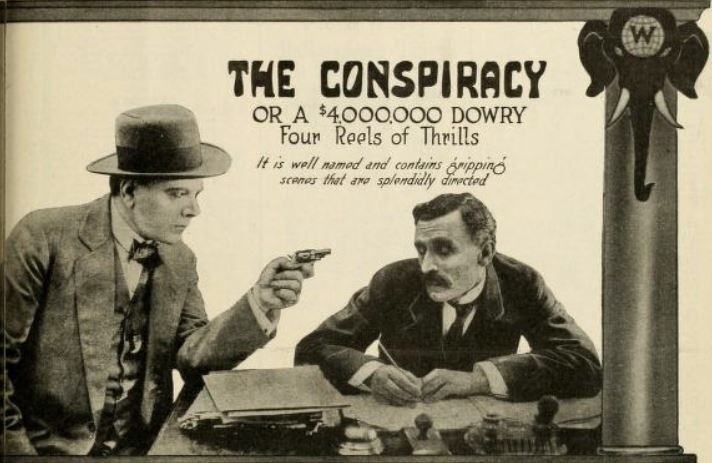
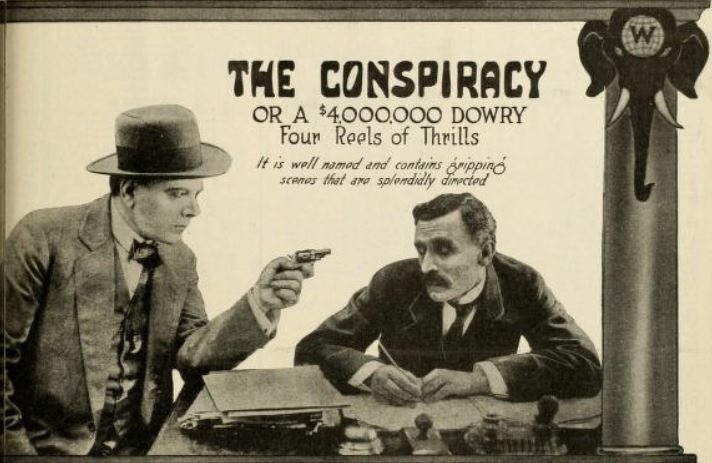
One bravura sequence cross-cuts between three spaces: Henry discovering Jeanne “fallen” amid roulette drunks; the Baron dictating fraudulent mine reports; the Marquis lifting a revolver to his temple. Pouctal accelerates the montage to a hysterical tempo, then drops a single, silent close-up of the pistol’s muzzle kissing flesh—cut to black. The absence of a gunshot is more deafening than any sound effect could ever be; we are left to imagine the click, the smell of oiled steel, the soft surrender of a father wagering suicide against filial obedience.
Traditional readings brand Sidonia a femme fatale, yet the film complicates her venom. She is first seen framed beneath a portrait of her dead mother, whose painted eyes radiate the same predatory patience. Inheritance here is recursive: the daughter inherits not money but the strategy of monetizing beauty. When she rips up Jeanne’s farewell letter and feeds it to the flames, the gesture is less jealousy than a ritual to sever the last ligament of empathy that might thwart corporate merger-by-marriage.
Jeanne, by contrast, is introduced through work: she trims pages, mends bindings, recites poetry aloud to the Marchioness. Her labor is textual, intimate, invisible—qualities the film equates with virtue. Yet once exiled, she survives by sewing hats in Victoire’s back-room gambling den, the same fingers that once stitched parchment now stitching tulle for courtesans. Pouctal refuses to let labour sanctify her; instead, he asks whether dignity can survive the marketplace that commodifies every touch.
The Golden Mine subplot anticipates The Wolf of Wall Street by a century but with the fatalism of Greek tragedy rather than the amphetamine rush of Scorsese. Prospectuses are printed on presses that clank like artillery; share prices, chalked onto blackboards, jitter like fever charts. When the swindle collapses, Pouctal shows no montage of ruined investors—he shows silence: a deserted exchange floor littered with torn confetti, a lone bowler hat rolling to rest like a decapitated head. Capitalism’s violence is not the scream but the hush that follows.
Restoration arrives, paradoxically, via confession on paper. Great Allan’s extraction of Delrue’s signed admission is shot like a bandit hold-up: dark staircase, single match-flare, ink that looks suspiciously like blood. The document, once publicized, detonates the Baron’s empire more thoroughly than dynamite could. Truth, the film insists, is the ultimate short-sell.
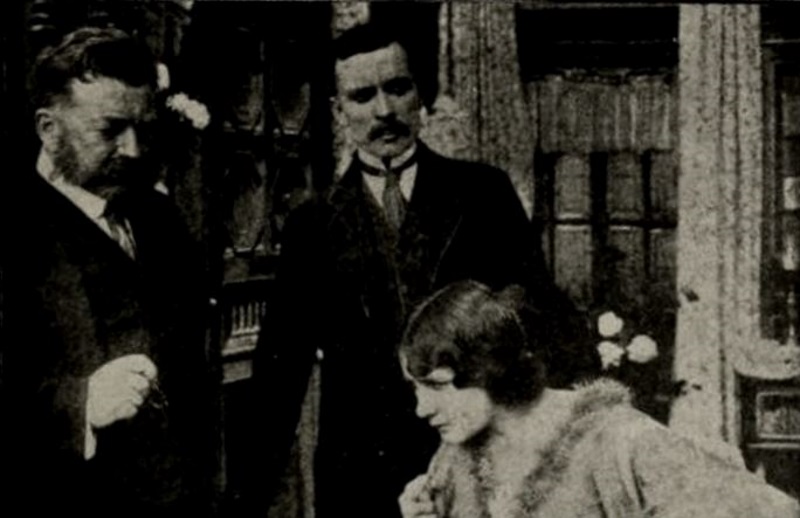
Pierre Magnier’s breakdown during the suicide-interrupted scene is a tremor of royal proportions: eyes that once glinted with cavalier insouciance now plead like a spaniel’s, mouth contorting as though words were physical thorns he must expel. Opposite him, the lesser-known Claude France (Jeanne) works in miniature: a blink lasts a lifetime, a half-smile heals. Watch her re-entry into the Kermor salon, draped in Allan’s borrowed silks—she walks as though the carpet might sprout teeth, every footstep expecting the old eviction.
As for Sheldon Lewis, his Great Allan could have slid into caricature, yet he undercuts swagger with sudden pockets of stillness: the moment he recognizes Jeanne’s handwriting on a prison letter, his jovial mask slips, revealing a man who has known exile of his own—whether from nation, race, or self—and refuses to invoice another soul for belonging.
Archival records suggest the original Gaumont screening employed a ten-piece ensemble weaving Saint-Saëns with African-American spirituals—a nod to Henry’s travels. Modern restorations often substitute a single piano, but I recommend curating your own counterpoint: try Coltrane’s Alabama beneath the jail sequence; the saxophone’s lament syncs uncannily with Jeanne’s striped shadow. During the mine-collapse montage, deploy Bernie Krause’s rainforest field recordings—sudden silence of share-tickers replaced by cicadas evokes the vacuum after speculative detonation.
Place this film beside Satanasso—both probe moral bankruptcy, yet where the latter externalizes evil as a supernatural force, The Conspiracy locates it in ledgers and marriage contracts. Its DNA also snakes through The Silence of Dean Maitland: both hinge on forged letters and suicides averted, but whereas Maitland’s cleric rots under guilt, the Marquis is absolved by filial sacrifice, a more Catholic transaction.
Curiously, the film’s dowry trope inverts Mrs. Wiggs of the Cabbage Patch, where poverty ennobles; here, wealth corrupts until re-gifted without strings. Fans of Jane Eyre will recognize the governess beloved by the heir, yet Pouctal denies us Brontë’s thunderous morality, offering instead the chillier justice of market correction.
Bootlegs circulate in 240p murk on video-sharing sites, but the Cinémathèque Gaumont-Saint-Étienne holds a 4K restoration—search their touring schedule. If you must settle for home viewing, dim lamps, silence phones, allow the flickering grayscale to haunt your peripheral vision. The film will whisper that every generation believes its own bubbles—dot-com, crypto, AI hype—are unprecedented. Yet here is 1915, calmly revealing the algorithm: promise infinity, monetize air, then let the orphans inherit the ashes.
When the last reel ends and the screen blooms to white, you may find yourself counting what, in your own life, has been collateral damage of someone else’s four-million-dollar dowry. And that, reader, is the mark of a masterpiece: it sends you back into the world hearing the echo of silent gunshots.
IMDb 7.2
1936
Community
Log in to comment.