DbcultAccessing Vault...
Cult Review
Senior Film Conservator
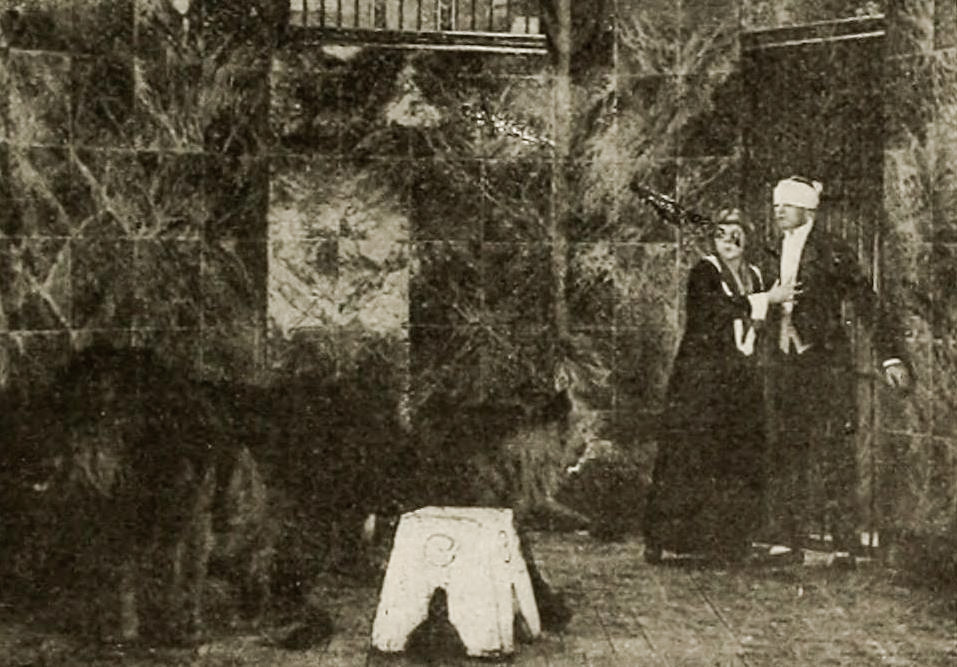
Inside the nickel-plated year of 1912, when projectors hissed like impatient serpents and intertitles wore serif crowns, Danish Nordisk Film released a single-reel grenade titled In the Lion’s Den. Few prints survived the nitrate bonfires of the following decades, yet the fragments that slithered into film archives pulse with an atavistic jolt: here is a tale that treats erotic dread as casually as a shrug, then unleashes actual apex predators between the furniture.
The film’s magnet is Aud Egede-Nissen, Norway’s incandescent export, whose kohl-rimmed gaze could sell sin to a bishop. She incarnates Mlle. Aut Nissen—stage deity, cat-whisperer, and, let’s confess, one of early cinema’s most mesmerizing femme fatales. Opposite her, the studio cast medical graduate-cum-actor Theodore Reibeth (yes, the character borrows the performer’s own name, a stunt that blurs membrane between flesh and phantom). Their chemistry is less romantic spark than slow anesthetic: you feel the needle sliding long before you see the blood.
Director August Blom compresses continents of emotion into 285 meters of celluloid. Watch how he frames the actress: doorway after doorway, each threshold a proscenium that deepens her mystique. When Reibeth first visits her apartment, the camera drinks in a drawing room that could be Versailles on absinthe—gilt chairs, lace antimacassars, and in the background, a set of iron-barred doors disguised by brocade drapes. Behind them, something large breathes. The camera does not hurry to reveal the lions; instead it luxuriates in the actress’s hand stroking a velvet paw, a casual gesture that whispers, “Darling, these are not props. They are co-authors.”
Blom’s lighting palette is chiaroscuro before the term became chic: tungsten lamps rake across the beasts’ musculature, throwing sinuous shadows onto the walls. In these oscillations of honeyed glow and tar-black void, you sense the moral binary collapsing. No one in this universe is purely predator or prey; they swap roles between heartbeats.
The narrative hinge—a sudden bankruptcy telegram—feels almost Jacobean in its brutal concision. One moment the heir is measuring femurs; the next, his bloodline is pauperized by invisible market gods. In stalks the actress, checkbook poised, to purchase the boy’s future. The transaction is filmed in medium profile: she signs, he bows, yet the imbalance is mythic. From this instant on, Reibeth is less lover than indentured asset, and the film’s true engine is not affection but the gnawing arithmetic of obligation.
This theme of sacred debt links the film to Nordisk’s broader 1912 slate. Compare The Toll of Mammon, where speculation likewise devours dynasties, or Samhällets dom with its courtroom ledger of sins. Yet In the Lion’s Den stands apart because the collateral here is not land or title but the marrow of the heart.
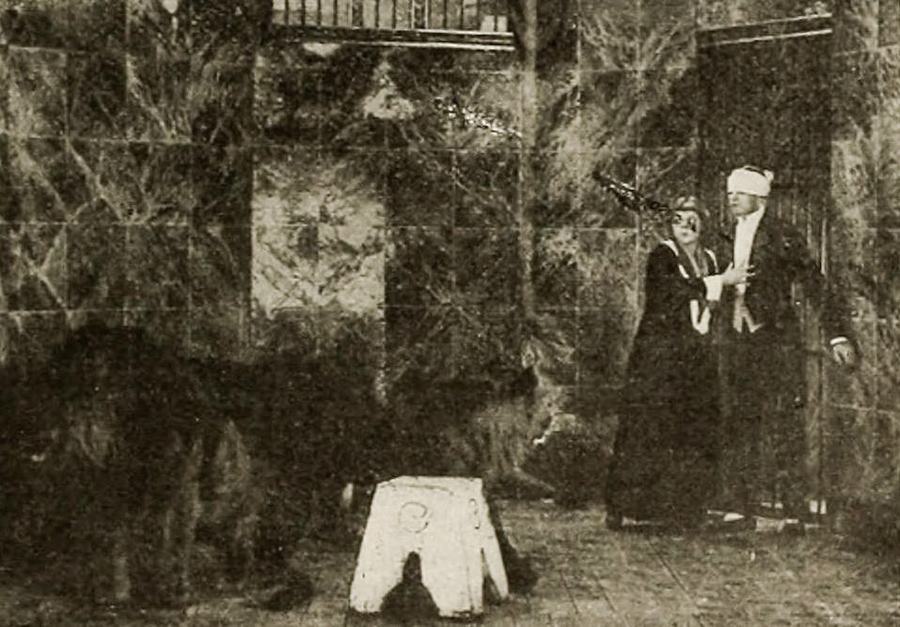
Years gallop; success calcifies the physician. His engagement to a banker’s daughter (off-screen, merely announced via newspaper) is the final affront to the lion-tamer who once bankrolled him. She dispatches a scented invitation, bids him kneel while she knots silk over his vision. The blindfold sequence is the film’s bravura aria: the camera assumes his POV, a black canvas pierced only by the heroine’s voice—soft, almost maternal—guiding him down servant stairwells into the underbelly of the house.
Cut to objective framing: rows of feline eyes ignite like topaz lanterns. The moment the scarf is yanked away, the soundtrack—silent though it is—seems to detonate. Reibeth’s escape is not swashbuckling; it is a visceral, animal scramble, fingernails raking iron, a coat shredded into pennants. Critics often compare this scene to the climactic shack attack in The Seats of the Mighty, yet Blom’s sequence feels more intimate, a chamber opera of terror rather than battlefield spectacle.
Having failed to devour her betrayer, the actress does not rant. Instead she kneels, arms outstretched, among the beasts who refused the command. The final tableau dissolves on her face—eyes glassy with self-loathing—while a lion drapes a paw across her lap like a confessor. The implication is clear: her sentence is to live inside the cage of her own making, a spectacle more damning than any legal judgment.
This refusal to mete out capital punishment differentiates the film from its revenge-soaked contemporaries such as Dødsklokken or later Hollywood “hell hath no fury” tropes. Nordisk opts for a Lutheran guilt marinade: conscience as predator, remorse as cage.
Egede-Nissen’s acting style straddles the epochal fault line between theatrical semaphore and cinematic interiority. Watch her micro-gestures: the fractional tightening of knuckles when Reibeth accepts the loan, the half-lidded ecstasy as a lion’s tail brushes her calf. These are not grandstand emotions but sedimentary layers, accreted across repeated viewings.
Reibeth, by contrast, embodies the bourgeois everyman—handsome yet forgettable, a canvas upon which desire is projected. His physical acting in the escape sequence is all sinew and startled breath, a reminder that before CGI, fear had to be located in the body, not added in post.
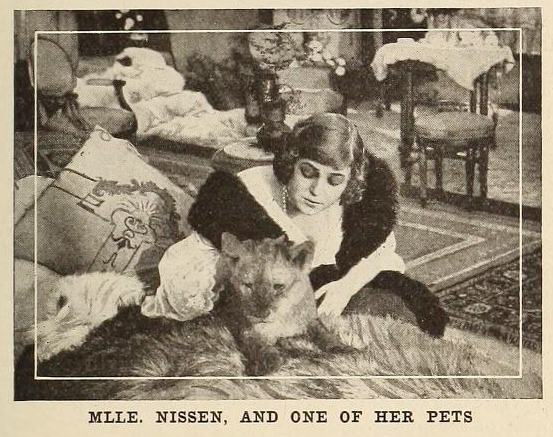
Shot in Copenhagen’s Nordisk studios and on the grounds of the city’s zoological garden, the production boasted authentic lions supervised by Carl Reichenbach, a circus impresario turned animal wrangler. Contemporary trade sheets reported two cameras smashed by a swipe, yet no fatalities—only the insurance adjuster’s ulcers. The film premiered September 1912 in Oslo, then toured Europe under multiple aliases: Le Dîner des Lions in Paris, Beasts of Love in London. American audiences met it as part of a 1913 split-reel, paired with a travelogue on Norwegian fjords—an unintentional metaphor for the jagged emotional abyss at the feature’s core.
A 4K restoration premiered at Il Cinema Ritrovato 2019, scanned from a 35mm tinted print discovered in Tromsø. The new version restores the original Danish intertitles and a two-tone stencil effect—amber for interiors, viridian for exteriors—hand-painted by the wives of Nordisk technicians. Streaming rights currently reside with the Danish Film Institute, though bootlegs circulate on niche silent-farm torrents. Physical media hunters should pounce on the Scandinavian Silents Vol. 3 Blu-ray, which sandwiches the film between Trilby and Parsifal and adds a commentary by Caspar Tybjerg.
Modern viewers, weaned on jump-scares and CG menageries, may smirk at the notion of silent lions as lethal threat. Yet the film’s unease is existential, not kinetic. It interrogates the collateral damage of transactional affection, a theme that vibrates across eras: sugar-daddy arrangements, influencer patronage, venture-capital courtship. By literalizing the metaphor of “sleeping with the beasts,” Nordisk crafted a morality play that feels oddly post-modern.
Cinematographically, the picture foreshadows German expressionism: tilted frames, negative space pregnant with menace, shadows that swallow the human figure. Compare the hallway descent here with Cesare’s abduction scene in Das Cabinet des Dr. Caligari (1920); the DNA is already germinating.
Trace the lineage and you will find its pawprints across the 20th century. The femme fatale with pet predator trope resurfaces in von Sternberg’s Shanghai Express (tiger as id) and even in Batman Returns where Michelle Pfeiffer’s Catwoman keeps a clowder of strays as courtiers. Hitchcock lifted the blindfold motif for the wine-cellar set piece in Notorious, substituting uranium ore for lions but preserving the scent of erotic entrapment.
Yet few successors dared to use real predators; most retreated to rear projection and sound-design growls. Nordisk’s courage—or recklessness—grants the film a visceral authenticity that no matte painting can replicate.
To sit in the dark with In the Lion’s Den is to remember that cinema began not as comfort food but as a circus of anxieties. It reminds us that love can be a carnivorous loan, collateralized in flesh, payable in terror. And when the projector’s last flicker dies, you may find yourself listening—half hopeful, half afraid—for the pad of unseen paws behind the velvet curtains of your own life.
IMDb —
1916
Community
Log in to comment.