DbcultAccessing Vault...
Cult Review
Senior Film Conservator
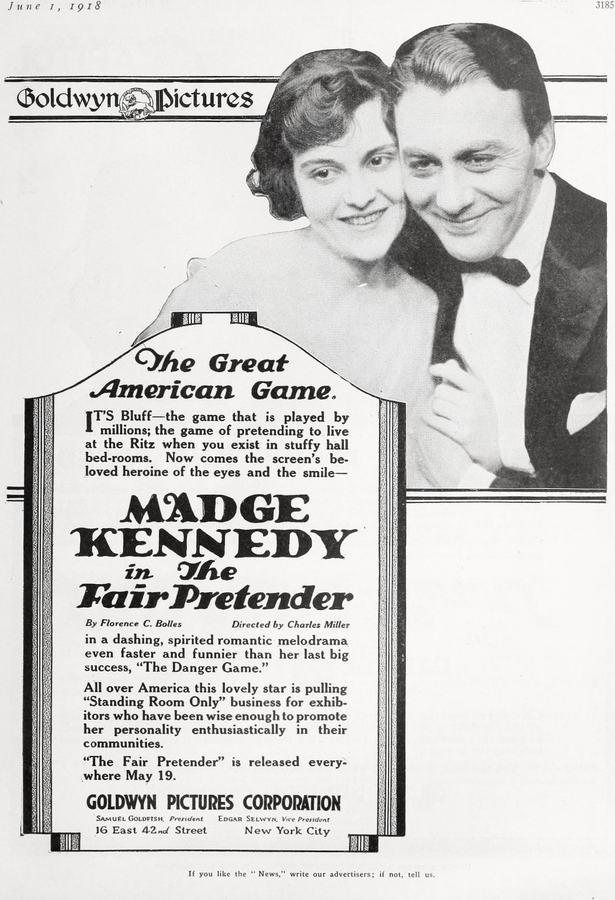
Stepping back into the hallowed halls of early cinema, one often encounters films that, despite their age, resonate with an astonishing contemporary relevance. The Fair Pretender, a 1918 offering, is precisely such a gem. It’s a narrative woven with threads of ambition, deception, and the eternal quest for self-realization, all set against a backdrop of societal artifice. Directed with a nimble touch and penned by Florence Bolles, this film masterfully navigates the intricate dance of identity, inviting viewers to ponder the very nature of authenticity in a world obsessed with appearances.
At its heart lies Sylvia Maynard, portrayed with captivating vivacity by the effervescent Madge Kennedy. Sylvia is not merely a stenographer; she is an artist trapped by circumstance, a soul yearning for the theatrical stage. Her ambition is palpable, a quiet fire burning beneath the surface of her mundane existence. The film opens with her in a position of subservience, typing away for a theatrical producer who, like many gatekeepers, is blind to the talent simmering right under his nose. Sylvia’s audacious plan to prove her acting prowess by infiltrating high society as a sophisticated widow is not just a plot device; it’s a profound commentary on the barriers faced by women in her era, and indeed, by anyone striving to break free from pre-conceived notions of their station. Kennedy imbues Sylvia with a spirited determination that makes her masquerade utterly believable, transforming from a demure office worker into an elegant socialite with remarkable grace and conviction. Her performance is a testament to the power of silent acting, conveying a spectrum of emotions through nuanced gestures and expressive eyes.
Parallel to Sylvia's clandestine theatrical audition runs the narrative of Don Meredith, played by the equally compelling Robert Walker. Don is a struggling playwright, a purveyor of ideas, whose latest work posits a radical thesis: that high society is a stage, and anyone with enough gumption can convincingly play a role within it. His decision to masquerade as a famous writer at the same lavish house party is not merely coincidental; it's a brilliant narrative stroke that doubles the stakes and provides a philosophical underpinning to the comedic chaos. Don’s intellectual justification for his deception adds a layer of depth to the film, elevating it beyond a simple romantic comedy. He is not just seeking fame; he is seeking validation for his artistic vision, for his understanding of human nature and social dynamics. Walker portrays Don with a blend of earnestness and intellectual arrogance, making his eventual emotional unraveling all the more poignant. The convergence of these two characters, both playing roles, both seeking validation, creates a fascinating dramatic irony that propels the story forward with delightful momentum.
The house party itself becomes a microcosm of society, a grand stage where identities are fluid and appearances reign supreme. Sylvia, introduced as the widow of Captain Milton Brown, navigates this new world with a mixture of trepidation and burgeoning confidence. Her interactions with Don are charged with an unspoken understanding, a recognition of kindred spirits despite their assumed personas. Their romance blossoms organically, a testament to the idea that genuine connection can pierce through even the most elaborate veils of deception. The chemistry between Kennedy and Walker is undeniable, their silent exchanges conveying a depth of feeling that transcends the lack of spoken dialogue. It's a masterclass in visual storytelling, where a glance, a touch, or a shared smile speaks volumes about their growing affection. This burgeoning love story is the emotional anchor of the film, providing a human heart amidst the swirling currents of mistaken identity.
Just as their love appears to solidify, the narrative takes a sharp, unexpected turn. The sudden, astonishing appearance of Sylvia’s supposedly deceased husband, Captain Milton Brown, shatters her carefully constructed facade. This twist is not only a moment of high drama but also a stroke of comedic genius, leveraging the absurdity of the situation for maximum effect. The Captain, far from being a vengeful specter, is an amused observer, allowing Sylvia to continue her impersonation for a time, perhaps out of curiosity or a perverse sense of humor. His advice for her to leave the party, though gentle, carries the weight of impending exposure. This development plunges Sylvia into a panic, forcing her to confront the precariousness of her deception and the potential loss of everything she has gained, including Don’s affection. The heartbreak that follows, as Don, feeling betrayed, also departs, is a powerful emotional beat, showcasing the fragility of trust when built upon a foundation of lies.
However, The Fair Pretender is not content to merely explore romantic entanglements and social satire. It boldly veers into the thrilling territory of espionage, introducing a subplot involving a German spy and stolen papers. This unexpected element injects a fresh surge of adventure and peril into the narrative, transforming a drawing-room comedy into something more expansive and dynamic. The spy's machinations provide a tangible external threat, forcing Sylvia and Don into a new set of circumstances where their wits and courage are truly tested. This shift in tone is handled with surprising dexterity, preventing the film from becoming monotonous and showcasing the versatility of Florence Bolles’s writing. The retrieval of the papers becomes a catalyst for their reunion, a shared ordeal that strips away the remaining layers of their false identities, revealing their true selves to one another in moments of genuine heroism and vulnerability. This genre-bending approach is reminiscent of other films of the era that blended romance with adventure, such as The Beloved Adventurer, which often saw protagonists thrust into extraordinary circumstances beyond their initial romantic pursuits.
The resolution of their adventures sees Don and Sylvia reunited, not as a playwright and a society widow, but as their authentic selves. This moment of truth is deeply satisfying, underscoring the film’s central message about the ultimate triumph of honesty and genuine connection over fabricated facades. The successful debut of Don’s play, now undoubtedly enriched by his personal experiences with deception and revelation, provides a triumphant conclusion. It’s a meta-narrative triumph, where the art imitates life, and life, in turn, informs the art. The film, through its characters’ journeys, suggests that while performance can open doors, true fulfillment lies in shedding the masks and embracing one's own truth. This theme of finding one's true self amidst a world of appearances is a recurring motif in cinema, from the social climbing antics in The Ne'er Do Well to the more dramatic explorations of identity in films like Kinkaid, Gambler, where characters often adopt new personas to navigate complex social landscapes.
Florence Bolles’s screenplay is a remarkable piece of construction, balancing comedic lightness with moments of genuine emotional depth and unexpected thrills. The dialogue, though unspoken, is conveyed through intertitles that are witty and economical, propelling the narrative without unnecessary exposition. The pacing of The Fair Pretender is brisk, a characteristic often found in the more engaging silent films, keeping the audience captivated from the initial premise to the satisfying conclusion. The film's direction, while not attributed in the provided information, clearly demonstrates a keen understanding of visual storytelling, utilizing close-ups to emphasize emotional states and wider shots to establish the opulent party setting. The ensemble cast, including Emmett King, Wilmer Walter, Grace Stevens, John Terry, Tom Moore, Clifford Williams, Florence Billings, Paul Doucet, and Charles Slattery, provide solid support, creating a believable and vibrant world for Sylvia and Don to inhabit. Each character, no matter how minor, contributes to the rich tapestry of the narrative, enhancing the film's overall charm and comedic timing.
Looking back, The Fair Pretender stands as a testament to the enduring power of silent cinema. It’s more than just a historical artifact; it’s a vibrant, engaging story that explores themes of ambition, love, and the complex interplay between appearance and reality. Madge Kennedy's performance alone is worth the price of admission, a shining example of the expressiveness and nuance that silent actors could achieve. Robert Walker complements her perfectly, creating a dynamic duo whose journey from deception to discovery is both entertaining and genuinely moving. The film's ability to seamlessly blend romantic comedy with elements of spy thriller is particularly impressive, showcasing a narrative ambition that belies its age. It reminds us that fundamental human desires – to be seen, to be loved, to achieve one’s potential – are timeless, and that the art of storytelling, even without spoken words, can capture these truths with profound impact.
In an era where films like Mascamor were exploring grand adventures and Red, White and Blue Blood delved into patriotic intrigue, The Fair Pretender carves out its own distinct niche by focusing on the 'adventure' of self-discovery and social navigation. It's a film that subtly critiques the superficiality of high society while celebrating the courage of individuals who dare to challenge their assigned roles. The unexpected twists, particularly the re-emergence of Captain Brown and the spy subplot, keep the audience on the edge of their seats, proving that silent films were capable of intricate plotting and thrilling suspense, not just melodrama. This narrative complexity, coupled with compelling performances, ensures that The Fair Pretender remains a compelling watch, demonstrating that the 'pretender' in its title refers not only to the characters' initial deceptions but also to the film's own unassuming brilliance, which subtly pretends to be a simple romance before revealing its layers of depth and adventure. It's a delightful journey into a bygone era, proving that a good story, well told, is truly timeless.

IMDb 6.4
1928
Community
Log in to comment.