DbcultAccessing Vault...
Cult Review
Senior Film Conservator
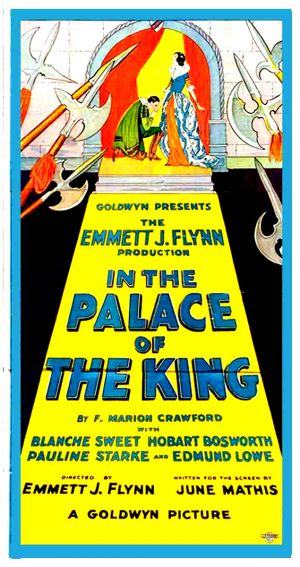
When the reels of In the Palace of the King begin to spin, the viewer is thrust into a meticulously staged court where every tapestry, every sword‑clad silhouette, whispers of power’s precarious balance. Director Francis Marion Crawford, collaborating with screenwriter June Mathis, crafts a narrative that is simultaneously intimate and grandiose, echoing the operatic excess of Spanish Golden Age drama while retaining the visual restraint characteristic of early 1920s cinema.
King Philip, embodied with regal menace by Charles Clary, is not merely a monarch; he is a study in the corrosive nature of envy. His decision to send Don John (Hobart Bosworth) to the Moorish front is less a strategic maneuver than a calculated act of fratricidal sabotage. The film’s mise‑en‑scene—dim corridors, looming arches, and the stark contrast of blood‑red banners—mirrors Philip’s internal turmoil, a visual metaphor that would make a modern auteur proud.
Bosworth’s Don John is a paradoxical figure: a battlefield champion whose victory is undercut by personal betrayal. The combat sequences, choreographed with a kinetic vigor reminiscent of Rip & Stitch: Tailors, employ rapid cutting and daring close‑ups, allowing the audience to feel the clang of steel and the breathless panic of war. Yet, it is in the quieter moments—when Don John exchanges a lingering glance with Dolores (Aileen Pringle)—that the film’s emotional core truly surfaces.
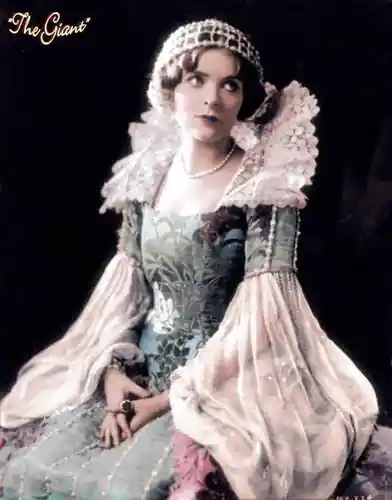
Dolores, portrayed with luminous poise by Pringle, is more than a love interest; she is a conduit for the film’s critique of patriarchal authority. Her defiance—refusing to be a pawn in a diplomatic marriage to the English queen’s sister—echoes the rebellious spirit of the later silent heroine in The Heart of Youth. When she publicly accuses Don John of dishonor, the courtroom scene erupts into a theatrical tableau of accusation, redemption, and the fragile veneer of royal legitimacy.
The pivotal stabbing is rendered with a stark economy of movement. The camera lingers on the glint of the blade—highlighted by a fleeting flash of #C2410C in the otherwise monochrome frame—before cutting to Philip’s cold, unflinching gaze. This moment, devoid of melodramatic excess, underscores Crawford’s confidence in visual storytelling; the audience feels the weight of the betrayal without a single intertitle explaining it.
The climax, wherein Philip relents and pardons Mendoza (William V. Mong), is a masterclass in silent-era negotiation of power. The dialogue‑free exchange—Dolores’ trembling hand placed upon the king’s throne, the subtle nod of the monarch—relies on nuanced facial acting, a technique perfected by silent legends such as Blanche Sweet, who appears in a supporting role here, lending gravitas to the court’s collective conscience.
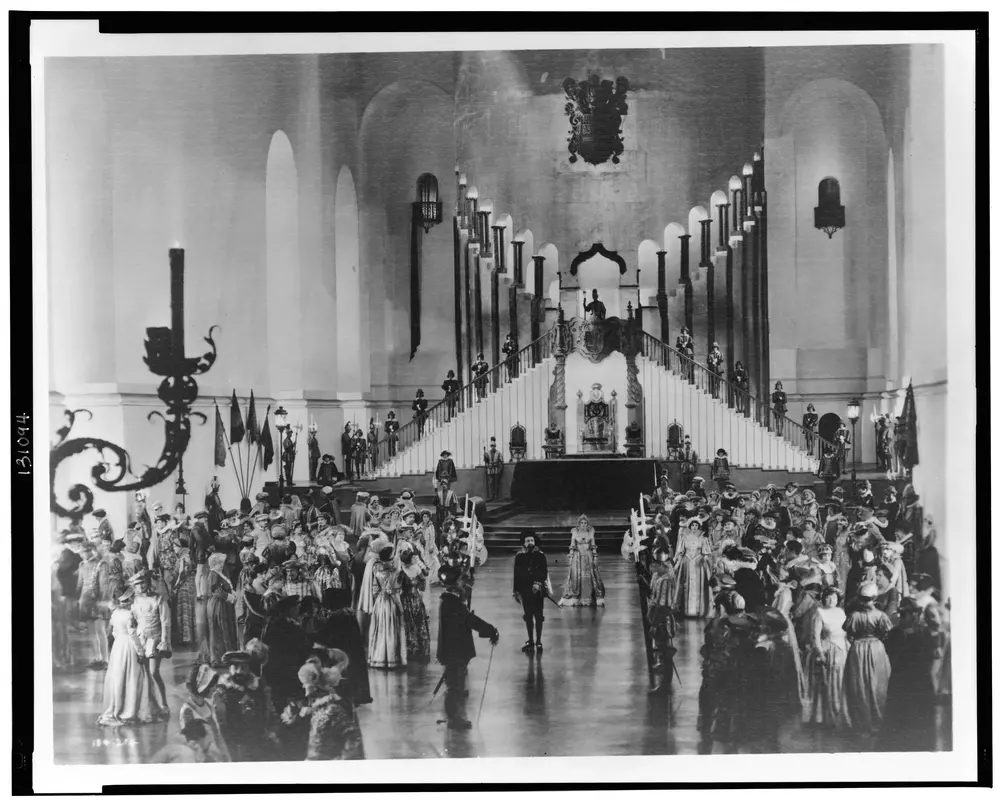
While In the Palace of the King shares thematic DNA with the maritime heroics of The Battle of Trafalgar, its focus on internal court intrigue aligns it more closely with the psychological depth found in Fräulein Julie. The film’s pacing, however, is more deliberate than the rapid-fire action of The Trap (1922), allowing the audience to savor each tableau.
Bosworth’s portrayal of Don John is a study in restrained intensity. He conveys the character’s internal conflict through a series of micro‑expressions—a clenched jaw, a fleeting flicker of sorrow—without resorting to melodramatic gesticulation. Pringle’s Dolores, meanwhile, balances vulnerability with an iron‑clad resolve, embodying the silent‑film heroine archetype while transcending it through subtle defiance.
The supporting cast, including the stoic General Mendoza (Edmund Lowe) and the ever‑present Queen of England’s sister (Pauline Starke), provide a sturdy scaffolding for the central drama. Notably, Blanche Sweet’s cameo as a court lady adds a layer of intertextual richness; audiences familiar with her earlier work will recognize the silent star’s signature poise, reinforcing the film’s claim to cinematic legitimacy.
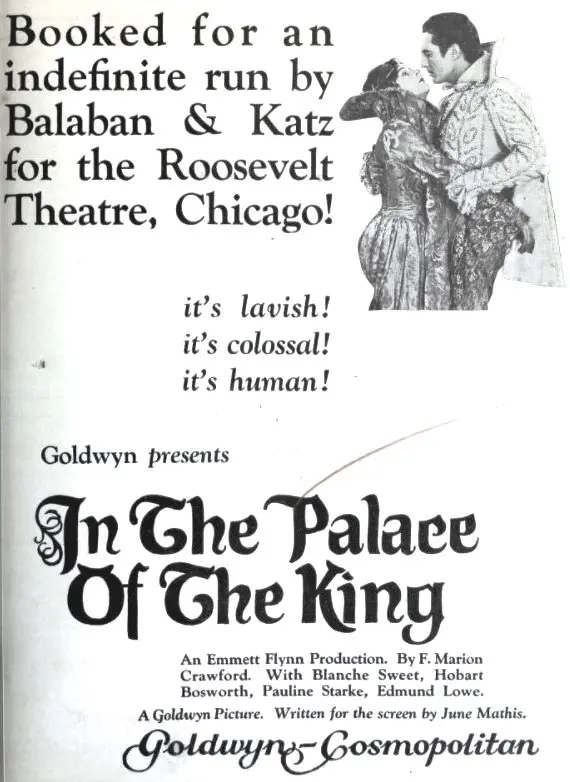
Crawford’s direction is marked by an astute awareness of spatial dynamics. The palace corridors are shot from low angles, emphasizing the towering authority of the monarch, while the battlefield sequences employ high‑angle shots that render the chaos of war both grand and intimate. The contrast between the cool sea‑blue hue of the night‑time courtyard (#0E7490) and the fiery orange of the royal chambers (#C2410C) is a visual metaphor for the clash between passion and power.
Cinematographer Lucien Littlefield utilizes chiaroscuro lighting to sculpt the characters’ faces, casting long shadows that echo the moral ambiguity pervading the narrative. The use of deep focus during the courtroom scene allows multiple layers of action—Dolores’ trembling, the king’s impassive stare, and the murmuring courtiers—to coexist within a single frame, demanding the viewer’s active engagement.
The film’s intertitles are sparingly employed, each rendered in an elegant serif typeface tinted with a subtle #EAB308 hue, reinforcing the regal atmosphere while preserving the visual flow. When the secret letter is revealed, the intertitle’s abrupt appearance heightens tension, a technique reminiscent of the suspenseful pacing in The Single Code.
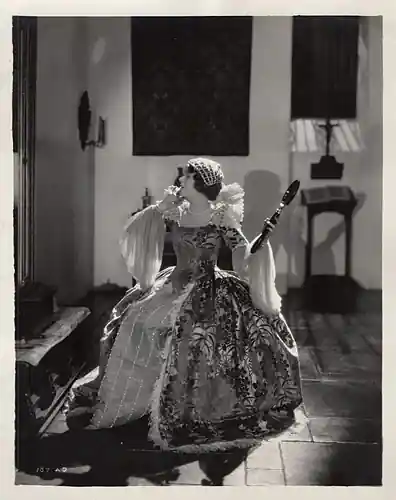
At its core, the film interrogates the fragility of authority when it is built upon envy. King Philip’s insecurity drives him to commit fratricide, a narrative choice that aligns the film with classic tragedies such as Shakespeare’s King Lear. Yet, unlike Lear’s descent into madness, Philip’s arc concludes with a pragmatic concession: he pardons Mendoza to preserve his throne’s veneer of fairness.
Dolores embodies the transformative power of love. Her willingness to jeopardize her own reputation to shield her father illustrates a moral fortitude that surpasses the king’s calculated cruelty. The final marriage scene, bathed in a soft, diffused light, suggests that personal affection can indeed eclipse the machinations of statecraft.
Although In the Palace of the King has languished in relative obscurity compared to contemporaneous epics, its sophisticated exploration of political intrigue predates modern cinematic treatments of dynastic drama, such as the series Game of Thrones. The film’s nuanced characterizations and visual storytelling merit renewed scholarly attention, particularly for students of silent-era narrative techniques.
For contemporary audiences, the film offers a window into early 20th‑century perspectives on gender, power, and national identity. Dolores’s agency, though constrained by the era’s social mores, hints at the evolving role of women in cinema—a trajectory that would later blossom in works like Cupid’s Elephant and Fools and Riches.
In sum, In the Palace of the King stands as a testament to the silent era’s capacity for complex storytelling without reliance on dialogue. Its layered performances, meticulous direction, and thematic resonance render it a hidden treasure for connoisseurs of classic cinema. Whether viewed as a historical drama, a tragic romance, or a study of regal insecurity, the film rewards repeated viewings, each revealing new subtleties in its richly textured tableau.
IMDb 6
1933
Community
Log in to comment.