DbcultAccessing Vault...
Cult Review
Senior Film Conservator
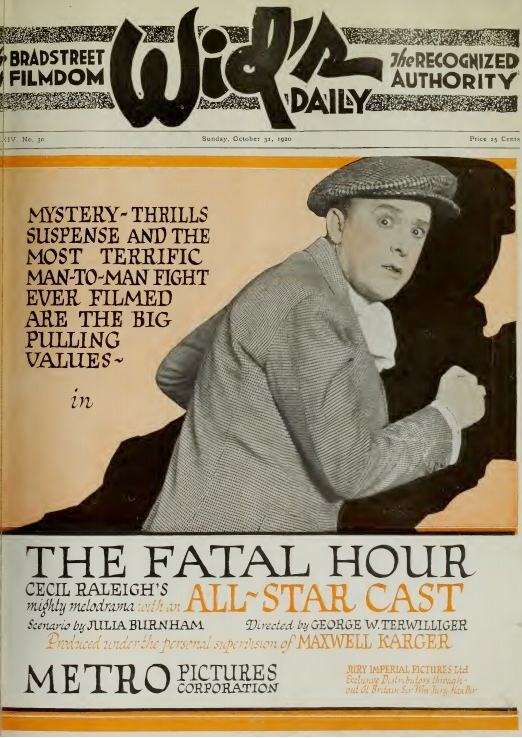
In the pantheon of early twentieth-century cinema, few works capture the precarious intersection of feudal entitlement and modern criminality with the same kinetic fervor as The Fatal Hour (1920). Directed with a keen eye for the grandiosity of the British class structure, the film serves as a fascinating specimen of the transition from stage-bound melodrama to the expansive visual language of the silent screen. It is a work that breathes the rarified air of the aristocracy while simultaneously plunging its hands into the muck of extortion and grand larceny.
The narrative engine is ignited by the death of the Marquis of Deerminister, a vacuum of power that invites the worst impulses of the human spirit to manifest. Wilfred Lytell portrays Nigel Villiers with a stoic nobility that feels both aspirational and tragically vulnerable. Nigel is the archetypal hero of the era—noble not just by blood, but by a perceived moral rectitude that stands in sharp contrast to the jagged edges of his nemesis, Jim Callender. Unlike the more grounded conflicts found in The Small Town Guy, the stakes here are existential, involving the total erasure of a man’s identity.
Jim Callender, played with a simmering, serpentine intensity, represents the 'new' villainy—a man who understands that the strongest weapons against the elite are their own rigid codes of honor and lineage. By aligning himself with Lord Dolly (Lionel Pape), Callender exploits the internal rot of the Villiers family. This dynamic of the traitorous relative is a recurring motif in the era's cinema, often used to critique the inherent instability of inherited wealth, a theme explored with different nuances in The Eternal Question.
Perhaps the most audacious narrative pivot is the inclusion of the Crown Jewels. By weaving the theft of national treasures into a personal vendetta, writers Julia Burnham and Cecil Raleigh elevate a family dispute into a matter of national security. The blackmailing of Dudley Gore serves as a poignant commentary on the fragility of the 'gentleman's' reputation. In 1920, a stain on one's character was a social death sentence, a concept that resonates through other contemporary dramas like Her Atonement.
The visual storytelling during the heist planning sequences utilizes a chiaroscuro lighting scheme that prefigures the noir aesthetics of later decades. The shadows cast in the drawing rooms are as long and menacing as the moral compromises being made within them.
The third act’s shift to a Swiss monastery provides a breathtaking aesthetic departure from the claustrophobic interiors of London. The monastery serves as a literal and figurative high ground—a place of sanctuary and truth. It is here that Nigel must confront the physical manifestation of his past. The use of location shooting (or expertly crafted studio sets that simulate the grandeur of the Alps) lends the film an epic scale often lacking in the more localized dramas of the period, such as A Roadside Impresario.
The confrontation between Nigel and Callender over the purloined documents is a masterclass in silent action. The physicality of the struggle is palpable, stripped of the polite veneers of the first two acts. When Callender falls to his death, it is not merely a villain being dispatched; it is the symbolic purging of the parasite from the body politic of the aristocracy. The restoration of the papers and the jewels represents a return to the status quo, yet the audience is left with a lingering sense of how easily that order can be dismantled. This tension between chaos and order is also a central pillar in The Sable Lorcha.
The cast delivers performances that, while rooted in the expressive traditions of the 1920s, avoid the more egregious excesses of over-acting. Gladys Coburn as Dorothy Gore provides more than just a romantic interest; she is a catalyst for Nigel's resolve. Her arrival at the monastery to assist in the detention of Callender showcases a proto-feminist agency that was beginning to percolate in cinema after the Great War, much like the characters in The Natural Law.
The directorial pacing is deliberate, allowing the complexity of the 'first wife' plot to settle before escalating into the thriller elements of the jewel heist. This structural intelligence ensures that the viewer is emotionally invested in Nigel’s legitimacy before they are asked to care about the fate of the Crown Jewels. It is a sophisticated layering of stakes that mirrors the narrative density of La course du flambeau.
Visually, the film utilizes a variety of tinting techniques common to the era—sepia for the interiors, deep blues for the night-time heist, and a stark, bright clarity for the Swiss peaks. These color choices guide the audience's emotional response with surgical precision. The cinematography captures the textures of the period—the heavy velvet curtains, the cold stone of the monastery, and the metallic glint of the jewels—with a clarity that survives even in contemporary restorations. For those who appreciate the visual grit of De Voortrekkers or the atmospheric dread of Under galgen, The Fatal Hour offers a rich tapestry of early cinematic craft.
The editing, particularly during the climax, employs rhythmic cutting that was quite advanced for its time. The cross-cutting between Dorothy’s desperate attempts to hold the villain and Nigel’s climb toward the documents creates a genuine sense of temporal pressure—the 'fatal hour' of the title. This technique of building suspense through parallel action was a hallmark of the burgeoning thriller genre, seen also in Saved in Mid-Air.
Ultimately, The Fatal Hour is a meditation on the concept of truth in an age of artifice. The villain's attempt to rewrite Nigel’s history through forged narratives and suppressed documents resonates in our modern era of misinformation. The film asserts that while the truth may be buried in a remote monastery or hidden behind a veil of blackmail, it possesses an inherent weight that eventually crushes those who seek to subvert it. It shares this moral backbone with Secret Marriage, where the legality of union defines the destiny of the protagonists.
In the broader context of 1920 cinema, this film stands as a bridge between the Victorian stage play and the modern action-thriller. It understands that for an audience to be truly captivated, the physical danger (the fall from the monastery) must be mirrored by a spiritual or social danger (the loss of one's name). It is this duality that makes the film more than a mere antique; it is a vibrant, breathing piece of storytelling that demands attention. Whether compared to the high-seas adventure of Die Abenteuer des Kapitän Hansen or the vengeful depths of Revenge, The Fatal Hour holds its own as a compelling exploration of the human condition under duress.
Technical Credits & Historical Context:
The screenplay by Julia Burnham and Cecil Raleigh showcases a sophisticated understanding of dramatic structure. Raleigh, in particular, brought his experience with large-scale stage melodramas to the screen, ensuring that the film’s 'big' moments—the heist, the monastery fight—felt earned and impactful. The cast, featuring veterans like Frank Currier and Jennie Dickerson, provides a level of gravitas that grounds the more fantastical elements of the plot. As we look back at the cinematic output of the post-war years, The Fatal Hour remains a testament to the power of silent narrative to convey complex themes of identity, honor, and the relentless pursuit of justice.
IMDb 6.6
1935
Community
Log in to comment.