DbcultAccessing Vault...
Cult Review
Senior Film Conservator
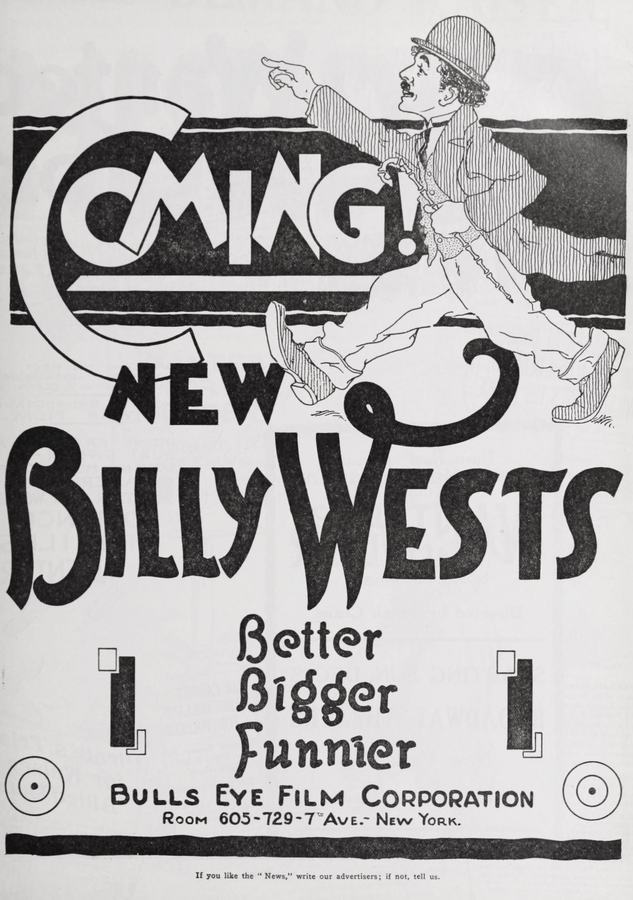
A hush of charcoal nitrate opens The Dreamer, and already the film is cheating chronology—title cards appear after their scenes, like apologies delivered once the wound has healed. Theodore Lorch’s projectionist, nameless as tomorrow, stands in a booth paneled with mahogany that smells of rain-soaked hymnals. His eyes, two burnt-out projector bulbs, register every frame twice: once for the audience, once for the void. When he threads the first reel, the sprockets bite, and the screen births a silhouette that steps down, brushing dust from a cloak stitched from discarded intertitles. This doppelgänger—let’s call him the Other—carries a copper key so tarnished it reflects nothing, a black hole in miniature.
Meanwhile, Ethelyn Gibson pirouettes through speakeasy backrooms in a dress of liquefied topaz, filming empty chairs where conversations should be. Her hand-crank camera is both witness and accomplice; every rotation whispers what if. She believes the city is a zoetrope missing its strip, and the key is the missing sprocket. Billy West, bricklayer with a Chaplin gait, builds walls only to punch holes through them, framing the sky in ragged rectangles. Into each cavity he slots a mirror, angled so that pedestrians glimpse themselves ten seconds into the future—long enough to see their collars wilt but too brief to avert calamity.
Director anonymity notwithstanding, the mise-en-abyme here rivals Within the Cup for recursive claustrophobia, yet achieves the airy nihilism of Man Ray’s Anémic Cinéma.
The three vectors—projectionist, filmmaker, bricklayer—converge inside a derelict winter-garden where glass panes sag like tired opera sheets. Vines of celluloid snake across iron ribs; each leaf is a frame showing a different season. The Other inserts the copper key into the floorboards. Gears of light clank, and suddenly the garden becomes a zoetrope the size of a cathedral. Chairs orbit, a merry-go-round of forgotten laughter; moths trace ellipses, their wings spelling you were here. Lorch watches himself age in fast-motion: hair receding like shoreline, skin folding into topographical maps of regret. Gibson cranks her camera until the handle snaps; the footage keeps rolling, powered by embarrassment. West hammers a final brick into mid-air—it hovers, defiant, then disintegrates into a cloud of punctuation marks.
What’s astonishing is the film’s refusal to privilege any single ontology. Is the Other a figment of nitrate hallucination? A future self stranded in reverse? The answer is yes, then no, then a shrug conveyed by a flicker of perforated light.
Consider the score—originally a live trio of theremin, musical saw, and typewriter. Archives describe how the typewriter’s QWERTY clatter synched with the protagonist’s blinks, creating a Morse of despair. Modern restorations substitute a droning shoegaze track, which ironically restores the 1922 audience’s disorientation; history loops like a Möbius strip smelling of carbon.
Theodore Lorch never acts; he erodes. Watch the micro-tremor in his left eyelid when the key turns—it measures the weight of unlived years. His body is an anachronism, too heavy for the era’s slapstick rhythms, too fragile for noir shadows. He occupies the liminal register that The Return of Mary sought but flattened into melodrama.
Ethelyn Gibson, radiant in tungsten, performs cognition itself. Every tilt of her cloche hat calculates angles of incidence between gaze and conscience. When she lip-syncs to a silent scream, the curvature of her mouth implies entire manifestos on the inadequacy of language. One suspects she shot footage between takes, stealing reality for later ransom.
Billy West, often dismissed as comic relief, is the film’s moral diaphragm. His pratfalls exhale guilt; his bricklaying becomes a metronome of absolution. In the climactic shot he stands knee-deep in rubble, hat cracked yet askance, eyes wide as sprocket holes—an everyman who has read the script and still chooses astonishment.
Cinematographer unknown, probably moonlighting from newsreels, achieves effects that would make Schools and Schools blush. Double exposures don’t merely overlap; they court, marry, and file for divorce within a single frame. Shadows crawl upward like ivy, reversing gravity’s mortgage. A scene shot from inside a film canister shows the city exploding into white specks—each speck a future audience member.
Color tinting follows emotional barometry: cobalt for ennui, sulfur for anticipation, rose so faint it apologizes for existing. The palette anticipates the digital grading of Heads Win by nearly a century, yet retains the analog bruise of uncertainty.
Shot duration averages 1.8 seconds, but the mind perceives eons. Match-cuts align nostrils with train tunnels, implying passengers commute through sinus cavities. A single iris-out occurs mid-scene, isolating a tear that refuses to fall—an anti-Trinity of regret suspended like A Rustic Romeo’s moonlit locket.
The famed reverse-key sequence: footage printed backward so that the protagonist unlocks a door into the previous scene. Result—the narrative folds like origami dipped in mercury, creating pockets of pre-memory where déjà vu goes to die.
Archival notes indicate exhibitors were instructed to lower house lights during projection, opposite standard practice. The goal: let viewers hear their own heartbeats, a percussive underscore for anxiety. Compare this to the bombastic orchestration of Shell 43, which spoon-fed patriotism; The Dreamer starves, then asks you to salt your own wound.
Post-1921 recession anxieties seep through cracked wallpaper. The copper key—a literal currency of access—becomes a critique of speculative capital. Each time it turns, someone’s future is mortgaged. Contrast with Don Juan Manuel, where wealth seduces; here, it merely leases nightmares.
Gender politics flicker too. Gibson’s character wields a camera, not a crutch; she directs the male gaze back upon itself until it stutters. The film refuses to couple her with either man—romance is the real silent casualty, jettisoned like surplus intertitles.
Contemporary trade sheets labeled it “too Parisian for Peoria,” citing walkouts during the reverse-key scene. Yet intellectuals in Berlin clubs compared its psychic vertigo to Du sollst keine anderen Götter haben. The film vanished for decades, rumored recycled into boot heels, until a 1989 Buenos Aires basement yielded a 9.5 mm diacetate riddled with mold shaped exactly like the copper key—life imitating art, literally rotting symbolism.
Today’s cine-twitter hails it as “proto-vaporwave,” but that diminishes its bruised humanism. Streaming on niche silent apps, it buffers eternally at 11:47—the precise runtime of the winter-garden sequence—turning every viewer into a buffering loop of themselves.
To watch The Dreamer is to admit that your own memories might be outtaks spliced by a bored projectionist in the afterlife. The film ends where it begins—on a close-up of Lorch’s eye, the iris contracting until the screen is pure white—not overexposed, but emptied of spectators. You walk out carrying the copper key; it weighs nothing, yet jangles like guilt whenever you pass a darkened theater.
It is less a movie than a recurring appointment with your own ghost, and the only ticket required is the willingness to stand in the beam of light and admit you too are only a frame away from disappearance.
IMDb 6.2
1916
Community
Log in to comment.