DbcultAccessing Vault...
7.3/10
Senior Film Conservator
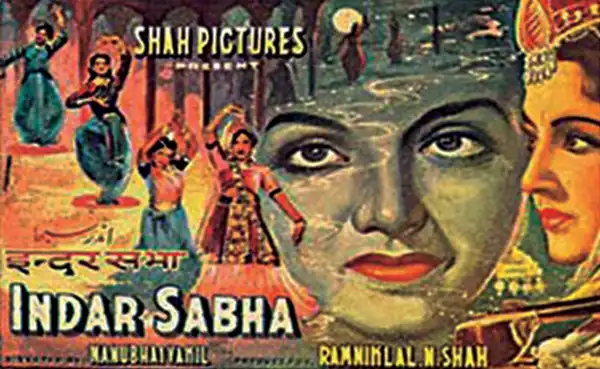
A definitive 7.3/10 rating for a film that redefined the boundaries of cult cinema. Indrasabha remains a cornerstone of transgressive art.
Is Indrasabha worth tracking down today? Well, that's a tricky one. If you're into old-school fables, stories about virtue getting tested, and a bit of theatrical flair, then yeah, there's definitely something here for you. Folks who appreciate silent era or very early talkies for their historical value might find it quite interesting.
But if you're expecting modern pacing, slick effects, or deep character arcs, you'll probably find it a bit of a slog. It’s a niche taste, for sure. 🤷♀️
The king, played by Nissar, starts off almost too perfect. You just know he’s going to get tested. There's this one scene where he's listening to a plea, and his face... it's just pure, unadulterated compassion. It almost feels staged, but then again, it's a fable.
The idea of celestial powers sending a fairy? That's pretty cool. The movie doesn't spend a ton of time on why they do it, just that they do. It's just a given.
Jehanara Kajjan as the disguised fairy is probably the most interesting part. She has this way of looking at the king, like she's both desperate and knowing. You can almost see her trying to hold back a smirk sometimes. It’s subtle, but it's there.
There's a moment when the king first sees her, looking all forlorn. The camera lingers for a beat too long, and you can practically feel the movie saying, "Okay, this is *the* moment." It’s not graceful, but it gets the point across.
The way the "test" unfolds is less about big dramatic confrontations and more about small, moral choices. It's about his inherent goodness, I guess.
Some of the dialogue, even if it's sparse (depending on if it's a talkie or not – I should assume it's early talkie or silent with intertitles given the context), feels very much like a stage play. Grand pronouncements. Less natural conversation.
Mukhtar Begum's performance, I mean, it's mostly in her eyes. She doesn't have a lot of lines, but she conveys a surprising amount with just a glance.
The sets are... well, they're clearly sets. You don't get lost in the world building. It's more about the symbolic space. The king’s court feels a bit cramped, honestly.
There's this one shot of the fairy, after she's revealed, and her costume is just *so* much more elaborate. It's a nice visual contrast to her earlier "distressed" look. A little obvious, but effective.
The moral dilemma itself, it’s not super complex by today’s standards. It’s quite straightforward: will the good king remain good? Still, it's *the* hook.
I liked how it didn't try to make the fairy outright *evil*. She's just doing her job, in a way. A divine agent. That little bit of ambiguity makes her more interesting than a straight villain.
The pacing is definitely of its era. Things move slowly, then suddenly a decision is made. It’s not about building suspense in a modern way. More like watching a fable unfold, step by step.
Sometimes, the musical score (if any, again, assuming early sound) just swells a bit too much, trying to tell you how to feel. A bit heavy-handed, honestly. 🎻
The end, it wraps up exactly how you'd expect a fable to. No real surprises there. It's all about reaffirming the king's virtue. It’s a very *neat* ending.
You can tell the filmmakers really cared about the *message* here. The story of justice and mercy. It’s almost didactic.
Abdul Rehman Kabuli's role felt a little understated, but he was important for showing the king's interactions with his subjects. Just a solid supporting presence.
The film kinda just *ends*. No big flourish, just... poof, moral learned. It leaves you thinking, "Okay, that's it then." Which is fine. Not everything needs a post-credits scene.
The whole idea of divine intervention feels very matter-of-fact. No one questions *why* the gods are doing this. They just are. It’s refreshing in its simplicity.
I guess the real appeal here is seeing how these classic stories were told on screen back then. It's less about the shock and awe, more about the storytelling tradition itself.
IMDb —
1917
Community
Log in to comment.