DbcultAccessing Vault...
Cult Review
Senior Film Conservator
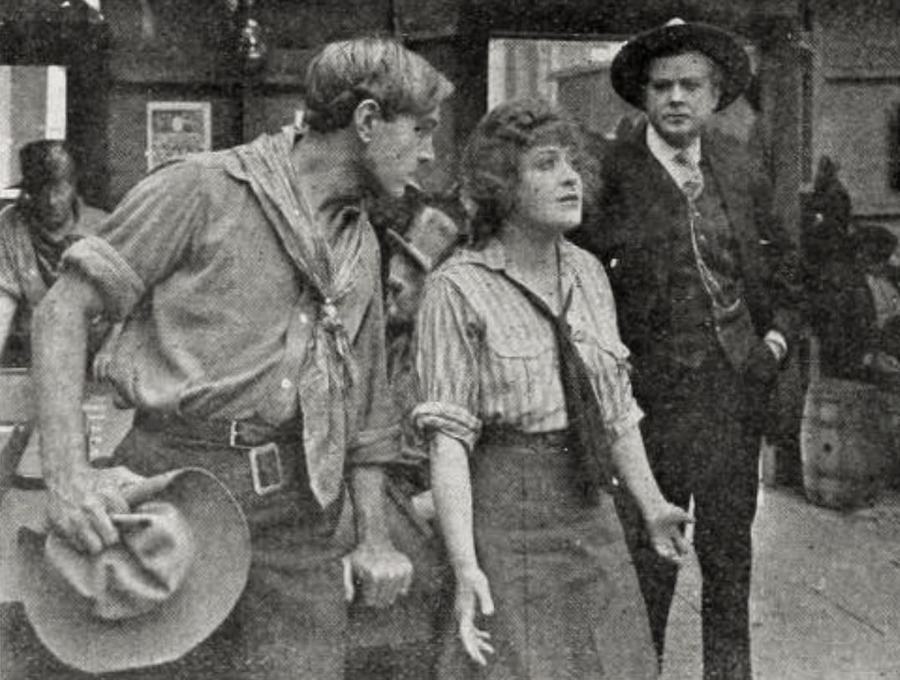
A nitrate fever dream flickering at the edge of extinction, Judge Not; or the Woman of Mona Diggings survives only in rumor and a brittle paper continuity uploaded to aging servers—yet its ghosts stalk the mind far longer than many a pristine 4K behemoth. Shot in the bruised twilight of 1915, when Hollywood was still a sun-drenched orchard of lemon groves and scandal, this ten-reel morality play fuses frontier sweat with urban gaslight, producing a soot-black pearl whose iridescence is guilt.
Director Robert Z. Leonard—years before he draped Garbo in velvet—here works in the key of smoke and kerosene. His camera (wielded by future western pillar Harry Carey, moonlighting as both cinematographer and grizzled bit-player) glides across Mona Diggings’ main drag: a artery of splintered boardwalk where piano jingles drip like molasses into the sawdust. Every frame feels dipped in cyanide-laced whiskey; even daylight scenes carry the metallic tang of impending thunder.
Julia Dean’s Molly arrives with a spine curved not by submission but by calculation. Watch her eyes during the sham wedding: they flick toward the door, measuring escape vectors even as lips murmur “I do.” Dean, a Broadway import who never quite cracked the Hollywood firmament, gives a masterclass in micro-gesture—the way her knuckles blanch when Kirk pockets the ring, how she exhales relief when the minister mispronounces her surname, invalidating the sacrament in her soul long before the law will.
Compare her to the dime-novel angels populating The Woman Who Dared or the saintly sufferer of The Little Gray Lady: Molly is flame itself, curling around every moral beam until it chars. The film refuses to punish her appetite for survival; instead it interrogates the pious wallets who assume poverty equals virtue’s absence.
Paul Machette, gaunt and dapper in equal measure, plays Kirk like a music-box that occasionally coughs up razor blades. His seduction is all indirect lighting: a hand on the small of Molly’s back guiding her past roulette tables, a whispered promise that tomorrow will fold itself into her palm if she just bets boldly enough. The genius lies in how Machette lets desperation seep through the lacquer—notice the twitch beneath his eye when Miles Rand mentions his father’s judgeship, the way he over-raises the bet, revealing the amateur beneath the sharkskin.
Kirk’s presumed death—engulfed in a conflagration that consumes gilt cherubs and crooked faro layouts alike—should feel operatic, yet Leonard stages it with chilling economy: a curtain of orange light reflected in a shot glass, then darkness. The film trusts our imagination to supply the screams, a restraint modern spectacle too rarely hazards.
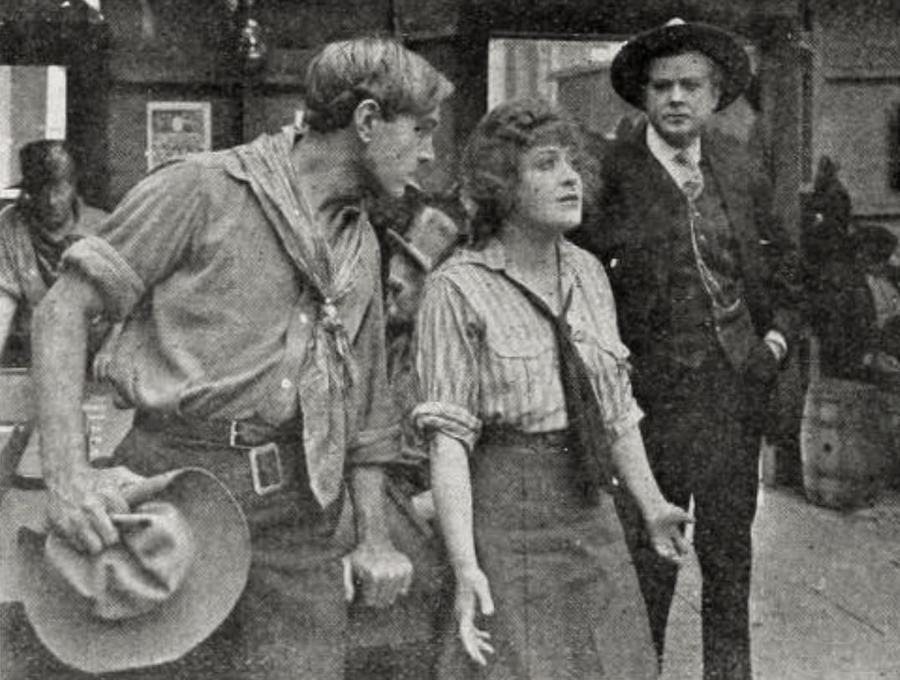
Harry Carey trades his usual saddle leather for tailored broadcloth, and the transformation is startling. Early scenes find Miles staggering drunk through the mining camp, collar unbuttoned like a promise already broken. Carey’s tall frame looms with self-disgust, yet when he accepts Molly’s loan—those crumpled bills moist from her palm—their fingers brush and the moment crackles with erotic debt.
The Eastern act sees him reborn: hair slicked, vowels clipped, ambition crystallized into prosecutorial granite. Still, watch his Adam’s apple bob when Molly reappears in the courtroom gallery; the west, with all its moral quicksand, rises in his throat. Carey’s final summation—delivered in intertitles reportedly ghost-written by suffragette journalist Harvey Gates—argues that “a woman may kill to bury the man who forged her soul’s signature, yet leave the world a brighter place.” It’s a radical thesis for 1915, one that predates the Dzieje grzechu cycle’s feminist jurisprudence by a full decade.
Cinematographer Kingsley Benedict (who later photographed The Red Circle) lights faces as if each pore might confess. Interiors alternate between flickering tallow—which smears shadows across cheekbones like coal streaks—and the harsh new glow of carbon arcs, turning courtroom marble into an antiseptic altar. The tonal swing mirrors Molly’s journey from murky transaction to harsh revelation.
Leonard employs double exposures during Molly’s testimony: while her lips move in the foreground, translucent memories float above—Kirk’s silhouette at the window, the wedding’s broken mirror—creating a palimpsest of trauma that predates Memoria dell’altro’s layered flashbacks by over a century.
Beneath its potboiler skin, Judge Not is a meditation on liquidity—how money liquefies virtue, how women must transmute flesh into capital to survive. Molly’s carpetbag of stolen cash is never shown in full; we glimpse only a corner of green pressing against worn calico, like an organ about to prolapse. The film refuses to condemn her theft; instead it indicts the society that leaves a widow only two currencies: hymen or hustle.
Compare this to the White Pearl adventure yarns where treasure maps lead to moral clarity; here the map is Molly’s own body, its X-mark shifting with every male gaze.
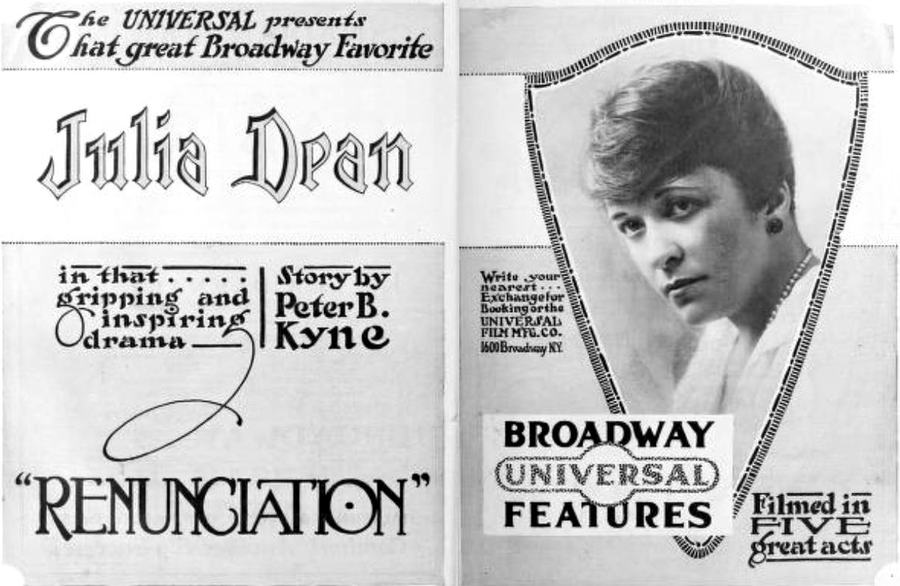
The last confirmed print vanished in the 1935 Fox vault fire, its emulsion curling into a black rose of acetate. Yet ephemera persists: a lobby card on eBay (misfiled under Mona Diggings Comedy), a cue sheet marked “thunder—timpani, low A”, a 1922 censorship ledger from Saskatchewan labeling the film “immoral for implying female agency in homicide.” These fragments tantalize archivists the way Kirk’s ring tantalizes Molly—shiny, poisonous, irresistible.
Rumors swirl of a 16mm abridgment struck for South African itinerant cinemas, its intertitles Afrikaans-laced. Until a print surfaces, we piece the narrative together from trade-paper précis and the surviving screenplay held by the Margaret Herrick Library, pages foxed but breathing.
The original score, a sprightly medley of “Oh! Susanna” and “A Hot Time in the Old Town,” clashes deliciously with the film’s noir undercurrents. Contemporary reviewers complained the jaunty brass mocked Molly’s anguish. One wonders how a modern restoration might approach it—perhaps a discordant string quartet scraping like a dull knife, akin to the atonal assault Jonny Greenwood would unleash a century later.
Unlike the didactic morality tales of Joseph in the Land of Egypt, Judge Not eschews divine deus-ex-machina; Molly’s salvation is forged in the crucible of her own confession. Its DNA reverberates through Behind the Scenes (1916) where another woman navigates the machinery of male patronage, and echoes in the cyclical damnation of Sodoms Ende, though that film swaps gold-rust for Weimar despair.
Should a print ever emerge from some Antwerp attic or Buenos Aires basement, Judge Not would land like a meteor in contemporary discourse—its cocktail of feminist jurisprudence, class warfare, and proto-noir fatalism more potable now than in its own era. Until then, we sift the ashes, inhaling phantom nitrate, feeling the heat of Molly’s pistol flash across a century’s dark.
“To judge another is to burn the map before the territory has even revealed its ravines.”
—intertitle from the final reel, preserved in the Moving Picture World synopsis, May 15, 1915
Seek this film not in vaults but in the negative space of every modern thriller where a woman’s past is weaponized against her. There, in the flicker between cuts, Molly Hanlon still walks, carpetbag in hand, eyes hard as claim pewter, daring us—judge not.
Community
Log in to comment.