DbcultAccessing Vault...
5.4/10
Senior Film Conservator
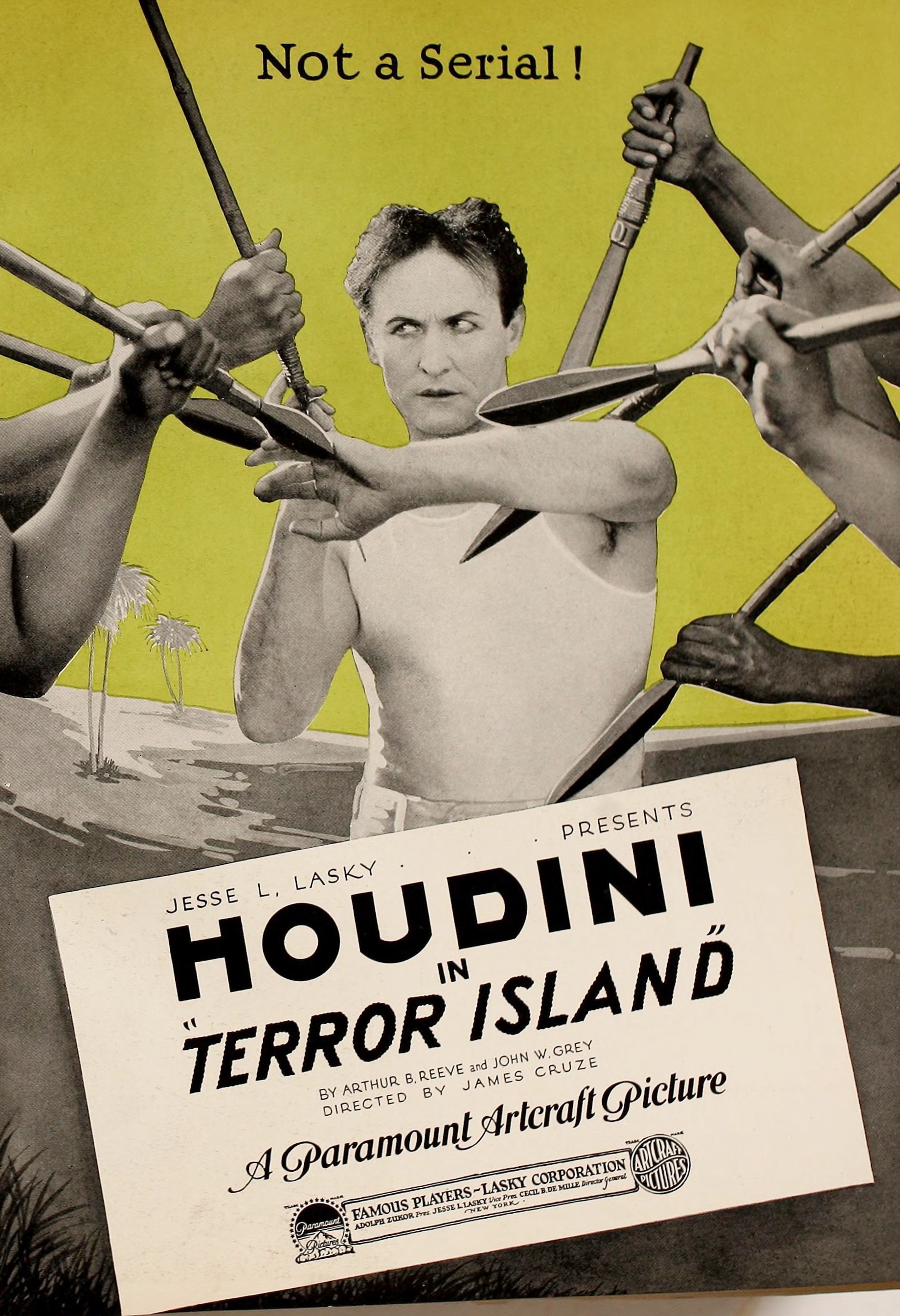
A definitive 5.4/10 rating for a film that redefined the boundaries of cult cinema. Terror Island remains a cornerstone of transgressive art.
The year 1920 represented a pivotal intersection in the evolution of mass entertainment, where the fading embers of vaudeville collided head-on with the burgeoning dominance of the silver screen. In this volatile cultural landscape, Harry Houdini—a man whose very name had become synonymous with the defiance of physical boundaries—sought to translate his stage-bound thaumaturgy into the permanent record of celluloid. Terror Island, directed by the prolific James Cruze, stands as a fascinating, if occasionally fragmented, testament to this ambition. It is a film that breathes the salty air of the South Seas while simultaneously humming with the electrical potential of early 20th-century invention. Unlike the more ethereal or psychological explorations found in contemporary works like The Dream Doll, this picture is rooted in the visceral, the tactile, and the perilously real.
Houdini’s performance as Harry Harper is less an exercise in dramatic nuance and more a display of charismatic athleticism. By 1920, the audience didn't come to see Houdini weep or pine; they came to see him struggle against the impossible and emerge unscathed. The screenplay, co-penned by Walter Woods and Arthur B. Reeve (the mind behind the Craig Kennedy detective stories), understands this implicitly. Harper is introduced not merely as a hero, but as an engineer of his own destiny, utilizing a sophisticated submarine—a marvel of production design for the era—to navigate the treacherous depths. This focus on technology offers a sharp contrast to the more grounded, often grittier urban narratives found in films like Lights of New York, which would later define the transition to sound.
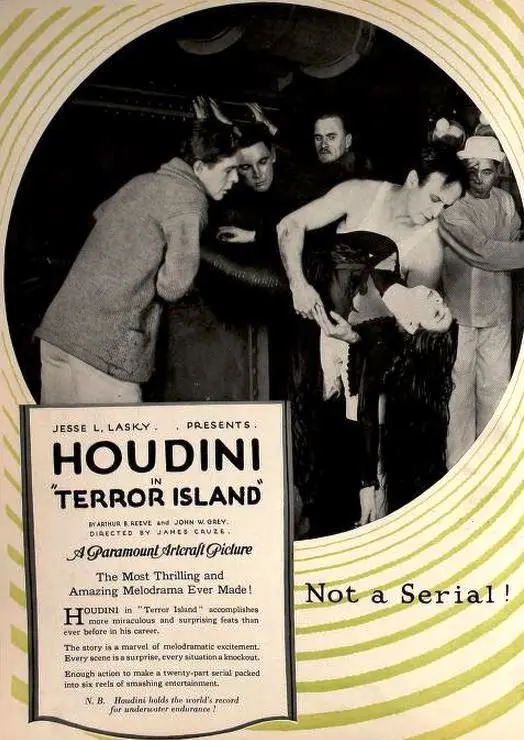
The casting of Lila Lee as Beverly West provides the necessary emotional ballast to Houdini’s kinetic energy. Lee, who would later shine in diverse roles across the decade, brings a sincerity to the role of the daughter in distress that prevents the film from devolving into a mere series of stunts. Her chemistry with Houdini is surprisingly tender, offering a respite from the relentless pacing of the adventure. When compared to the melodramatic intensity of Black Orchids, Terror Island feels more buoyant, driven by a pulp sensibility that prioritizes movement over brooding atmosphere.
Technically, the film is a marvel of its time. James Cruze, who would later direct the epic The Covered Wagon, demonstrates an early mastery of spatial logistics. The sequences involving the submarine and the subsequent underwater rescue are choreographed with a clarity that was often lacking in silent-era action sequences. There is a palpable sense of weight and resistance in the aquatic scenes; the water is not merely a backdrop but a character in its own right—a suffocating, unforgiving force that only a man of Harper’s (and Houdini’s) caliber could hope to conquer. This use of environment as a primary antagonist is far more sophisticated than the theatrical sets seen in Erträumtes.
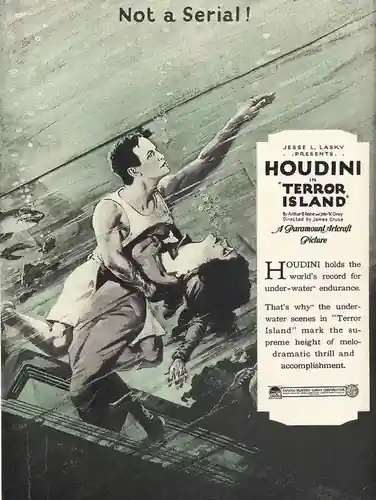
The centerpiece of the film—the escape from the locked safe submerged in the ocean—remains one of the most iconic images in silent cinema. It is here that the film transcends its genre trappings and becomes a documentary of sorts, capturing the genuine physical risk that Houdini was willing to endure for his craft. The editing in this sequence, likely influenced by the rapid-fire techniques beginning to emerge in international cinema, creates a mounting sense of dread. We see the bubbles escaping the iron box, the frantic movements of the captors above, and the serene, yet deadly, silence of the deep. It is a masterclass in tension that rivals the dramatic crescendos of Les Misérables, Part 1: Jean Valjean, albeit in a vastly different register.
While the film’s technical merits are undeniable, its narrative architecture is firmly rooted in the tropes of its time. The depiction of the South Sea islanders as a monolithic, cannibalistic threat is a relic of colonialist anxieties that permeated early 20th-century fiction. This "othering" of non-Western cultures was a standard shorthand for danger in the era of The Ranger and other frontier-style adventures. However, within the context of Terror Island, these elements serve as a heightened, almost mythic backdrop for the struggle over the idol’s pearl. The pearl itself is a quintessential MacGuffin, a shimmering catalyst that drives the characters across the globe and into the jaws of death.
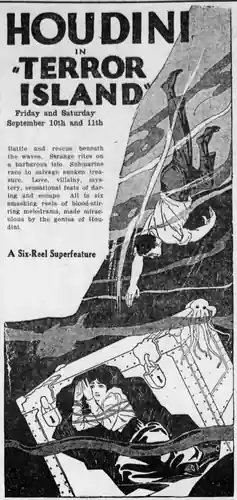
The supporting cast, including Rosemary Theby and Eugene Pallette, fill their roles with a professional competence that rounds out the ensemble. Pallette, in particular, provides a ruggedness that complements Houdini’s more refined inventor persona. The interplay between these characters suggests a world that extends beyond the frame, a quality sometimes missing in more insular dramas like Damaged Goods. There is a sense of camaraderie and shared mission that propels the second act toward its explosive finale.
Reflecting on Terror Island over a century later, one is struck by the sheer audacity of its production. In an age before digital trickery, the spectacle was derived from the sweat and sinew of the performers. When Houdini leaps from a burning mast or grapples with a shark, there is a verisimilitude that modern blockbusters often struggle to replicate. This physicality is what connects the film to the raw human struggle depicted in Man's Desire or the grit of Children of Banishment.
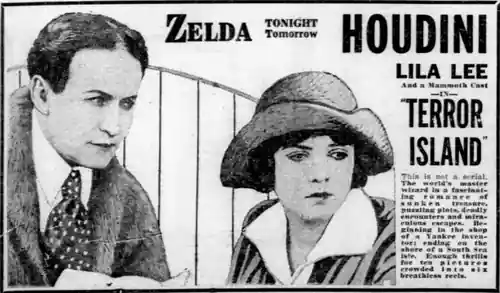
The film also serves as a fascinating precursor to the adventure serials of the 1930s and 40s. The structure—a series of escalating perils leading to a climatic confrontation—would become the blueprint for everything from Flash Gordon to Indiana Jones. While it lacks the social commentary of Gretchen the Greenhorn or the sophisticated wit of Stage Struck, it possesses a pure, unadulterated sense of wonder that is the hallmark of great silent cinema. It is a reminder that, at its core, the medium of film began as an extension of the magic show—a way to make the impossible visible.
The writing by Walter Woods and John Grey ensures that the pacing rarely flags. They weave together the disparate elements of the plot—the invention of the submarine, the family secret, the island ritual—into a cohesive whole that rewards the viewer’s attention. Even when the plot leans into the implausible, the conviction of the performers carries it through. This is not the delicate character study of Fuss and Feathers; it is a full-throttle sprint through the imagination of the 1920s.
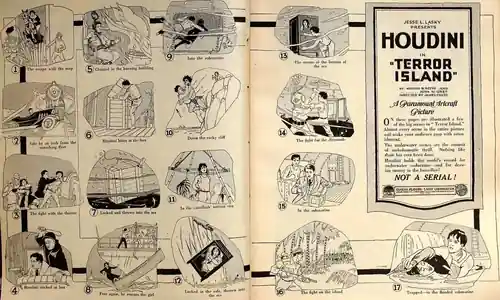
Ultimately, Terror Island is defined by the enigma of Houdini himself. On stage, he was a master of misdirection; on film, he was forced to be a man of action. This transition required a different kind of presence, one that he navigates with surprising grace. His movements are precise, his gaze intense, and his physical control absolute. While he would eventually move away from the film industry to focus on exposing fraudulent spiritualists—a pursuit that mirrors the investigative spirit of Behind the Mask—his brief tenure in Hollywood left behind gems like this that capture his essence in a way no biography could.
The film’s climax, involving the return of the pearl and the narrow escape from the island as it is besieged by a volcanic eruption (rendered with impressive miniature work), serves as a fittingly grand finale. It encapsulates the film’s ethos: the triumph of human ingenuity and courage over the chaotic forces of nature and the unknown. In this regard, it shares a thematic DNA with The Seed of the Fathers, though it trades that film’s somber tone for a more adventurous spirit.
In conclusion, Terror Island is more than just a historical curiosity or a vehicle for a world-famous magician. It is a vibrant, breathing example of the silent era's capacity for spectacle and its obsession with the frontiers of the world and the mind. It invites the audience to dive into the deep, to face the unknown with a steady hand and a clever mind, and to believe, if only for an hour, that no lock is unpickable and no prison is permanent. Whether compared to the detective intrigue of Mistinguett détective or the high-seas drama of its contemporaries, it remains a singular achievement in the career of a man who spent his life escaping the ordinary.
A quintessential artifact of 1920s adventure cinema, Terror Island is a visceral showcase of Harry Houdini's physical genius. While its narrative follows the well-worn paths of period pulp, its technical execution and the sheer audacity of its stunts ensure its place in the pantheon of silent-era spectacles. A must-watch for historians of the medium and fans of classic adventure alike.
IMDb —
1935
Community
Log in to comment.