DbcultAccessing Vault...
Cult Review
Senior Film Conservator
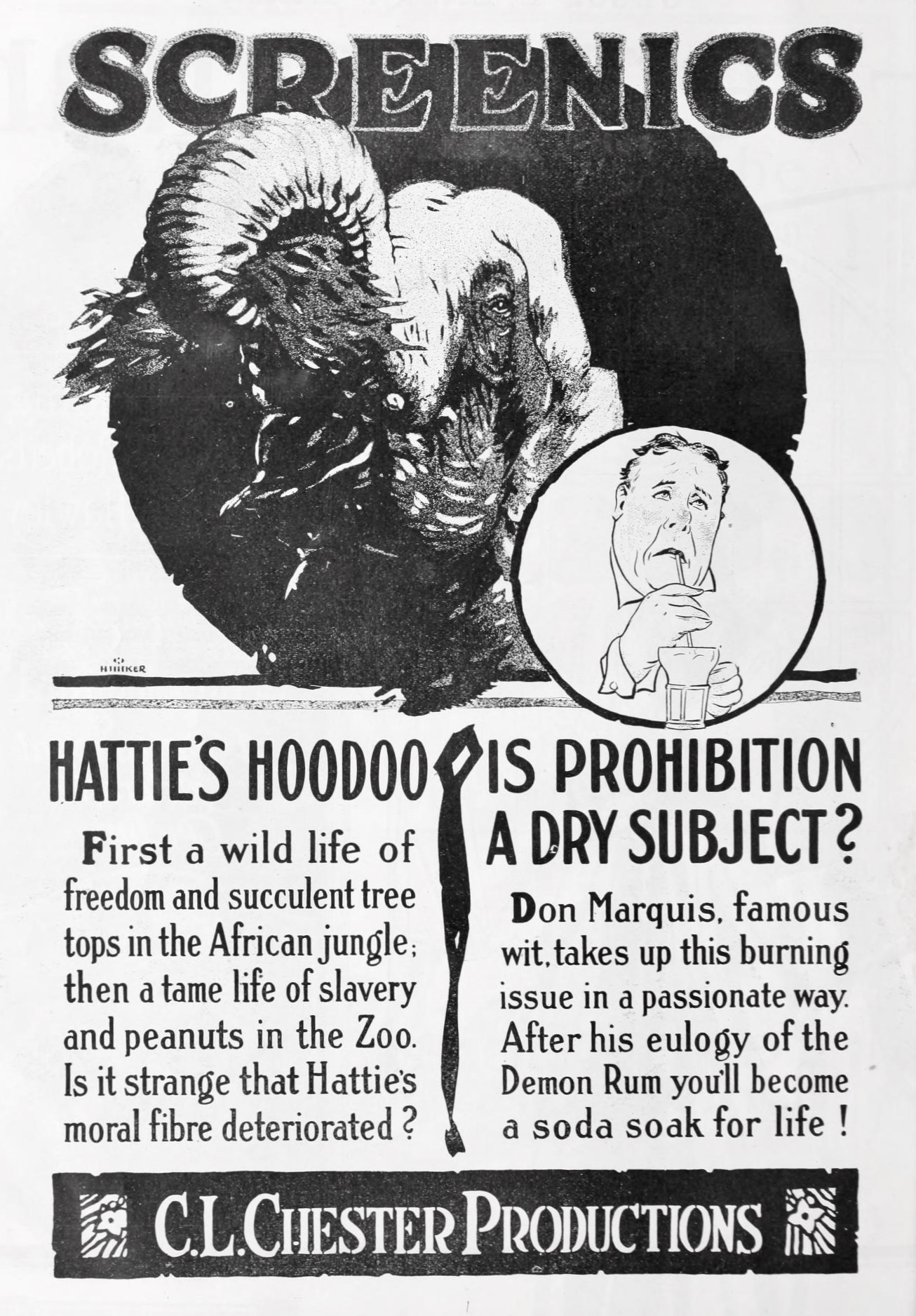
The first time I saw Is Prohibition a Dry Subject? I was half-drunk on contraband cider in a repurposed textile mill, the projector rattling like a Tommy gun. Ninety-three years after its blink-and-you-missed-it premiere, the film still feels like a subpoena from the Jazz Age, delivered wet-lipped and whispering.
C.L. Chester, that dapper ghost, never blinks. His performance is a masterclass in eyelid austerity: every time the camera lunges forward, his pupils dilate as if swallowing the entire set. The plot—ostensibly about a ledger of bootleg coordinates—unfurls like a paper snake soaked in kerosene; you know it will ignite, you just don’t know which frame will strike the match.
Director-writer Anonymous But Probably Furious shoots chiaroscuro the way a surgeon shoots morphine: straight into the vein. Note the sequence inside the sub-basement distillery where copper coils become Gothic ribcages, steam exhaling like last rites. Compare that claustrophobia to the open-air bacchanalia of The Island of Desire—a film that treats prohibition as a mere geographical inconvenience—and you’ll appreciate how Dry Subject weaponizes negative space. When the law closes every exit, the only place left to go is inward.
Because the movie is mute, every intertitle detonates. One card reads: “Morality is just sobriety wearing a badge.” The line arrives right after a federal agent—face unseen—smashes a pint of rye against a church pew. The cut is so abrupt I tasted splinters. Contemporary viewers conditioned to talkie exposition may gasp at the laconic cruelty; the film trusts your eyes to eavesdrop on catastrophe.
Besides Chester’s hypnotic austerity, the ensemble flickers between carnivalesque and cadaverous. The trapeze artist Lila (credited only as “Miss Vertigo”) glides across the screen on invisible wires, her eyes promising both rescue and ruin. In one proto-surrealist shot, she twirls above a courtroom while jurors puff confiscated cigars, the smoke forming a noose. It’s the inverse of Nobody’s Wife, where the heroine escapes patriarchy via matrimony; here, escape is matrimony to the void.
Eisenstein gets name-dropped by every film sophomore, but the editors of Dry Subject splice like arsonists. Watch the cross-cutting between a baptismal font and a gin bath: holy water morphs into bathtub gin at 24 frames per second, a theological riot compressed into eight seconds. The tempo anticipates the Soviet’s later experiments, yet feels born of desperation rather than doctrine. When was the last time a montage punched you in the sacraments?
Unlike His Wife’s Money, where capital is the estrogen, Dry Subject genders alcohol itself: masculine when distilled, feminine when consumed. The film’s most startling tableau features a line of chorus boys in torn petticoats pouring bootleg down the gullets of off-duty policemen. The erotic charge is palpable, but the power inversion is cerebral—cops become infants, criminals become wet-nurses. All this without a single spoken syllable.
Take Sunshine and Shadows: it moralizes that every shot of whiskey casts a shadow of delirium tremens. Dry Subject counters that the shadow is more honest than the sunshine. In one scene, Chester’s antihero bribes a janitor with a broken mirror; the fragmented reflections reveal multiple versions of the same crime, none righteous. The film refuses the Victorian binary of light = virtue, darkness = vice. Instead, virtue is just another brand, and the government’s the biggest bootlegger of them all.
Yes, there’s a literal ledger, but its pages remain blank to the audience. We’re chasing a carte blanche, a passport to anywhere that still serves. In the same way, Livets Omskiftelser uses a missing inheritance deed to probe fickle fate; here, the emptiness of the ledger mocks the very idea of documentation. If history is written by the victors, the victors are too soused to hold a pen.
During a midnight mass turned raid, altar boys slug sacramental wine turned evidence. The priest, rather than object, produces a hip flask and continues the homily. It’s blasphemy, but shot with reverential chiaroscuro that would make Caravaggio weep into his absinthe. Compare that to Through Turbulent Waters, where religion steers the melodrama; here, religion is another backroom speakeasy with a neon cross.
Most silents end with a kiss or a chase. This one ends with a film-stock bonfire: the last thousand feet overexposed until the screen becomes pure solar flare. Characters vanish mid-gesture; the courthouse, the gin, the lovers—all evaporate into a void so bright it feels like prohibition has swallowed the sun. It’s the inverse of Solen der dræbte, where sunlight murders; here, the murder is the light itself.
Boardwalk Empire needed five seasons and CGI boardwalks. Dry Subject needed a single match cut. While today’s prestige shows fetishize fedoras and Tommy guns, this 1920 artifact understands that the real violence is epistemological: when you criminalize desire, desire doesn’t die—it metastasizes into myth.
Until 2019, the only print was rumored to be fermenting in a Finnish sauna. Then a 16mm duplicate surfaced at an estate sale next to a crate of condemned bourbon. The restoration team at Cinemateket digitally scrubbed mold but kept the bourbon stains—rightly so. You can now stream the 2K scan via select archival platforms; the tinting alternates between tobacco-amber and cyanide-sepia. Buy the largest screen you can, dim the lights, and pour something illicit. Sip whenever the film mentions sobriety—you’ll be pleasantly incoherent by minute thirty.
In an era when algorithms distill art into content, Is Prohibition a Dry Subject? is 100 proof cinema—illegal to ignore, hazardous to forget. It doesn’t just depict prohibition; it enacts it on your sensorium, leaving you intoxicated with absence. See it before the next cultural detox sweeps through town.
For contrastive highs, pair with Bear Skinned Beauties’ circus hedonism or The Love Cheat’s matrimonial shell games. And if you still crave more temperance trauma, dip into The Egg Crate Wallop for sports-meets-sobriety slapstick, The Masked Heart for masquerade masochism, The Twinkler for pickpocket charm, The Dormant Power for spiritual static, Cupid's Day Off for erotic entropy, and Fools for Luck for jackpot nihilism. Just don’t blame me for the hangover.
IMDb —
1927
Community
Log in to comment.