DbcultAccessing Vault...
Cult Review
Senior Film Conservator
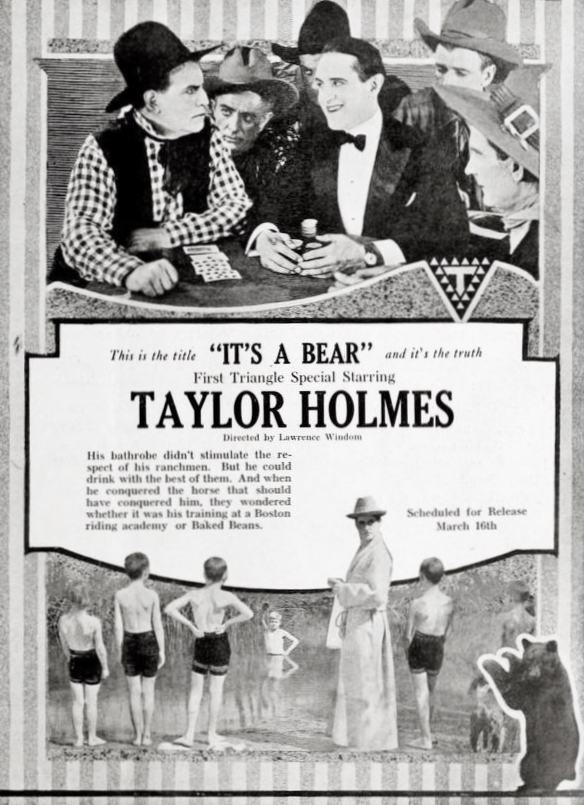
Stepping back into the nascent days of cinema, we encounter films that, despite their age, possess a vibrant spirit and an uncanny ability to subvert expectations. One such gem is the 1919 silent feature, 'It's a Bear'. Far from a mere historical curiosity, this picture, penned by Norman Jacobsen and Nina Wilcox Putnam, with its captivating blend of comedic fish-out-of-water tropes and burgeoning Western adventure, offers a surprisingly sophisticated commentary on identity, societal pressures, and the untamed allure of self-discovery. It's a testament to the era's storytelling prowess, delivering a narrative that is both uproariously funny and subtly profound.
At the heart of 'It's a Bear' lies the utterly charming and initially bewildering character of Orlando Winthrop, brought to life with understated brilliance by Howard Davies. Orlando is introduced as the quintessential Bostonian scion, a figure of refinement whose greatest transgression, in his wealthy father's eyes, is his passionate pursuit of entomology. This seemingly innocuous hobby becomes a symbol of his quiet rebellion against a life pre-ordained by privilege and expectation. Davies imbues Orlando with an intellectual curiosity that feels genuinely at odds with the staid world he inhabits, foreshadowing the dramatic transformation to come. His father's distress over his son's 'unmanly' interests speaks volumes about the rigid social conventions of the time, making Orlando's journey not just a physical one to the West, but a profound psychological escape from the gilded cage of his upbringing.
The catalyst for Orlando's grand adventure is a book, a seemingly innocuous volume offering the enigmatic advice to 'get the drop on the other fellow.' This maxim, initially vague, becomes Orlando's guiding principle, propelling him towards the rugged landscapes of Wyoming and his family's sheep ranch. His mission: to investigate the disquieting rumors surrounding the foreman, William Cogney. This premise cleverly sets the stage for a classic clash of cultures and personalities. Orlando arrives in Wyoming a vision of incongruity – impeccably, yet inappropriately, dressed in his finest Eastern attire, complete with golf clubs, an emblem of leisure utterly out of place amidst the dust and grit of the frontier. The immediate reaction from the ranch cowboys, who parade him through town as an object of ridicule, is entirely predictable, yet it serves to highlight the vast chasm between Orlando's world and theirs. This initial humiliation, however, is merely the prelude to a series of dazzling reversals that define Orlando's character arc.
What makes 'It's a Bear' so refreshingly original is its playful deconstruction of the burgeoning Western genre. Instead of a hardened cowboy or a grizzled prospector, our hero is an intellectual, a man of quiet observation rather than overt aggression. Yet, Orlando demonstrates an unexpected aptitude for the very skills the cowboys pride themselves on. The poker game is a masterclass in silent film comedy, as Orlando, with a poker face born of academic concentration, bluffs the seasoned ranch hands into submission. It's a victory not of brute force, but of shrewd intellect and a keen understanding of human psychology – truly 'getting the drop' on his opponents. This scene, devoid of dialogue, relies entirely on Davies' subtle expressions and the reactions of the bewildered cowboys, proving the enduring power of visual storytelling.
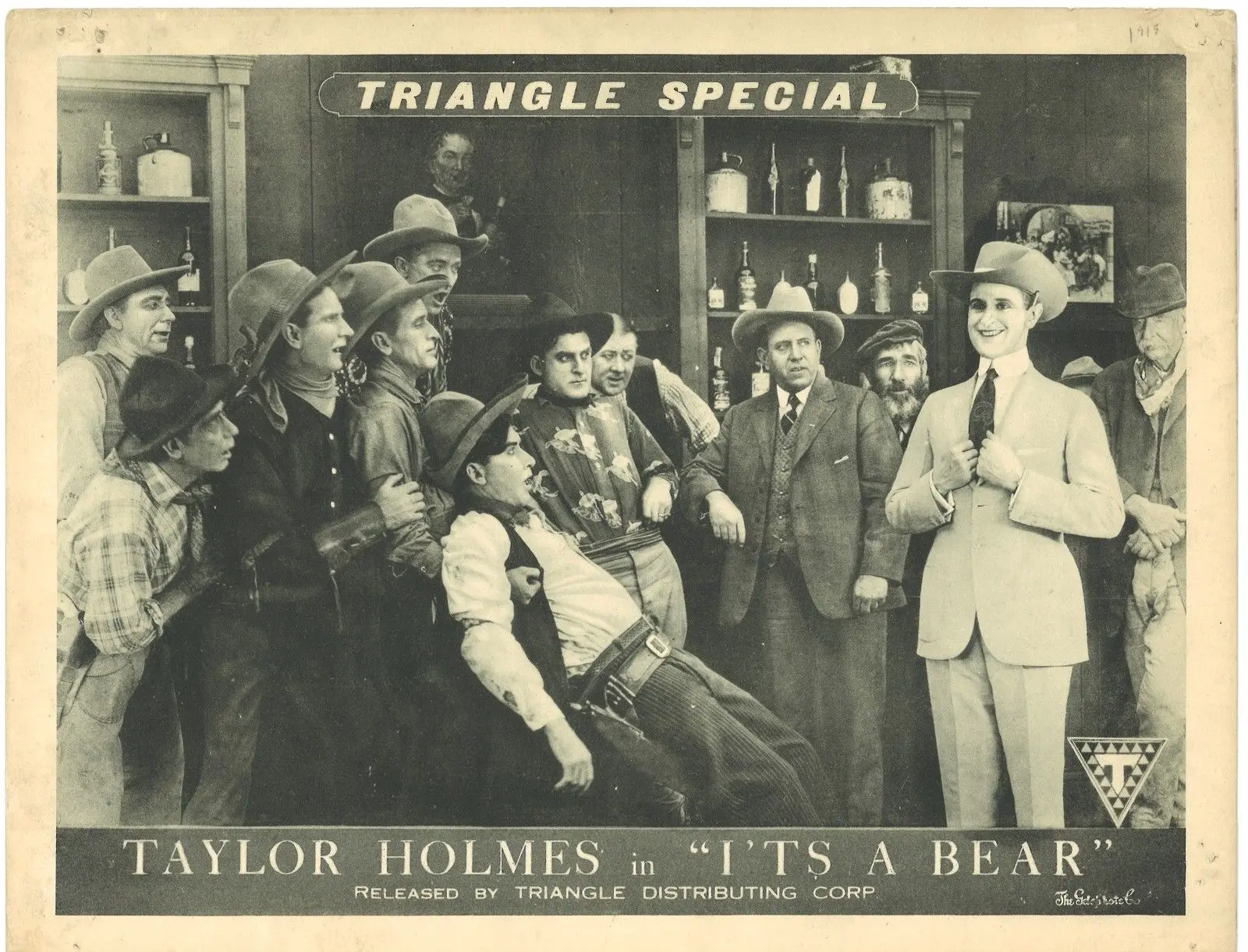
His subsequent triumph in an impromptu drinking contest further cements his unexpected prowess, challenging the very notion of what constitutes 'manliness' in the rugged West. But the ultimate test, the symbolic initiation into the cowboy creed, comes with the bucking bronco. The image of the refined entomologist, initially a figure of ridicule, not only mounting but successfully riding the wild horse, is a powerful visual metaphor for his internal transformation. It's a moment of pure, exhilarating triumph, signaling that Orlando is no mere dilettante but a man capable of adapting, learning, and, most importantly, surprising everyone, including himself. This sequence could easily draw thematic parallels to other films exploring character transformation through unexpected challenges, such as the journey of self-discovery in something like A Bit of Kindling, though 'It's a Bear' infuses its arc with a unique brand of whimsical bravado.
The film's titular moment, the 'bear' incident, is arguably its most iconic and a stroke of comedic genius. During a hunting expedition, the cowboys, still harboring resentment and a desire to humble Orlando, attempt to scare him with a crudely deployed stuffed bear. The scene is set for a predictable fright, but 'It's a Bear' gleefully pulls the rug out from under convention. Orlando's nonchalant emergence from the woods, not scared but followed by a very much alive, and evidently trained, bear (played by the remarkable Bessie the Bear), is a moment of sublime, deadpan comedy. It's a revelation that completely recontextualizes Orlando's character. He isn't just physically capable; he possesses an unconventional mastery over nature, a quiet confidence that stems from understanding rather than brute force. This scene brilliantly encapsulates the film's central theme: that true strength and capability often manifest in unexpected forms, far removed from the stereotypical notions of frontier machismo.
Bessie the Bear herself deserves a special mention. Her performance, guided by invisible cues, adds an unparalleled layer of charm and absurdity to the narrative. The sheer audacity of featuring a trained bear as a comedic foil and a symbol of the protagonist's unique power is a testament to the creative risks early filmmakers were willing to take. This moment perfectly illustrates Orlando's philosophy of 'getting the drop on the other fellow' – he anticipates their childish prank and counters it with an utterly disarming display of his own, peculiar brand of wilderness wisdom. It’s a scene that would undoubtedly have brought the house down in 1919 and still elicits chuckles today.
Beyond the comedic escapades, 'It's a Bear' also features a genuinely compelling conflict. William Cogney, portrayed with suitable villainy by Taylor Holmes, represents the more conventional antagonist – a man driven by greed and deceit. His scheme to destroy a portion of the flock is a nefarious plot that Orlando, now fully integrated into his new environment and armed with his sharpened intellect and newfound physical capabilities, is uniquely positioned to thwart. The confrontation between Orlando and Cogney is the culmination of Orlando's journey. It’s a physical struggle, but it's also a battle of wits, where Orlando's strategic thinking, honed by his academic pursuits and now applied to real-world perils, proves decisive. He not only defeats Cogney in a fight but also unravels his destructive plan, cementing his role as the ranch’s unlikely savior.
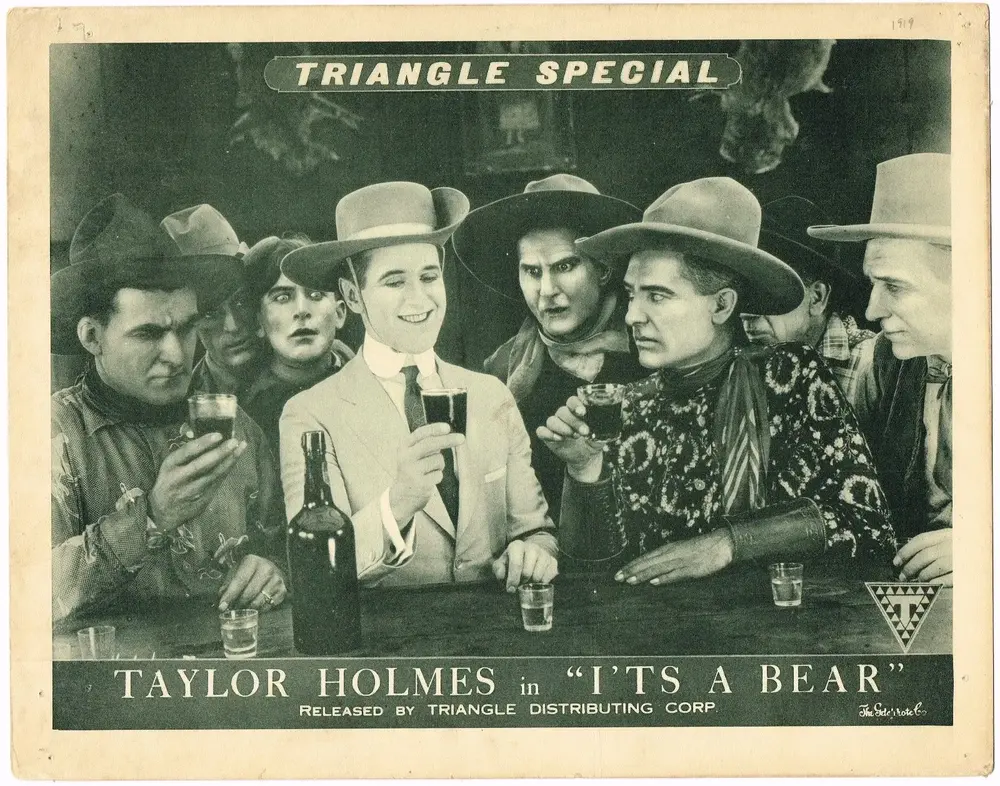
The film then brings Orlando’s past and present crashing together with the arrival of his disapproving father and his prim fiancée from the East. This scene offers another delightful comedic twist and the ultimate validation of Orlando’s transformation. His fiancée, upon witnessing her betrothed chew tobacco – a simple, rustic habit he has adopted – is utterly repulsed and breaks off their engagement. For Orlando, this is not a moment of heartbreak but of profound liberation. It’s a poignant rejection of the superficial expectations of his former life and an embrace of his authentic self. Howard Davies conveys Orlando's quiet delight with a nuanced performance, showcasing a character who has finally shed the constraints of his Bostonian upbringing. This freedom paves the way for a heartfelt connection with the town’s schoolteacher, played by Edna Phillips, a woman who, presumably, appreciates the multifaceted man he has become, a man equally comfortable with insects, broncos, and bears.
The success of 'It's a Bear' is undoubtedly rooted in the clever screenplay by Norman Jacobsen and Nina Wilcox Putnam. Their ability to weave together disparate elements – the intellectual pursuits of a Bostonian, the rugged demands of the American West, and a charmingly absurd comedic sensibility – speaks to a sophisticated understanding of narrative structure and character development. They crafted a story that, while lighthearted, subtly explores themes of class, identity, and the pursuit of individual happiness against societal pressures. The pacing of the silent film, relying heavily on visual gags, character reactions, and intertitles, is expertly handled, ensuring that the audience is always engaged in Orlando’s evolving predicament.
The cast, though part of an era often overlooked, delivers performances that are both expressive and nuanced. Howard Davies' Orlando is a revelation, a character who grows from a mild-mannered academic into a confident, unconventional hero. Taylor Holmes as William Cogney provides the necessary foil, his sneering villainy contrasting sharply with Orlando's understated charm. Vivian Reed and Edna Phillips, though given less screen time, effectively portray the societal expectations and the genuine affection, respectively, that frame Orlando's romantic journey. And, of course, Bessie the Bear is a scene-stealer, a testament to the ingenuity of early animal training in cinema. The visual language of the film, through its cinematography and direction (even without a credited director readily available, the visual storytelling is evident), effectively contrasts the refined interiors of Boston with the expansive, sun-drenched landscapes of Wyoming, underscoring Orlando’s physical and spiritual migration. The use of location shooting would have been crucial in lending authenticity to the Western setting, a trend that was rapidly gaining popularity in American cinema.
In an era where the Western was often defined by stoic heroes and clear-cut morality, 'It's a Bear' offers a refreshing alternative. It’s a film that celebrates the unexpected hero, the individual who defies categorization and finds strength in his unique qualities. Orlando Winthrop's journey from an entomology enthusiast to a bronco-riding, bear-taming, villain-defeating man of the West is a delightful and enduring narrative. It reminds us that true character is not defined by one's origin or societal expectations, but by one's adaptability, intellect, and the courage to embrace authenticity. The film’s humor remains surprisingly fresh, and its underlying message about self-acceptance resonates just as strongly today as it did over a century ago.
For those interested in the rich tapestry of early American cinema, and particularly the silent era's inventive storytelling, 'It's a Bear' is an essential watch. It's a charming, witty, and surprisingly insightful film that deserves to be rediscovered and celebrated for its unique contribution to the comedic Western genre. It stands as a testament to the power of a well-crafted story and memorable characters, proving that even without spoken dialogue, the magic of cinema can transport, entertain, and inspire across generations.
IMDb 7.2
1930
Community
Log in to comment.