DbcultAccessing Vault...
Cult Review
Senior Film Conservator
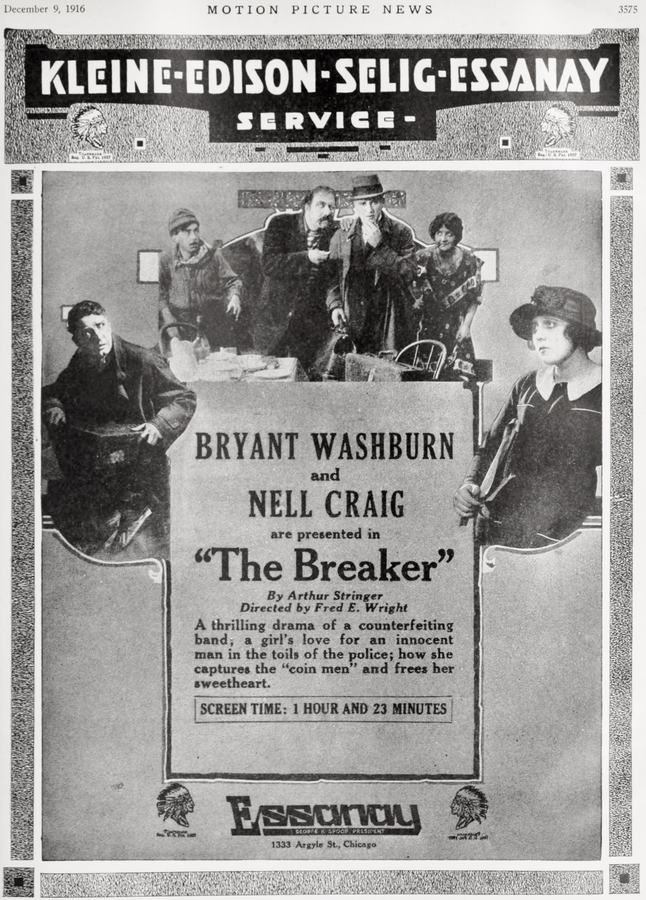
In the pantheon of early twentieth-century cinema, few films capture the intersection of intellectual ambition and physical deprivation as poignantly as The Breaker. Directed by Fred E. Wright and adapted from Arthur Stringer’s narrative, the film serves as a fascinating specimen of the 1916 zeitgeist. It is a period where the cinema was transitioning from mere spectacle to a sophisticated medium of social commentary. The setting—a dilapidated boarding house—is not merely a backdrop but a character in itself, echoing the psychological states of its inhabitants. Bryant Washburn, portraying John Widder, embodies the 'eccentric inventor' archetype with a nervous energy that feels remarkably modern. Unlike the stoic heroes of The Mysterious Man of the Jungle, Widder is a man defined by his vulnerabilities and his intellectual isolation.
The cinematography utilizes the limited space of the garret to create a sense of impending doom. As we observe Widder tinkering with his inventions, there is a palpable sense of the 'New World' struggling to be born from the ashes of the old. This theme of invention versus survival is a recurring motif in silent cinema, yet here it is twisted by the introduction of Piazzia, the counterfeiter. The act of counterfeiting serves as a dark mirror to Widder’s own creative impulses; where Widder seeks to create something new and beneficial, Piazzia seeks to replicate the existing power structure of capital through deception. This thematic duality elevates the film beyond a simple crime caper, placing it in conversation with more complex narratives like The Curious Conduct of Judge Legarde, where the boundaries of legality and morality are similarly blurred.
The pivotal moment of the film—the accidental swap of the portmanteaus—is handled with a Hitchcockian precision that predates the master himself. The suitcase, a classic MacGuffin, becomes the vessel through which the characters' lives are irrevocably altered. In many ways, the suitcase represents the volatility of the American Dream in the 1910s. One moment it contains the tools of an honest man’s trade; the next, it is filled with the illusory wealth of a criminal’s labor. This sudden shift in fortune is a trope often explored in comedies of the era, such as Shoe Palace Pinkus, but in The Breaker, the tone remains resolutely somber, emphasizing the weight of the choice Widder must make.
When Widder discovers the spurious currency, his reaction is not one of immediate greed, but of moral paralysis. It is only the presence of Alice Treadwell (Nell Craig) that pushes him toward transgression. The film skillfully portrays Alice not as a femme fatale, but as a victim of the industrial machine. Her work—typing medical treatises—is a brilliant narrative choice. It suggests a life spent documenting the ailments of others while her own life withers away in poverty. The 'medical' nature of her work adds a layer of sterility and coldness to her environment, contrasting sharply with the warm, albeit misguided, impulse that leads Widder to cash the first counterfeit bill.
The true brilliance of The Breaker lies in its third-act revelation regarding Alice’s identity. Throughout the first two acts, Nell Craig plays the role of the struggling typist with such conviction that the audience is completely disarmed. She evokes the same pathos found in the lead characters of Cinderella or A Viuvinha. However, the reveal that she is an undercover Secret Service agent completely recontextualizes her previous interactions with Widder. Was her 'misery' a performance? Was her proximity to Widder a calculated move from the start? The film leaves these questions tantalizingly open, suggesting a level of professional detachment that makes her character far more interesting than the standard romantic lead.
This subversion of gender roles is remarkably progressive for 1916. Alice is the one who holds the power; she is the one who commands the federal agents and dictates the resolution of the plot. While Widder is the 'inventor' and the 'breaker' of laws, Alice is the 'enforcer' and the 'restorer' of order. Their eventual marriage, funded by the $2,000 reward, feels less like a traditional romantic conclusion and more like a pragmatic merger of two disparate worlds: the creative/unstable and the institutional/ordered. This dynamic is a far cry from the more traditionalist depictions of heroism seen in The Boer War or the rugged survivalism of Dr. Mawson in the Antarctic.
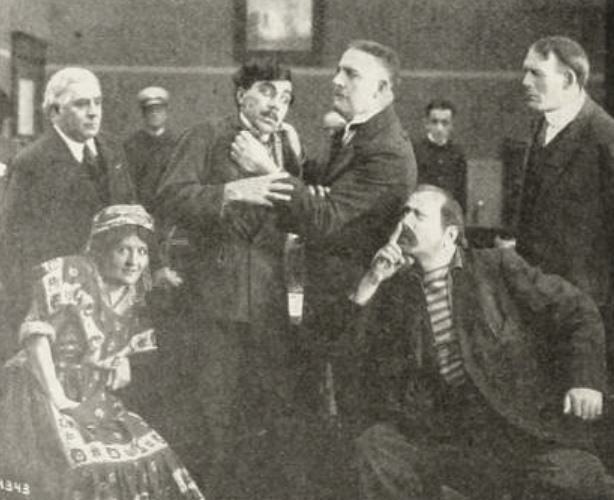
Fred E. Wright’s direction exhibits a sophisticated understanding of narrative economy. Every shot serves a purpose, whether it’s to establish the claustrophobia of the garret or the frantic energy of the streets. The editing, particularly during the scenes where the counterfeiters are being tracked, shows an early mastery of parallel action. This rhythmic tension is comparable to the suspenseful sequences in The Purple Mask or the intricate plotting of What Happened at 22. Wright manages to balance the melodrama of the situation with a grounded, almost naturalistic approach to the characters' struggles.
The film also touches upon the concept of the 'Precious Parcel'—not just in terms of the suitcase, but in terms of human potential. Just as in The Precious Parcel, the value of the object is defined by the desperation of those who possess it. For Piazzia, the money is a tool of subversion; for Widder, it is a means of salvation; for Alice, it is the bait in a trap. This multifaceted view of material wealth reflects a society in flux, grappling with the realities of urban poverty and the rise of federal authority. The use of light and shadow in the garret scenes anticipates the film noir aesthetic that would emerge decades later, using darkness to hide the 'spurious' and light to reveal the 'truth,' however painful that truth might be.
The conclusion of The Breaker is perhaps its most controversial element from a modern perspective. Widder, despite having committed a felony by knowingly passing counterfeit currency, is not only exonerated but rewarded. This suggests a hierarchy of morality where the 'intent' of the crime and the 'utility' of the criminal to the state outweigh the letter of the law. By helping Alice capture the real crooks, Widder earns his place in the social order. This theme of redemption through service to the state is a powerful one, often seen in propaganda or nationalistic films like Revolución orozquista, but here it is framed as a personal, romantic victory.
The $2,000 reward serves as the 'home stake,' a literal investment by the government into the domestic stability of its citizens. The message is clear: compliance and cooperation with authority lead to prosperity, while independent 'breaking' of the rules leads to ruin. Even the title, *The Breaker*, carries a double meaning. Widder is a breaker of laws, but he is also a man who is 'broken' by his circumstances and eventually 're-made' by his union with Alice. This transformative arc is handled with a subtlety that avoids the saccharine pitfalls of many of its contemporaries, such as Little Meena's Romance.
In comparing The Breaker to other works of the era, one cannot ignore its unique blend of crime, romance, and social realism. While films like Coral or Pufi - Hogyan lett ünnepelt hös egy jámbor pesti férjböl? offer different perspectives on heroism and social status, Wright’s film remains a standout for its psychological depth. Bryant Washburn’s performance, in particular, deserves more recognition in the annals of silent film history. He brings a twitchy, intellectual intensity to Widder that makes his eventual 'domestication' feel like a profound character shift rather than a convenient plot point.
Ultimately, The Breaker is a film about the masks we wear—the inventor’s mask of eccentricity, the typist’s mask of penury, and the counterfeiter’s mask of legitimacy. It explores the 'masked motives' of the heart, much like The Masked Motive, but does so with a groundedness that makes its stakes feel real and its resolution feel earned. It is a testament to the power of early cinema to reflect the complexities of the human condition, even within the framework of a standard crime thriller. For those interested in the evolution of the procedural and the shifting dynamics of gender and class in early 20th-century America, this film is an essential watch. It is a work of significant lexical and visual diversity, challenging the viewer to look beyond the surface of the 'spurious' to find the genuine human emotion beneath.
IMDb 7.4
1933
Community
Log in to comment.