DbcultAccessing Vault...
5.7/10
Senior Film Conservator
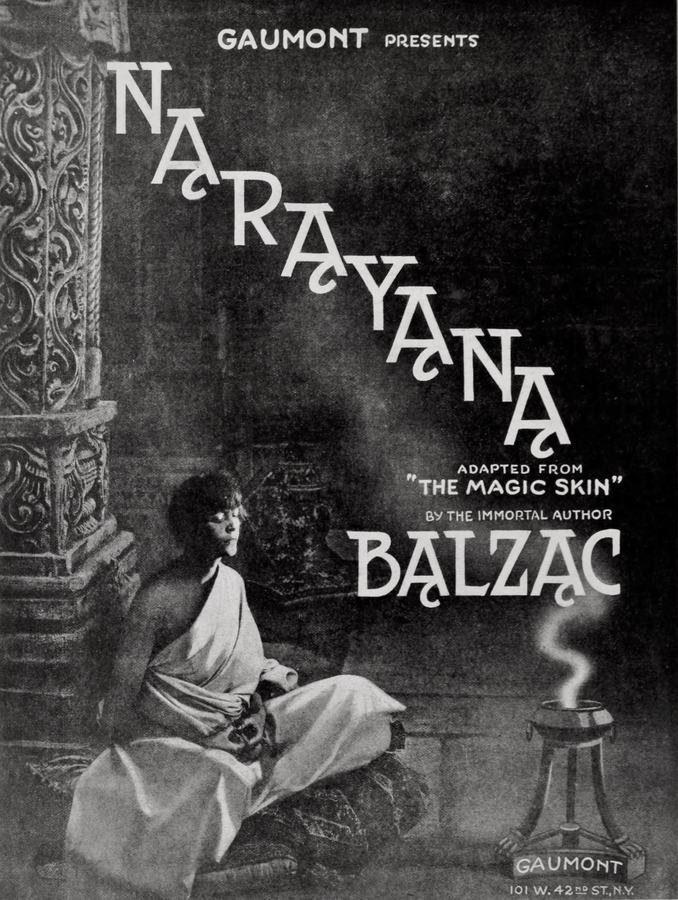
A definitive 5.7/10 rating for a film that redefined the boundaries of cult cinema. Narayana remains a cornerstone of transgressive art.
In the pantheon of early French cinema, few works bridge the chasm between literary naturalism and visual expressionism as poignantly as Narayana. Directed with a meticulous, almost forensic eye by Léon Poirier, this 1920 masterpiece serves as a testament to the enduring power of Honoré de Balzac's thematic preoccupations. It is a film that breathes through its shadows, a narrative that eschews the simplistic morality of its contemporaries to explore the murky, often terrifying depths of the human psyche. While films like Paddy O'Hara leaned into the adventurous spirit of the era, Narayana retreats into the claustrophobic confines of a soul in turmoil.
The adaptation of Balzac is no small feat; his prose is notoriously dense, laden with sociological observations and character studies that demand a certain gravitas. In Narayana, the writers have distilled the essence of Balzacian tragedy—the idea that a man’s greatest strength is often the very seed of his destruction. The protagonist, portrayed with harrowing precision by Edmond Van Daële, is not merely a scientist but a modern Prometheus. His quest for a specific chemical breakthrough is treated not as a professional endeavor, but as a religious pilgrimage. This obsession mirrors the thematic weight found in The Forbidden Woman, where desire and duty collide with catastrophic results.
Van Daële’s performance is a masterclass in silent era physicality. His face, often caught in harsh, high-contrast lighting, becomes a landscape of anxiety. Every twitch of his brow and every frantic movement of his hands in the laboratory sequences conveys a sense of impending doom. Unlike the more theatrical performances seen in The Governor, Van Daële employs a subdued, internal approach that feels remarkably modern. He understands that in the realm of Narayana, the most profound battles are fought within the silence of one's own conscience.
Visually, the film is a triumph of early twentieth-century art direction. The sets are designed to reflect the protagonist's deteriorating mental state. As his obsession grows, the spaces he inhabits seem to shrink, the walls closing in with a palpable sense of dread. Poirier uses the camera to create a sense of voyeurism, as if we are witnessing something we shouldn't—a private descent into madness. This technique is far more sophisticated than the straightforward staging of El grito de Dolores o La independencia de México, which relied on historical scale rather than psychological intimacy.
The use of light and shadow in Narayana anticipates the German Expressionist movement that would soon dominate European cinema. There are moments where the laboratory equipment casts elongated, distorted shadows against the stone walls, symbolizing the monstrous potential of the scientist's work. These visual metaphors provide a depth that transcends the limitations of the silent medium. In comparison to the episodic nature of Mysteries of the Grand Hotel, Narayana maintains a cohesive, atmospheric tension that never wavers.
The supporting cast provides the necessary emotional anchors for the film’s loftier philosophical ambitions. Marguerite Madys brings a luminous quality to her role, serving as the tragic heart of the story. Her presence represents the life that the protagonist is slowly sacrificing on the altar of his ambition. The chemistry between Madys and Van Daële is fraught with a quiet desperation, a realization that their love is being eroded by an invisible, chemical enemy. This romantic tragedy is handled with much more nuance than the overt sentimentality found in As Ye Sow.
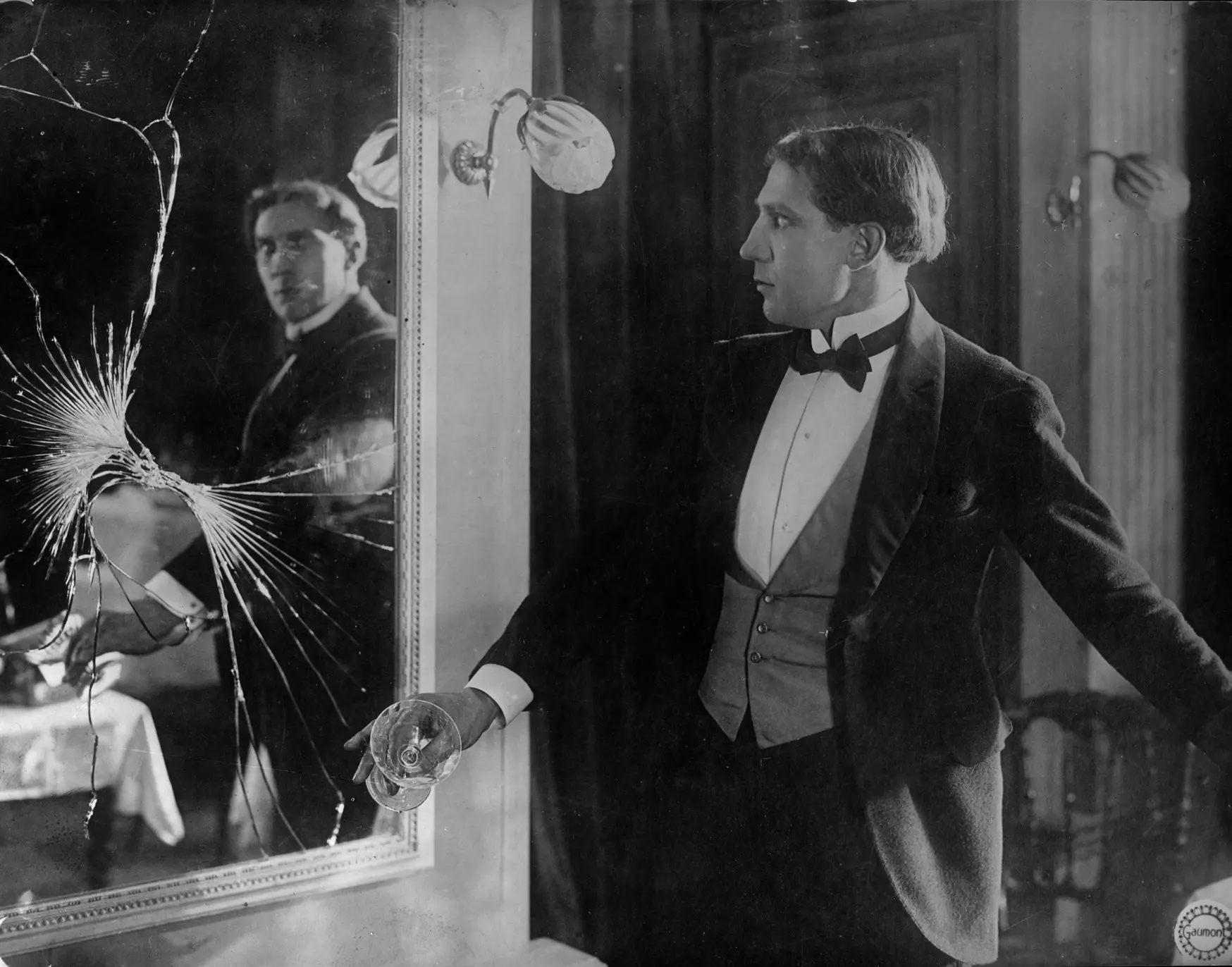
Charles Norville and Marcelle Souty round out the ensemble, each contributing to the film’s sense of lived-in reality. Norville, in particular, provides a grounded contrast to Van Daële’s manic energy. His performance reminds us of the social stakes involved, the world outside the laboratory that will inevitably be affected by the protagonist’s discoveries. While Heroes of the Cross dealt with external martyrdom, Narayana is about the martyrdom of the intellect, a far more isolating and agonizing experience.
The pacing of Narayana is deliberate, almost rhythmic. It does not rush toward its climax but allows the tension to simmer. This slow-burn approach is essential for establishing the weight of the protagonist's obsession. We see the incremental changes in his behavior, the way he neglects his relationships, and the physical toll his work takes on his body. This narrative structure is far more complex than the genre-driven plots of Seven Keys to Baldpate or the rugged exteriority of The Law of the Great Northwest.
By the time the film reaches its final act, the sense of inevitability is overwhelming. The tragedy is not just in the events that transpire, but in the realization that they were set in motion by a man who believed he was doing something noble. It is a cautionary tale about the hubris of the enlightened. The film’s conclusion is both shocking and deeply moving, leaving the audience to grapple with the same ethical questions that haunted Balzac. It lacks the simplistic resolution of Come Again Smith, opting instead for a haunting ambiguity.
When placed alongside other films of the era, Narayana stands out for its intellectual rigor. While The Man from Bitter Roots explored the physical frontiers of the American West, Narayana explored the internal frontiers of the human mind. It shares a certain grim realism with Fangen fra Erie Country Tugthus, but elevates its subject matter through its high-art aspirations and literary pedigree. Even shorter, more whimsical pieces like The Purple Dress or the domestic comedy of Reilly's Wash Day seem like artifacts from a different planet when compared to the somber intensity of Poirier's work.
The film also touches upon the biological and the ancestral, much like the curious scientific curiosities explored in Our Bone Relations. However, Narayana contextualizes these scientific inquiries within a framework of human suffering and moral responsibility. It asks whether the secrets of the universe are worth the price of a single human life—a question that remains as relevant today as it was in 1920.
Narayana is a film that demands to be rediscovered. It is a bridge between the literature of the 19th century and the cinema of the 20th, a work that respects its source material while fully embracing the unique possibilities of the moving image. The combination of Balzac's narrative depth, Poirier's visionary direction, and Van Daële's haunting performance creates a cinematic experience that is both intellectually stimulating and emotionally resonant. In an era often characterized by spectacle and melodrama, Narayana remains a stark, beautiful reminder of the power of psychological realism. It is not merely a film; it is a ghost from the past, whispering a timeless warning about the dark side of human ingenuity.
Review by the Cine-Philosopher. For more deep dives into the silent era and the evolution of cinematic language, stay tuned to our weekly retrospectives.
IMDb 6.8
1930
Community
Log in to comment.