DbcultAccessing Vault...
Cult Review
Senior Film Conservator
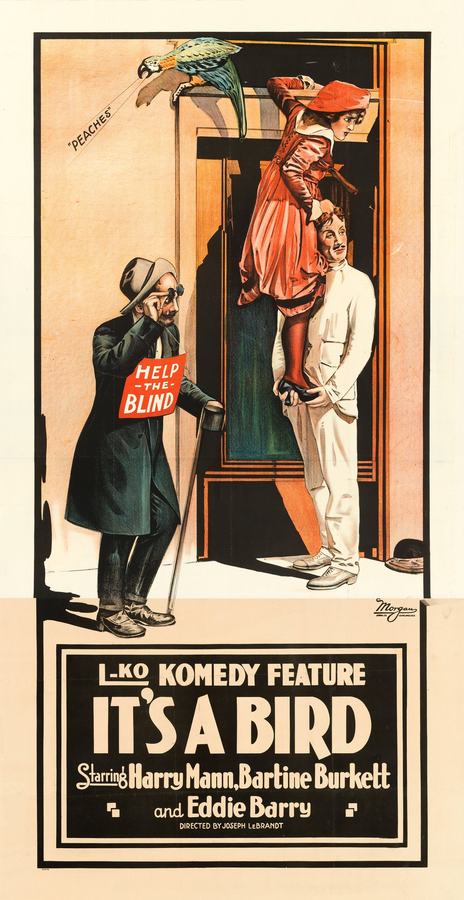
In the annals of early cinematic comedy, where physical gags reigned supreme and narrative intricacies often took a backseat to escalating absurdity, one occasionally stumbles upon a gem that, while perhaps not widely canonized, offers a delightful window into the era's comedic sensibilities. Such is the case with the 1918 silent film, 'It's a Bird'. This particular offering, a vibrant tapestry of domestic discord, mistaken identity, and the sheer chaos ignited by a mischievous simian, serves as a quintessential example of the farcical energy that captivated audiences over a century ago. It’s a film that, despite its brevity and the relative obscurity of its cast and crew in modern memory, articulates a universal language of humorous human foibles, making it a fascinating subject for contemporary appraisal.
The film plunges us headfirst into the lives of Eddie Barry and Harry Mann, co-owners of a rather bustling bird and animal store. From the outset, Mann is subtly painted as the more unscrupulous partner, a character trait that will, predictably, fuel much of the subsequent pandemonium. The inciting incident, a stroke of pure comedic genius, arrives not from human machination but from the playful, yet utterly disruptive, intervention of a monkey. This simian saboteur, with a hose nozzle precisely inserted into the keyhole, renders the shop inaccessible, setting off a chain reaction of escalating misfortunes that would make Rube Goldberg proud. This initial gag, a testament to the inventive physical comedy of the era, immediately establishes the film's playful tone and its willingness to embrace the absurd.
Mann's frustrated quest for a spare key leads him directly to Eddie Barry's domestic sphere, a realm he perhaps should have avoided. Here, the film expertly pivots from slapstick to a more nuanced, albeit still broad, form of situational comedy. Mann's interactions with Eddie's wife are fraught with awkward complications, a subtle dance of misinterpretation and discomfort that foreshadows the marital strife to come. Yet, it is his unexpected elevation to the status of an 'idol' in the eyes of Eddie's mother-in-law that provides some of the film's most genuinely amusing moments. This sudden, inexplicable adoration from a formidable matriarch is a classic comedic trope, deployed here with delightful effect, highlighting Mann's unwitting charm or perhaps, more accurately, the mother-in-law's peculiar judgment. This sequence, in its portrayal of domestic intrusion and the discomfort it breeds, offers a humorous parallel to the more serious marital discord explored in films like The Marriage Bond, though 'It's a Bird' maintains a decidedly lighter, farcical touch.
The domestic tranquility of the Barry household is, predictably, shattered. Eddie and his wife find themselves embroiled in a heated argument, fueled in part by the mother-in-law's increasingly inconvenient presence and, no doubt, Mann's earlier awkward visit. In a fit of pique, they declare their intentions to dissolve their home, articulating their dramatic pronouncements in separate notes. It is here that the film introduces its central mechanism of mistaken identity and opportunistic exploitation: Harry Mann, through a stroke of blind luck or perhaps cosmic irony, intercepts these declarations of domestic dissolution. Seeing an opportunity rather than a tragedy, Mann, with characteristic opportunism, promptly rents Eddie's now-vacated residence to a vaudeville team, Harry Griffin and Bartine Burkett.
"The beauty of 'It's a Bird' lies not just in its individual gags, but in the intricate, almost balletic way these disparate threads of misunderstanding and misadventure are woven together to create a tapestry of utter, delightful chaos."
The narrative then twists further into delightful absurdity. Eddie, having previously encountered Bartine in his store, possesses a photograph of her in tights – a perfectly innocent, yet contextually provocative, image without her face showing. A chance encounter with Bartine's husband in the park leads Eddie to foolishly present this photograph, inadvertently attaching his own address to it. This moment is a masterclass in escalating comedic tension, culminating in a frenetic chase scene between the enraged husband and the bewildered Eddie. Such chases were a staple of early cinema, often serving as climactic sequences of physical comedy, much like the frenetic energy found in other period pieces. The physical comedy here, while perhaps not as elaborate as some of Chaplin's or Keaton's later works, is effective in its simplicity and directness, driving the plot forward with a palpable sense of urgency and humor.
The film's denouement is a glorious explosion of comedic confusion. Just as all the preceding complications seem to have, against all odds, resolved themselves, Eddie and his wife, having presumably reconciled their differences, decide to return to their home. Unbeknownst to them, their abode is now happily occupied by Griffin and Bartine, the vaudeville team. This collision of worlds – the domestic and the theatrical, the rightful owners and the temporary tenants – unleashes a torrent of misunderstandings, frantic explanations, and physical comedy. The sheer volume of complications that result from this simultaneous occupancy is the film's crowning achievement, a testament to the power of well-orchestrated farce. It echoes the kind of overlapping, character-driven chaos seen in more complex narratives, but distilled here into its most potent, laugh-inducing form.
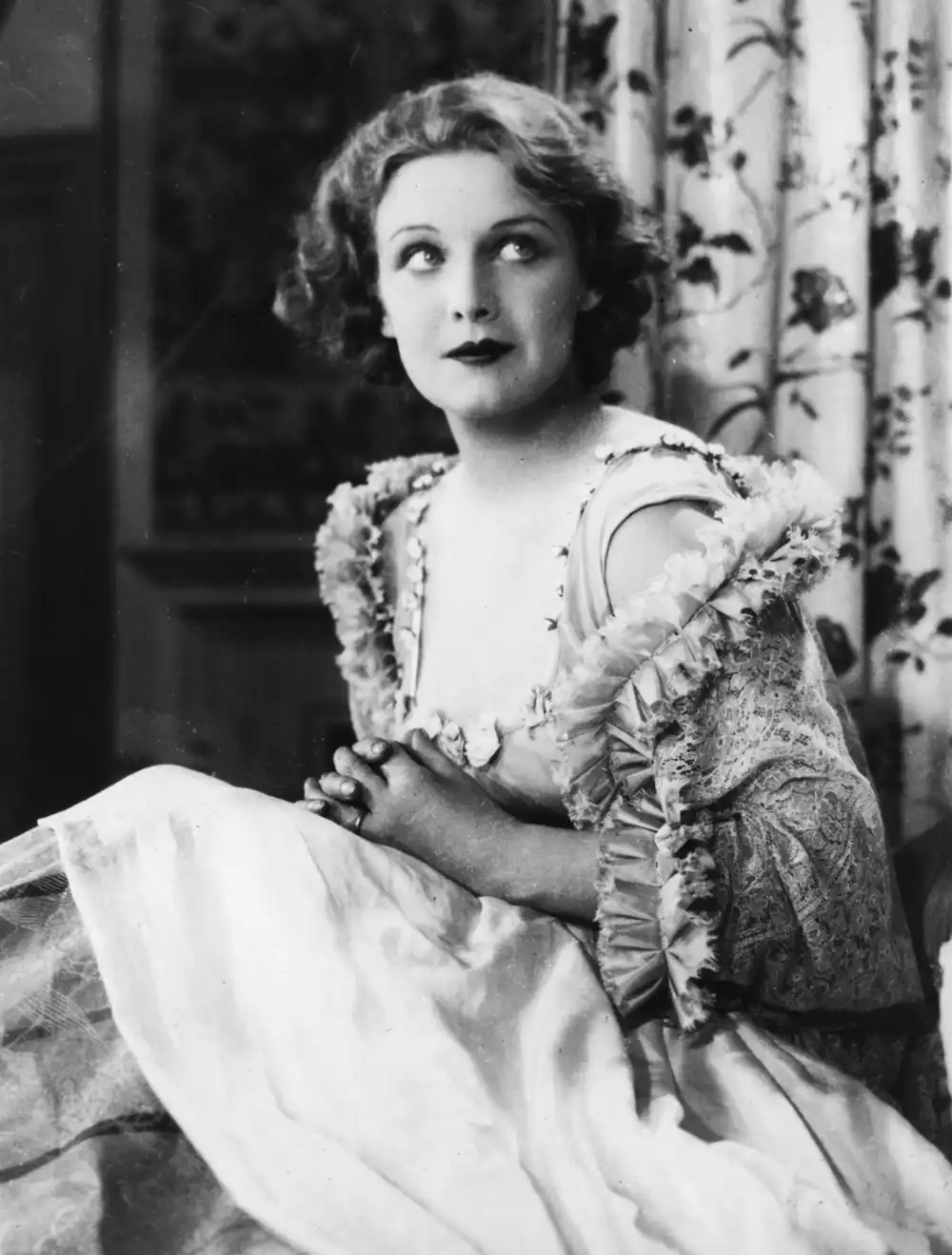
The performances, while typical of the silent era's often exaggerated acting styles, are perfectly suited to the material. Eddie Barry embodies the perpetually put-upon everyman, his exasperation and bewilderment forming the comedic core of the character. Harry Mann, as the conniving partner, navigates the line between charming rogue and opportunistic schemer with aplomb, his actions consistently driving the plot into further disarray. Bartine Burkett, while perhaps given less screen time than the male leads, is crucial to the mistaken identity plotline, her presence a catalyst for both Eddie's initial blunder and the husband's subsequent rage. Her portrayal adds a touch of innocent allure that contrasts sharply with the frantic male antics.
As a product of 1918, 'It's a Bird' stands as a testament to the burgeoning sophistication of silent comedy. While lacking the profound artistry of a Chaplin or the acrobatic grace of a Keaton, it nevertheless demonstrates a clear understanding of comedic timing and narrative construction. The uncredited writers, typical of the collaborative and often anonymous creative processes of the time, crafted a plot that, despite its simplicity, is remarkably effective in building suspense and delivering punchlines through visual means. The film relies heavily on visual gags, exaggerated expressions, and the universal language of physical comedy, making it accessible even to modern audiences unfamiliar with the conventions of silent cinema. The pacing is brisk, a necessity for a short film designed to entertain quickly, ensuring that the audience is constantly engaged in the escalating absurdity.
The film's themes, while lighthearted, touch upon the fragile nature of domestic harmony, the perils of miscommunication, and the often-unforeseen consequences of seemingly minor actions. The monkey's initial prank, for instance, is the butterfly effect that ultimately leads to a full-blown domestic invasion. This exploration of cause and effect, even in a comedic context, adds a layer of unexpected depth to the proceedings. The film also playfully critiques, or at least highlights, the opportunistic tendencies of characters like Harry Mann, whose self-serving actions, while driving the plot, often backfire in humorous ways.
When considering 'It's a Bird' within the broader landscape of early cinema, its strengths become clearer. Its reliance on escalating domestic chaos and mistaken identities finds echoes in many comedies of the period. The idea of an animal acting as a catalyst for human drama, albeit in a more serious vein, can be seen in films like The Lion and the Mouse, though 'It's a Bird' twists this into pure farce. The bustling energy and the rapid-fire succession of gags recall the spirit of early Mack Sennett productions, where the emphasis was on constant motion and visual spectacle. While perhaps not as grand in scale as a Western like Wild and Woolly, its comedic ambition to create a world turned upside down through a series of unfortunate events is equally compelling within its genre. The film’s focus on marital strife and eventual reconciliation, albeit through the most circuitous and hilarious means, also aligns with the period’s fascination with domestic narratives, often presented with a comedic slant to alleviate the inherent tensions. The lighthearted approach to conflict resolution here stands in stark contrast to the more somber explorations of relationships found in dramas like The Curse of Greed, highlighting the versatile range of cinematic storytelling even in its nascent stages.
The film also showcases the burgeoning talent of actors like Bartine Burkett, whose presence in a vaudeville team within the narrative mirrors the common transition of stage performers to the silver screen during this era. Her role, though pivotal to the plot's central misunderstanding, is also a nod to the theatrical roots of cinema. The film's ability to maintain a sense of playful anarchy, even as the plot becomes increasingly convoluted, is a testament to its well-executed direction. The visual storytelling is clear and concise, guiding the audience through the labyrinthine plot without the aid of spoken dialogue, relying instead on expressive performances and well-timed physical actions. This clarity in communication, without verbal cues, is a hallmark of effective silent filmmaking and a skill that 'It's a Bird' demonstrates admirably.
"A delightful relic from a bygone era, 'It's a Bird' reminds us that laughter, in its purest, most unadulterated form, transcends the limitations of time and technology."
While 'It's a Bird' may not possess the grand narrative scope of a historical epic or the profound character studies of later dramas, its value lies in its unpretentious commitment to pure entertainment. It is a film that doesn't attempt to be more than it is: a rollicking, lighthearted comedy designed to elicit genuine laughter. Its historical significance is rooted in its representation of the comedic trends and production methods of the late 1910s, a period of rapid evolution for the cinematic art form. It’s a snapshot of a time when the medium was still discovering its voice, and physical humor was a universal language understood by all, regardless of background or nationality. The film’s simple yet effective use of props, animals, and domestic settings to generate humor is a hallmark of this period, contrasting with the more elaborate sets and special effects that would come to define later cinematic eras. For enthusiasts of silent cinema and students of film history, it offers valuable insights into the craft of early comedic storytelling.
In conclusion, 'It's a Bird' is more than just a forgotten relic; it is a vibrant, if minor, piece of cinematic history that continues to entertain with its timeless brand of farcical humor. Its ability to weave a complex web of misunderstandings from a simple premise, all while maintaining a buoyant and engaging pace, speaks to the ingenuity of its creators. For those willing to delve into the rich archives of silent film, this feathered fiasco offers a delightful escape, a reminder of the foundational elements of screen comedy, and a testament to the enduring power of laughter. It’s a film that, despite its age, still manages to soar, proving that sometimes, all it takes is a mischievous monkey and a series of unfortunate events to create cinematic magic. Its charm is undeniable, its historical context invaluable, and its legacy, though perhaps understated, is firmly etched into the comedic landscape of early film. It encourages a deeper appreciation for the foundational narratives and character archetypes that continue to influence storytelling today, proving that the roots of modern comedy are deeply embedded in these early, often overlooked, silent masterpieces.
IMDb 5.7
1930
Community
Log in to comment.