DbcultAccessing Vault...
Cult Review
Senior Film Conservator
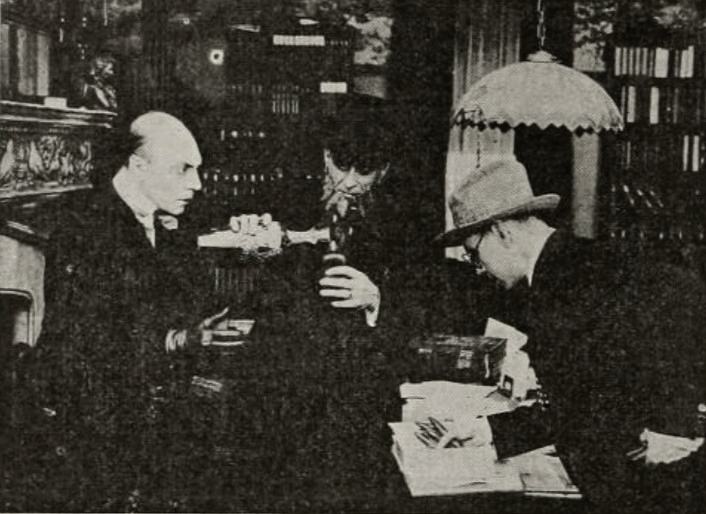
The film, "The Mystery of No. 47," is a delightful dive into the absurdities of social convention and the snowball effect of a seemingly innocent white lie. It's a testament to early cinematic storytelling, showcasing how a simple domestic mishap can spiral into a grand, bewildering public spectacle.
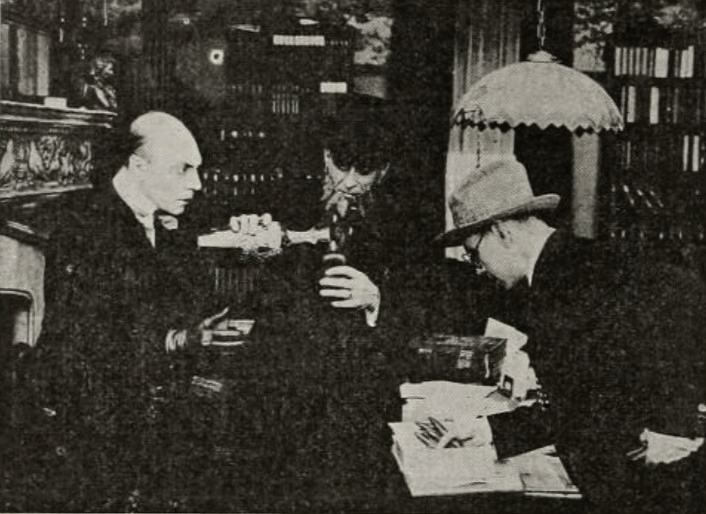
From the outset, "The Mystery of No. 47" establishes Irwin Molyneux, portrayed with a commendable blend of bewildered pomposity and underlying good nature by Lloyd Sedgwick, as a pillar of his community. Molyneux is the quintessential Edwardian gentleman—a connoisseur of fine china, a man whose life is meticulously ordered, much like his prized porcelain collection. His reputation is his most valuable asset, polished and presented for public admiration. Yet, this carefully constructed facade begins to crack under the most mundane of pressures: a domestic staffing crisis. When his cook, played by Mrs. Margaret A. Wiggin (who later reveals a surprisingly complex backstory), abruptly tenders her resignation, Molyneux's wife, brought to life with charming resilience by Louiszita Valentine, steps into the kitchen to prepare a meal for none other than the venerable Bishop of Bedford.
Herein lies the pivot point of the entire narrative. Molyneux, perhaps more concerned with the perceived social standing of having his wife toil in the kitchen than with the actual act itself, concocts a flimsy alibi: his wife, he claims, is away visiting. This seemingly innocuous fib, designed to maintain appearances, instead ignites a spark of suspicion in the Bishop's mind. It's a wonderfully subtle yet potent commentary on the fragility of reputation and the ease with which trust can be eroded by the smallest inconsistency. The Bishop's raised eyebrow, the slight pause, the unspoken question – these are the silent harbingers of the whirlwind that is about to engulf Molyneux's ordered world.
What follows is an escalating comedy of errors, a farcical descent into public hysteria. The bishop's whispered doubts metastasize into full-blown accusations, fueled by the inexplicable disappearance of both Molyneux's wife and the cook. Suddenly, the esteemed china collector is no longer a model citizen but a prime suspect in a sensational double murder, pursued relentlessly by the formidable, if somewhat bumbling, forces of Scotland Yard. The film masterfully plays on the audience's understanding of how quickly public opinion can turn, how a man's entire identity can be reshaped by rumor and circumstantial evidence. The frantic energy of the chase, the bewildered expressions of Molyneux as he navigates this labyrinth of false accusations, are brought to life through the kinetic performances of the supporting cast, including the stern Casson Ferguson and the ever-watchful May White.
The narrative takes a truly ingenious turn when Molyneux, now a fugitive, adopts an assumed identity and, with a stroke of delicious irony, is hired by a London newspaper to find himself. This meta-narrative device is a stroke of genius from writer J. Storer Clouston, transforming a standard mystery into a profound, albeit humorous, exploration of identity, self-perception, and the media's role in shaping public truth. It forces Molyneux into a unique position of observing his own public persona, the monster that society has painted him to be, from an objective distance. This self-referential quest is not merely a plot contrivance but a brilliant way to satirize the very nature of news-making and the sensationalism that often overrides factual reporting.
The climax, when Molyneux triumphantly produces his wife, alive and well, is a moment of pure cinematic satisfaction, a collective sigh of relief for the audience. But the ultimate revelation, that the "missing" cook is none other than the beloved sweetheart of Lord Francis Phillamore, and her disappearance was merely a carefully guarded secret liaison, adds another layer of delightful absurdity. The entire elaborate misunderstanding, the public panic, the Scotland Yard manhunt—all stemmed from a desire to protect a secret romance. It's a whimsical, yet pointed, critique of a society obsessed with appearances and prone to jumping to the most dramatic conclusions. The performances by Nellie Hartley and Ralph Herz in these pivotal moments add to the film's comedic timing.
"The Mystery of No. 47" is more than just a whodunit; it's a profound social satire, a mirror held up to the absurdities of human behavior and societal expectations. The film, in its depiction of Molyneux's plight, delves into several compelling themes.
Firstly, there's the pervasive theme of reputation versus reality. Molyneux's life is initially defined by his public image as a "model citizen." The moment this image is challenged, even by a trivial lie, his entire existence unravels. This resonates deeply, reminding us how fragile our carefully constructed personas can be and how quickly public perception can diverge from personal truth. The film, through its escalating chaos, suggests that society often prefers a dramatic narrative over a simple, mundane explanation. This theme echoes in films like The Cheat, where social standing and the preservation of face drive characters to desperate measures, often with dire consequences. Similarly, Lady Windermere's Fan, though a different genre, masterfully explores the intricate dance of reputation and scandal within high society.
Secondly, the film explores the power of rumor and the media's influence. The swiftness with which Molyneux is condemned in the public eye, long before any concrete evidence emerges, is a chilling precursor to modern media frenzies. The newspaper's eagerness to sensationalize, and then ironically, to employ the very subject of their sensationalism, highlights the often-performative nature of news. This aspect finds a fascinating parallel in The Million Dollar Mystery, which, while focusing on a different kind of enigma, also plays with public intrigue and the widespread fascination with unsolved cases.
Thirdly, there's the inherent comedy of bureaucracy and officialdom. Scotland Yard, while formidable, is ultimately shown to be fallible, driven by suspicion rather than pure logic. The image of the police pursuing Molyneux based on a cascade of misunderstandings is inherently humorous, a gentle lampooning of institutional overzealousness. This light-hearted critique of authority can be seen in various forms across cinematic history, often providing a cathartic release for audiences who recognize the often-absurd nature of official processes.
The success of "The Mystery of No. 47" hinges significantly on its ensemble cast, who navigate the increasingly preposterous plot with a commendable balance of earnestness and comedic timing. Lloyd Sedgwick as Irwin Molyneux is the anchor, his increasingly flustered demeanor providing much of the film's humor. He embodies the 'everyman' caught in an extraordinary predicament, making his character relatable despite the outlandish circumstances. His journey from composed gentleman to hunted fugitive, and then to self-detective, is a masterclass in evolving character portrayal.
Louiszita Valentine as Molyneux's wife brings a quiet strength and a touch of domestic realism to the proceedings. Her initial willingness to cook, and her later resilience in the face of her husband's predicament, ground the story in human emotion, preventing it from becoming pure slapstick. The revelation of her being alive and well is not just a plot twist but a testament to her character's understated presence throughout the narrative.
The supporting cast, including Mrs. Margaret A. Wiggin as the cook whose clandestine romance sparks the entire debacle, and Casson Ferguson and May White in their roles, contribute significantly to the film's texture. Even minor characters like Nellie Hartley, Ralph Herz, Frederick Eckhart, James F. Fulton, Edgar Murray Jr., and Tony West play their parts in building the world and the escalating tension, each adding a brushstroke to the canvas of this intricate mystery. Their collective ability to convey the mounting confusion and the eventual relief is crucial for the film's overall impact.
While detailed records of early film direction can be scarce, one can infer from the film's enduring appeal that its direction was both competent and inventive for its time. The pacing, crucial for a comedic mystery, must have been carefully managed, allowing the suspense to build without sacrificing the humor. The visual storytelling, likely relying on expressive acting, clear staging, and perhaps innovative camera work for its era, would have been key to conveying the complex plot without the aid of extensive dialogue. The juxtaposition of Molyneux's refined world with the chaos that engulfs it would have offered rich visual opportunities.
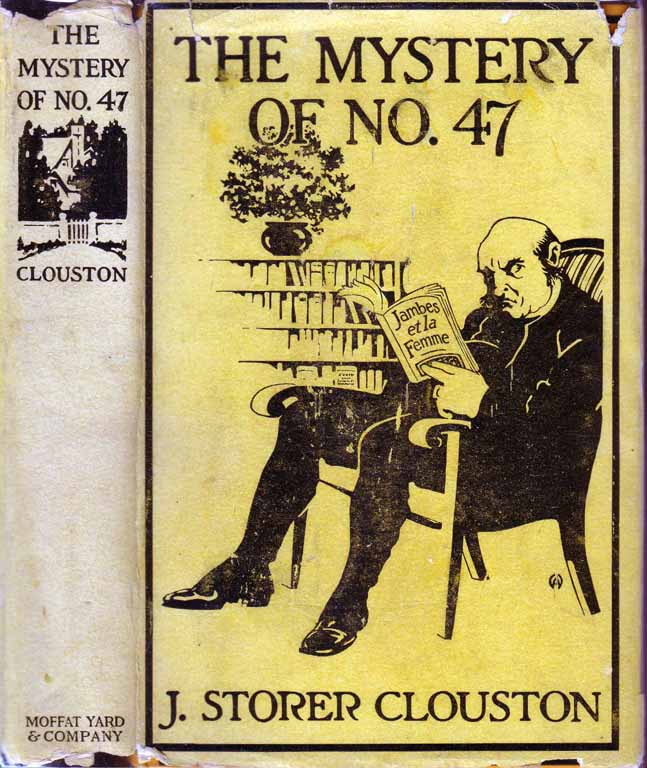
The true genius of "The Mystery of No. 47" lies in its source material by J. Storer Clouston. Clouston’s narrative is a meticulously constructed house of cards, where each seemingly minor detail contributes to the overarching misunderstanding. His ability to craft a plot that is both intricate and ultimately logical, even if absurd in its premise, is remarkable. The idea of the protagonist investigating his own 'murder' is a stroke of literary brilliance that translates exceptionally well to the screen, providing a unique perspective on the traditional detective story. This kind of clever, twisty plotting can be appreciated alongside films like The Woman in the Case, which similarly weaves a complex web of legal and personal intrigue.
"The Mystery of No. 47" sits comfortably within a tradition of films that explore mistaken identity, societal pressure, and the fight for one's reputation. Its blend of comedic elements with genuine suspense creates a unique flavor that differentiates it from purely dramatic thrillers.
Comparing it to other films of its era, one can draw intriguing parallels. While Therese might delve into more psychological depths of character, "No. 47" uses the external pressures of society to drive its protagonist's internal and external journey. The dramatic stakes, though comedic, feel as high for Molyneux as the emotional turmoil in Mignon or The Heart of Maryland, albeit with a different tonal approach.
The film's focus on an individual battling an overwhelming, unjust system can be seen as a precursor to narratives like The Unbroken Road or Più forte del destino (Stronger Than Fate), where protagonists must demonstrate immense fortitude to overcome seemingly insurmountable odds. Molyneux's resilience, even in the face of public scorn and official pursuit, is a testament to the human spirit's capacity to fight for truth, no matter how convoluted the path.
Furthermore, the domestic setting that precipitates the grand adventure brings to mind films like Meg o' the Mountains or The Call of the Cumberlands, which, while exploring different social landscapes, also highlight how individual actions within a community can have far-reaching, unforeseen consequences. Even the subtle critique of financial deception or hidden motives, as seen in Le roman d'un caissier (The Cashier's Story) or The Root of Evil, finds a distant echo in the film's initial premise of a seemingly respectable man hiding a small, perceived flaw. The film even touches upon the idea of a 'devil' in the details, where a small lie can become a monstrous problem, much like the thematic undertones of The Devil. The interplay between individual will and societal pressures, a theme often explored in works like In Mizzoura, finds a unique expression here through the lens of a comedic mystery.
Decades after its original release, "The Mystery of No. 47" retains a remarkable freshness. Its central premise—a man falsely accused and forced to unravel the very mystery he embodies—is timeless. The film deftly blends elements of a drawing-room comedy with a high-stakes thriller, a combination that proves eternally engaging. It reminds us that sometimes, the greatest mysteries aren't about grand conspiracies, but about the small, human foibles that spiral out of control.
The film serves as a delightful reminder of early cinema's capacity for sophisticated storytelling and character development, even within the confines of a relatively nascent art form. It's a charming, witty, and ultimately satisfying journey into the heart of an extraordinary misunderstanding, proving that sometimes, the truth is stranger, and funnier, than fiction. For anyone seeking a classic mystery with a clever twist and a hearty dose of social commentary, "The Mystery of No. 47" remains an absolute gem.
IMDb 6.2
1924
Community
Log in to comment.