DbcultAccessing Vault...
5/10
Senior Film Conservator
A definitive 5/10 rating for a film that redefined the boundaries of cult cinema. Alien Souls remains a cornerstone of transgressive art.
The year 1916 was a crucible for the American cinematic identity, a moment when the silent frame began to grasp the complexities of the human psyche beyond mere slapstick or melodrama. In this fertile ground, Alien Souls emerges as a fascinating, if somewhat uncomfortable, relic of its time. Directed with a steady hand and written by the formidable duo of Margaret and Hector Turnbull, the film serves as a vehicle for the unparalleled Sessue Hayakawa and Tsuru Aoki. It is a work that demands our attention not just for its historical significance, but for the way it interrogates the concept of the 'outsider' in a land that prides itself on assimilation while simultaneously weaponizing exclusion.
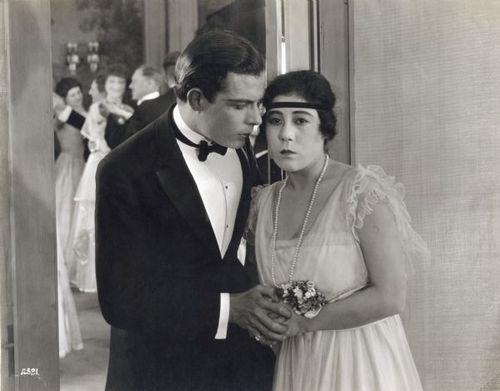
The plot is a deceptively simple tragedy of errors. Lin, portrayed with a chillingly superficial charm by Earle Foxe, is the quintessential American opportunist. He is a man who views the world through the lens of transaction. When he encounters Aleen (Aoki), he doesn't see a human being with a rich cultural heritage; he sees a bank vault draped in silk. The central tension of the film arises from Lin’s misguided conviction that Aleen is an heiress. This misunderstanding fuels a pursuit that is as predatory as it is performative. Unlike the more overt villainy found in Wer ist der Täter?, Lin’s malice is wrapped in the soft cloth of romantic interest, making his eventual exposure all the more visceral.
The Turnbulls' script excels at highlighting the grotesque nature of this pursuit. There is a specific scene in a tea room where the framing emphasizes Aleen’s isolation. She is surrounded by a society that views her as an exotic curiosity, a sentiment echoed in the thematic explorations of The Dancing Girl. However, while 'The Dancing Girl' often leans into the spectacle of the performance, Alien Souls stays grounded in the psychological toll of being 'the other.' Aoki’s performance is a masterclass in restrained vulnerability. Her Aleen is not a caricature; she is a woman navigating a minefield of cultural expectations and personal desires, unaware that her suitor is merely a scavenger in a tuxedo.
If Aoki provides the film’s heart, Sessue Hayakawa provides its spine. Playing Sakata, Hayakawa utilizes his signature 'mumei' acting style—a technique of suppressed emotion that conveys volumes through a slight shift in the eyes or a tightening of the jaw. In an era where many actors were still relying on the exaggerated gestures of the stage, Hayakawa was already a modern film star. His Sakata is the moral anchor of the story, a man who sees through Lin’s facade with a clarity that the audience finds both comforting and tragic. Sakata’s protective instinct is not born of a possessive patriarchy, but of a shared understanding of what it means to be an 'alien soul' in a hostile environment.
The dynamic between Sakata and Aleen is the film's most authentic element. It stands in stark contrast to the hollow interactions Aleen has with the American contingent. This exploration of communal protection among immigrants can be seen as a precursor to the gritty realism found in Peterburgskiye trushchobi, where the disenfranchised must rely on one another to survive the whims of the powerful. In Alien Souls, this survival is not just physical, but spiritual.
Visually, the film is a fascinating study in contrast. The cinematography captures the opulence of American interiors with a sharpness that feels almost sterile. These spaces are crowded with things—furniture, drapes, trinkets—symbolizing the clutter of Western materialism. This is juxtaposed against the more minimalist, purposeful spaces associated with Aleen and Sakata. The use of light and shadow, while not as expressionistic as Die Doppelnatur, still manages to create a sense of impending doom. There is a weight to the atmosphere, a feeling that the characters are being crushed by the very air they breathe.
The narrative pacing is deliberate, allowing the tension to simmer. We watch as Lin’s desperation grows when the expected riches fail to materialize. His frustration reveals the true nature of his 'love,' transforming him from a suave suitor into a frantic gambler who has bet his last cent on a lie. This descent into moral bankruptcy is reminiscent of the themes found in The Price of Vanity, where the pursuit of status leads to the erosion of the self. In Lin’s case, the vanity is not just personal, but nationalistic; he feels entitled to Aleen’s wealth because he views himself as her superior.
At its core, Alien Souls is a scathing critique of the American Dream as it was presented to the world in the early 20th century. It suggests that the dream is often a nightmare for those who do not fit the prescribed mold. The film doesn't shy away from the ugliness of the American characters. Even the supporting cast, like Grace Benham and Dorothy Abril, portray a society that is at best indifferent and at worst complicit in Aleen’s exploitation. This social critique is as sharp as anything found in The Woman, another Turnbull-penned piece that examines the intersection of power and gender.
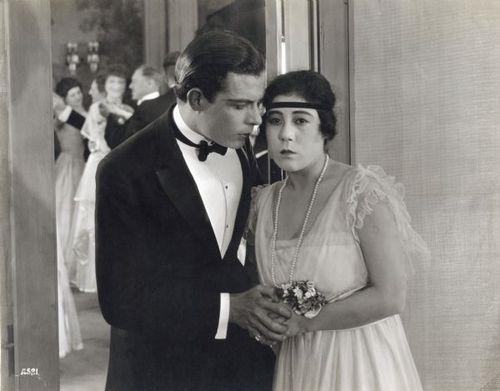
The film also touches upon the theme of religious or spiritual displacement, a concept explored in a different light in Miraklet: Tavlor ur det katolska samfundslivet. While 'Miraklet' focuses on the internal struggles of faith, Alien Souls looks at the external pressure to conform to a culture that views one’s original identity as a commodity. Aleen is pressured to change, to adapt, to become 'less alien,' yet the moment she is perceived as poor, she is discarded. Her value is entirely tied to her utility to the Western characters.
To understand the unique positioning of Alien Souls, one must look at its contemporaries. It lacks the pastoral melodrama of Enken or the rigid military structure of The Commanding Officer. Instead, it occupies a space of domestic thriller and social commentary. It has more in common with the psychological tension of Marga, Lebensbild aus Künstlerkreisen, where the artistic and the personal are irrevocably intertwined. In 'Alien Souls,' the 'art' is the performance of identity—Lin performing the lover, Aleen performing the assimilated immigrant.
The film’s climax is a powerful subversion of the typical 'save the damsel' trope. While there is a confrontation, the resolution is more about the internal realization of the characters than a physical victory. The 'sting' of the ending is not unlike The Sting of Victory, where the cost of winning is often too high to bear. For Aleen and Sakata, the victory is simply the preservation of their dignity in a world that sought to strip it away.
Technically, the film is a testament to the high production standards of the Lasky Feature Play Company. The lighting, often attributed to the innovations Hayakawa brought with him, creates a depth of field that was rare for 1916. The shadows aren't just lack of light; they are narrative tools that hide the true intentions of the characters. We see this use of atmosphere in European works like Impressioni del Reno, but here it is applied to a contemporary American setting, making the familiar look strange and threatening.
The Turnbulls' writing deserves a second look. They were able to craft a story that, while trapped in some of the racial tropes of its time, still managed to make the white protagonist the most villainous figure in the room. This was a bold move in 1916. It avoids the simplistic moralizing of The Commuters and instead leans into the darkness. There is a sense of danger that feels more akin to the pulpier Zatansteins Bande, though 'Alien Souls' keeps its feet firmly planted in the soil of social reality.
Even the minor characters contribute to this sense of a world out of balance. Violet Malone and J. Parks Jones populate the periphery as symbols of a society that is too busy with its own 'double events'—to borrow a title from The Double Event—to notice the tragedy unfolding in their midst. They represent the white noise of indifference that allows men like Lin to thrive.
Revisiting Alien Souls today is a complex experience. It is a film that reflects the prejudices of its era while simultaneously providing a platform for two of the greatest actors of the silent age to showcase their humanity. Aoki and Hayakawa transcend the script's limitations, turning a story about a 'Japanese maiden' into a profound statement on the resilience of the human spirit. The film reminds us that the most 'alien' thing in any society is not the foreigner, but the lack of empathy that allows one person to view another as a mere means to an end.
In the grand tapestry of silent cinema, this film occupies a unique thread. It is a precursor to the noir sensibility, a social document, and a showcase for a level of acting that still feels modern over a century later. It is a somber, beautiful, and ultimately haunting piece of work that lingers in the mind long after the final intertitle has faded. For any serious student of film history, it is an essential viewing—a reminder that the ghosts of the past still have much to tell us about the present.
IMDb —
1919
Community
Log in to comment.