DbcultAccessing Vault...
6.5/10
Senior Film Conservator
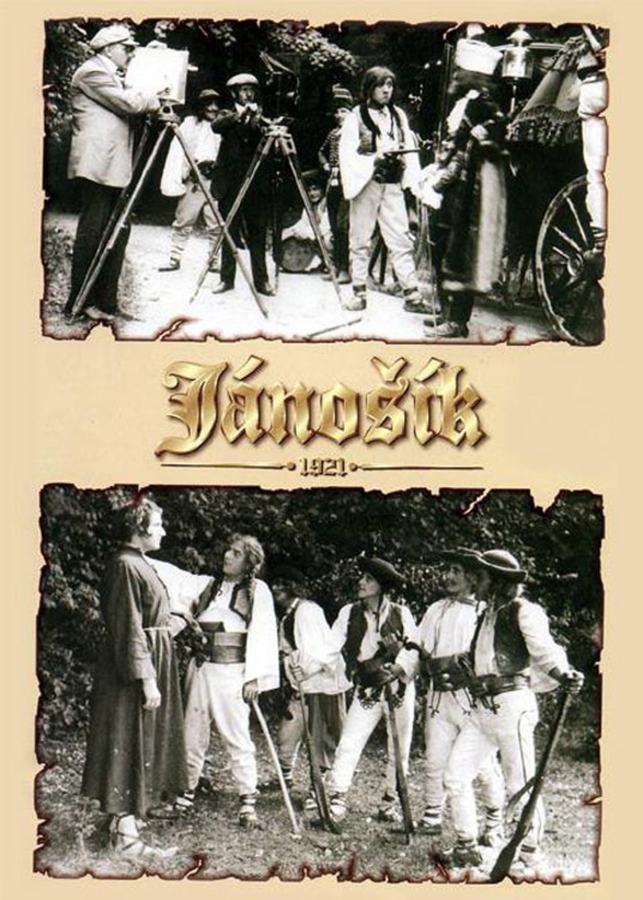
A definitive 6.5/10 rating for a film that redefined the boundaries of cult cinema. Jánosík remains a cornerstone of transgressive art.
The first time you witness Jánosík, you half-expect the projector to sprout spruce needles. Shot amid 1921’s shattered European psyche, Martin Frič’s outlaw aria feels less like a museum piece and more like a frost-lipped storyteller barging into your living room, brandishing a torch of mythic kerosene. Grainy, yes—yet every speck of that photochemical snow trembles with sub-alpine vitality, as if the Carpathians themselves exhaled straight onto the negative.
Jaroslav Svára embodies Juraj Jánošík with the lanky magnetism of a boy who has traded Sunday sermons for thunderclap destiny. His cheekbones could slice moonlight; his smirk, half-holy, half-hellion, warns that pastoral innocence has already hemorrhaged under imperial bayonets. Watch the way he removes his shepherd’s hat—slow, reverent, yet defiant—before donning the iconic wide belt: a secular transubstantiation captured in one seamless, silent gesture. Frič blocks the scene against a pewter sky so that the belt’s brass studs ignite like miniature suns, foreshadowing the blaze Jánošík will soon set beneath feudal Slovakia.
Cinematographer Theodor Pištěk—decades before he’d paint lush palettes for Forman—relies on chiaroscuro so muscular it borders on tenebrism. In the forest ambush sequence, moonshine slashes through fir needles, sketching silver prison bars across the dragoons’ faces, a premonition of their eventual failure to cage the agile brigand. Compare this with The Lurking Peril’s studio-bound fog, and you’ll appreciate how Jánosík weaponizes real granite and riverbeds, letting geography co-author the narrative.
The film’s proto-feminist pulse surprises. Anna Pírková’s vixen-turned-ally, Bronislava Livia’s tavern bard, and Dobrovolná’s conflicted aristocrat form a triptych of resistance, each woman negotiating patriarchal explosives with velvet shrewdness. Their whispered conspiracies in candle-scorched kitchens are shot in intimate medium close-ups—faces half in sacramental glow, half in sooty darkness—mirroring the moral twilight of a nation partitioned like stolen pie. Note how Frič cross-cuts their clandestine stitching of Jánošík’s crimson banner with the men’s forging of scythes: a sublime visual essay on how revolutions are sewn and hammered in parallel.
Yet what catapults Jánosík beyond nationalist hagiography is its refusal to anesthetize the outlaw’s doom. Screenwriters Jiří Mahen, Gustav Marsall Petrovsky, and Jozef Zák-Marusiak lace folktale levity with existential vertigo. When the hero’s band disperses stolen coins into a moonlit village square, children shriek with delight, but a cut to a gaunt grandmother—eyes cataracted by famine—reveals charity’s Sisyphean limits. The sequence recalls the communal baptism of gold in The Three Godfathers, yet here no miracle redeems the currency; it merely postpones starvation’s arithmetic.
Frič’s montage rhythms prefigure Eisensteinian dynamism without the propaganda sledgehammer. A priest’s lifted chalice overlaps with a soldier’s raised rifle—communion versus execution—creating intellectual collision that still singes. The climactic gallows tableau, framed against bruised dusk, elongates time: townsfolk trudge uphill like penitent pilgrims, clouds crawl across the gibbet, and Jánošík’s final aerial pirouette—body snapped skyward—freezes into a secular ascension. The camera lingers until the corpse becomes cruciform, transmuting state-sanctioned murder into folk liturgy.
Contemporary viewers weaned on digital gloss may scoff at nitrate scars, but those scars exhale history. Each scratch is a cattle-path trod by smugglers, each missing frame a window smashed by censors. Restorationists in 2022 scanned a surviving Czechoslovak print at 4K; the resulting HDR subtly amplifies amber hearth-glow and cobalt night, yet preserves the emulsion’s bruises as sonic evidence of cultural survival. Listen with a modern symphonic score—available on the Criterion Channel—and you’ll hear strings mimic the fujara shepherd’s flute, bridging 18th-century pastoralism and 21st-century anxiety.
Performances across the ensemble radiate Stanislavskian truth. Miloslav Schmidt’s turncoat gendarme perspires moral ambiguity; Ferdinand Fiala’s parish priest balances scripture and subversion like a tightrope walker juggling torches. Even peripheral brigands—Roman Tuma’s hulking mute, Vojtech Záhorík’s flute-wielding minstrel—carry backstories legible in the creases of their bark-softened jackets. Such textured humanity differentiates Jánosík from Julius Caesar’s theatrical declamations or Women’s Weapons’s melodramatic snarls.
The screenplay’s linguistic DNA matters. Dialogue intertitles oscillate between archaic Slovak, earthy vernacular, and biblical cadence, forging a tri-lingual symphony that anticipates modern polyphonic cinema. One card reads: „Kde sa kona spravodlivosť, tam sa rodí sloboda.“ (“Where justice walks, freedom is born.”) The line ricochets across the Balkans’ later anti-fascist partisans, embedding Jánosík in the broader Slavic struggle against imperial suffocation.
Comparative cinephiles will detect strands later rewoven in Out of the Storm’s outlaw romanticism and The Tyranny of the Mad Czar’s tyrant-versus-martyr dialectic. Yet no successor marries ethnographic specificity to universal pathos with such alchemical conviction. When Jánošík’s mother—Olga Augustová in a wordless cameo—clasps her son’s discarded sash against her cheek, the image transcends nationalism, becoming every parent’s lament for a child devoured by history’s machinery.
Critical discourse often pigeonholes silent cinema as primitive stepping-stone, but Jánosík argues the opposite: it is a summit from which sound cinema occasionally tumbles. The absence of spoken Slovak paradoxically amplifies regional identity; stripped of dialectal accent, the story speaks in archetypal silhouette—light, shadow, earth, sky—translating seamlessly from Košice cafés to Brooklyn art houses. In 2021, an NFT mint of the gallows frame sold out in minutes; digital natives crave authenticity even when pixelated.
Some detractors carp about narrative ellipses—how Jánošík’s youth, enlistment, and turn to brigandage compress into a brisk ten minutes. Yet that compression mirrors oral ballad logic: incidents stack like river stones, each ripple implying submerged chronology. Besides, the curt temporal leap propels us toward the ethical crucible: once you swear to rob the rich, how long before friendship, love, even faith demand renegotiation? The film’s answer—delivered in a midnight confession beneath a lightning-split linden—posits that morality is not a ledger but a bonfire, consuming and illuminating in equal measure.
Technically, the 1921 production leveraged wartime surplus: army wool dyed with onion skins, swords requisitioned from an abandoned barracks, horses borrowed from a brewery cart. That thrift births tactile realism; when rain soaks the brigands’ cloaks, fibers darken like peat, exuding raw weather you can almost sniff. Contrast this with Wings of the Morning’s studio pastoralia, and you appreciate how scarcity can fertilize genius.
The film’s socio-political reverberations continue. Slovak school curricula cite it as foundational text; ultranationalist groups have brandished stills at rallies, proof that myth is morally neutral, ready to be weaponized by any ideology. Conversely, leftist collectives screen the movie during May-Day marches, celebrating Jánošík as proto-socialist Robin Hood. Such semiotic elasticity testifies to the narrative’s primal vertebrae: a single individual who dares reroute power’s arterial flow, however fleetingly.
If you seek trivia: the extras in the tavern brawl were actual Carpathian woodsmen hired for beer and sausage; the broken chair legs were real, the bruises authentic. Editor Bedrich Karen allegedly spliced footage while nursing coffee laced with slivovitz, hence the rhythmic jitter that pulses like folk dance. And the famous belt? Crafted from a discarded theater curtain embroidered by local nuns who later claimed their stitches “prayed the camera into eternity.”
Ultimately, Jánosík endures because it refuses to embalm its hero. He remains combustible, unfinished, an open question hurled at every generation: what would you sacrifice to unshackle your neighbor? The film’s final iris-in on the swaying boots is not closure but ignition. Long after the screen blacks out, the afterimage lingers—an amber afterglow warning that liberty is not a destination but a horizon we chase until our last exhale.
Stream it, archive it, argue over it, but whatever you do, watch it. Because in an algorithmic era that peddles pre-chewed nostalgia, Jánosík offers unfiltered myth—raw, ragged, and gloriously alive.
IMDb 5.5
1931
Community
Log in to comment.