DbcultAccessing Vault...
Cult Review
Senior Film Conservator
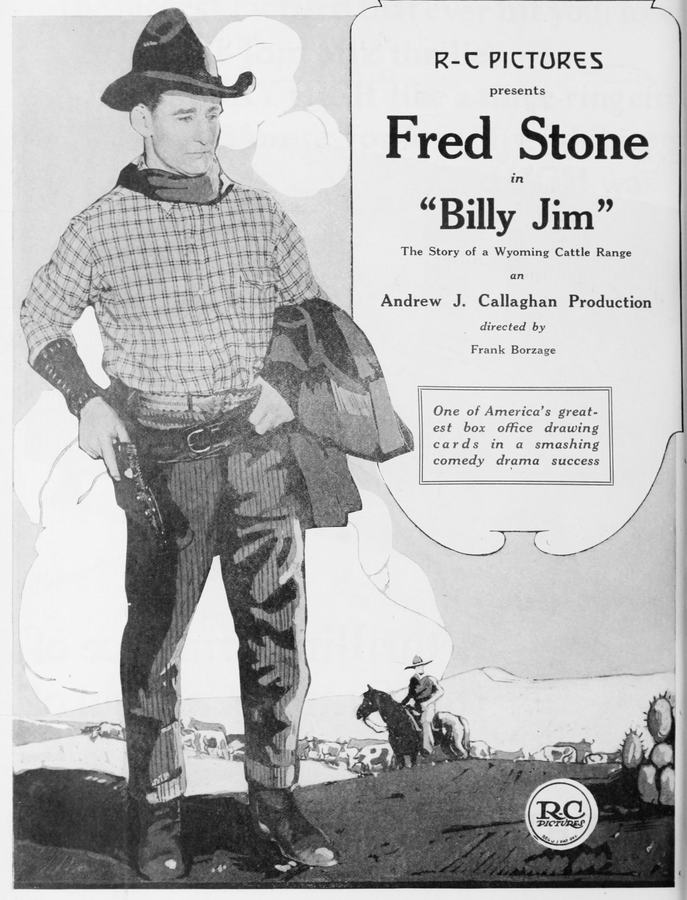
Western mythology loves its shape-shifters, but Billy Jim weaponizes the trope with such flamboyance that even the landscape seems to swap masks. Our protagonist’s dandyish fringed jacket hides a ledger of assets; his lazy drawl conceals boardroom eloquence. Directors Jackson Gregory and Frank Howard Clark—adapting Gregory’s own pulp—treat class like quicksilver: it sloshes between cattle baron and cowpoke, never settling, always gleaming.
Amour arrives not via moonlit serenade but through public chastisement. Millicent Fisher’s unnamed firebrand pins Billy Jim with a stare sharp enough to punch train tickets, and the ricochet is instantaneous. The scene is a masterstroke of silent-era psychology: no title card can reproduce the micro-tremor in George Hernandez’s eyes—half guilt, half revelation. Their chemistry detonates in a chair-bound rescue soaked in moonshine fumes, a tableau equal parts Gothic and slapstick.
Forget moral binaries. Billy Jim’s armed robbery of a card den is less felony than venture capitalism: he liquidates the winnings, buys mobility (that sputtering automobile), and reinvests in social capital by racing ahead of the woman who scorned him. The West here is a stock exchange where bullets are preferred currency and reputation trades higher than gold.
Cinematographer Frank Thorne lenses the alpine mining camp like a fever dream: cobalt glaciers press against ochre cliffs, smoke from Colt .45s hangs in crystalline air, and the horizon glows an almost radioactive tangerine. When Billy Jim disperses claim-jumpers, choreography evokes Nijinsky more than Bronco—bodies arc, hats pinwheel, hooves kick up geysers of alabaster snow. The sequence predates the kinetic editing of The Eternal Question yet feels prophetically modern.
Hernandez’s physique carries the memory of range wars in his posture; his smile, however, is pure vaudeville. The tension between those registers—laconic menace and matinee charm—fuels the film’s moral ambiguity. Watch how, in the unmasking scene, he transitions from handcuffed rogue to boardroom sovereign with nothing more than a straightened spine and a voiceless intertitle that reads simply, “Property of the Sierra Cattle Company.”
Fisher’s performance is a clinic in controlled fury. Her scolding aboard the train—eyes wide, gloved finger wagging—could have slid into caricature, yet she injects a tremor of fear, as though aware that a single woman’s reprimand might summon masculine wrath. Later, bound to the chair, she refuses the damsel’s default vapors; instead her gaze tracks every door hinge, calculating angles of escape. The result is a proto-feminist beacon amid the otherwise testosterone-drenched silents of The Brand of Cowardice vintage.
As sidekick or cantankerous card-sharp (the credits are coy), Fred Stone pirouettes through slapstick beats with the elasticity of a gum-chewing sage. His double-takes—achieved without sound—could teach modern comic editors volumes about rhythm. Each pratfall echoes the absurdism of The Egg yet lands within the Western’s rougher sandbox.
Gregory and Clark’s script ricochets across tonal continents: social satire, Gothic captivity, heist thriller, slapstick romance, corporate reveal. Miraculously, the tonal whiplash feels intentional, as though the film itself is a card-shark riffling genres to keep the audience guessing. Compare this audacity to the comparatively monochromatic moralism of The Road to Ruin and you’ll appreciate how Billy Jim anticipates post-modern pastiche decades early.
Archival records indicate the original roadshow featured a live trio blending banjo, pump-organ, and brushed snare. Today, most prints circulate mute, inviting contemporary accompanists to retrofit everything from Appalachian bluegrass to glitch electronica. Try pairing it with a pulsing synth track and you’ll be stunned how the camp–robbery montage suddenly mutates into neon-noir; swap in a string quartet and the film’s latent tragedy—rootless wealth pining for authentic connection—surfaces like a bruise.
Though Empty Arms and The Devil’s Garden mine similar territory of disguised identity, none weaponize wealth as both punch-line and salvation with such glee. The template resurfaces in Cimino’s Heaven’s Gate and even the capitalist-cowboy irony of There Will Be Blood. Billy Jim’s final ride into sagebrush immortality—only to be pursued by love brandishing his own Colt—prefigures the cyclical, almost Sisyphean romance of the genre.
Released during the Harding-era euphoria of deregulated fortunes, the film both celebrates and lampoons the ultra-rich. Billy Jim’s criminality is merely disruptive entrepreneurship until his pedigree sanitizes it. Meanwhile the father’s mining claim—embodying labor’s hope—stands defenseless without the aristocrat’s firepower. The ideological whiplash feels eerily predictive of 1929, a celluloid harbinger of speculative bubbles.
Only two 35mm prints are known: one nitrate at the Library of Congress (awaiting photochemical rescue), another reissued in 16mm safety by a private collector who occasionally loans to cinematheques. Streamers cinephiles have circulated a 2K scan ripped from a 1980s VHS off-air, riddled with vinegar syndrome streaks yet still luminous. Lobby your local archival festival; this is a title that rewards collective pleading.
Billy Jim is less a Western than a pocket-sized encyclopedia of American mythologies—class, capitalism, courtship, and the perpetual promise of reinvention. It ricochets through tones so brazenly that each new swerve feels like a dare: keep up, or eat my dust. More than a century on, that dare still crackles. Catch it before the last ember of nitrate fades to powder, and you’ll witness the moment when the frontier rode straight into the Roaring Twenties, laughing all the way to the bank.
IMDb 6.8
1921
Community
Log in to comment.