DbcultAccessing Vault...
Cult Review
Senior Film Conservator
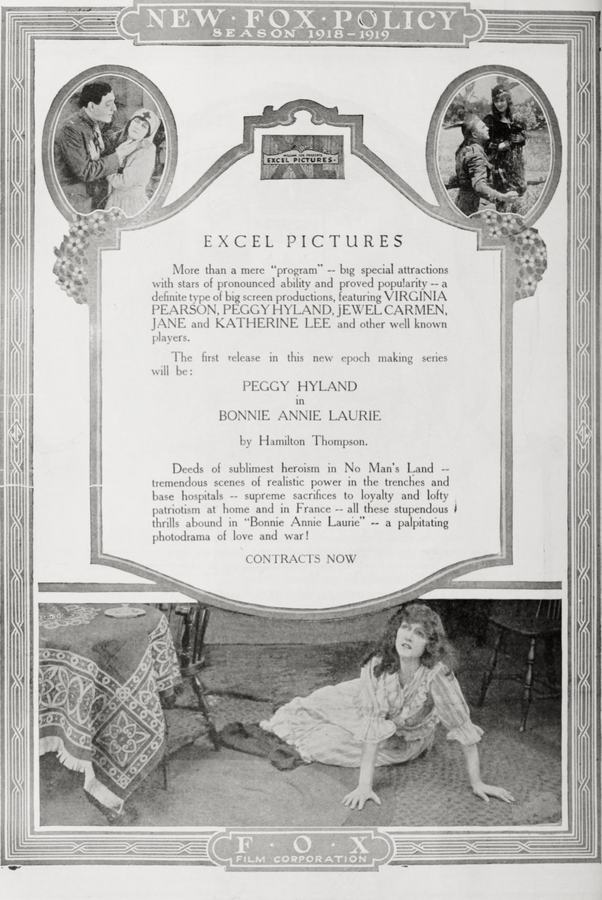
Bonnie Annie Laurie (1917) is a film that thrives in the liminal spaces between romance and tragedy, its silhouettes etched against the stark contrasts of war and domestic propriety. Directed with a delicate hand by an uncredited helmsman, the film’s core lies in its protagonist’s collision with a patriarchal world that demands both her constancy and her silence. Sidney Mason, as Annie Laurie, delivers a performance that is as much about restraint as it is about yearning—her eyes often betraying the tempest beneath her composed surface. Her chemistry with William Bailey, in the role of the enigmatic Lieutenant Hathaway, crackles with a tension that feels both desperate and inevitable, a fate sealed by the unforgiving rhythms of war.
The film’s setting is crucial to its emotional architecture. The Scottish Highlands, with their brooding cliffs and restless tides, serve as both a literal and metaphorical boundary. Annie’s cottage, perched on the edge of the sea, becomes a liminal space where the past and future converge. When Hathaway washes ashore, his arrival disrupts the fragile equilibrium of her betrothal to Donald McGregor (Dan Mason), a man whose absence on the battlefield mirrors the emotional void left by the stranger’s sudden departure. The father’s (Henry Hallam) role as a moral arbiter—driven by a fear of his daughter’s agency—is rendered with a mix of pathos and irony, his authoritarianism a relic of a vanishing order.
What elevates Bonnie Annie Laurie beyond a mere period romance is its unflinching portrayal of war’s dehumanizing effects. The scenes of Donald and Hathaway’s camaraderie on the frontlines are stark yet tender, their bond forged in the crucible of shared suffering. The film’s use of flashbacks, though rudimentary by today’s standards, effectively juxtaposes the men’s battlefield injuries with Annie’s hospital visits—a visual metaphor for the fragmentation of identity. Peggy Hyland’s supporting role as a Red Cross nurse adds a layer of resilience, her character embodying the unsung heroism of women during the war.
Thematically, the film grapples with the paradox of choice in a world governed by duty. Annie’s ultimate decision to marry Donald, despite her lingering connection to Hathaway, is not a betrayal but a surrender to societal norms. This resolution, while historically accurate, feels bittersweet in its inevitability. The writers, Lela E. Rogers and Hamilton Thompson, craft a narrative that avoids melodrama by focusing on the quiet, corrosive nature of love denied. The film’s emotional core lies in its ability to evoke empathy without overstatement, a quality that resonates with the same solemnity as The Last of the Mafia in its portrayal of fractured loyalties.
Visually, the film employs chiaroscuro lighting to striking effect, particularly in scenes where Hathaway’s shadow looms over Annie’s memories. The contrast between the sunlit shores and the shadowy interiors of the cottage mirrors the duality of her existence—one foot in the world of duty, the other in the realm of forbidden passion. While the film’s pacing occasionally lags in its middle act, these lulls are offset by moments of lyrical grace, such as a sequence where the sea’s relentless ebb and flow mirrors the cyclical nature of war and healing.
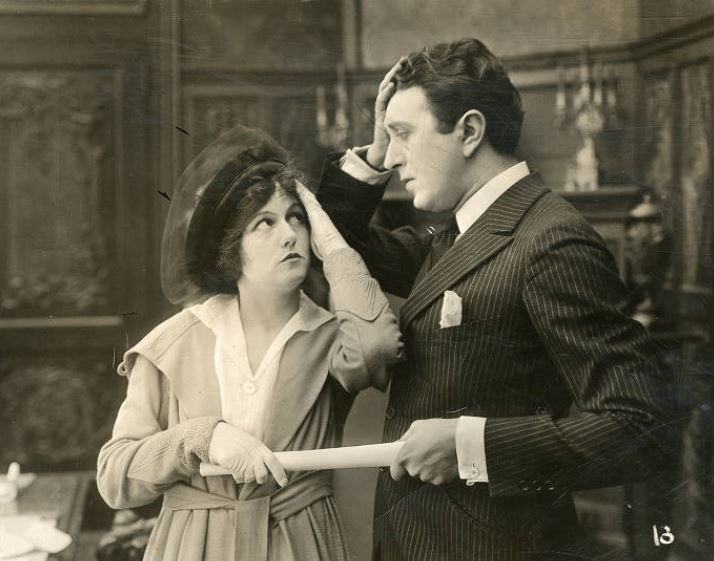
The cast’s performances are uniformly compelling, though Sidney Mason’s portrayal of Annie is the film’s beating heart. Her nuanced expressions—flickers of doubt, fleeting hope, and resigned acceptance—anchor the narrative in emotional truth. William Bailey, though given less screen time, imbues Hathaway with a quiet intensity that lingers long after his departure. Dan Mason’s Donald is a study in stoic heroism, his character’s absence on the battlefield rendered palpable through the weight of his silence.
In the broader cinematic landscape of the 1910s, Bonnie Annie Laurie occupies a unique space. It shares thematic DNA with The Floor Below, particularly in its exploration of isolation and unspoken longing, but diverges in its focus on historical context. Unlike the more action-driven Jim Bludso, this film opts for introspection, its power lying in its restraint. Comparisons to The Desire of the Moth are apt in its metaphor-laden storytelling, though Bonnie Annie Laurie leans more toward realism than surrealism.
What Bonnie Annie Laurie lacks in technical innovation, it compensates for in emotional depth. The film’s score, though minimal, enhances its melancholic tone, with a haunting violin motif underscoring Annie’s internal conflict. The editing, while rudimentary, prioritizes narrative clarity, allowing the audience to linger on key moments of connection and loss. This deliberate pacing, however, may test modern viewers accustomed to faster cuts and more dynamic storytelling.
One cannot discuss this film without acknowledging its historical significance. Released just a year before the war’s end, Bonnie Annie Laurie captures the zeitgeist of a nation grappling with unprecedented sacrifice. Its portrayal of women in roles like nursing and caregiving adds a rare dimension to early cinema, which often relegated female characters to passive archetypes. Peggy Hyland’s performance, in particular, is a testament to the resilience of women during this era, her character’s quiet strength a counterpoint to the male-dominated narratives of heroism.
Yet, the film’s most enduring legacy may be its exploration of the human capacity for forgiveness and survival. In a world where love is often a casualty of war, Bonnie Annie Laurie offers no easy resolutions—only the bittersweet acceptance that some bonds are forged in the fire of adversity, while others are extinguished by the cold hand of duty. This duality is perhaps best encapsulated in the final scene, where Annie walks away from the shore, the sea’s roar a metaphor for the unspoken truths she carries with her.
For modern audiences, Bonnie Annie Laurie is a poignant reminder of cinema’s power to distill complex emotions into visual poetry. While its historical context may demand some suspension of disbelief, the film’s emotional authenticity and thematic richness make it a compelling watch. Those seeking a nuanced take on wartime relationships will find much to admire in its quiet, unadorned storytelling. In an age where remakes often prioritize spectacle over substance, this silent gem stands as a testament to the enduring power of human connection.
IMDb —
1931
Community
Log in to comment.