DbcultAccessing Vault...
Cult Review
Senior Film Conservator
Honestly, you probably already know if you'll like J'arrose mes galons before you even hit play. If you have a soft spot for 1930s French farce where everyone seems to be in a perpetual state of mild panic, you'll be fine. If you prefer movies that don't feel like they were filmed inside a very crowded, very echoey theater, you might want to skip this one.
It’s not exactly a masterpiece, but it’s got this weird, frantic energy that’s hard to look away from. The plot? It’s thin. Like, tissue-paper thin. We’ve got soldiers trying to navigate love lives that are somehow even more complicated than their military rankings. It reminded me a bit of the chaos in Smarty, just with more uniforms and fewer fancy clothes.
The dialogue moves at a breakneck speed, mostly because everyone is shouting their lines like they're trying to reach the people in the back row of a cinema. There’s a specific scene where the timing felt so off that I actually laughed, though I’m not sure the director intended for it to be funny. It’s just the way the actors bump into each other—like they’re playing a very high-stakes game of bumper cars in a living room.
Also, notice how Marguerite Pierry just commands the screen whenever she shows up. It’s like she’s in a completely different, much better movie than everyone else. She’s got this sharp, cynical edge that makes the surrounding nonsense feel almost grounded.
It’s not a movie you go to for deep thoughts. It’s a movie you watch when you’re bored on a Tuesday and want to see what people in the 30s thought was peak comedy. It’s a bit messy, the plot wanders off, and sometimes the camera just stays still for way too long while people argue about nothing. But hey, it’s honest. It doesn't pretend to be more than a goofy, loud, slightly imperfect romp. 🎬
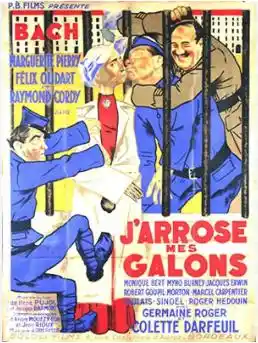
Year
1936
IMDb Rating
—

Editorial
Deciphering the legacy of transgressive cult cinema.
Community
Log in to comment.