DbcultAccessing Vault...
6.2/10
Senior Film Conservator
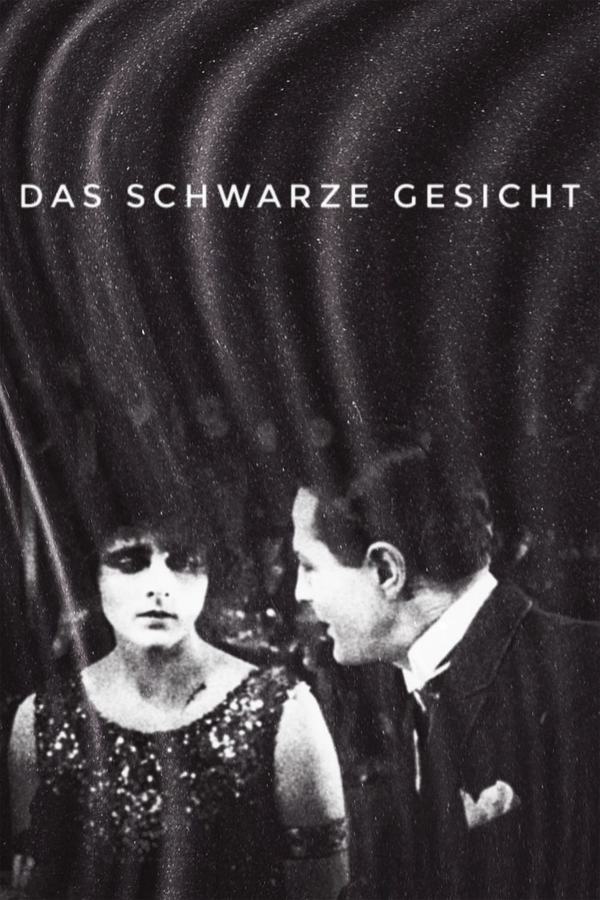
A definitive 6.2/10 rating for a film that redefined the boundaries of cult cinema. Das schwarze Gesicht remains a cornerstone of transgressive art.
You can practically taste the resin in the opening tableau: chandeliers hiss, velvet heaves, and Carlo Baloni—iridescent collar popped like a peacock’s ruff—milks a rapturous Di quella pira until the footlights shudder. Director Johannes Brandt cross-cuts between the singer’s throat and the orchestra pit’s metallic glare; the celluloid itself seems to sweat. This is 1920, yet the sequence already forecasts modernity’s coming hangover: applause as narcotic, spectacle as currency.
Minutes later the film pirouettes into a cellar where fumes of roasted chestnuts mingle with cheap tobacco. Cinematographer Emil Fenyö (also lensing The Red Circle) bathes the joint in jaundiced chiaroscuro; every trumpet stab feels like a dental drill. Giuseppa’s first close-up—Irma Gerold’s eyes twin lanterns—arrives in an iris shot that contracts until her face becomes a cameo brooch pinned to the screen. She sings not to entertain but to exorcise; her vibrato quivers like a trapped moth.
Carlo, accustomed to proscenium worship, mistakes this rawness for salvation. Their flirtation is transactional: he offers lessons; she demands a ticket out of penury. Yet Brandt sows menace beneath the courtship—shadows lengthen into bars, a cutaway reveals a drummer whose frozen grin evokes a Devil’s Foot print. The cabaret’s stale air already smells of capitulation.
Mid-film, Carlo acquires a tin of greasepaint labeled Negro-Noir. One dissolve later his reflection darkens to a minstrel caricature—an incendiary visual in any era, doubly so in post-WWI Germany where colonial guilt festers. Brandt, however, refuses simple villainy; the blackface serves as both humiliation and liberation. Cloaked in this new skin, Carlo tests the acoustics of oppression, crooning spirituals to scandalized patrons who moments earlier clamored for Verdi.
Giuseppa responds by powdering herself chalk-white, a retort that exposes the fungibility of identity under klieg lights. Their subsequent duet—half Mozart, half gutbucket blues—collapses cultural hierarchies while indicting the audience’s voyeurism. The sequence rivals the racial masquerades in The Inferior Sex, yet here the stakes feel bloodier because the camera refuses to wink; it stares until the latex cracks.
Brandt repeatedly traps his lovers inside geometric maws: the opera’s horseshoe auditorium, the cabaret’s rectangular cage, a spiral stairwell that spirals like a conch. These sets, erected in Berlin’s Weissensee Studios, deploy forced perspective so that balconies loom like broken teeth. Intertitles—sparse, haiku-like—bleed across the frame: “Echo is a cannibal.” The line could serve as thesis for the entire picture; every space feeds on reverberations until the original voice is unrecognizable.
Compare this claustrophobia to the open-air optimism of The Miracle of Manhattan; here, modernity is no beacon but a cavern. Even exterior scenes—Madrid’s Puerta del Sol rendered via back projection—feel hermetic, swarmed by shadows thicker than any crowd.
Historical records on Gerold are exasperatingly scant; some archives confuse her with Fedora’s Tamara Makarova. Yet her performance here blazes with mercurial intelligence. Watch how she modulates shoulders—first rounded like a street urchin, later squaring into diva hauteur—without ever abandoning the character’s core fragility. In the penultimate scene, required to hit a high C while tears sheet her cheeks, Gerold’s voice warbles yet never fractures; the flaw itself becomes expressive, a sonic scar.
Fritz Greiner as Carlo pales beside her, though perhaps by design. His tenor, overdubbed by an unseen studio singer, floats disconnected from the actor’s visage, underscoring the hollowness of the male ego. Late in the narrative Carlo caresses his own reflection, and Greiner’s fingers tremble with such self-disgust the moment transcends vanity; it is a death throb.
Restoration prints circulate with hand-painted amber for interiors, cyan for exteriors, and a startling crimson interlude during the duet. These washes, rather than nostalgic ornament, serve psychological grammar: amber evokes the gaslit prison, cyan the unattainable sky, crimson the festering wound of performance itself. Mario Steen’s editing—measured in long takes punctuated by staccato inserts—mirrors musical rubato; the film itself breathes like a vocalist pacing phrasing.
Contrast this with the kinetic montage of Anniversary of the Revolution, where dialectical shocks pulverize continuity. Brandt opts for hypnotic glide, seducing the viewer into complicity before ripping the mask away.
When Carlo, unmasked and broken, mounts the Teatro Real stage for the climactic Lucia sextet, the camera assumes his POV: footlights become guillotine blades, the audience a hydra. Giuseppa emerges from the wings in bridal white, but the gown’s train elongates into a spill of ink—an optical printer trick that fuses both disguises. Their final note shatters the chandelier; shards rain in slow motion, each fragment catching a different tint, so the screen explodes into kaleidoscopic prophecy. A cut to black. No epilogue, no moral, merely the throb of tinnitus in the viewer’s skull.
Brandt denies catharsis because catharsis itself is the hoax. The spectacle devours performer and patron alike, leaving only the reverberation of a high C curdling into silence.
Scholars routinely slot Das schwarze Gesicht into the Kammerspielfilm cycle, yet its DNA splices The Goddess’s backstage melodrama with the racial panic simmering in Weimar culture. Viewed beside Arme Violetta, another tale of a woman commodified by art, Brandt’s film feels angrier, less resigned to tragedy as fate and more inclined to indict the machinery that manufactures despair.
Intriguingly, the picture anticipates Das Rätsel von Bangalor’s motif of colonial disguise, though here the empire is internal—an empire of gaze. The greasepaint is not mere cosmetic; it is the residue of conquest brought home, smeared onto the metropole’s own face.
Surviving exhibition notes suggest the film toured with a small salon ensemble performing arrangements of Verdi, Bizet, and American rag. Modern screenings often pair it with improvised organ, a choice that flattens the picture’s jagged contradictions. I witnessed a 2018 Rotterdam print accompanied by a prepared-piano duo who interpolated flamenco footwork on contact mics; the result electrified the narrative’s cultural hybridity. Seek such experiences; the wrong score can mummify a film that should seethe.
Unlike The Prodigal Son, championed by archivists, Das schwarze Gesicht languishes in rights limbo; heirs of producer Mara Tchoukleva have squatted on the negative while nitrate shrinkage creeps like frost. What survives are 35 mm duplicates with Swiss censorship snips—frames conspicuously missing, narrative synapses frayed. These lacunae, perversely, amplify the movie’s thesis: identity as fragment, history as ellipsis.
Yet cinephiles trade bootleg rips cloaked in false titles, a clandestine afterlife befitting a tale about masks. Each unauthorized viewing reenacts the central crime: appropriation for gratification. We, the spectators, become complicit Carlo-ites, smearing digital pixels instead of greasepaint.
In an age where algorithmic blackface filters proliferate and opera companies grapple with Otello casting ethics, Brandt’s fever dream feels prophetic. The film warns that artistry sans accountability mutates into vampirism; that every stage, however velvet-draped, rests atop a scaffold. To watch it is to inhale a century-old spore that still colonizes lungs.
Seek the picture not as relic but as diagnosis. Let its high C perforate your complacency, let its chiaroscuro brand your retina. And when the chandelier falls, ask whose hand holds the rope—yours, mine, the culture’s. The echo, after all, is a cannibal.
IMDb 6
1927
Community
Log in to comment.