DbcultAccessing Vault...
Cult Review
Senior Film Conservator
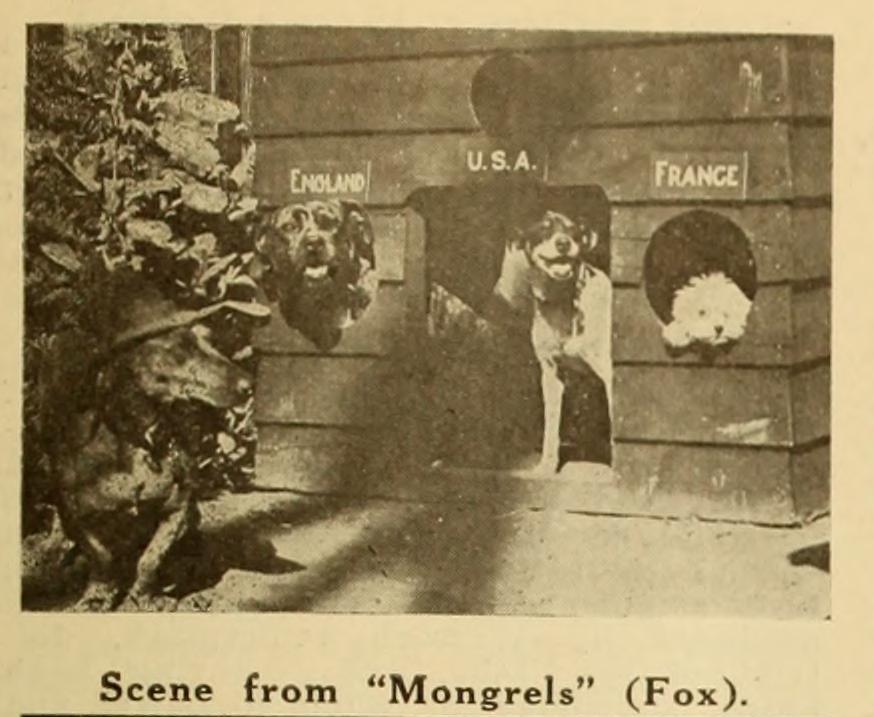
In the vast, often-overlooked annals of early cinema, where flickering shadows danced across silver screens and narrative prowess was conveyed through gesture, expression, and the rhythmic cadence of a piano score, certain films emerge as unexpected revelations. Such is the case with "Mongrels," a 1917 comedic offering that, despite its relative obscurity in mainstream discourse, stands as a testament to the inventive spirit and enduring appeal of silent-era slapstick. Far from being a mere historical curiosity, this picture, featuring the talents of Jimmie Adams, Gertrude Selby, and Dave Morris, among others, unfurls a delightful spectacle that transcends its temporal origins, delivering a masterclass in physical comedy and subtle allegorical commentary. To dismiss "Mongrels" as simply another antique would be a grave disservice; it is, rather, a vibrant, effervescent piece of cinematic artistry that continues to elicit genuine mirth with its audacious gags and meticulously choreographed chaos.
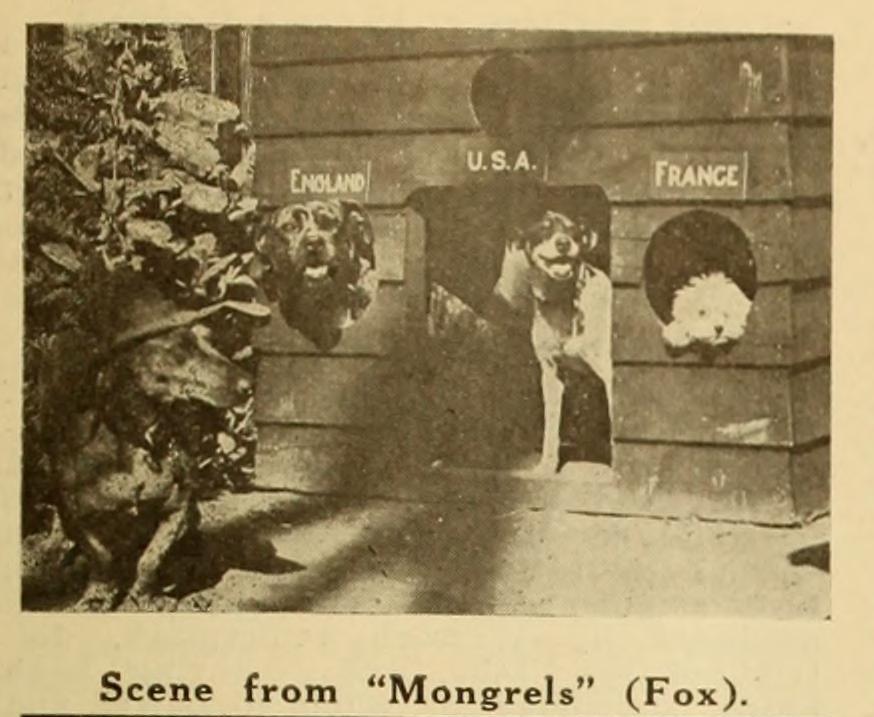
The film commences not with a direct plunge into its central comedic premise, but with a remarkably astute and charmingly executed allegorical skit that sets a surprisingly sophisticated tone. This opening sequence, a playful re-enactment of global power dynamics through the innocent guise of canines, immediately distinguishes "Mongrels" from many of its contemporaries. We are introduced to a French poodle, embodying a certain Gallic elegance and territorial pride, clutching a cherished bone. The orchestral accompaniment, a jaunty rendition of "Oh, Frenchy," underscores this nationalistic caricature with a delightful musical flourish. This idyllic scene of possession is soon disrupted by the arrival of a German dachshund, its predatory intent palpable as it endeavors to usurp the poodle's prized possession. The tension, though presented humorously, mirrors the nascent anxieties and rivalries that characterized the pre- and early World War I era, a period of profound geopolitical flux. The poodle's subsequent frantic search for John Bulldog – a clear personification of British resolve and strength – and the eventual, decisive entrance of an American terrier, accompanied by the stirring strains of "You're a Grand Old Flag," completes this ingenious canine tableau. This segment, far from being a mere throwaway gag, functions as a miniature, self-contained narrative, a brilliant piece of visual shorthand that playfully critiques international relations. It’s a testament to the filmmakers' subtle wit, demonstrating an ability to weave socio-political commentary into the fabric of light entertainment, a feat not always achieved with such deftness even in more overtly dramatic works. Contrast this with the earnest, often heavy-handed allegories found in films like Der Thug. Im Dienste der Todesgöttin, where symbolism serves a much darker, more serious purpose. "Mongrels," by comparison, uses its allegorical framework to disarm and amuse, preparing the audience for the subsequent comedic onslaught with a knowing wink.
Following this remarkably insightful preamble, "Mongrels" sheds its allegorical skin and plunges headfirst into the realm of unbridled farce. The transition is seamless, signaling a shift from pointed satire to pure, unadulterated comedic mayhem. The plot, if one can call it a singular, linear entity, becomes a vehicle for a relentless succession of gags, pratfalls, and absurd situations. The film doesn't labor under the weight of a complex narrative arc; rather, it thrives on the instantaneous gratification of the laugh. Each moment is meticulously crafted to elicit a chuckle, a guffaw, or an outright belly laugh, proving the initial description of "a laugh every moment" to be not hyperbole, but an accurate promise. This commitment to continuous comedic output is a hallmark of the era's best silent comedies, echoing the relentless pacing seen in works by masters like Buster Keaton or Charlie Chaplin, though perhaps with a slightly less philosophical bent than the latter. While a film like The Matrimaniac offers a more structured, albeit still comedic, narrative journey, "Mongrels" leans into a more episodic, gag-driven approach, where the joy is in the immediate, visceral reaction to each comedic set-piece.
The success of "Mongrels" rests heavily on the shoulders of its talented cast, who navigate the physical demands of silent comedy with remarkable agility and expressive clarity. Jimmie Adams, a name perhaps not as universally recognized as some of his contemporaries, delivers a performance that is both energetic and nuanced. His comedic timing is impeccable, a crucial attribute in a genre where pauses and reactions speak volumes. Adams possesses a rubbery physicality, capable of contorting himself into hilariously awkward predicaments, yet he never descends into mere buffoonery. There’s an underlying intelligence to his characterizations, even amidst the most chaotic scenes. He embodies the everyman caught in extraordinary circumstances, a relatable figure whose escalating frustrations are a source of endless amusement. His ability to convey complex emotions through exaggerated facial expressions and precise body language is a masterclass in silent acting.
Gertrude Selby, a performer whose presence often brought a delightful vivacity to the screen, shines brightly in "Mongrels." Her comedic contributions are essential, providing a counterbalance to the more boisterous antics of her male co-stars. Selby's characters often exhibit a spirited independence and an astute awareness of the absurdity unfolding around them. She avoids being a mere damsel in distress or a passive observer, instead actively participating in the comedic chaos, often initiating or cleverly escalating the predicaments. Her expressive eyes and subtle shifts in demeanor communicate volumes, allowing her to convey exasperation, surprise, and mischievous delight with equal measure. Her dynamic with Adams is particularly engaging, showcasing a chemistry that elevates their scenes beyond simple gag delivery to something more akin to a comedic pas de deux. This kind of robust female role was not always a given in early cinema, making Selby's performance all the more noteworthy, perhaps even more so than some of the more restrained female leads in dramas like The Scarlet Trail or Helene of the North, where the focus was often on stoicism rather than overt expressiveness.
Dave Morris contributes significantly to the film's comedic tapestry with his distinctive presence. Often cast in roles that require a certain authoritative bluster or a perpetually bewildered air, Morris brings a grounded, yet equally absurd, energy to his character. His reactions are often delayed, allowing the audience to anticipate the comedic payoff, or his attempts to restore order inadvertently exacerbate the chaos, a classic comedic trope he executes with precision. Lloyd Hamilton, another stalwart of silent comedy, demonstrates his characteristic knack for physical gags and understated humor. His ability to appear utterly serious while engaged in the most ludicrous actions creates a wonderful comedic tension. Hamilton's contributions, though perhaps less central than Adams' or Selby's, are vital in rounding out the ensemble, adding layers of comedic texture to the unfolding pandemonium. Charles Dorety, with his often gruff or exasperated persona, serves as an excellent foil, absorbing the brunt of many of the film's physical jokes and reacting with a delightful mix of indignation and resignation. The collective synergy of these performers is palpable; they operate as a well-oiled machine, each understanding their role in the grand comedic design, building upon each other’s gags to create a cumulative effect of escalating hilarity. Unlike the often singular focus on a lead in a drama like The Christian or Ivanhoe, "Mongrels" flourishes as a true ensemble piece, where the interplay between characters is as important as any individual's performance.
In silent cinema, the director's vision and the cinematographer's eye are paramount, especially in comedies where timing and visual clarity are everything. While specific directorial credits for many early films can be hazy, the execution in "Mongrels" speaks volumes about a keen understanding of cinematic rhythm and spatial dynamics. The camera work, though perhaps less overtly experimental than some avant-garde pieces of the era, is remarkably effective in capturing the fast-paced action without sacrificing intelligibility. Shots are framed to maximize comedic impact, often allowing the full extent of a physical gag to unfold within the frame, ensuring that the audience doesn't miss a single pratfall or bewildered expression. The editing is crisp, driving the narrative forward with an energetic tempo that prevents any scene from overstaying its welcome. This meticulous pacing is crucial for sustained comedic effect; a joke that lingers too long loses its punch. The filmmakers demonstrate an acute awareness of this, cutting at precisely the right moment to enhance the laugh. The use of intertitles is minimal, a testament to the actors' ability to convey meaning through their performances, and when they do appear, they are succinct and serve to advance the plot or deliver a punchline without disrupting the visual flow. This visual economy is a hallmark of effective silent storytelling, a skill also evident in the precise narrative progression of films like The Bigger Man, albeit in a dramatic context.
Furthermore, the set designs and locations, while seemingly straightforward, are ingeniously utilized to facilitate the comedic scenarios. Whether it’s a cluttered domestic interior ripe for destruction or an outdoor setting that allows for chases and elaborate physical stunts, every element seems to conspire in favor of the gag. The dynamic between characters and their environment is a constant source of humor, demonstrating a thoughtful approach to production design that extends beyond mere background dressing. The visual gags are often multi-layered, with several simultaneous actions unfolding, requiring the viewer to pay close attention to fully appreciate the intricate choreography of chaos. This attention to detail in visual storytelling is a characteristic shared by many successful films of the era, from the intricate plotting of The Strange Case of Mary Page to the opulent settings of Die Königstochter von Travankore, though "Mongrels" applies it to the service of pure comedic delight.
What makes "Mongrels" resonate even today, over a century after its initial release? It’s not merely the nostalgia for a bygone era, nor is it solely its historical significance as a product of early cinema. The film's enduring appeal lies in its universal language of laughter. Physical comedy, when executed with precision and genuine heart, transcends cultural and temporal barriers. The pratfalls, the exaggerated reactions, the escalating misunderstandings – these are comedic staples that remain effective regardless of the technological advancements in filmmaking. The sheer inventiveness of the gags, combined with the committed performances of its cast, ensures that "Mongrels" remains genuinely funny. It is a reminder that the foundational principles of comedy – timing, character, and absurdity – are timeless. While silent film dramas like Jealousy or The Mother Instinct might require a deeper historical context to fully appreciate their dramatic nuances, the humor in "Mongrels" is often immediate and requires little translation.
In an age where cinematic experiences are often dominated by complex narratives, advanced special effects, and sophisticated psychological explorations, there is a refreshing simplicity to the comedic ethos of "Mongrels." It doesn't aim to delve into the human condition with profound introspection, nor does it seek to revolutionize cinematic technique. Instead, its ambition is singular and perfectly realized: to entertain, to amuse, and to provide a continuous stream of joyous laughter. And in this endeavor, it succeeds magnificently. Its legacy, though perhaps understated, is that of a film that perfectly encapsulates the vibrant, unpretentious spirit of early screen comedy. It stands as a delightful counterpoint to the more dramatic or grand-scale productions of its time, such as Das Geheimschloss or The Reckoning, demonstrating that profound entertainment can also be found in the lighter, more whimsical corners of the cinematic landscape. It reminds us that sometimes, the most profound cinematic experiences are those that simply make us smile, that lift our spirits with their infectious energy and their unwavering commitment to the art of the gag.
For enthusiasts of silent cinema, for those curious about the roots of screen comedy, or simply for anyone in need of a good, honest laugh, "Mongrels" is a film that unequivocally deserves to be rediscovered. It is a vibrant, kinetic, and utterly charming piece of filmmaking that, despite its age, feels remarkably fresh. The initial allegorical sequence alone is worth the price of admission (or the click of a play button), offering a glimpse into the cleverness that permeated even the most seemingly straightforward comedies of the era. But it is the subsequent, unrelenting cascade of comedic brilliance, expertly delivered by a committed cast, that truly cements its place as a minor masterpiece of mirth. There's a joyful abandon to the performances, a clear sense that everyone involved was having a grand time crafting this spectacle of silliness, and that infectious enthusiasm translates directly to the viewer. It's a film that embodies the pure, unadulterated pleasure of cinema, a delightful artifact that continues to deliver on its promise of "a laugh every moment." Much like discovering a hidden gem in art history, such as an early work by a renowned painter, encountering "Mongrels" offers a unique window into the foundational ingenuity of the medium. Its accessibility, its sheer entertainment value, and its subtle intellectual undercurrents make it a compelling watch, proving that true comedic genius, much like true art, is indeed timeless. It stands proudly alongside other delightful and often overlooked works, like The Purple Dress or En kunstners kærlighed, showcasing the breadth and depth of early cinematic offerings.
IMDb 5.6
1937
Community
Log in to comment.