DbcultAccessing Vault...
3.8/10
Senior Film Conservator
A definitive 3.8/10 rating for a film that redefined the boundaries of cult cinema. Jeffries-Sharkey Contest remains a cornerstone of transgressive art.
The flickering shadows of the late 19th century held a peculiar fascination for movement, for the capture of life in its rawest, most dynamic forms. Among the earliest and most compelling cinematic ventures into this realm was the recording of prize fights, brutal ballets of strength and will that predated the more polished narratives of the silver screen. The Jeffries-Sharkey Contest, a monumental 25-round heavyweight championship bout from 1899, stands as a stark, unvarnished testament to this pioneering spirit. It is not merely a film; it is an archaeological excavation of an era, a direct portal to a moment when cinema was less an art form and more a miraculous extension of human perception, capable of preserving the ephemeral for posterity.
To speak of 'acting' in the context of William A. Brady and James H. White within this film is to fundamentally misunderstand its nature. These are not performers; they are participants, their roles dictated by the unforgiving demands of the ring. Brady, representing James J. Jeffries, and White, embodying Tom Sharkey, are captured in their purest, most unadulterated form. The camera, a stoic observer, records their every grunt, every strategic feint, every devastating blow. This is reality cinema at its most fundamental, predating the very concept of 'documentary' as we understand it, yet laying its foundational bricks with each frame. The absence of a discernible 'writer' for such a piece is, in itself, a profound statement: the narrative is written by the fists and fortitude of the men themselves, their story unfolding in real-time, unscripted and unembellished.
The significance of the Jeffries-Sharkey Contest cannot be overstated when viewed through the lens of sports history and the evolution of media. Before the ubiquity of radio, let alone television, the moving picture offered an unprecedented opportunity for vast audiences to witness events previously restricted to a privileged few. While earlier efforts like The Corbett-Fitzsimmons Fight (1897) and its Reproduction of the Corbett and Fitzsimmons Fight had already established the commercial viability and public appetite for filmed boxing, the Jeffries-Sharkey bout pushed the boundaries further. It captured a grueling, extended engagement, demanding more from the nascent technology and the stamina of the camera operators. The sheer length of the contest – twenty-five rounds – presented immense logistical challenges for filming, from managing film stock to ensuring consistent lighting, a feat in itself given the primitive equipment of the era. This was not a quick vignette, but an epic, drawn-out struggle, faithfully recorded.
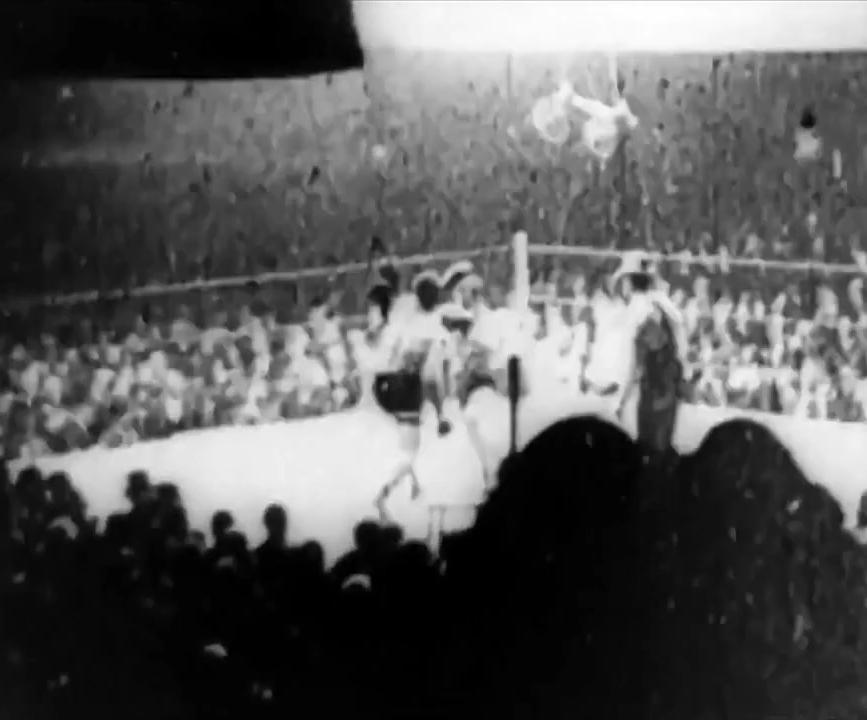
The aesthetic of the film is one of brutal utility. There are no dramatic close-ups, no artful camera angles designed to heighten tension. The camera is largely static, a fixed gaze on the squared circle, mimicking the experience of a ringside spectator, albeit one with an unblinking eye and an impossibly long memory. This lack of cinematic embellishment paradoxically lends the film an almost archaeological authenticity. We are not being told a story; we are observing an event. The grainy texture, the occasional jump in the footage, the stark contrast of light and shadow – these are not flaws but inherent characteristics that underscore its vintage, reminding us of the fragility and wonder of early film capture. The spectacle is in the raw physicality, the sweat, the grimaces, the sheer will etched onto the faces of the combatants. It is a testament to the endurance of the human spirit, magnified by the burgeoning power of the cinematic lens.
James J. Jeffries, known as the 'Boilermaker', entered this contest as a formidable force, a man whose physical presence and raw power were legendary. He was a champion in the making, his style characterized by relentless pressure, an iron chin, and devastating punching power. Tom Sharkey, while perhaps less celebrated in the annals of heavyweight history, was no less a warrior. Known for his tenacity and ability to absorb punishment, Sharkey was a relentless brawler, always moving forward, always engaging. The film captures this dynamic beautifully: Jeffries, the inexorable force, slowly, methodically breaking down Sharkey, who embodies a defiant, almost tragic resilience. Each round is a mini-drama, a testament to tactical adjustments and sheer fortitude. The viewer, even through the veil of time and the limitations of the medium, can discern the strategic shifts, the moments of dominance, and the desperate rallies. It is a masterclass in athletic endurance, stretching across a remarkable twenty-five rounds, a length almost unimaginable in contemporary boxing.
The historical context of this fight is crucial. Boxing in the late 19th century was a brutal, bare-knuckle (or nearly bare-knuckle) affair, often conducted in clandestine or semi-legal settings. The public fascination was immense, a blend of morbid curiosity and genuine admiration for athletic prowess. Capturing such an event on film transformed it, democratizing the experience and allowing it to transcend its immediate time and place. Unlike staged theatrical performances or simple parades, which also found their way onto early celluloid – for instance, the ceremonial precision of 69th Regiment Passing in Review or the playful antics of Dressing Paper Dolls – the prize fight was an unscripted, high-stakes drama. The Jeffries-Sharkey Contest, therefore, served a dual purpose: it was a chronicle of a significant sporting event and a pioneering experiment in capturing prolonged, unscripted human action for mass consumption. It demonstrated cinema's potential not just for entertainment, but for documentation and historical preservation.
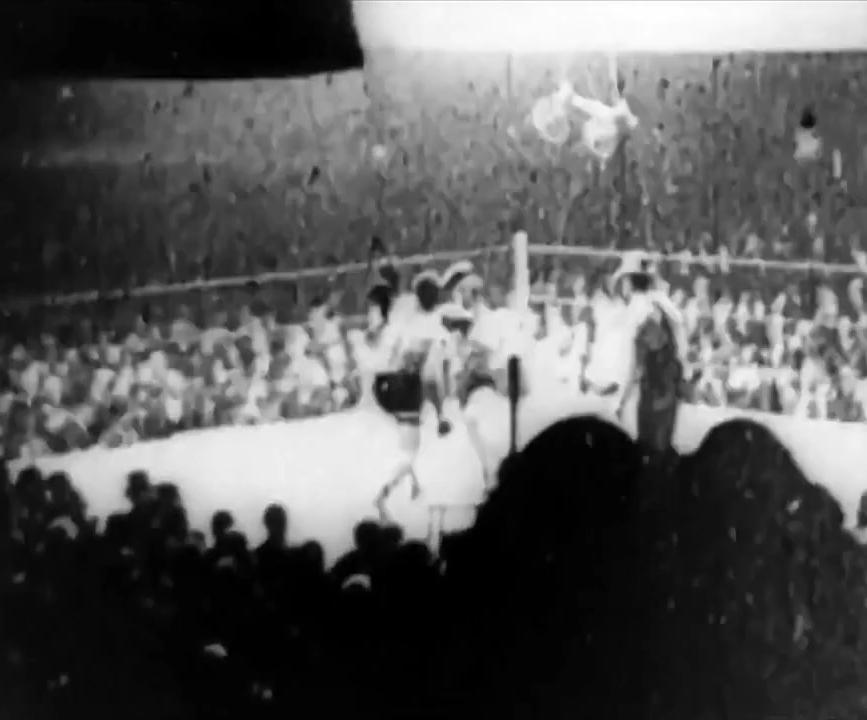
The technical challenges involved in filming the Jeffries-Sharkey Contest were formidable. Early motion picture cameras were cumbersome, film stock was expensive and prone to degradation, and lighting often relied heavily on natural sunlight or powerful, yet temperamental, arc lamps. To sustain filming for twenty-five rounds, approximately an hour of actual fight time, plus intermissions, would have required meticulous planning and execution. The resulting footage, though perhaps choppy by modern standards, represents a triumph of early cinematic engineering. It speaks to the ingenuity of the cinematographers and technicians who wrestled with these limitations to bring such a grand spectacle to audiences across the nation and beyond.
This film, alongside its contemporaries, played a pivotal role in shaping public perception of cinema itself. It proved that moving pictures could offer more than just fleeting glimpses of everyday life, such as the workers departing in Saída dos Operários do Arsenal da Marinha or the street scenes of A Rua Augusta em Dia de Festa. It demonstrated cinema's capacity for narrative (even if a sports narrative), for extended engagement, and for capturing events of national interest. The public's appetite for such films was voracious, driving the expansion of nickelodeons and early movie theaters. The Jeffries-Sharkey Contest was not just watched; it was experienced, discussed, and replayed, contributing to the burgeoning cultural phenomenon of cinema.
The film also implicitly raises questions about realism and authenticity in early cinema. While the fight itself was undeniably real, the act of filming and presenting it transformed it into a curated experience. The camera's perspective, the editing (however rudimentary), and the exhibition context all contributed to how the event was perceived. This foundational tension between documented reality and cinematic presentation is a thread that runs through the entire history of film, beginning with these early attempts to capture unscripted life. It contrasts with films like O Campo Grande or O Carnaval em Lisboa, which, while also observational, often focused on public events with a more festive or communal atmosphere. The Jeffries-Sharkey Contest, however, captured an event of direct, intense conflict, pushing the boundaries of what could be considered 'spectacle'.
In its current form, often viewed through digitized, restored versions, the Jeffries-Sharkey Contest remains a powerful, if challenging, viewing experience. The slow, almost deliberate pace of the early rounds, the relentless grind of the middle, and the final, decisive moments when Jeffries finally asserts his ultimate superiority, offer a profound insight into the sport and the men who defined it. It is a document of human physicality pushed to its limits, a visceral reminder of a time when entertainment was often less refined but arguably more raw and immediate.
The film’s historical importance extends beyond boxing. It is a crucial artifact in the study of early film exhibition, distribution, and audience reception. It represents a significant step in cinema's journey from a scientific curiosity to a mass medium. Each frame, with its inherent imperfections, tells a story not just of a fight, but of an industry finding its footing, discovering its voice, and grappling with the immense potential of capturing and replaying reality. It serves as a stark reminder of the foundational era, where the very act of seeing moving images was a marvel, and the content, however simple, held an almost magical allure. Its influence can be traced through subsequent sports films, documentaries, and even the narrative structures that would later define dramatic cinema – the build-up, the conflict, the resolution, all present in this primitive yet powerful record.
Considering the film in comparison to more abstract or purely observational early works, such as the fleeting glimpses of life in Birmingham, the Jeffries-Sharkey Contest stands out for its sustained focus on a single, dramatic event. It possesses a narrative arc, however rudimentary, that engages the viewer in a way that mere 'actualities' often did not. It asks for an investment in the outcome, a sympathy for the struggle, a recognition of the victor's triumph and the loser's valiant effort. This makes it a more compelling watch, even today, for those willing to look beyond the technical limitations and appreciate its historical weight and visceral impact.
Ultimately, the Jeffries-Sharkey Contest is a foundational text in the cinematic lexicon. It is a testament to the raw power of early film to capture, preserve, and disseminate human drama on an unprecedented scale. It chronicles not just a boxing match, but a pivotal moment in the history of both sport and cinema, a moment when the flickering image began its long, transformative journey into the heart of global culture. Its endurance, despite its age and primitive nature, speaks volumes about the timeless appeal of human struggle, triumph, and the camera's unique ability to immortalize them.
IMDb —
1923
Community
Log in to comment.