DbcultAccessing Vault...
6.2/10
Senior Film Conservator
A definitive 6.2/10 rating for a film that redefined the boundaries of cult cinema. Opus II remains a cornerstone of transgressive art.
The year 1921 witnessed an aesthetic rupture that most contemporary audiences, tethered to the burgeoning melodrama of the studio system, were scarcely prepared to comprehend. While the majority of the cinematic output was preoccupied with the moralizing narratives found in works like The Devil's Needle or the sentimental domesticity of Lovely Mary, Walter Ruttmann was busy dismantling the medium itself. With Opus II, Ruttmann did not merely provide a sequel to his previous experiment; he refined a language that sought to liberate the moving image from its subservience to literature and theater.
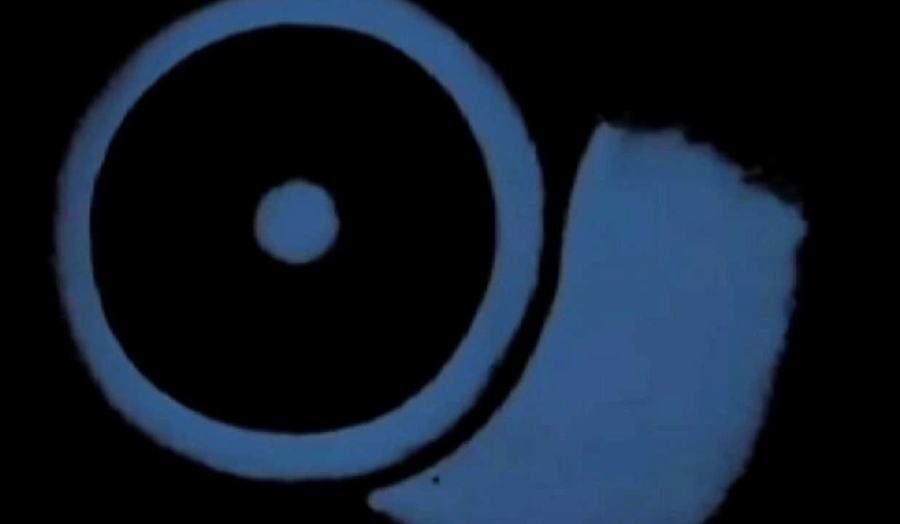
To watch Opus II is to witness the birth of a new sensory hierarchy. Ruttmann, an architect and painter by training, approached the celluloid strip as a four-dimensional space. Unlike the rigid social hierarchies explored in The Woman in the Case, where character motivation drives the frame, Ruttmann’s motivation is purely formal. He employs what he termed "Malerei mit Zeit"—painting with time. In this short but dense visual excursion, we see the screen populated by shapes that do not represent objects, but rather embody states of being.
The technical prowess required to execute such a vision in the early 1920s cannot be overstated. Ruttmann utilized a specialized animation table of his own design, involving layers of glass and shifting cutouts, which allowed for a fluidity of motion that feels surprisingly organic. While films like The Law of Nature attempted to capture the physical world through a documentary or educational lens, Opus II seeks a higher truth through abstraction. It is a world of pure becoming, where a curve is not part of a body, but a trajectory of energy.
The intellectual climate of post-war Germany was a pressure cooker of radical ideas. The devastation of the Great War had shattered the belief in traditional representation. If the world was broken, why should art reflect it realistically? This sentiment is echoed in the somber tones of With Serb and Austrian, but where that film looks back at the trauma of conflict, Ruttmann looks forward toward a spiritualized technology. He was deeply influenced by the concept of synesthesia—the blurring of the senses where one might 'see' music or 'hear' color.
In Opus II, the rhythm is the protagonist. The way a shape expands and contracts mimics the inhalation and exhalation of a living creature, yet it remains resolutely non-figurative. This creates a psychological tension for the viewer. We are programmed to search for faces, for stories, for the 'invisible bond' that connects us to the screen, much like the themes in The Invisible Bond. However, Ruttmann denies us this comfort. He forces us to engage with the screen on a primal, visceral level. The flickering light is no longer a window into a story; it is a direct stimulus to the optic nerve.
When we place Opus II alongside its contemporaries, the contrast is startling. Consider Faith (1919) or The Crucial Test. Those films rely on the 'kuleshov effect' and the juxtaposition of human emotion to elicit a response. Ruttmann, conversely, relies on the inherent weight of a line and the velocity of a color shift. His work is closer to the mathematical beauty of Close to Nature, yet it possesses a deliberate artifice that rejects the passivity of the natural world.
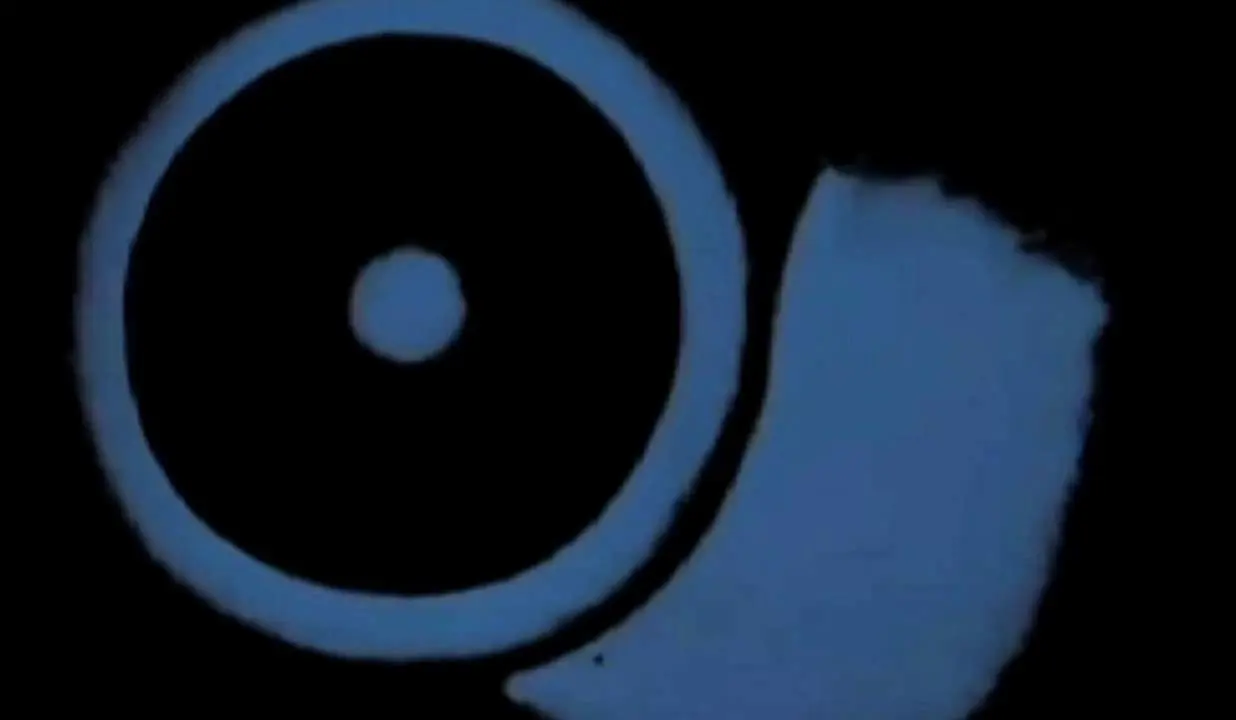
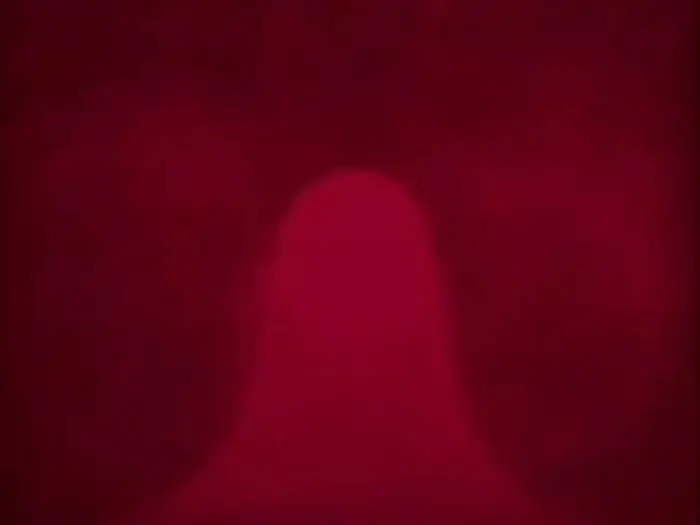
The hand-tinting in Opus II is particularly noteworthy. Each frame was a miniature canvas. The use of deep oranges and vibrant yellows creates a sense of warmth and movement that black and white photography of the era, such as in Humdrum Brown, simply could not achieve. Ruttmann’s colors are not descriptive; they are emotive. They don't tell you it's sunset; they make you feel the heat of the light. This is a radical departure from the literalism found in Golfo di Napoli, where the camera merely observes the beauty of a location. Ruttmann constructs beauty from the void.
As we delve deeper into the visual mechanics of the film, we notice a recurring motif of soft, rounded shapes that seem to emerge from the darkness. This 'emergence' is a key philosophical component of the absolute film. It represents the struggle for form against the chaos of the void, a theme perhaps unintentionally echoed in the melodramatic struggles of Reclaimed: The Struggle for a Soul Between Love and Hate. However, while Reclaimed deals with the soul in a moral sense, Ruttmann deals with the 'soul' of the medium itself.
The duration of Opus II is brief, yet its impact is expansive. It demands a level of concentration that most narrative films, like the adventure-laden The Pool of Flame, do not. In a narrative film, the viewer is often ahead of the plot, anticipating the next beat. In Opus II, the viewer is always in the present moment. There is no 'next' because there is no 'before.' There is only the immediate, hypnotic presence of the shape on the screen. This phenomenological approach to cinema prefigures the structuralist and experimental movements of the 1960s and 70s.
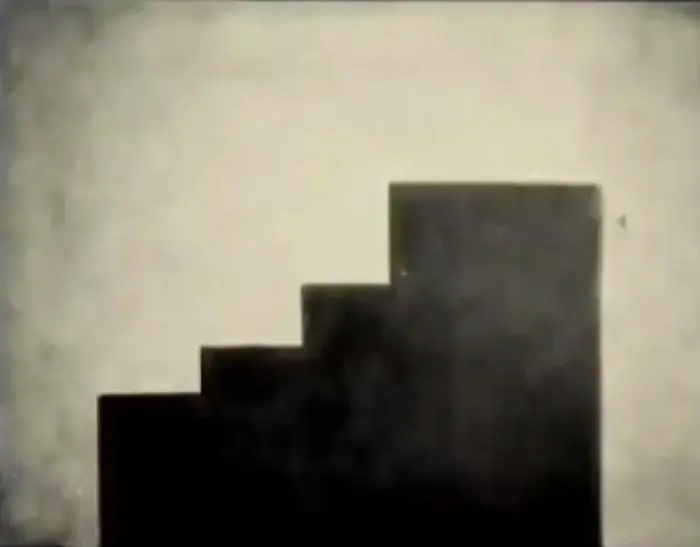
Is Opus II still relevant in an age of CGI and infinite digital manipulation? The answer is a resounding yes. In fact, the physical texture of Ruttmann’s work—the slight imperfections in the hand-painted frames, the subtle jitter of the animation—provides a tactile reality that modern digital effects often lack. There is a sense of human labor and artisanal precision that connects Ruttmann to the master painters of the past. His work is a bridge between the brush and the projector.
Furthermore, the film challenges the commercialization of the image. In an era where cinema was quickly becoming a mass-market commodity, as seen in the popularity of detective serials like Manden med de ni Fingre V, Ruttmann’s work stood as a bulwark of pure artistry. He was not interested in ticket sales or celebrity; he was interested in the limits of human expression. This purity is rare. Even in the Hungarian drama A Dolovai nábob leánya, the art is bound by the cultural and linguistic context of its time. Opus II, by contrast, is universal. A circle is a circle in Berlin, Tokyo, or New York. It speaks a language that requires no translation.
In the final analysis, Opus II is not just a film; it is a meditation on the possibility of a new world. It reflects the utopian hopes of the early 20th century, the belief that technology could be harnessed to create something beautiful and transcendent rather than merely destructive. While the world outside the cinema was grappling with the harsh realities of inflation and political unrest, Ruttmann offered a glimpse into a harmonious universe governed by rhythm and light. It remains a cornerstone of the avant-garde, a testament to the power of the image to move us, not through what it represents, but through what it is.
Critique Note: To truly appreciate Opus II, one must abandon the desire for story. Like listening to a wordless concerto, the meaning is found in the interplay of the elements. It is a masterpiece of brevity and a giant of influence.
IMDb —
1917
Community
Log in to comment.