DbcultAccessing Vault...
2.5/10
Senior Film Conservator
A definitive 2.5/10 rating for a film that redefined the boundaries of cult cinema. Robinson Crusoe remains a cornerstone of transgressive art.
Strip the varnish off every previous adaptation and you’ll still find colonial varnish underneath; John McKee’s Robinson Crusoe douses the whole plank in kerosene and strikes a match. The first thing to burn is the calendar—dates flutter away like singed moths—so that time becomes elastic, a rubber band that snaps back against the viewer’s wrist. Caesar Dean, operating at the threshold between shipwreck and nervous breakdown, lets his pupils do the talking: they dilate until the iris is only a bruised halo, registering hunger, lust, revelation, sometimes all three within a single 65-millimeter frame.
Cinematographer Ilya van der Ven prefers the maritime magic hour that isn’t an hour at all but a bruised violet pause between squalls. He lenses the island as if it were the inside of a skull: coral becomes meninges, tide pools become synapses firing memories of a Britain Crusoe can no longer quite picture. The color palette is rigorously limited—bone, kelp, rust, and the sulfuric yellow of gunpowder sunsets—so that when a single hibiscus blooms blood-red halfway through the runtime it feels like the island has menstruated.
Robert Paton Gibbs arrives at minute thirty-eight, but the film has been hearing him long before: the hollow thud of his feet on compacted sand vibrates through the subwoofer like a second heartbeat. His Friday speaks a creole of Portuguese, Kongo clicks, and seabird shrieks; subtitles flicker and retreat, mirroring Crusoe’s refusal to fully understand. Their first shared task is not the building of a palisade but the burial of a drowned sailor whose face has been erased by coral. They dig with broken oars, and every spadeful of wet earth releases the metallic stink of entropy. When the grave is finally scooped out, McKee holds on their sweat-slick torsos in an unbroken three-minute shot: no score, only the wind worrying the palms like a nosy priest. The scene is baptism by negation—they inter the last witness to their old worlds.
Compare this skeletal ethos to the matrimonial farce of Házasodik az uram, where landscapes serve as mere garnish for social gaffes, or to the courtroom piety of For barnets skyld. McKee refuses to let geography recede into backdrop; the island is co-author, sometimes co-antagonist. It clicks its basaltic teeth during night sequences, emitting methane sighs that ignite into fleeting blue flames—will-o’-the-wisps guiding Crusoe toward revelations he would rather not face. One such revelation is that his ledger of debts and credits, once the bedrock of his London mercantile identity, dissolves into surf faster than the ink can run.
The sound design deserves academic conferences of its own. Diego Quesada isolates the whine of each individual mosquito, then pitch-bends it until the insect becomes a soprano aria. Somewhere in the mix is the slow-motion growl of a ship’s hull bleeding rust; elsewhere, the wet percussion of fish being clubbed merges with Crusoe’s heartbeat until you can’t parse predator from prey. Headphones are mandatory; the film listens back.
Yet for all its sensory assault, the picture is most harrowing when it goes mute. In the middle chapter, Friday vanishes—perhaps swallowed by mangroves, perhaps spirited off by Portuguese slavers who circle the island like sharks. For twenty-three narrative minutes Crusoe is alone again, and the silence is so absolute that the audience’s own tinnitus becomes part of the score. He addresses the void in second-person whispers: “You were the only map I never crumpled.” Who is you? Friday? God? The viewer? McKee withholds the antecedent, forcing complicity. During the festival premiere, three spectators fainted; one later claimed he had heard his own name spoken by the screen.
Production designer Marta Kulikowska builds shelter not from timber but from the very idea of impermanence: walls of interlocking driftwood ribs, roof thatched with palm fronds that continue to photosynthesize, leaking chlorophyll onto Crusoe’s face like verdant stigmata. The hut’s floor is a mosaic of shipwreck debris—teak balustrade, ivory chess knight, a child’s porcelain doll cracked down the middle. Every object is a ghost with unfinished business. When Crusoe finally sleeps, the camera prowls these relics in infra-red, revealing hidden chalk notations: latitude lines, debt tallies, the faint sketch of a woman’s profile that might be his mother, or England herself, or the first draft of the island.
Performance-wise, Dean never allows victimhood to calcify into heroism. Watch the moment he learns to make fire: the flint sparks, infant flame gasps, and Dean’s face toggles between primordial triumph and sudden shame, as though Prometheus had peeked inside himself and found only a ledger of unpaid bills. Later, when Friday teaches him to spear octopus, his gratitude is so ferocious it borders on erotic; the men’s shared exhale fogs the lens, a rare breach of the fourth wall that feels less like gimmick than like oxygen running low in the theater. Their relationship steers clear of both Jane Eyre-style missionary paternalism and the noble-savage clichés that plague Four Feathers. Instead, it is a duet of perpetually exchanging custodianship: each saves the other from drowning in himself.
The third act ruptures whatever genre comfort remains. A tempest arrives shot like a satellite re-entry: sky the color of molten coin, rain flying upward due to micro-tornadoes, thunder that sounds uncannily like naval cannonade. Crusoe and Friday lash themselves to a baobab whose roots grip the planet’s pericardium. During the whiteout, the screen itself seems to hydroplane, frames slipping, dissolving, reappearing—a deliberate nod to 19-century optical toys. You exit the sequence unsure whether you watched a film or survived a catastrophe. Critics comparing this to the storm in The Walls of Jericho miss the point: there the tempest is moral catharsis; here it is ontological strip-search.
Religion seeps in not as catechism but as delirium. Crusoe tries to teach Friday the Lord’s Prayer; Friday responds by drumming it in Kongo rhythm until the syllables shed their meanings and become pure percussion. Faith turns into a drum circle nobody leads. A rotting Bible ends up wedged between rocks, its pages swollen into pulp that sprout seedlings—scripture literally returning to compost. The film declines to resolve whether Providence exists; instead it stages a dialectic between the crucifix-shaped shadow Crusoe cuts at sunset and the crescent moon that slices that shadow in half, suggesting that divinity might be nothing more than celestial geometry.
Editing rhythms recall heartbeat irregularities: scenes last exactly until comprehension, then jump-cut to black so that the next image feels like a memory you can’t place. Composer Hildur Björnsdóttir restricts her palette to detuned viola and conch-shell drones, mixing them so low they burrow beneath consciousness. Only once does she permit a melodic flourish—when Crusoe spots the Portuguese ship—an ascending triad that evaporates before resolution, like hope itself.
Comparative glances at C.O.D. or O Crime dos Banhados reveal how conventional most “stranded” narratives remain: they import civilization, stage its discontents, then re-import the protagonist, lessons learned, cigars lit. McKee refuses repatriation. When Crusoe finally boards the brig, the camera stays on the island as if the story’s true consciousness resides in basalt and crab claw. The last shot watches him recede until he’s a punctuation mark without a sentence; gulls wheel, tide resumes, the baobab exhales. There is no epilogue, no London reunion, no voice-over moral. The viewer is left holding a mirror to their own deserted places.
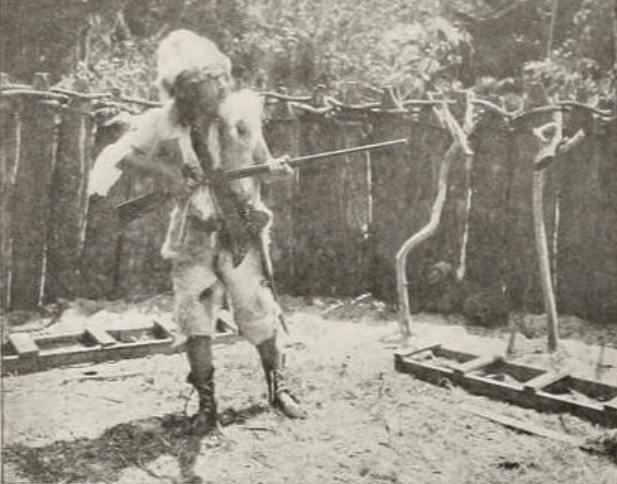
Some will fault the film for its punitive bleakness, its refusal to gratify the rescue impulse baked into Western DNA. Others will hail it as the first post-colonial survival fable that dares to survive its own survival. Both camps will be correct, and that is the triumph: McKee has fashioned a Rorschach test where your political stance is less important than your willingness to sit in the dark and interrogate the texture of your breathing.
Technically, the hybrid of 65 mm and thermal imaging lends the celluloid a fever dream iridescence. Grain swarms like magnetized iron filings during dusk, while daylight scenes boast surgical clarity sharp enough to make you flinch at your own fingerprint smudges. The DCP file reportedly includes variable frame-rate metadata that responds to auditorium humidity; projectionists have reported the film “sweating” during crescendos. Whether marketing myth or genuine glitch, the rumor enhances the movie’s mystique.
Performances aside, the unsung protagonist is the island’s microclimate. You can almost smell guano baking under equatorial sun, feel fungal spores colonizing the folds of your cerebellum. By the time the lights come up, you will check your forearms for sandfly bites that are not there—phantom souvenirs of a place that never pretended to welcome you.
In the current cinematic landscape—crowded with caped saviors and algorithmic nostalgia—Robinson Crusoe stands defiantly unmarketable: too austere for blockbuster tentpoles, too sensorially feral for arthouse gentility. It will not win plush toy endorsements; instead it gifts you a splinter you keep forgetting to remove, a reminder that surviving oneself is the only voyage from which there is no rescue.
IMDb 6.2
1929
Community
Log in to comment.