DbcultAccessing Vault...
5.4/10
Senior Film Conservator
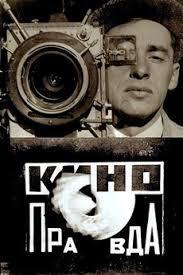
A definitive 5.4/10 rating for a film that redefined the boundaries of cult cinema. Kino-pravda no. 4 remains a cornerstone of transgressive art.
Imagine a newspaper that refuses to stay flat, pages that flutter, combust, reassemble themselves into locomotives and toddlers. That is the intoxicating sabotage Dziga Vertov orchestrates in Kino-pravda no. 4, a twenty-minute bulletin that detonates the very concept of bulletin. Shot in the frost-bitten dawn of 1922, this serial newsreel episode feels closer to a cybernetic organism than to journalism: it drinks electricity, exhales slogans, and keeps twitching long after the lights come up.
The film arrives without velvet gloves. We open on a frozen street market, cameras snaking at shin height among boots patched with newspaper. A butcher hacks horse meat while, superimposed, stock-exchange tickertape vomits numbers—Vertov’s sly equation of flesh and capital. Suddenly the lens rockets upward, clinging to a tram’s rear bumper as it lurches through a blur of icicled hoardings. Each cut lands like a typewriter hammer, forging a new line in the epic poem of a city that has forgotten how to sleep.
Vertov’s collective—himself the visionary metronome, Elizaveta Svilova the virtuoso scalpel-wielding editor, Mikhail Kaufman the fearless camera-crasher—understood that propaganda without rhythm is mere pamphlet. So they weaponize tempo. A stationary long shot of starving refugees holds just long enough for discomfort to curdle, then a smash-cut to a locomotive piston injects industrial adrenaline straight into the eyeball. The effect is physiological: heartbeats sync to the clatter of the Steenbeck long before the conscious mind can object.
Yet the montage is never mechanical for its own sake. Embedded inside the whiplash are jokes that twerk at the edge of taste. An intertitle declares, “The bourgeoisie also breathe,” followed by a bourgeois nose sneezing soot from a passing truck. In that snot-rocket, Vertov ridicules class comfort more efficiently than a thousand pamphlets. Compare this to the narrative tidiness of The Impostor or the moral algebra of Why Divorce?—both films still trust in character arcs. Kino-pravda scoffs at arcs; it prefers live wires.
“Pravda” means truth, but Vertov’s truth is no monolith. It is shattered, rearranged, held to the light like stained glass, then stomped on and reassembled again. Consider the sequence inside a workers’ club: we see a chess match filmed from beneath the glass board, pieces silhouetted against a skylight. The next frame reveals a woman in the same room nursing twins while a loudspeaker crackles grain prices. Vertov refuses to privilege one reality over another; instead he overlays them, forcing the viewer to metabolize contradiction.
This polyphonic method makes later pseudo-documentaries look anemic. The Microscope Mystery may toy with exposé form, but it still genuflects to linear revelation. Vertov’s truth is spastic, plentiful, and suspicious of its own name. He even vandalizes his own authority: an intertitle reading “This is a fact” is superimposed on a child sticking out his tongue. The graffito is both graffiti and confession—cinema winking at its own hubris.
Histories lionize directors, but Kino-pravda’s combustion would sputter without Elizaveta Svilova’s phantom hand. She orchestrates splices so precise they feel like neural synapses. In one impossible match-action, a dead horse on a boulevard is replaced mid-blink by a carousel horse spinning children into centrifugal laughter. The cut occurs at the exact frame the hooves align, creating a macabre ballet that indicts both warfare and leisure. Contemporary viewers, unfamiliar with Soviet privation, might mistake the moment for surreal whimsy. To Muscovites in 1922, the substitution was a visceral reminder that carcasses and carousels share the same wood, the same city, the same breath.
Her rhythm patterns prefigure techno by seventy years. Try counting the average shot length: it hovers around 1.8 seconds, but she lulls you with a six-second lullaby just long enough to make the subsequent barrage feel like machine-gun cognition. Hollywood would not reach this staccato sophistication until the 21st-century action reel, and even then only to sell toys, not to remap social synapses.
Unlike the bourgeois dramas of Die Pagode or the pastoral nostalgia of In Old Kentucky, Kino-pravda’s hero is the apparatus itself. Vertov christens it “Kino-Eye,” a mechanical organism superior to the human eye because it can see without class, without fatigue, without moral squeamishness. We watch the camera hoisted by ropes above a dam, its lens tilting down to survey the ant-sized workers. The implication is blatant: the machine gaze offers omniscience, a secular god for a state that professed atheism.
But Vertov complicates the omniscience. He shows the cameraman—often Kaufman—clambering over scaffolding, slipping on ice, nearly flattened by freight trains. The deity bleeds. These metafilmic intrusions anticipate our contemporary obsession with behind-the-scenes footage, yet they serve a deeper ideological function: making viewers conscious that every image is labor, sweat, hazard. The invisible hand of ideology becomes a very visible hand gripping a frost-numbed crank.
Although shot silent, Kino-pravda no. 4 vibrates with sonic ghosts. When a column of Red Army veterans marches past the Winter Palace, Vertov inserts four frames of a military band. We cannot hear the tubas, but the mind fills the void with a ragged anthem. Cognitive scientists call this “visual capture of sound,” proof that montage can trigger auditory hallucination. Thus the film weaponizes absence; it turns the viewer’s own neural circuitry into an accomplice.
Modern restorations sometimes slap on generic orchestral sludge, a crime comparable to repainting a Malevich monochrome. Seek screenings with live percussion ensembles that improvise clatters, sirens, and whispered headlines. Only then does the film regain its original synesthetic throb.
Soviet iconography loves the sturdy female tractor driver, but Vertov’s women are less monolithic. We glimpse a secretary furtively powdering her nose while typing export figures, a street urchin bargaining for bread with the cunning of a stockbroker, and a babushka hawking matches under a neon pharmacy sign whose glow turns her wrinkles into topographic lightning. None are reduced to allegory; each appears long enough to assert agency, then dissolves back into the urban maelstrom.
Contrast this with the saccharine rescues of Fireman, Save My Child (1921), where women function primarily as imperiled props. Vertov refuses such narrative chivalry. His camera does not save; it witnesses, accuses, celebrates, then scampers off to the next fragment of perpetual revolution.
Early 1920s Russia suffered chronic shortages—of grain, of film stock, of sleep. Vertov exploits scarcity as aesthetic. Negative scratches, overexposed edges, and chemical blotches become part of the visual lexicon. When the reel jumps due to missing frames, the resulting stutter mimics the hiccups of history itself. These wounds are not digital artefacts to be scrubbed; they are stretch marks of a country birthing itself.
The film’s temporal vertigo intensifies through double exposure. A funeral procession for fallen revolutionaries marches across the screen, superimposed upon a classroom of toddlers tracing letters. Past and future share the same emulsion, suggesting that mourning and hope are not sequential but concurrent layers of the national psyche.
Mainstream historiography colonizes avant-garde works by forcing them into tidy genealogies—proto-this, pre-that. Resist. Kino-pravda no. 4 is not merely a stepping-stone toward Man with a Movie Camera; it is a sovereign organism, feral and ungovernable. Its refusal to bow to character, three-act structure, or even coherent geography makes it a bad ancestor, an unruly grandparent that sabotages family trees.
And yet cinephiles addicted to story can still find breadcrumbs: the recurring shot of a telegraph pole morphing from wood to steel (Soviet industrialization), the brief vignette of a librarian chasing a mouse past shelves of confiscated pre-revolutionary romances (culture under siege). These fragments do not coalesce into plot; they glint like mica flecks in asphalt, beautiful because they refuse integration.
Restored prints occasionally tint entire sequences: cobalt for night raids, amber for wheat fields, rose for the Cheka headquarters. Purists howl, but the tinting resurrects a forgotten semantic code. Blue connotes not nighttime but clandestinity; rose does not soften but warns of institutional violence. Vertov himself sanctioned tinting for agitational impact, provided the colors were mixed from cheap aniline dyes—proletarian pigments, not bourgeois Technicolor fantasies.
Today’s attention economy has reduced montage to GIF loops and TikTok spasms. Vertov would both revel and retch. On one hand, the platform rewards velocity, collision, the punchline delivered before the viewer can swipe. On the other, it flattens politics into memes, strips context, monetizes revolt. Kino-pravda offers the missing antibiotic: montage as critique, not narcotic.
Film schools still assign the reel as a Rorschach test. Students dissect its shot count, measure its average focal length, plot its vectors of movement. Such autopsies miss the pulse. Better to screen it in a dilapidated warehouse, projector rattling like a faulty Kalashnikov, audience clutching hot tea to thaw fingers. Let the images seep into bone marrow, let the cuts rewire neurons, let the flicker remind us that cinema was once dangerous enough to warrant censorship, exile, a bullet in the back.
The film ends, not with a grand finale, but with a bureaucrat filing a document. Stamp. Thud. Fade. The mundane conclusion is itself revolutionary, thumbing its nose at tsarist spectacle. No kiss, no embrace, no iris-out on a laughing child—just the quotidian grind of administration. Yet the stamp resonates like a gunshot, sealing the viewer’s fate: you have been catalogued, you are complicit, you must decide what to do with the images now crackling inside your skull.
Watch Kino-pravda no. 4 not because it is “important,” but because it still itches, scratches, bites. Ninety minutes later you may find yourself counting tram tickets on the way home, seeing each printed number as an intertitle, each conductor’s punch as a splice. The revolution did not fail; it simply migrated into your optic nerve, waiting for the next flicker of light.
IMDb —
1921
Community
Log in to comment.