DbcultAccessing Vault...
Cult Review
Senior Film Conservator
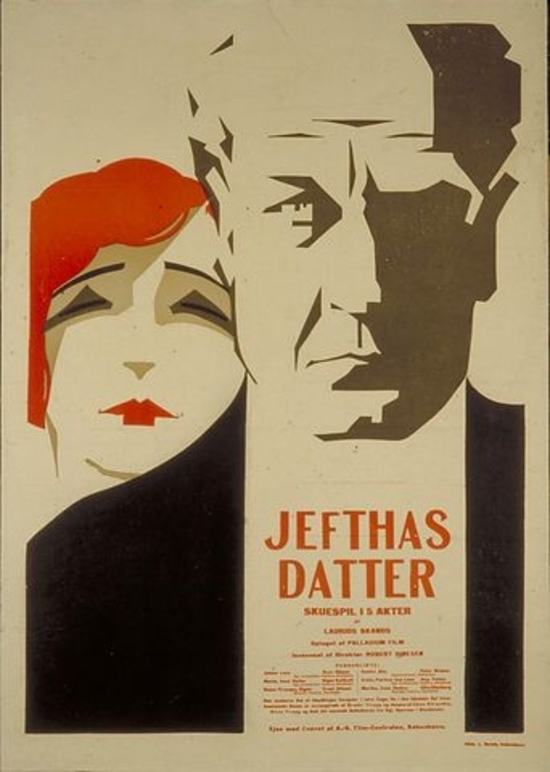
From the very first flickering frames of Laurids Skands' profound and unsettling drama, 'Jefthas dotter', we are plunged headlong into a world steeped in gothic shadows and psychological torment. This isn't just a film; it's an excavation of a soul, a meticulous dissection of how societal scorn can fester into an all-consuming, destructive force. At its heart lies Juhani Leno, a character crafted with such intricate darkness that he remains etched in one's memory long after the final title card fades. His story isn't merely a narrative; it’s a chilling testament to the enduring power of a bleak upbringing.
The film, a silent era masterpiece, masterfully employs its visual language to convey the immense weight of Juhani's past. We learn that his origins are steeped in ignominy: the son of a 'fool' and an 'anonymous gentleman.' This societal branding, this indelible mark of illegitimacy and perceived intellectual inferiority, becomes the crucible in which his formidable intellect is forged, but also where his spirit is irrevocably warped. He retreats to a gloomy castle, a magnificent yet oppressive fortress nestled deep within dark forests, a setting that mirrors the labyrinthine confines of his own embittered mind. This isn't just a dwelling; it's a monument to his isolation, a physical manifestation of the walls he has erected between himself and a world he despises.
The genius of 'Jefthas dotter', penned by Laurids Skands and Niels Hoffmeyer, lies in its ability to articulate such profound psychological depth without a single spoken word. The performances, particularly from the lead ensemble including Göta Klintberg, Oscar Tropp, and Anna Tropp, are nothing short of revelatory. Göta Klintberg, whose presence often dominates the screen, conveys a complex tapestry of emotion, her eyes alone capable of narrating volumes of unutterable pain and simmering resentment. Oscar Tropp, as Juhani Leno, delivers a portrayal of controlled fury and intellectual arrogance that is both terrifying and tragically compelling. His every gesture, every subtle shift in expression, paints a vivid picture of a man whose entire being is predicated on retribution.
This film doesn't merely hint at Juhani's hatred; it immerses us in its very texture. His legal prowess, rather than being a tool for justice, is weaponized into an instrument of precise, calculated vengeance. He is a man who doesn't merely seek to win; he seeks to dismantle, to humiliate, to exact a meticulous toll from a humanity he believes has wronged him fundamentally. The narrative, therefore, becomes a series of chess moves, each designed to inflict maximum psychological and social damage on those who represent the very fabric of the society that once judged him. It's a fascinating, albeit disturbing, portrayal of how a brilliant mind, when corrupted by bitterness, can become its own worst enemy and a formidable adversary to others.
In its exploration of a protagonist driven by a profound sense of alienation and a desire for retribution, 'Jefthas dotter' finds thematic resonance with other films of its era, and indeed, those that came long after. One might draw parallels to the existential struggle found in A Soul Without Windows, where characters grapple with internal voids and the profound impact of their past. Juhani's obscured soul, his inability to connect authentically, mirrors the very title of that film, suggesting a shared cinematic preoccupation with the damaged psyche.
Furthermore, the character's relentless pursuit of vengeance and his battle against societal perceptions could be seen in dialogue with films like A Fugitive's Life, where individuals are often forced to confront or escape the labels and judgments imposed upon them. While the specific circumstances differ, the underlying tension between an individual's innate worth and society's often cruel evaluation of it is a powerful, recurring motif. Juhani Leno isn't merely a fugitive from the law; he's a fugitive from acceptance, his life a perpetual act of rebellion against the societal structures that scorned him.
The cinematography in 'Jefthas dotter' is a character in itself. The gloomy castle, with its imposing architecture and shadowed interiors, becomes a psychological prison. The dark forests surrounding it are not merely scenery but a symbolic barrier, isolating Juhani from any semblance of conventional human warmth. The use of light and shadow is particularly striking, often bathing Juhani in chiaroscuro that emphasizes his internal conflict and the moral ambiguity of his actions. Close-ups on the faces of Göta Klintberg, Oscar Tropp, and Anna Tropp are used with devastating effect, allowing the audience to peer into the depths of their characters' unspoken thoughts and emotions, a hallmark of powerful silent film acting.
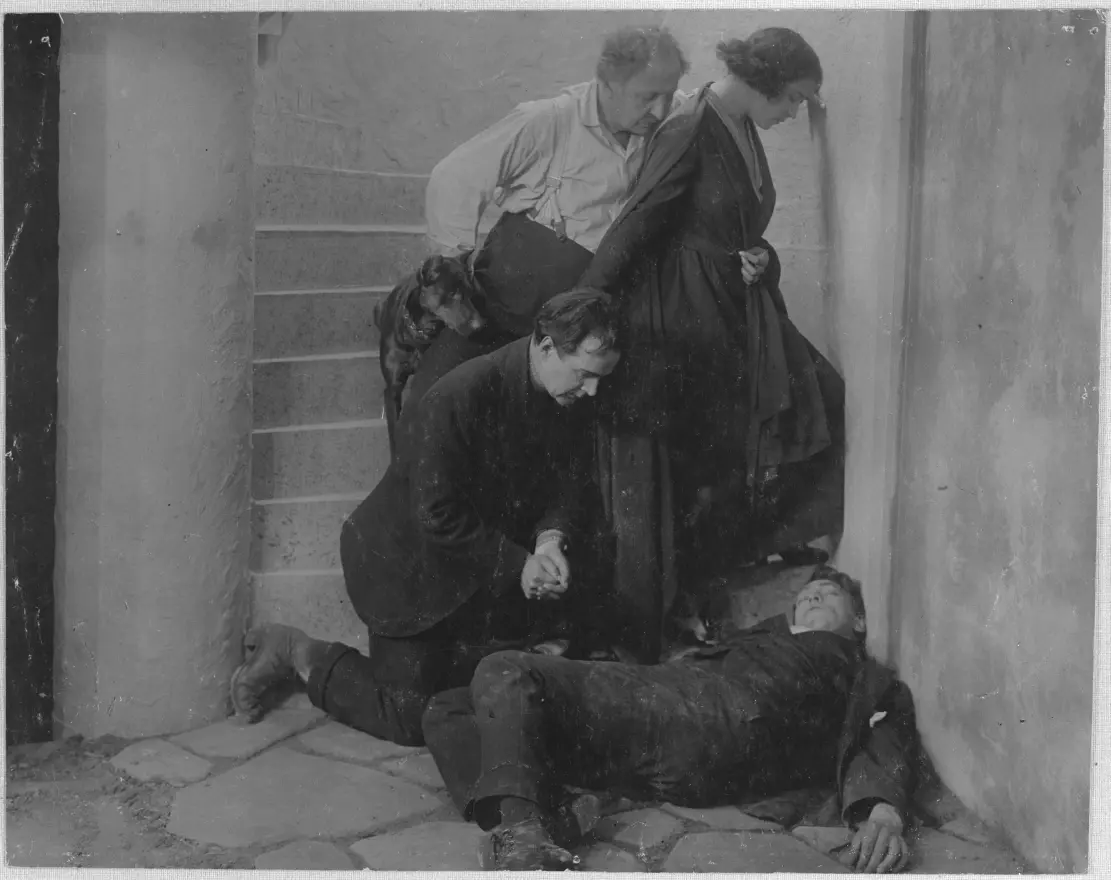
The film's visual style evokes a sense of perpetual unease, a brooding atmosphere that permeates every scene. Even moments of potential respite are tinged with an underlying current of dread, a constant reminder of Juhani's unyielding bitterness. This meticulous attention to visual detail, from the grand sweeping shots of the desolate landscape to the intimate, intense exchanges between characters, elevates 'Jefthas dotter' beyond mere melodrama into the realm of profound psychological drama. It’s a masterclass in how environment can reflect and amplify internal states.
What makes 'Jefthas dotter' particularly potent is its unflinching examination of the corrupting power of hatred. Juhani Leno is not a simple villain; he is a product of his circumstances, a victim who transforms into a perpetrator, driven by an understandable yet ultimately destructive impulse. His rage, while rooted in genuine injustice, consumes him entirely, preventing any possibility of redemption or peace. This exploration of the cyclical nature of pain – how the wronged can become the wrongdoers – is a theme that remains tragically relevant, transcending the specific historical context of the film.
The film compels us to ponder the societal responsibility in creating such figures. If Juhani had been met with understanding rather than scorn, if his origins had been accepted rather than condemned, would his path have been different? Skands and Hoffmeyer don't offer easy answers, instead presenting a complex portrait that forces viewers to confront uncomfortable truths about judgment, empathy, and the long-lasting repercussions of prejudice. It's a stark reminder that the wounds inflicted in childhood can fester into lifelong grievances, shaping destinies in unforeseen and often devastating ways.
The supporting cast, including August Palme, Ernst Eklund, and Bror Olsson, contribute significantly to the film's rich tapestry, each bringing a nuanced performance that adds layers to the central conflict. Their reactions to Juhani, whether fear, disdain, or a glimmer of misguided sympathy, serve to further define his character and his isolated position within their world. These are not merely background players; they are the mirror reflecting Juhani's twisted perception of humanity, the very faces of the society he seeks to punish. The ensemble work is exemplary, demonstrating the collaborative power of silent cinema to convey intricate social dynamics.
Consider the subtle yet potent interplay between characters; a glance, a turn of the head, a clenched fist – these are the tools through which profound emotional truths are communicated. The absence of dialogue forces a heightened focus on body language and facial expressions, demanding an almost balletic precision from the actors. Göta Klintberg, in particular, navigates these demands with astounding grace, her character often serving as a moral compass or a counterpoint to Juhani's relentless descent. Her performance is a testament to the power of non-verbal communication, embodying resilience and sorrow in equal measure.
'Jefthas dotter' is more than just a historical curiosity; it’s a powerful piece of cinema that continues to resonate with contemporary audiences. Its themes of social alienation, the corrosive nature of vengeance, and the enduring impact of childhood trauma are universal. The film challenges us to look beyond the surface, to understand the complex forces that shape individuals, particularly those who seem irredeemably lost to bitterness. It’s a compelling reminder that even the most formidable intellect can be overshadowed by the emotional scars of the past.
The narrative arc, while focused on Juhani's personal vendetta, expands into a broader critique of societal hypocrisy and the often-unseen cruelties inflicted by communal judgment. It leaves us pondering the very definition of justice, questioning whether Juhani's actions, however dark, are not a twisted form of seeking balance for the injustices he endured. This ambiguity is one of the film's greatest strengths, refusing to provide simplistic answers and instead inviting deep introspection from its viewers. It's a film that stays with you, prompting reflection on the human condition and the intricate dance between cause and effect.
Ultimately, 'Jefthas dotter' stands as a testament to the enduring power of silent cinema to explore profound psychological landscapes. It is a film that demands engagement, rewarding the attentive viewer with a rich, unsettling, and ultimately unforgettable experience. If you appreciate cinema that delves into the darker recesses of the human psyche and challenges conventional notions of morality, then this film, with its masterful performances and brooding atmosphere, is an absolute must-see. It’s a journey into the heart of darkness, expertly guided by Skands and brought to life by a truly remarkable cast.

IMDb 7.3
1936
Community
Log in to comment.