DbcultAccessing Vault...
5.1/10
Senior Film Conservator
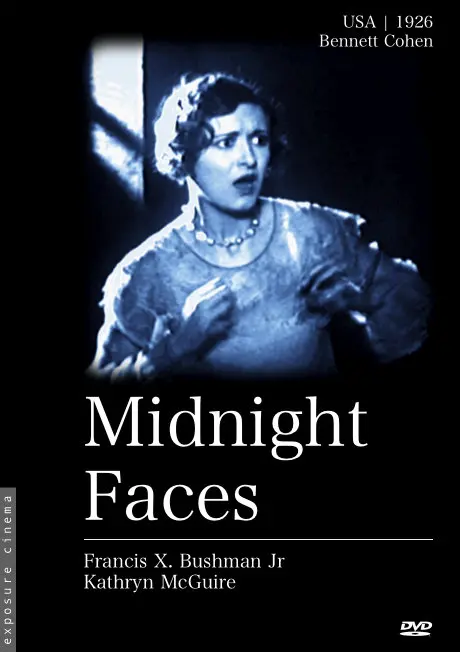
A definitive 5.1/10 rating for a film that redefined the boundaries of cult cinema. Midnight Faces remains a cornerstone of transgressive art.
Is the 1926 silent thriller Midnight Faces worth your time nearly a century later? Short answer: yes, but only if you possess a genuine appetite for the foundational architecture of the American horror genre. This is not a film for the casual viewer seeking high-octane thrills; it is a film for the cinematic archeologist who finds beauty in the grain of a deteriorating Florida mansion and the stiff, exaggerated gestures of a cast caught between the Victorian era and the jazz age.
This film is for enthusiasts of the 'Old Dark House' subgenre and those interested in how early cinema handled isolation and structural dread. It is decidedly not for anyone who requires a fast-paced plot or modern logic. It is a slow-burn mystery that relies heavily on its setting—a swamp-locked estate—to do the heavy lifting that the script occasionally fumbles.
Before we dive into the murky waters of the Everglades, let's establish the core value of this production. Midnight Faces is a fascinating relic that manages to be both ahead of its time and firmly rooted in the melodramatic tropes of the 1920s.
Midnight Faces serves as a vital bridge in the history of the thriller. While many of its contemporaries, like The Last Frontier, were focusing on the expansive vistas of the West, director Bennett Cohen turned the camera inward, focusing on the rot of a single location. For a viewer today, the value lies in witnessing the birth of tropes we now take for granted: the mysterious face at the window, the uninvited guest, and the 'safe' house that proves to be a cage.
The film is slow. It is often repetitive. But it possesses a specific, grimy charm that many polished modern horror films lack. There is a scene where a figure is seen crawling through a window—a moment captured in a wide, static shot—that feels more voyeuristic and unsettling than a thousand jump-scares. It is a quiet kind of terror.
The Florida Everglades setting is the secret weapon of Midnight Faces. Unlike the gothic castles of European cinema or the urban alleyways of German Expressionism, the swamp offers a uniquely American flavor of decay. The film uses the environment to justify the characters' isolation. There are no neighbors to call, no easy escape routes, and the mud seems to swallow the very idea of civilization. This environmental pressure is what makes the arrival of the 'knife-wielding psycho' actually impactful.
When the young woman runs into the house to escape the killer, the movie shifts gears. It stops being a movie about a disputed inheritance and starts being a movie about survival. This transition is clunky, but it’s historically significant. It mirrors the transition of the industry itself, moving away from the drawing-room mysteries of the early 20th century toward the more visceral thrills of the 1930s horror boom.
Jack Perrin is primarily remembered for his work in Westerns like The Fighting Brothers or The Vengeance Trail. Seeing him here, stripped of his horse and six-shooter, is a revelation. He plays the inheritor with a certain stiff-collared anxiety that feels authentic to the period. He isn't a hero in the traditional sense; he is a man out of his element, trying to navigate a world of legal documents and swamp-dwelling killers.
The supporting cast, particularly Kathryn McGuire, provides the necessary emotional stakes. McGuire has a way of communicating terror through her eyes that bypasses the need for dialogue. In an era where many actors over-gesticulated to compensate for the lack of sound, her performance is surprisingly grounded. She anchors the more ridiculous plot points, such as the sudden appearance of the estate's staff who seem to have their own agendas.
The cinematography in Midnight Faces is a mixed bag. At times, the lighting is flat, typical of lower-budget silent productions. However, during the night sequences, the film finds its voice. The use of high-contrast shadows creates a sense of depth in the mansion that makes the house feel larger and more labyrinthine than it probably was. This technique is something we see refined in later films like Pampered Youth, where the environment reflects the internal state of the characters.
The pacing is the film's biggest hurdle. Like many films from 1926, such as The Exiles, the narrative takes its time to establish the legal stakes before getting to the 'good stuff.' The first two reels are heavy on title cards and exposition. Once the knife-wielder appears, however, the editing tightens. The final twenty minutes are a masterclass in silent tension, using cross-cutting to show the various threats closing in on the protagonists.
One could argue that Midnight Faces is an accidental grandfather to the slasher film. The 'knife-wielding psycho' is a figure that would eventually evolve into Michael Myers or Jason Voorhees. In 1926, this was a radical departure from the 'ghost' or 'monster' tropes of the time. The threat here is human, and the motivation is primal. It lacks the supernatural elements found in films like Ultus, the Man from the Dead, opting instead for a gritty, albeit melodramatic, reality.
This shift toward human-centric horror is what makes the film feel modern despite its age. The fear isn't that a ghost will haunt you; the fear is that a man with a blade is outside your door, and the people inside with you might be even worse. It’s a cynical worldview for 1926, and it’s one that resonates with modern audiences far more than the moralistic tales of the early silent era.
Midnight Faces functions as a hybrid of the mystery and horror genres. It begins as a standard inheritance mystery, focusing on legal documents and the arrival of an heir at a remote mansion. However, the film pivots sharply into horror territory with the introduction of a knife-wielding antagonist and the use of 'Old Dark House' tropes, such as hidden figures and inescapable locations. This makes it an early example of the suspense-thriller that would eventually lead to the slasher genre.
Midnight Faces is a fascinating, if flawed, piece of cinematic history. It doesn't have the polish of Pampered Youth or the adventurous spirit of The Last Frontier, but it has something those films lack: a genuine sense of unease. It is a film that understands that a house can be a prison and that the people we trust are often the ones we should fear the most.
It works. But it’s flawed. The transition from the drawing room to the swamp is bumpy, and the logic of the characters is often dictated by the needs of the plot rather than common sense. Yet, there is a raw energy here. The sight of a knife glinting in the low light of a 1926 mansion still carries a certain weight. If you can look past the age and the technical limitations, you'll find a film that is surprisingly effective at getting under your skin. It is a midnight watch in every sense of the word.
Midnight Faces is a reminder that horror didn't start with sound; it started with a shadow in the corner of a room and a door that wouldn't lock.
IMDb 6.3
1923
Community
Log in to comment.