DbcultAccessing Vault...
6.3/10
Senior Film Conservator
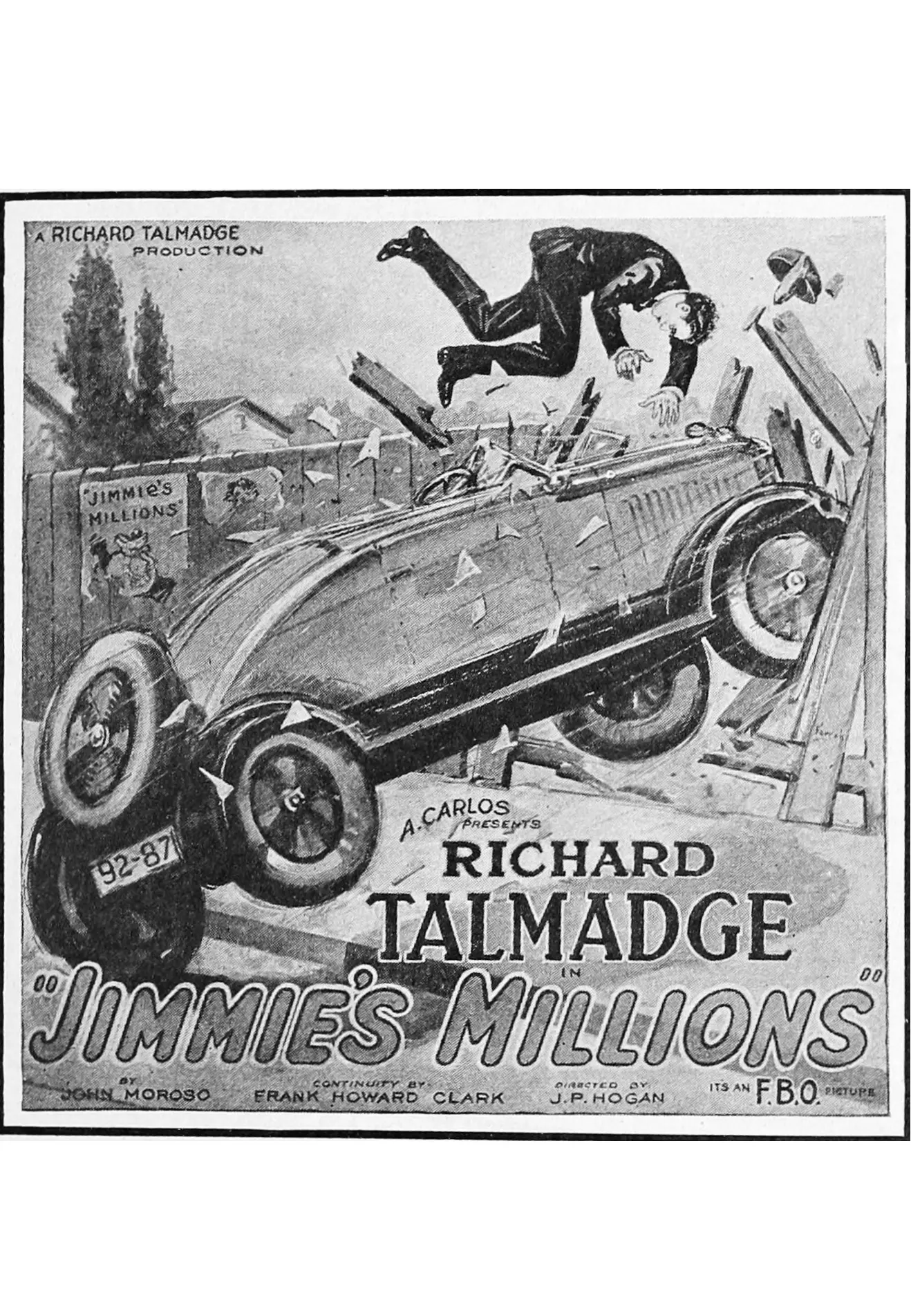
A definitive 6.3/10 rating for a film that redefined the boundaries of cult cinema. Jimmie's Millions remains a cornerstone of transgressive art.
Is Jimmie's Millions a lost masterpiece of the silent era? Short answer: No, but it remains a fascinating, high-energy artifact for those who value physical performance over narrative complexity.
This film is specifically for enthusiasts of 1920s kinetic cinema and those who enjoy the 'beat-the-clock' trope; it is decidedly not for viewers who require psychological depth or a plot that doesn't rely on massive coincidences.
This film works because it utilizes the physical charisma of its lead to distract from a fundamentally thin script. It fails because the transition from a comedy of manners (being late) to a murder mystery feels tonally disjointed. You should watch it if you want to see a prime example of how silent cinema used 'the clock' as a literal antagonist.
At its core, Jimmie's Millions taps into a universal anxiety: the fear of being late for something that actually matters. Unlike the neurotic tension found in Harold Lloyd’s Why Worry?, Jimmie Wicherley’s tardiness isn't just a quirk; it’s a character flaw that the universe seems determined to punish. The premise is simple, yet the stakes are artificially inflated to the point of absurdity. This is the hallmark of mid-20s entertainment.
The film opens with a series of vignettes establishing Jimmie’s inability to track time. These moments are played for laughs, but they carry a weight of impending doom. When the inheritance condition is revealed, the film shifts gears. It stops being a character study and becomes a mechanical race. Every scene thereafter is measured in minutes and seconds, a pacing strategy that keeps the audience engaged even when the logic begins to fray.
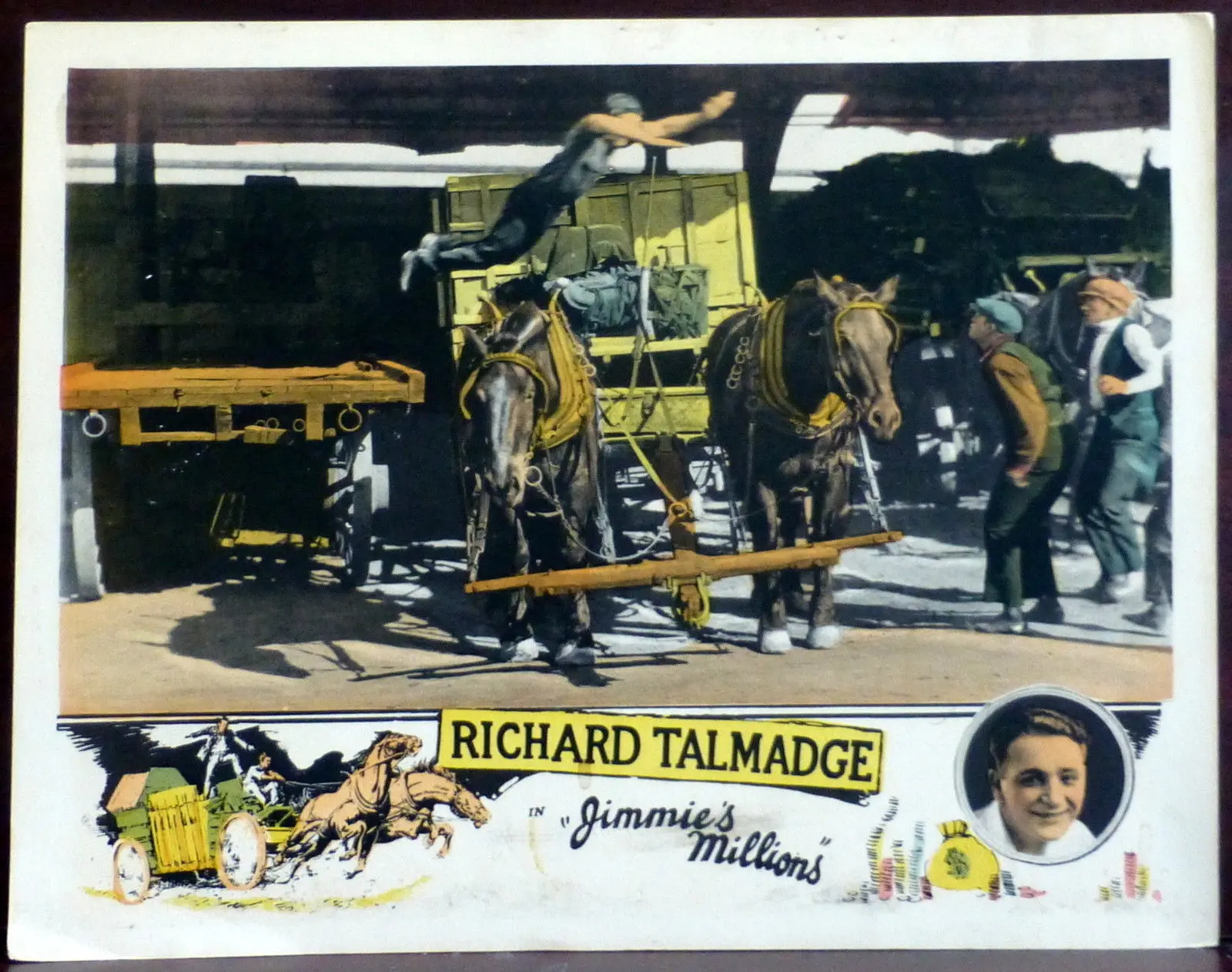
One specific scene involving Jimmie checking his watch while navigating a crowded street serves as a perfect metaphor for the film. He is so focused on the tool of time that he ignores the world around him. This lack of situational awareness is exactly what Saunders exploits. It’s a clever bit of writing that links Jimmie’s internal flaw to the external threat.
Richard Talmadge was never the most nuanced actor, but his physicality was undeniable. In Jimmie's Millions, he brings a restless energy that fits the role perfectly. When he engages in the central fight with Johnson the truck driver, the choreography is surprisingly grounded. It isn't the hyper-stylized combat of modern cinema; it’s a messy, desperate struggle that feels authentic to the period.
The moment Jimmie knocks Johnson out cold is the turning point of the film. Talmadge’s reaction—a mix of horror and disbelief—is one of his better acting beats. He doesn't look like a hero; he looks like a man who has just accidentally ruined his life. This vulnerability makes the subsequent frame-up by Saunders feel much more threatening. We aren't watching a superhero; we're watching a victim.
Compare this to the more polished action in Live Wires. While that film has more spectacle, Jimmie's Millions has more grit. The dirt on the costumes and the unpolished nature of the street scenes give it a documentary-like quality that is often missing from the more prestigious productions of 1925.
Saunders is a fascinatingly lazy villain. He doesn't want to kill Jimmie; he just wants to inconvenience him into poverty. This is a refreshingly low-stakes brand of evil that feels more realistic than the world-dominating plots of other silent films like The Doom of Darkness. Saunders’ decision to bribe Johnson to disappear is a masterstroke of simple manipulation.
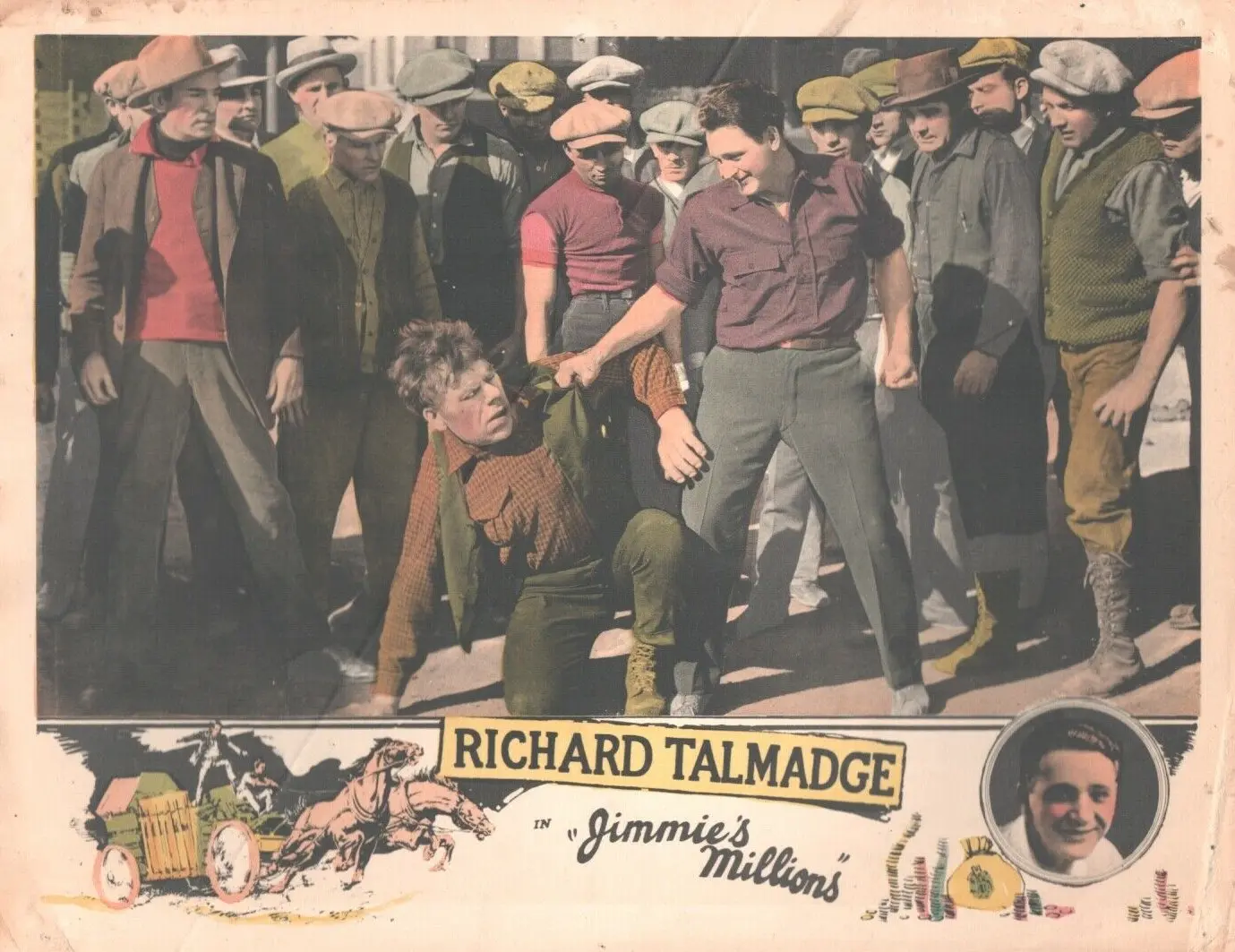
The film spends a significant amount of time in the jail cell after Jimmie is arrested. These scenes are the weakest part of the narrative. The pacing slows to a crawl, and the 'friend' who springs him from jail feels like a deus ex machina introduced purely to get the plot moving again. However, the moment Jimmie is back on the street, the film regains its momentum.
The pursuit of Johnson is a highlight. Jimmie’s desperation is palpable. He isn't just fighting for money; he’s fighting for his identity as a non-murderer. The climax in the courtroom is a bit of a letdown in terms of legal realism, but as a piece of narrative closure, it works. The judge’s dismissal of the case is a foregone conclusion, but the lawyer’s final decision is the real surprise.
Yes, Jimmie's Millions is worth a watch for anyone interested in the evolution of the action-comedy genre. It bridges the gap between the pure slapstick of the early 1910s and the more sophisticated narrative structures of the late silent era. While it lacks the emotional depth of something like Over the Hill, it compensates with raw energy and a relatable, if exaggerated, central conflict.
The film’s cinematography is standard for the time, but the use of location shooting in the city adds a layer of historical interest. Seeing the bustling streets of 1925 provides a backdrop that feels more alive than any studio set. The camera stays mostly static, but the movement within the frame—people, cars, and Jimmie’s frantic running—creates a sense of constant motion.
The pacing of Jimmie's Millions is its greatest asset and its greatest flaw. The first act is a breeze, the second act drags in the prison, and the third act is a sprint. This unevenness is common in films from writers like John A. Moroso, who often struggled to balance character development with plot progression. However, the 'victim of circumstance' ending is a bold choice.
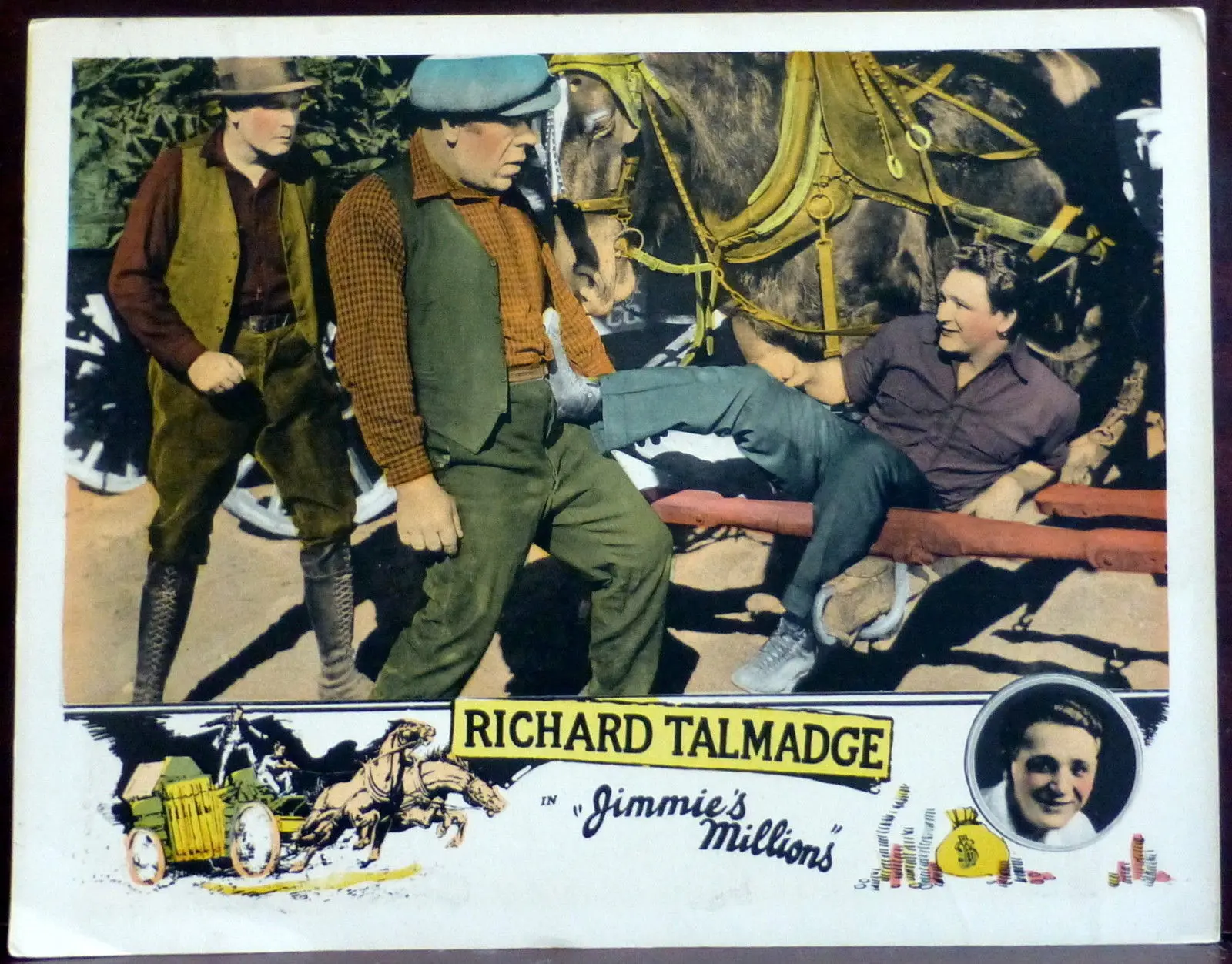
Most films of this era would have Jimmie arrive at the lawyer's office at the very last second, sliding through the door as the clock strikes twelve. By having him miss the deadline and *still* get the money through a legal loophole, the film makes a cynical, yet honest, observation about the world: rules are for people without good lawyers or sympathetic friends. It’s a brutally simple realization. The system is rigged, but occasionally it’s rigged in your favor.
"The law is a clock that everyone sets to their own time." – This sentiment echoes throughout the final act, as the lawyer decides that Jimmie's 'spirit' of punctuality outweighs the 'letter' of the law.
Pros:
- High-energy performance by Richard Talmadge.
- Relatable central theme of punctuality.
- Interesting historical location shots.
- A surprising, non-traditional resolution to the inheritance conflict.
Cons:
- The female lead, Susan, is given almost nothing to do.
- The transition from comedy to murder drama is jarring.
- Some of the secondary acting is stiff even by silent standards.
Most critics point to the 'lateness' as the comedy, but the real joke is the lawyer. He sets a strict, life-altering rule and then ignores it the moment it becomes inconvenient for the protagonist. This suggests that in the world of Jimmie's Millions, the only thing more powerful than time is a good excuse. It’s a subversive message for a 1920s film. It suggests that character—or perhaps just being a 'victim of circumstance'—is more important than the actual law.
Jimmie's Millions is a solid, if unpolished, entry in the silent action-comedy subgenre. It doesn't have the poetic grace of Christus or the pure comedic genius of Chaplin, but it has a blue-collar charm that is hard to dislike. It works. But it’s flawed. The film is a reminder that even in 1925, audiences were hungry for stories about the little man fighting against an unyielding system. If you can forgive the clunky middle section, the payoff is well worth the time—ironically, a resource Jimmie Wicherley finally learns to respect.
IMDb 5.3
1933
Community
Log in to comment.