DbcultAccessing Vault...
Cult Review
Senior Film Conservator
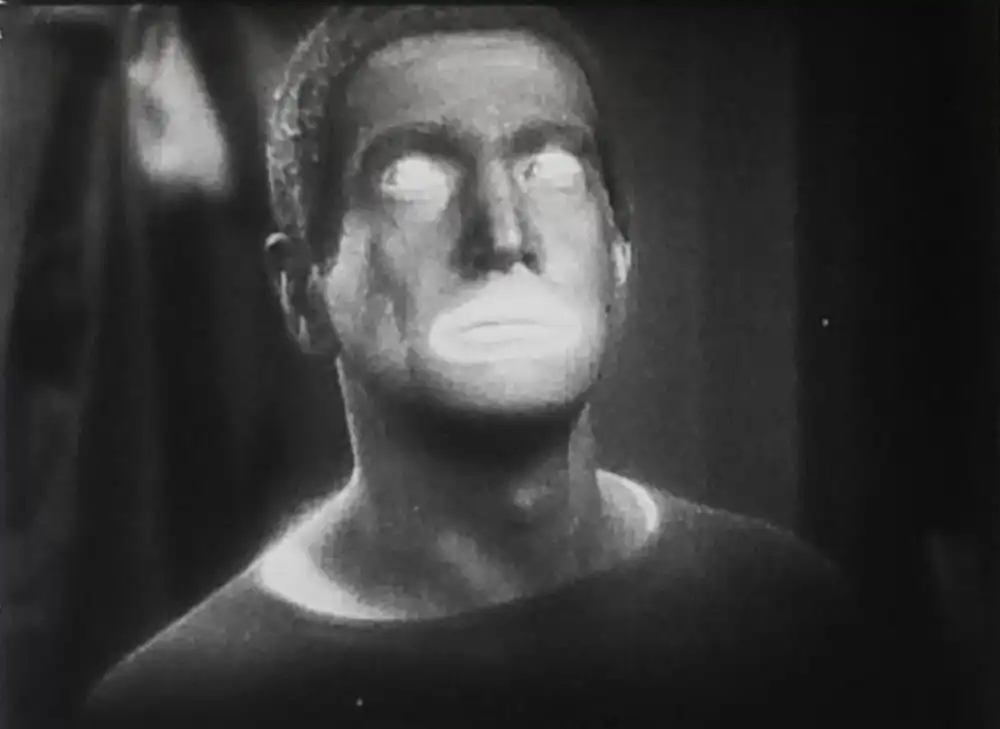
If you are looking for a narrative experience, you are in the wrong place. However, if you want to see the exact moment the silent era began to draw its final breath, the John Miljan: Vitaphone Trailer Announcement is an essential seven minutes. It is worth watching for anyone fascinated by the technical evolution of Hollywood or the sheer awkwardness of performers transitioning from pantomime to speech. Casual viewers will likely find it dry, but for those who want to see the 1920s elite blinking in the harsh glare of a new reality, it is a fascinating artifact.
The most striking thing about watching John Miljan here is how uncomfortable he looks. In the silent era, actors had a physical vocabulary; here, Miljan is forced to stand remarkably still to stay within the range of the primitive microphone. He speaks with a deliberate, almost theatrical enunciation that feels like he is trying to convince the audience that the machine actually works. There is a specific moment where he gestures toward the screen behind him, and the timing feels just a fraction of a second off—a reminder that in 1927, synchronization was a miracle, not a standard.
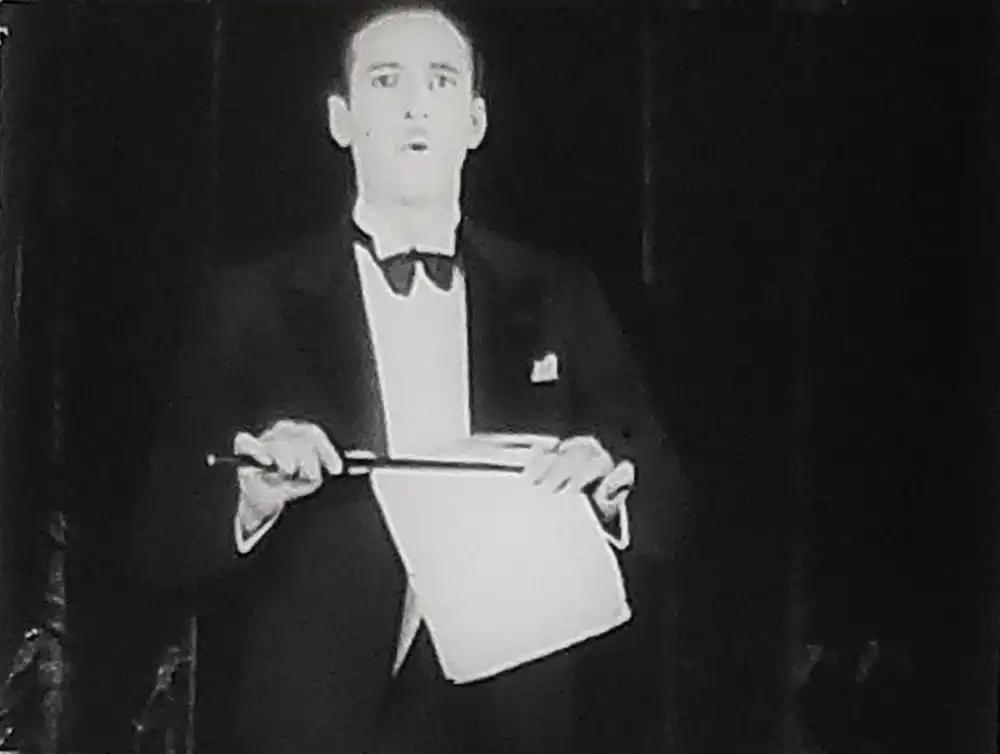
Miljan’s performance is a masterclass in the 'over-pronunciation' that plagued early sound films. You can almost see him thinking about his vowels. It lacks the fluidity of his later work, but it captures the terror of an industry that suddenly realized it had to speak to stay alive. Unlike the more experimental shorts of the era, such as Walter Tells the Tale, which played with narrative, this is pure corporate propaganda.
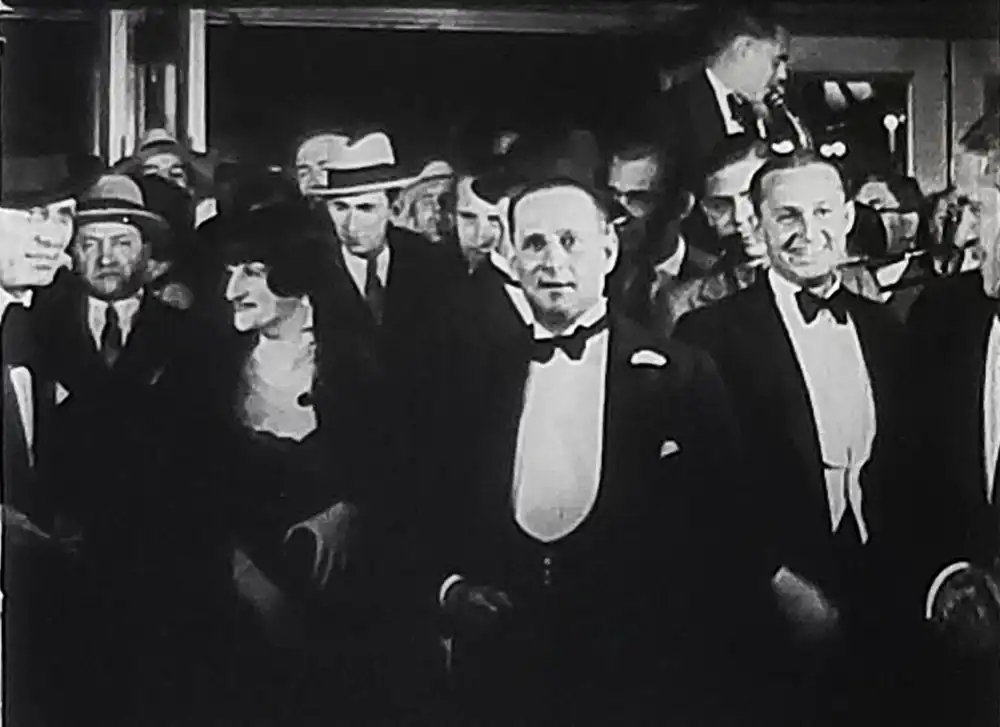
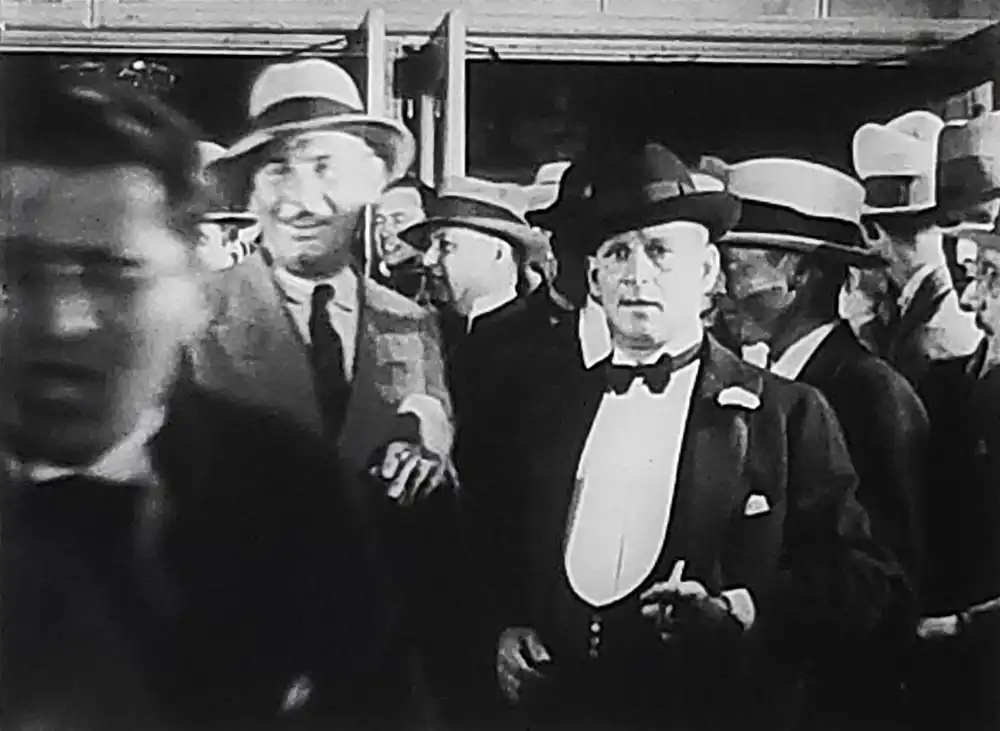
The second half of the short moves away from Miljan’s static introduction and into the chaotic energy of the New York premiere at the Winter Garden Theatre. This is where the short actually breathes. We see the Warner brothers—Harry, Albert, Sam, and Jack—looking like men who have just bet their entire lives on a single spin of the wheel. The lighting in these outdoor shots is harsh and uneven, far removed from the controlled environments of the studio, giving it a gritty, newsreel quality that feels more 'real' than the feature film it was promoting.
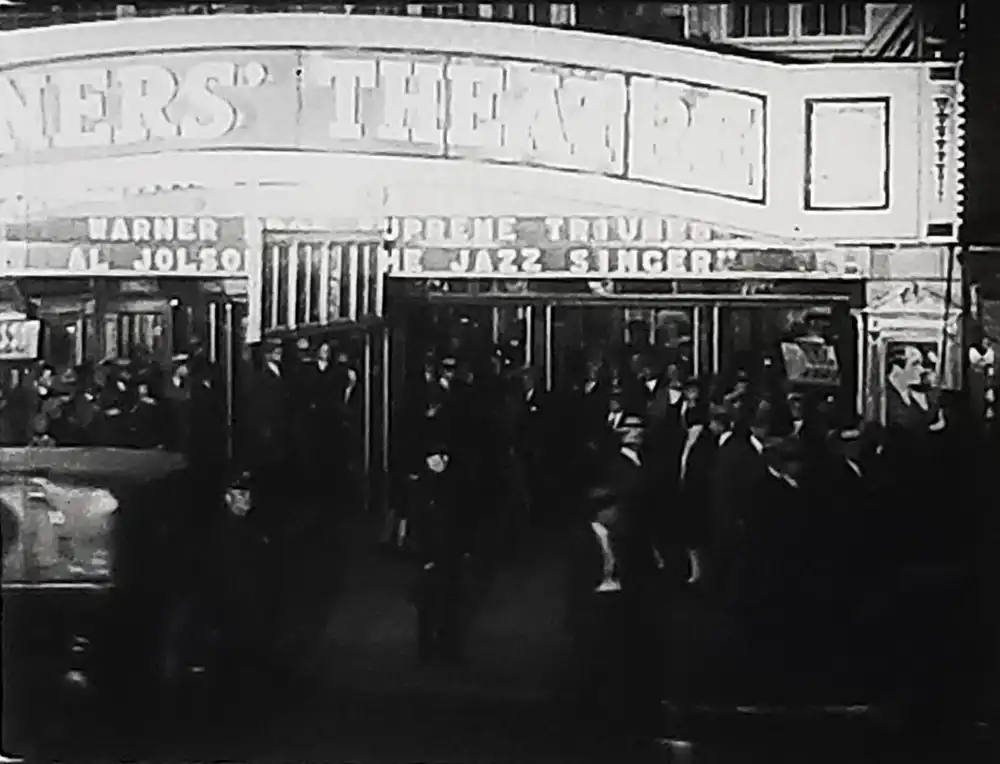
The camera lingers on the crowds and the arriving stars. There is an unrehearsed quality to these moments; people aren't yet sure how to act for a camera that might also be capturing their voices. You see men in top hats and women in furs glancing nervously at the equipment. It’s a rare glimpse of Hollywood royalty looking genuinely unsure of themselves. The editing is functional, chopping between the red carpet and the theater marquee, but the rhythm is dictated by the Vitaphone disc length rather than dramatic tension.
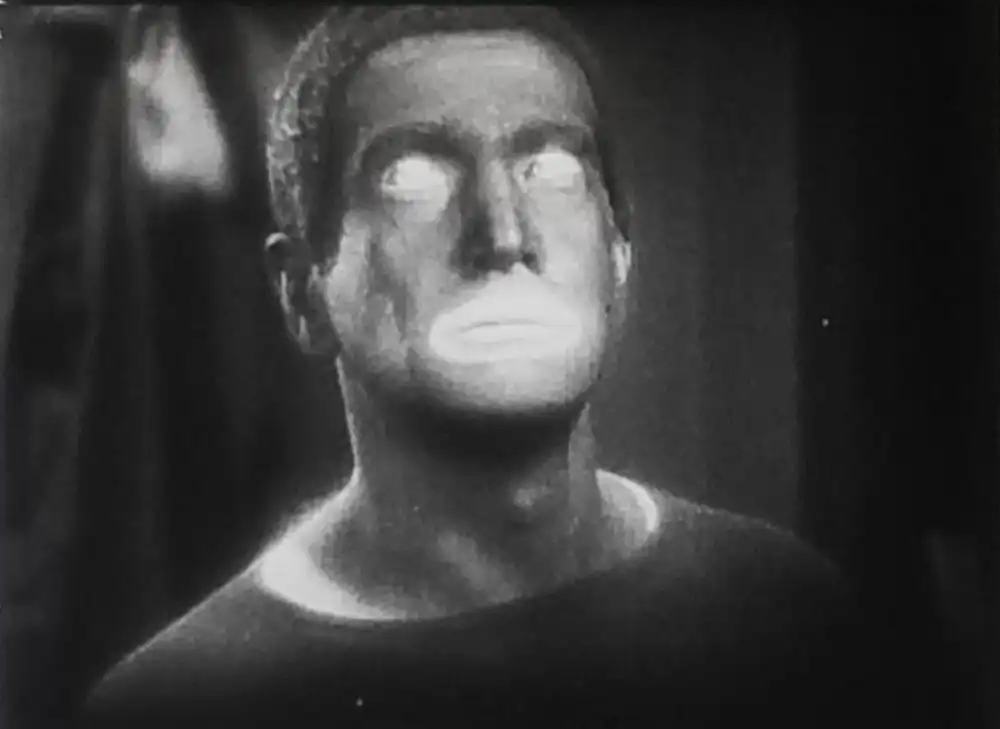
Technically, the short is a mess by modern standards, but that is its charm. The audio has a persistent hiss, and the dynamic range is non-existent. When the crowd cheers, it sounds more like rushing water than human voices. Yet, there is a specific visual texture to this footage—the high-contrast black and white, the slight flickering of the frame—that makes the 1927 New York night feel tangible.
One detail only a close viewer would notice is the way the background extras in the premiere footage seem to be directed to move as little as possible. There is a strange stillness to the wide shots, likely an attempt by the sound engineers to keep the 'noise floor' low so the primary audio could be captured. It creates an eerie, wax-museum effect that stands in stark contrast to the lively, kinetic energy of silent films like Protéa or the grand spectacles of the same decade.
The John Miljan: Vitaphone Trailer Announcement isn't 'good' in a traditional sense. The dialogue is promotional fluff, and the 'performances' are non-existent. But as a document of a turning point, it is unparalleled. It shows an industry in the middle of a nervous breakdown and a celebration all at once. If you can spare seven minutes, watch it to see the sweat on the brows of the men who ended the silent era. It is a sharp, unvarnished look at the birth of the modern movie-going experience.
Community
Log in to comment.