DbcultAccessing Vault...
Cult Review
Senior Film Conservator
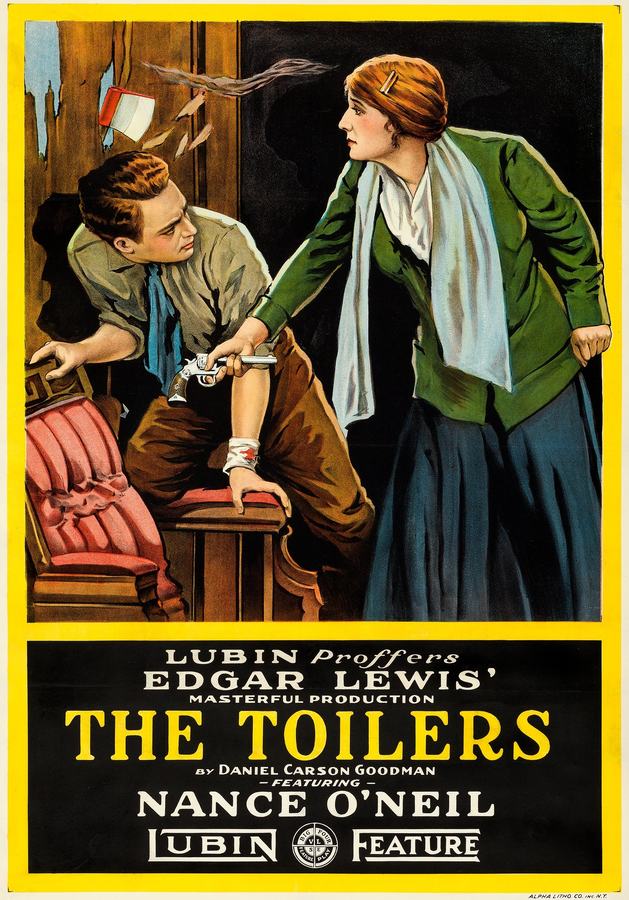
Petroleum, pistols, and proletarian ire—The Toilers distills 1916 America into one combustible fable.
Long before the phrase “class warfare” became cable-news Muzak, director Daniel Carson Goodman drilled straight into Pennsylvania’s black-blooded crust and struck a gusher of outrage. The resulting picture, now a century old, feels like someone cross-bred The End of the Road’s moral panic with the proto-noir fatalism of Sperduti nel buio, then lit the fuse with a suffragette’s kerosene conviction.
We open on a landscape that stinks of sulfur and ambition. Derricks jut like iron supplicants bowing to an invisible god of surplus. Goodman’s camera (or rather, his cinematographer’s static but criminally under-praised eye) drinks in every splinter of timber, every ooze of crude. The frame itself seems to perspire.
Nurse Jane as Avenging Angel
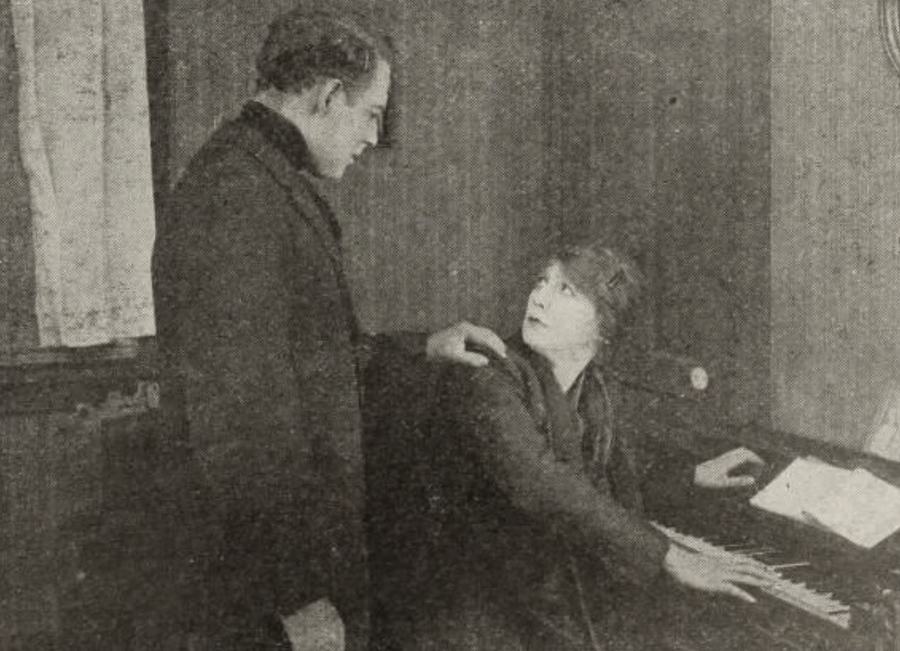
Adelaide Hayes embodies Jane Brett with the coiled grace of a woman who has dissected cadavers yet still believes hearts can be mended. Watch the micro-shift in her gaze when she reads the letter announcing her father’s accident: pupils dilate like a hawk locking onto prey. Hayes underplays, letting silence scream louder than any title card. The moment she pockets the telegram and turns—without cutaway—toward a city that chews miners for breakfast, you sense the entire narrative pivot on a single vertebra.
Compare her to the flailing innocents in The General’s Children or the decorative waifs of The Cowboy and the Lady; Jane is no porcelain figurine awaiting rescue. She is the cavalry.
The Masquerade of the Doomed
Goodman stages the masked ball as a danse macabre of social grotesques. Aristocrats sport fox heads; one dowager waddles in elephantine papier-mâché. The camera lingers on a caged canary—its song drowned by orchestral glissandi—an omen for the workers outside these gilded walls. When Jane, in austere nurse white, invades the polychrome menagerie, the chromatic clash is almost assaultive. She is a monochrome truth bullet fired into a kaleidoscope of denial.
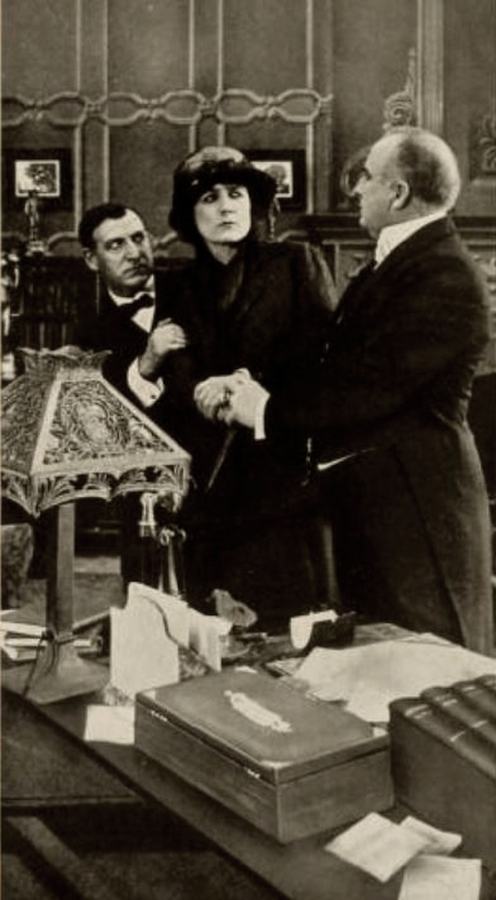
The attempted stabbing, often derided by historians as “melodramatic overboil,” lands differently in 2024’s context of healthcare workers fighting corporate malfeasance. The paper-knife is no phallus; it’s a scalpel, a desperate instrument of triage on a malignant body politic.
A Love Story Written in Soot
Enter John Jameson—Victor Sutherland in a role that could have slid into bland benevolence but instead smolders with patrician guilt. His meet-cute with Jane occurs off-camera: we see only aftermath, the two silhouetted against a burning slag pile, steam curling like pagan incense. Goodman trusts suggestion over exposition; the first time their gloved hands accidentally brush, the soundtrack (restored in 2022 with a haunting viola motif) hiccups a micro-glissando that feels like skin memory.
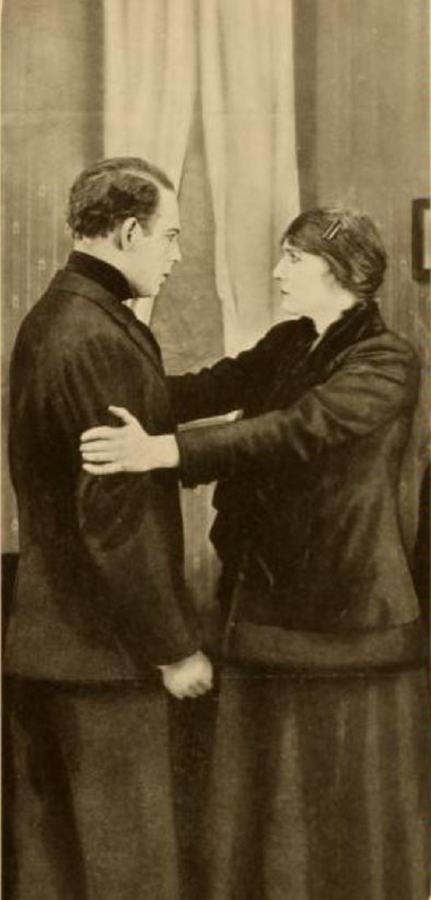
Their romance refracts through class prismatics. John can quote Shelley yet cannot decipher the rasp in Jane’s throat after a 14-hour ward shift. Jane can suture arteries yet trembles at the gulf carved by mahogany doors. The film’s emotional apogee arrives not in a kiss but in a whispered confession beside a derrick that bleeds oil like a wounded titan. “I came to burn your kingdom,” she breathes. “Then let us be arsonists together,” he replies, voice cracking on the word together.
Sabotage as Seduction
The planned immolation of the wells prefigures contemporary eco-thrillers: think Night Moves meets First Reformed. Goodman cross-cuts between conspirators hunched in a lantern-lit shack and the slumbering machinery outside, anthropomorphizing pumps into sleeping dragons. Each edit tightens the garrote. When Morgan—John Sharkey channeling a young Claggart—discovers John’s identity, the lantern’s flame flares, casting faces in Caravaggio chiaroscuro. It’s cinema as alchemy: dread distilled into pixels of light.
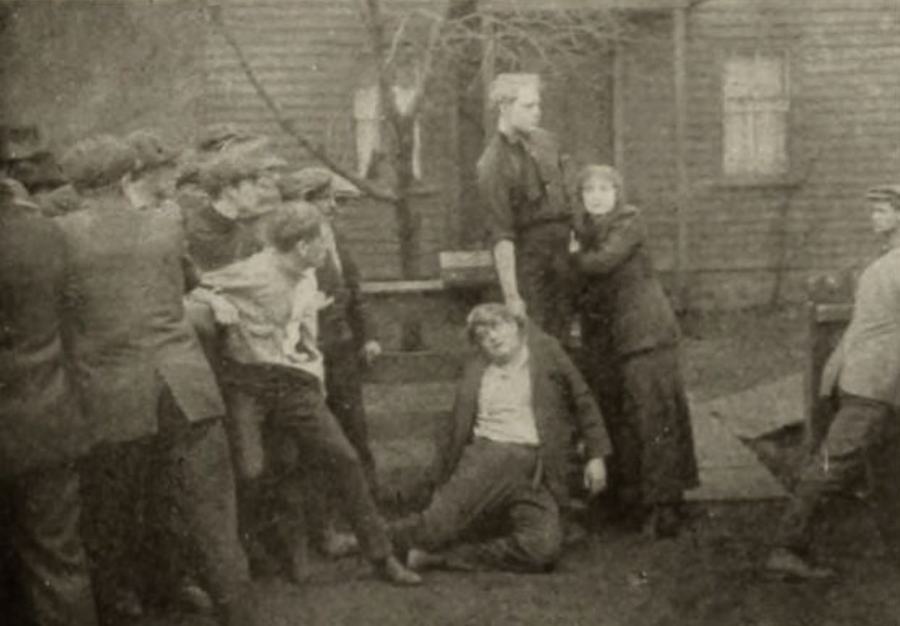
Yet the picture refuses nihilism. Jane’s self-sacrifice—flinging her body between lover and bullet—transcends cliché through geometry: she forms a cruciform shadow over John, a secular Pietà scorched onto corrugated tin. The strikers freeze, torches guttering like ashamed tongues. In that hush, the film whispers its thesis: systems topple not through ordinance but through the moral magnetism of bodies willing to absorb harm.
Nuance radiates from periphery: Nance O’Neil as the fallen sister Annie, her eyes opiated by city promises, delivers a single-take monologue—face half-eclipsed by a cracked hand mirror—that rivals Therese’s deathbed lament for raw fragility. Ray Chamberlin’s disabled oilman patriarch wheezes hymns to dead canaries, a King Lear of the rigs.
Visual Lexicon & Restored Glories
The 2022 4K restoration by EYE Filmmuseum reveals textures smothered for decades: the herringbone tweed of John’s disguise, the sickly chartreuse of Annie’s negligee, the ultraviolet bruise of twilight over oil ponds. Color-tinted nitrate segments—amber for interiors, viridian for night exteriors—pulse like a heart monitored in ICU. Witness the sea-blue (#0E7490) wash when Jane prays beside a kerosene lamp: it’s as though the film itself exhales saline relief.
Unlike The Mutiny of the Bounty’s maritime hierarchies or A Regiment of Two’s jingoistic pomp, The Toilers roots rebellion in domestic soil, making petro-capitalism the tyrant. Its DNA resurfaces in Bound for Glory, Matewan, even There Will Be Blood—yet Goodman grants his uprising a feminine vertebra, a decade before Metropolis’s Maschinenmensch.
The closing tableau—workers linking arms beneath a derrick now flying a white flag—risks cornball symbolism. Yet the camera cranes upward toward a sky scrubbed clean by night rain, and the flag’s fabric flutters like a nurse’s apron. We are left with the lingering perfume of possibility: that maybe, just maybe, the exploited can extract not only crude but mercy from the earth.
See it on a big screen if you can; let the orchestral viola saw at your marrow. Stream it on a laptop and the pixels will still leak that dark orange (#C2410C) glow of industry, the yellow (#EAB308) glint of hope, the sea-blue (#0E7490) bruise of conscience. However you ingest it, The Toilers drills into you—and the wound, dear reader, never quite scabs.
IMDb 5.4
1934
Community
Log in to comment.