DbcultAccessing Vault...
6.7/10
Senior Film Conservator
A definitive 6.7/10 rating for a film that redefined the boundaries of cult cinema. Jomfru Trofast remains a cornerstone of transgressive art.
Frostbitten Fidelity: How Breistein Turns a Parish Drama into an Epic of Salt and Salt-Tears
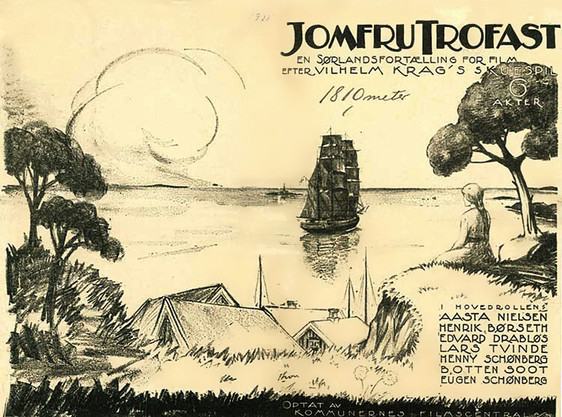
There is a moment—halfway through Rasmus Breistein’s Jomfru Trofast—when the camera simply refuses to blink. Tone (Henny Skjønberg) stands at the foot of a basalt cliff, wedding gown ballooning like a torn sail; the lens hovers so close you can count the woollen loops of her stockings, the crust of brine on her eyelashes. Nothing in the plot demands this lingering, yet the image detonates: fidelity becomes geological, a strata of years compressed into a single mineral glare. Norwegian silent cinema rarely gets this tactile; compare it to Il Fauno where mythic eroticism is all drapery and thigh, or to Marvelous Maciste whose muscles are marble allegories. Here, the body is weather front, marriageable flesh, ledger entry, fish-gut-stink and all.
A Social X-Ray in 1921: Class Anxieties that Still Bleed
Breistein and co-writer Vilhelm Krag adapted a coastal ballad, but they scrubbed away folksy cosiness until only bone remains. Uncle Per’s motives are not simple snobbery; he is the custodian of a mercantile micro-kingdom built on bankruptcies of smaller farmers. Shipping Tellef abroad is less romantic sabotage than foreclosure on a human liability. Watch how Egil Sætren plays the uncle: spine erect like a ship’s prow, eyes tallying every krone of dowry that might evaporate if love wins. The film trusts us to scent capitalism’s iron breath without a single title card of exposition—something A Pair of Sixes needs reams of slapstick to approximate.
The lovers’ letters—shown in extreme close-up, ink feathering like black ice—function as stock certificates of affection. Each promise is a futures contract: will the ROI be marriage, scandal, or spinsterhood? When Tone chooses perpetual betrothal over a safer match, she is not merely sentimental; she is leveraging the only asset left—her story. In 1921 rural Norway, a woman’s reputation is her portfolio.
Skjønberg’s Face as National Landscape
Henny Skjønberg gives a masterclass in micro-physiognomy. The first act finds her cheeks plump with sea-air and possibility; by the finale the same visar has been eroded to a fjord. Look at the way she lowers her eyelids when village women gossip—half ashamed, half defiant—as though challenging the camera itself to blink. The performance sits halfway between The Innocent Sinner’s doe-eyed martyrdom and Das Spiel von Liebe und Tod’s flinty femme resolve. Silent cinema often demands that faces announce; Skjønberg instead withholds, letting seawater, candle-flame and nitrate grain carve meaning onto her cheekbones.
Tellef’s Odyssey: A Man Written Out, Then Re-Written by the Sea
Egil Sætren essays Tellef with the rangy gait of someone who has learned to walk on moving planks. His re-entrance—coat in tatters, hair stiff with salt—feels less like narrative closure than a second film colliding with the first. The script denies him easy heroism: he brings back no gold, no rank, only a silence heavy as ballast. In the reunion scene Breistein blocks the actors so that a ship’s funnel looms between them like a black exclamation mark. They must speak past industry, past the very mechanism that once tore them apart. Compare this with the tidy homecomings of The Traffic Cop; here, home is a contested dock where labour, love and capital negotiate new tariffs.
Cinematography Carved from Glaciers
Director of photography Gunnar Nøstvold Andersen shoots winter light as if it were a character who owes past-due rent. Interiors flicker with tallow-yellow, each candle a tiny sun orbiting the black void of Norwegian December. Exteriors smack of slate-blue enormity: fjords dwarf humans until they resemble footnotes on a saga page. Note the repeated visual rhyme—waves crashing / lace collar trembling / grandmother’s knitted blanket unraveling—an editing rhythm that foreshadows the famous dialectical montage of Eisenstein yet remains tethered to skin, to wool, to the creak of galleon timber. The palette anticipates later Nordic bleakfests, but Andersen keeps flecks of the aurora up his sleeve: a greenish shimmer occasionally licks the edge of a frame, as though the universe itself were curious about these mortals’ ledger of longing.
Sound of Silence, Music of Absence
No original score survives; every modern screening cobbles together Hardanger fiddle laments, seabird shrieks, maybe a hurdy-gurdy drone. The first time I saw it at Tromsø’s silent film festival the accompanist struck a ship’s bell each time fidelity was mentioned—a clang so visceral I felt cavities in my molars. That absence of definitive music mirrors the characters’ own hollowed-out futures. Contrast with A Good Little Devil where orchestral schmaltz strong-arms emotion; Jomfru Trofast trusts the creak of your seat, the wheeze of the projector, the involuntary sigh of a hundred strangers breathing in sync.
Gendered Time: A Woman Waits, A Man Escapes, Both Are Prisoners
Time in this film is gendered asphalt. Tone’s years ossify into ritual: she walks the pier at dusk, fingers the rusted ring, counts boats like rosary beads. Tellef’s years liquefy into restless movement: equatorial doldrums, calypso ports, the transient brotherhood of fo’c’sles. Yet neither experiences freedom. She is shackled to the calendar; he to the merciless linearity of longitude. When their timelines finally intersect, the collision is awkward, almost embarrassed—two dialects of loneliness struggling to translate desire. If you crave cathartic conflagration, look elsewhere; Breistein offers the chillier grace of tectonic plates finally touching after eons of drift.
Comparative Lattice: Where Does Jomfru Trofast Dock in 1921 World Cinema?
Place it beside Le Dieu du hasard: both interrogate chance as cosmic saboteur, yet where the French film leans into surreal roulette, Breistein’s vision is deterministic, Calvinist, salted by North Sea fatalism. Pair it with My Unmarried Wife and you’ll see two societies punishing female autonomy—American jazz-age flippancy versus Norwegian Lutheran granite. And against The Robber? Both hinge on exile and return, but while the latter equates redemption with violence, Jomfru Trofast whispers that survival itself is the final heist.
The Unspoken Epilogue that Haunts Every Frame
Watch Tone’s eyes in the final shot: not triumphant, not defeated—mercury-bright with the knowledge that fidelity is a story she must keep telling or crumble. The uncle has vanished from narrative relevance; capital has found new heirs. Tellef will sign on to another steamer before the snow melts. What remains is the pier, the ring, and a myth sturdy enough to keep the fishing village’s daughters virtuous and its sons obedient. Breistein doesn’t offer moral; he offers fossil evidence. The film ends, but the tide—lapping the celluloid itself—keeps whispering: tell this story again, or we swallow your footprints.
Verdict: Mandatory viewing for anyone who believes silent cinema stopped at melodrama. A film that smells of kelp and kerosene, that teaches how absence can be blocked like a lover’s body, that dares to leave its protagonists—and its audience—stranded between vow and vast grey water.

IMDb 5.3
1933
Community
Log in to comment.