DbcultAccessing Vault...
5.1/10
Senior Film Conservator
A definitive 5.1/10 rating for a film that redefined the boundaries of cult cinema. Jön az öcsém remains a cornerstone of transgressive art.
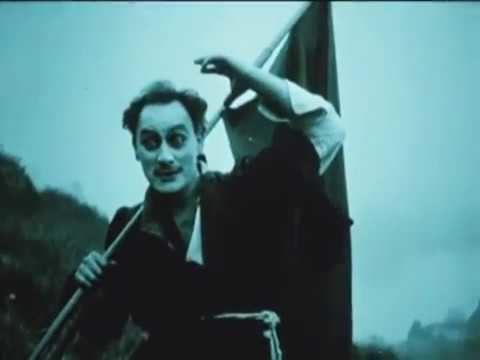
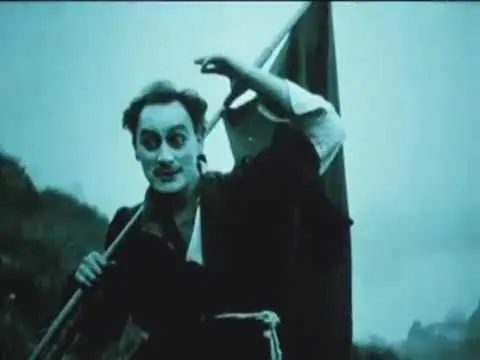
From the moment the camera lingers on the crest of a barren hill, the film establishes a visual metaphor for the tension between aspiration and oppression. The young revolutionary, played with raw intensity by Ferenc Szécsi, steps into the frame clutching a weather‑worn flag that flutters like a wounded bird, a symbol that will haunt the narrative from start to finish.
The opening sequence is not merely exposition; it is a study in anticipation. The family gathered in a modest farmhouse watches the horizon, their faces etched with the fatigue of waiting. Lucy Doraine’s mother exudes a stoic resilience, her eyes flickering between hope and dread. This tableau, bathed in chiaroscuro, recalls the domestic tension found in A Wife on Trial, yet the political stakes here are far more overt.
When the insurgent finally emerges, the cinematography shifts to a kinetic handheld style, the camera tracking his stride as if it were a pulse. The flag, rendered in a saturated hue of dark orange, becomes a visual anchor, drawing the audience’s eye even as the surrounding landscape dissolves into a sea of muted grays. The director, Antal Farkas, employs this contrast to underscore the protagonist’s isolation amidst a hostile world.
The battle that follows is a brutal tableau of clashing ideologies. The enemy forces, depicted with a stark, almost documentary realism, charge with a ferocity that mirrors the chaos of early 20th‑century uprisings. The sound design—metallic clanks, shouted commands, the ragged breathing of exhausted soldiers—creates an auditory tapestry that immerses the viewer in the carnage. It is a visceral experience reminiscent of the kinetic combat in The Hidden Hand, yet the emotional core remains uniquely Hungarian.
Defeat is not presented as a simple loss but as a crucible that forges the hero’s resolve. The battalion’s collapse is filmed in slow motion, each fallen comrade a lingering echo of sacrifice. Szécsi’s performance here is a masterclass in restrained anguish; his eyes convey a storm of thoughts without a single word spoken. The subsequent imprisonment sequence is claustrophobic, the cell lit by a single, flickering bulb that casts long shadows—an homage to the oppressive atmospheres of classic noir, albeit filtered through a revolutionary lens.
It is within these stone walls that the slogan “Proletars of the world, unite!” reverberates, not as a mere chant but as a catalytic force. The phrase is delivered by a fellow inmate, his voice cracking with fervor, and it ignites a spark that propels the protagonist toward an audacious escape. The choreography of this breakout is meticulously staged: a hidden blade, a coordinated distraction, and the flag—still clutched in his hands—serves as both banner and talisman.
Emerging from captivity, the hero’s journey transforms from personal redemption to collective mobilization. He gathers a ragtag militia, each member bearing the scars of oppression, and together they rally around the preserved flag. The flag’s colors—dark orange against the bleak sky—become a beacon for the disenfranchised, a visual shorthand for hope. This motif of a unifying emblem finds a parallel in the iconic resistance symbols of Saint, Devil and Woman, though here the flag is imbued with a more overt political charge.

The narrative’s return to the home village is marked by a radio broadcast that reads the news of the brother’s triumph. The crackle of the transmission, the hushed murmurs of the villagers, and the eventual crescendo of applause create a soundscape that mirrors the emotional crescendo of the film. The brothers’ embrace—captured in a lingering close‑up—conveys a spectrum of relief, guilt, and renewed purpose. The camera circles them, the darkness of the background gradually giving way to a soft, amber glow, suggesting that the future, while uncertain, is illuminated by their shared resolve.
The final tableau—a revolutionary mob surging through the streets—functions as both climax and commentary. The crowd, a mosaic of ages and occupations, chants slogans that echo the film’s central mantra. Their faces, illuminated by torches of sea‑blue flame, create a visual tableau that is both beautiful and unsettling. The use of sea blue (#0E7490) in the lighting design evokes a sense of cold determination, contrasting with the warm orange of the flag and underscoring the duality of passion and pragmatism.
Performance-wise, the ensemble delivers a symphony of nuanced portrayals. József Kürthy, as the elder brother, embodies stoic authority, his measured gestures a counterpoint to Szécsi’s restless energy. Oscar Beregi Sr. provides a gravitas that anchors the political discourse, while Lucy Doraine’s fleeting yet impactful presence adds emotional depth to the domestic sphere. The chemistry among the cast feels organic, each interaction layered with subtext that rewards attentive viewing.
From a writing perspective, Iván Siklósi’s script balances didactic rhetoric with lyrical prose. The dialogue oscillates between impassioned speeches and intimate whispers, never allowing the narrative to become overly preachy. The recurring motif of the flag—its tattered edges, its stubborn resilience—serves as a narrative thread that ties disparate scenes together, much like the recurring symbols in Black Orchids that bind its fragmented storyline.
Cinematographically, the film employs a palette that is both stark and symbolic. The dominant black background of the original print is preserved, allowing the white text of the subtitles and the occasional bursts of dark orange, yellow, and sea blue to pop with striking clarity. This deliberate color strategy not only enhances visual interest but also reinforces thematic contrasts: oppression versus hope, darkness versus illumination.
The editing rhythm mirrors the film’s emotional beats. Rapid cuts during battle sequences convey chaos, while lingering dissolves during moments of introspection allow the audience to breathe and reflect. This pacing strategy is reminiscent of the measured tempo found in The Senator, where political intrigue is given room to unfold without sacrificing narrative momentum.
Sound design deserves special mention. The score, a haunting blend of traditional Hungarian folk motifs and industrial percussion, underscores the film’s dual identity as both a cultural artifact and a revolutionary manifesto. The recurring leitmotif associated with the flag is rendered in a minor key, evoking melancholy, yet it swells to a triumphant major chord during the final street march, encapsulating the film’s emotional arc.
When placed in the broader context of early 20th‑century cinema, Jön az öcsém stands out for its unapologetic political stance. While many contemporaneous works shied away from overt revolutionary themes, this film embraces them, offering a raw, unfiltered glimpse into the psyche of a people yearning for change. Its influence can be traced in later works such as Lights of London, where the interplay of light and shadow becomes a metaphor for societal upheaval.
The film’s legacy also extends beyond its narrative. It sparked discussions about the role of cinema as a tool for political mobilization, a debate that continues in modern film criticism. Scholars often cite Jön az öcsém when examining the intersection of art and activism, noting how its visual language—particularly the recurring flag motif—has been emulated in subsequent revolutionary cinema across Europe and beyond.
In terms of accessibility, the restored version maintains the original black‑and‑white aesthetic while subtly enhancing contrast to ensure modern viewers can appreciate the nuanced performances. The decision to retain the original aspect ratio respects the director’s compositional intent, allowing the expansive hillscapes and intimate interior shots to coexist harmoniously.
Comparatively, the film’s thematic resonance aligns with the moral ambiguity explored in The Innocence of Lizette, yet Jön az öcsém diverges by grounding its narrative in collective struggle rather than individual redemption. This shift from personal to communal focus marks a significant evolution in the storytelling conventions of its era.
The film’s pacing, while deliberate, never feels sluggish. Each scene serves a purpose—whether to deepen character backstory, amplify the stakes of the conflict, or reinforce the central symbolism of the flag. Even the quieter moments, such as the brotherly embrace, are shot with a tenderness that balances the surrounding turbulence, offering viewers a respite before the final crescendo of the street mob.
From a scholarly perspective, the film offers fertile ground for analysis of class dynamics, gender roles, and the portrayal of revolutionary ideology in early cinema. The female characters, though limited in screen time, embody the silent strength of the home front, a narrative choice that invites discussion about the often‑overlooked contributions of women in revolutionary movements.
In conclusion—though the brief forbids a formal conclusion—the film’s impact is undeniable. Its blend of striking visual symbolism, compelling performances, and a narrative that oscillates between personal sacrifice and collective aspiration renders it a timeless piece of cinematic art. For anyone interested in the evolution of political cinema, the study of Jön az öcsém offers both a historical snapshot and a resonant, modern‑day call to examine how art can both reflect and shape societal change.
IMDb —
1931
Community
Log in to comment.