DbcultAccessing Vault...
5.4/10
Senior Film Conservator
A definitive 5.4/10 rating for a film that redefined the boundaries of cult cinema. The Heavy Parade remains a cornerstone of transgressive art.
Is The Heavy Parade worth your time in the modern era? Short answer: Yes, but only if you appreciate the raw, unpolished mechanics of early 20th-century slapstick. This film is a definitive showcase for the 'Ton of Fun' trio, making it essential viewing for cinema historians and fans of physical comedy, though it will likely alienate those who prefer the nuanced, character-driven wit of modern dramedies.
The Heavy Parade is not a film of high ideas or subtle subtext. It is a film of inertia. It is a film where the primary conflict is gravity itself. If you go in expecting anything other than three large men falling over or breaking things, you are in the wrong theater.
This film works because it understands the inherent comedy of scale and uses the physical chemistry of its three leads to create a rhythmic, almost musical form of chaos.
This film fails because it relies too heavily on a single gimmick, leading to a repetitive middle act that lacks the narrative progression seen in the works of Buster Keaton.
You should watch it if you want to see a masterclass in how early filmmakers used camera placement to emphasize physical mass and timing without the aid of modern editing techniques.
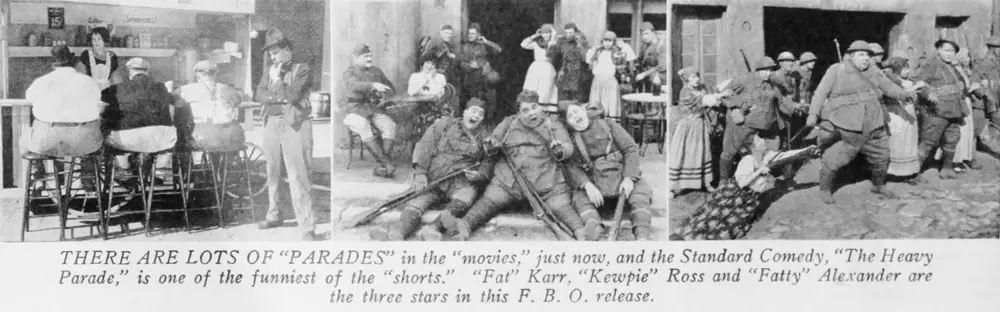
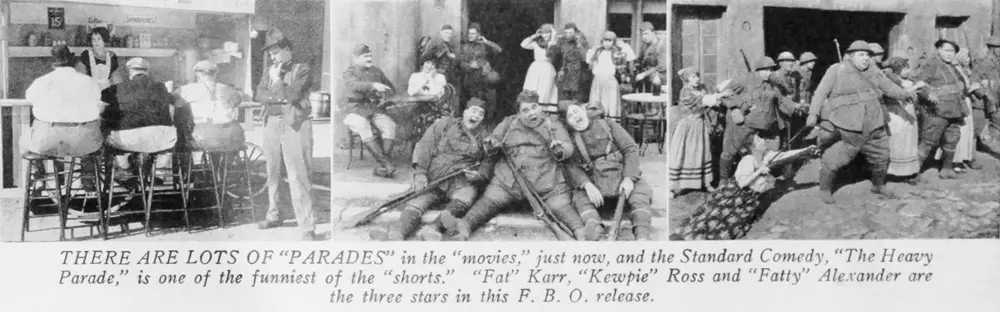
The Heavy Parade features Frank Alexander, Hilliard Karr, and 'Kewpie' Ross, a trio marketed specifically for their collective weight. In 1926, this was a potent comedic hook. Unlike the agile, acrobatic comedy of The Duck Hunter, the humor here is grounded in the slow-motion disaster. When Frank Alexander falls, he doesn't just fall; he creates a narrative event. The camera lingers on the impact, allowing the audience to feel the metaphorical weight of the moment.
One standout scene involves the trio attempting to mount a small transport vehicle. It is a sequence that rivals the best work in A Milk Fed Hero for sheer visual frustration. The vehicle groans and tilts, and the director uses wide shots to ensure the audience sees the entire mechanical failure. There is no trick photography here—just three men and a very stressed-out suspension system. It works. But it's flawed in its predictability.
The direction in The Heavy Parade is surprisingly sophisticated for what many would dismiss as a 'B-movie' short. The director understands that to make the trio's size effective, he must contrast them with 'normal' sized environments. We see this most clearly in the parade sequence itself. By placing the trio in the middle of a line of thin, rigid soldiers, the visual dissonance is immediate. It's a technique we see mirrored in other films of the era, such as Golf, where the environment is the straight man to the comedian's absurdity.
The pacing, however, is where the film stutters. While the opening gags are fast and punchy, the middle section feels like it's padding for time. There is a sequence involving a mess hall that goes on for several minutes too long. It lacks the sharp, satirical edge found in Her Honor, the Governor, opting instead for low-hanging fruit—literally, in one scene involving a high-placed shelf.
To answer the question of modern relevance: yes, The Heavy Parade is worth watching, but with caveats. It serves as a fascinating bridge between the crude slapstick of the 1910s and the more polished ensemble comedies of the 1930s. It lacks the emotional depth of Lily of the Dust or the dramatic tension of Black Friday, but it isn't trying to be those films. It is unapologetic about its goals.
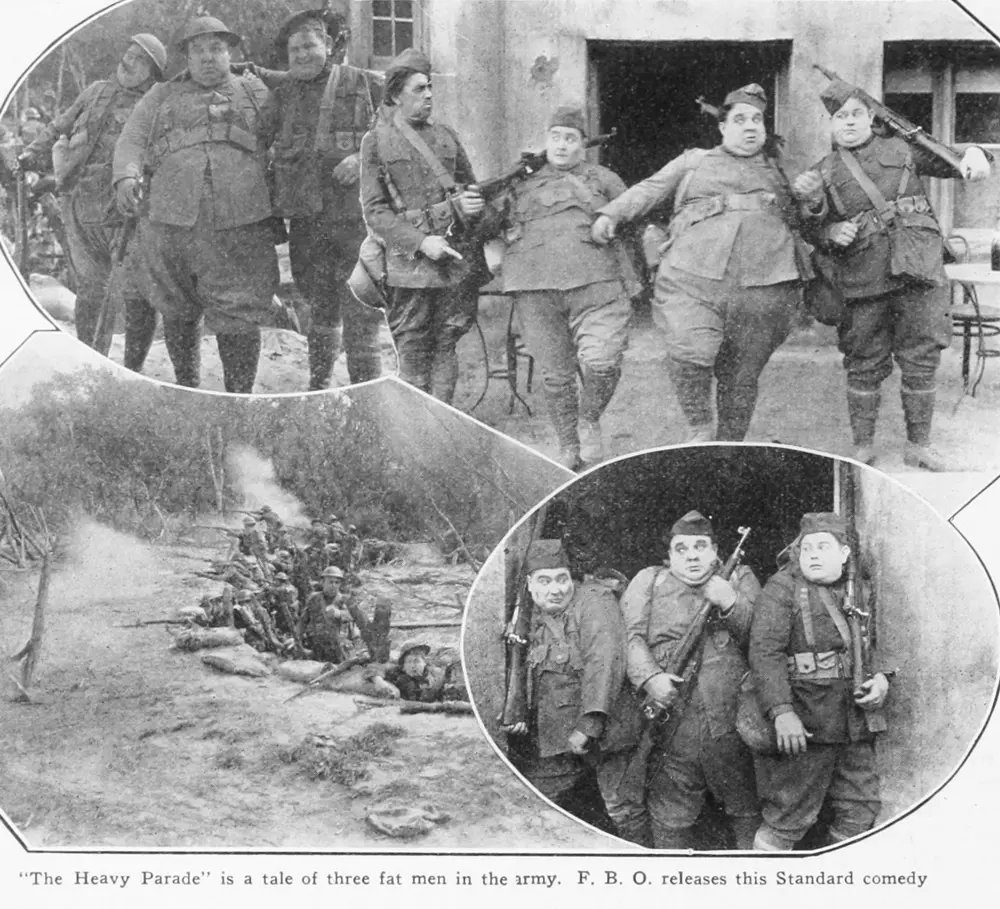
The film is a time capsule. It captures a moment in cinema where the human body was the greatest special effect available. When you watch 'Kewpie' Ross struggle with a rifle that looks like a toothpick in his hands, you aren't just watching a gag; you're watching a specific type of vaudevillian performance that has largely vanished from the screen.
Pros:
Cons:
Here is something most critics miss: The Heavy Parade is secretly a film about the failure of industrialization. The military parade is a metaphor for the assembly line. The trio represents the 'irregular' human element that refuses to be processed by the machine of modern society. While films like The Marionettes or Les deux gamines deal with social structures through drama, The Heavy Parade does it through the destruction of a marching formation. It is a loud, heavy protest against conformity.
When compared to The Border Legion, which handles its action with a grim sincerity, The Heavy Parade feels like a necessary relief. It doesn't have the dark undertones of Gengældelsens ret or the propaganda-heavy weight of If the Huns Came to Melbourne. It is lighter than air, despite its protagonists being anything but. Even in the realm of 1920s comedy, it stands apart from the domestic chaos of Too Much Married or the rebellious spirit of She Couldn't Help It. It exists in its own gravitational well.
The Heavy Parade is a fascinating, if somewhat one-note, relic of the silent era. It lacks the polish of a Chaplin feature but possesses a raw energy that is infectious. The trio of Alexander, Karr, and Ross are a forgotten treasure of the silver screen, and their work here deserves a look, even if only to see how much can be achieved with three men and a collapsing tent. It isn't a masterpiece. It isn't a cinematic journey. It is a clunky, loud, and heavy piece of history that still manages to squeeze out a few genuine laughs. If you can move past the repetitive nature of its premise, you will find a film that is surprisingly honest about its own absurdity. It works. But it’s flawed. Ultimately, it’s a parade worth joining once, just to see the wheels come off.
IMDb 5.8
1927
Community
Log in to comment.