Summary
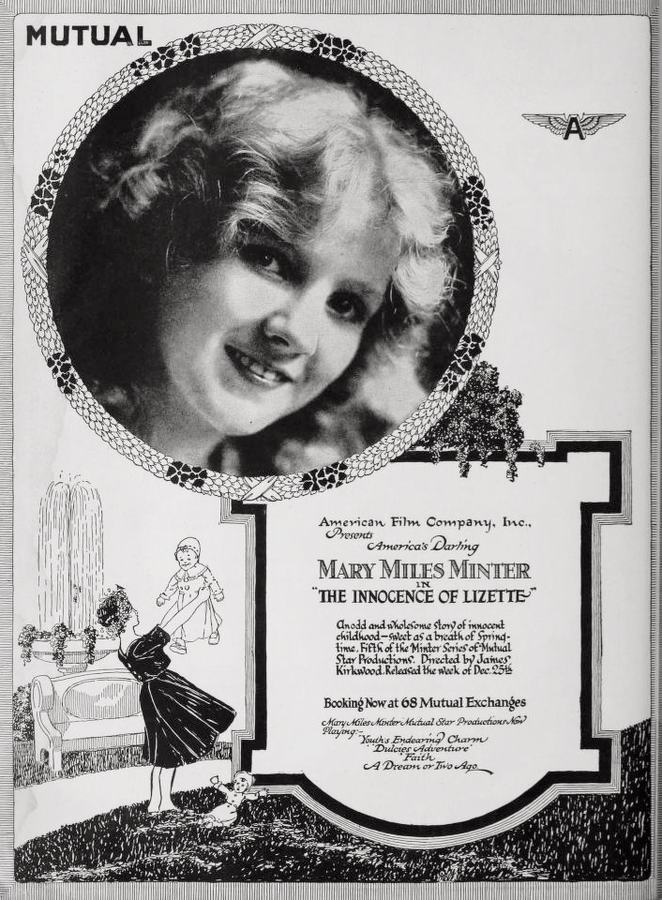
The silent era often explored the profound currents of human emotion, and The Innocence of Lizette is a poignant testament to this tradition, unfolding a narrative tapestry woven with threads of loss, adoption, and the perplexing nature of youthful naivety. Our story commences in the somber aftermath of Ashby Leene's demise, a once-celebrated actor now reduced to penury, leaving his bright-eyed granddaughter, Lizette, adrift. She finds an unexpected haven with Granny Page, her grandfather's compassionate landlady, in a home that, while modest, overflows with warmth and genuine affection. Here, Lizette forges a steadfast bond with Paul, Granny's earnest nephew, whose humble newsstand becomes a vibrant locus of their shared world. Granny, ever vigilant, dedicates herself to assisting at the stand, subtly observing the nascent attentions of the dubious Dan Nye towards Lizette, a presence she instinctively distrusts.
A chance encounter at the newsstand introduces Lizette to Henry Faure, an elderly industrialist whose immense wealth is shadowed by an profound melancholy, a void left by the untimely passing of his wife and child. Captivated by Lizette's radiant spirit, Faure sees in her a beacon to rekindle his shattered existence, offering her a life of unimaginable privilege through adoption. Despite the wrenching sorrow of separation, Granny and Paul, prioritizing Lizette's ostensible well-being, reluctantly consent to her departure.
Initially, Lizette thrives in this gilded cage, but the pull of her former life, of authentic connection, proves irresistible. During Faure's absence, she seeks solace with her old friends. His premature return precipitates a heartbreaking plea from Lizette to remain with Granny, a request Faure, wounded but understanding, grants. His old demons of depression resurface, prompting his concerned housekeeper to implore Lizette's return.
Upon her reluctant re-entry into Faure's opulent world, Lizette stumbles upon a foundling, an abandoned infant on the doorstep. With an unburdened heart and an almost primordial maternal instinct, she embraces the child, carrying it inside. Confronted by a bewildered butler and then a distraught Faure, Lizette, in a moment of sublime, unadulterated ignorance, declares herself the baby's mother. Pressed for the father's identity, her innocent admission of not knowing, followed by a simplistic deduction that all babies must have a father, leads her to spontaneously bestow the dubious honor upon Dan Nye. The sheer preposterousness of the situation, coupled with Lizette's guileless candor, disarms Faure and his housekeeper, who, despite their shock, cannot bring themselves to condemn her, finding a strange amusement in her profound lack of worldly knowledge.
This comedic tragedy escalates when Faure, driven by a desperate desire to protect Lizette's "honor," confronts Nye, accusing him of paternity. Nye, a man of base opportunism, swiftly grasps the leverage at hand. Feigning indignation, he confesses to the "paternity" but demands an exorbitant sum for a forced marriage, an arrangement Faure, in his misguided protectiveness, agrees to, insisting on an immediate ceremony. The meticulously crafted deceit unravels when the child's true mother emerges, reclaiming her infant. The revelation shatters Nye's scheme, leading to his ignominious expulsion. In the aftermath of this emotional tempest, Lizette's heart, now fully understanding the depth of Paul's unwavering affection, finds its true home, bringing a tender, deserved resolution to her tumultuous journey.
Synopsis
Ashby Leene, once a famous actor, but now poverty stricken, dies, leaving his grandchild, Lizette, in the care of Granny Page, his landlady. Lizette's new home is one of kindliness and she becomes a friend of Paul, Granny's young nephew, who runs a newsstand. Remembering her promise, Granny spends a good deal of time at the newsstand when Paul is away on deliveries. She resents Dan Nye's attention to Lizette. One day Lizette sells a paper to Henry Faure, an elderly millionaire, who is attracted to the bright-faced girl. Faure has been mentally depressed since the death of his wife and little girl. Longing for someone to love, Faure offers to adopt Lizette as his own daughter. Though Paul and Granny are heartbroken, they consent. For a time Lizette is happy in her new home. While Faure is away on business, Lizette visits her old friends. Faure unexpectedly returns. To his dismay Lizette begs that he let her stay a while longer with Granny. He reluctantly consents. His old depression returns. The housekeeper finally writes Lizette, begging her to return for Faure's sake. Lizette finds an abandoned infant on the doorstep upon her return. She is overjoyed. She is admitted by the butler, who is aghast to see that she has returned with a baby. When questioned, she tells them that she is the baby's mother, etc. Faure asks her about the child's father. Lizette innocently answers that she don't know. She realizes in a vague way that babies have fathers and, seeing that everyone is greatly upset, she decides that if the baby must have a father she will give Dan Nye the honor of naming him. Faure loves her so much that he cannot find it in his heart to denounce her. Nor can the kind old housekeeper, who is highly amused at Lizette's lack of knowledge about babies. Dan Nye is amazed when Faure calls to see him and charges him with being the father of Lizette's baby. He conceals his astonishment, quick to realize that he has an unusual opportunity for blackmail in the affair. When Faure declares he must marry Lizette for the sake of her good name, Nye admits he is the baby's father, but refuses to marry the girl unless Faure pays him an exorbitant sum. Faure agrees to this, upon the condition that he accompany him and marry Lizette at once. The young woman who abandoned the child calls to reclaim it, but Lizette is unwilling to give it up. But she is finally induced to give it back to the rightful mother. Nye is thrown out of the house, and Paul, who has long cherished a love for Lizette, is made happy by her acceptance of him.
Review Excerpt
"
In the annals of early cinema, few genres captured the raw, unvarnished spectrum of human emotion quite like the silent drama. These films, stripped of spoken dialogue, relied entirely on the expressive power of visual storytelling, a nuanced choreography of gesture, gaze, and mise-en-scène to convey the deepest currents of the human heart. Among them, The Innocence of Lizette emerges as a captivating exemplar, a narrative tapestry meticulously woven with threads of profound loss, ..."