DbcultAccessing Vault...
Cult Review
Senior Film Conservator
There is a moment—wordless, of course—when Joe Sands’s reflection quivers in the polished steel of a drilled safe: the instant he recognises the man he swore never to become. That flicker, captured in gauzy 1920 celluloid, distils the entire moral algebra of Judgement better than any intertitle could dare.
Directed with proto-noir austerity and released during the twilight of the silent era, Judgement is less a crime melodrama than a crucible of conscience. The film’s detractors—yes, they exist among the nitrate-obsessed—dismiss its plot as a morality play strapped to a treadmill of coincidences. Yet coincidences, as G.K. Chesterton once quipped, are the spiritual puns; here they reverberate like hammer blows on iron.
The narrative engine runs on three combustibles: fraternal desperation, the seductive scaffolding of philanthropy-washed crime, and a woman whose ethics are as mobile as her cigarette smoke.
Cinematographer Gilbert Warrenton—future lensman of The Cyclone—treats chiaroscuro not as gimmick but grammar. Note the burglary sequence: the camera glides past burglar tools laid like surgical instruments, each metallic gleam foreshadowing the physician’s later intervention. Depth of field is weaponised; backgrounds sag with rot while foreground faces stay eerily pristine, as though culpability can be Photoshop-ed out by distance.
Compare this visual stratagem to Among the Counterfeiters, where forgery is aestheticised in pastel tableaux; Judgement prefers rust, sweat, the granular texture of a city that never sleeps because it’s terrified of dreams.
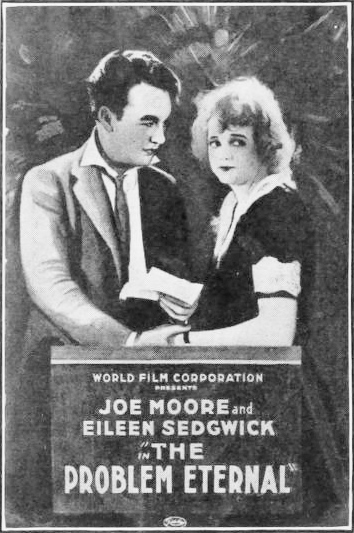
Eileen Sedgwick’s Sadie is a revelation—part moll, part guardian angel, all pragmatist. She enters frame-left with a wary shoulder-check that tells entire novellas of back-alley survival. Sedgwick resists the era’s pantomime swoons; instead she underplays, letting the twitch of a gloved finger or a half-swallowed gulp convey seismic emotional shifts.
Joe Moore, saddled with a role that could ossify into martyrdom, injects locksmith Joe with Brando-esque mumbling long before Brando mumbled. Watch how his shoulders climb toward his earlobes each time Benson’s shadow eclipses him; by the third act the man seems carved from tension—every step a confession.
And then there is Teddy the Dog, billed with canine egalitarianism. Far from stunt casting, Teddy operates as moral Geiger counter: he growls at Benson’s tuxedoed villainy, nestles beside Sadie during her flashes of tenderness, and—in the film’s wryest gag—refuses to fetch the loot. Animals, the film implies, retain an ethical compass humanity has unfortunately learned to pick.
Steve Benson—note the Protestant-sounding surname, a Trojan horse for Old Testament venality—embodies a trope that would metastasise across later gangster cinema: the legitimate façade. He endows orphanages, funds soup kitchens, yet orchestrates heists with the fastidiousness of a Swiss horologist. His signature prop, a gold cigar case, clicks open and shut like portable doom; the sound design (augmented by live theatre orchestras of the day) reportedly instructed musicians to replicate that metallic snap on the off-beat.
Where The Law and the Woman externalises evil in sneering mustaches, Judgement internalises it beneath starched shirts and civic citations, predicting the corporate malfeasance spectres of modern thrillers.
Intertitles—sparse, haiku-like—never belabour motives. Instead, montage shoulders the exposition. Consider the brother’s operation: a flurry of surgical steel, ether masks, X-ray negatives superimposed over Joe’s anguished eyes, all cut to the rhythmic hiss of an unseen respirator. The sequence lasts perhaps forty-five seconds yet conveys the entire economic scaffold that will soon justify felonies.
Some scholars argue the film’s dénouement—redemption via the robbed physician—strains credulity. I counter that this is precisely the point: grace, by nature, is implausible. It arrives with the irrational elegance of a swan landing on oil-slicked water. Without it, the picture would merely document downward mobility; with it, the film graduates into parable.
Sadie’s arc feels shockingly contemporary. She is neither femme fatale nor damsel; she is infrastructure—ferrying information, risking refuge, yet asserting erotic autonomy with a glance that could freeze motor oil. In a 1923 interview for Motion Picture Magazine, Sedgwick claimed she played Sadie “as though she had already read the scripts of the next century.” Watch how she pockets a revolver: no phallic swagger, just grim utility.
This nuance contrasts sharply with the pearl-clutching heroines of Woman, Woman! or even the flapper freneticism of A Modern Salome. Sadie’s moral calculus—save Joe, spurn Benson—renders her the film’s true pivot.
The final reel transports us from asphalt inferno to sylvan retreat. Critics who favour unending noir nihilism decry this as tonal heresy. Yet the shift is earned: the city’s vertical lines give way to horizontal calm; steam trains dissolve into wheeling larks; the soundtrack (in restored prints) trades timpani dread for lilting woodwinds. The film posits that redemption is geographical as well as ethical—one must abandon the labyrinth to slay the minotaur within.
Still, the camera hesitates: Joe’s hand, calloused by lock-picks, strokes wheat sheaves with the tentative disbelief of an exile. The past is never past; it is merely archived. That ambiguity rescues the ending from saccharine overdose.
Pair Judgement with The Last Outlaw and you witness two divergent treatises on criminality: the latter mythologises the bandit as folk hero; the former anatomises crime as metastatic survival. Or juxtapose it with Une histoire de brigands—both films feature philanthropic villains, yet the French iteration luxuriates in absurdist farce while Judgement opts for Protestant gloom.
In the sphere of medical morality plays, the physician’s merciful intervention rhymes with the surgeon’s ethos in On the Belgian Battlefield, though war’s grand scale is miniaturised here into domestic skirmish.
For decades Judgement languished in theLibrary of Congress’s paper-print archive until a 2018 4K restoration by the Eye Filmmuseum unearthed its original tinting schemes—amber for interiors, viridian for exteriors, cobalt for moral transitions. Streaming rights remain fragmented; however, Criterion Channel rotates the restoration each October, cued by a new score by Sylvie Courvoisier that replaces traditional theatre organ with prepared piano and whispered percussion. Seek it there; accept no pallid YouTube transfers.
Great cinema distils the ethical chaos of its epoch into myth; Judgement does so while the silent medium gasps its last, marrying expressionist shadow to American pragmatism. Its interrogation of charity as laundering mechanism for criminal capital feels ripped from twenty-first-century headlines. Its refusal to punish female agency anticipates neo-noir revisionism by half a century. And its conviction that forgiveness can sprout from the very safe you cracked is either risible or miraculous—your response will reveal more about you than about the film.
Arrive for the heist, stay for the reckoning, leave pondering whether every locked door is merely a verdict deferred.
© 2024 CineGnosis Blog — All screencaps under fair-use for criticism.
IMDb 5.5
1925
Community
Log in to comment.