DbcultAccessing Vault...
Cult Review
Senior Film Conservator
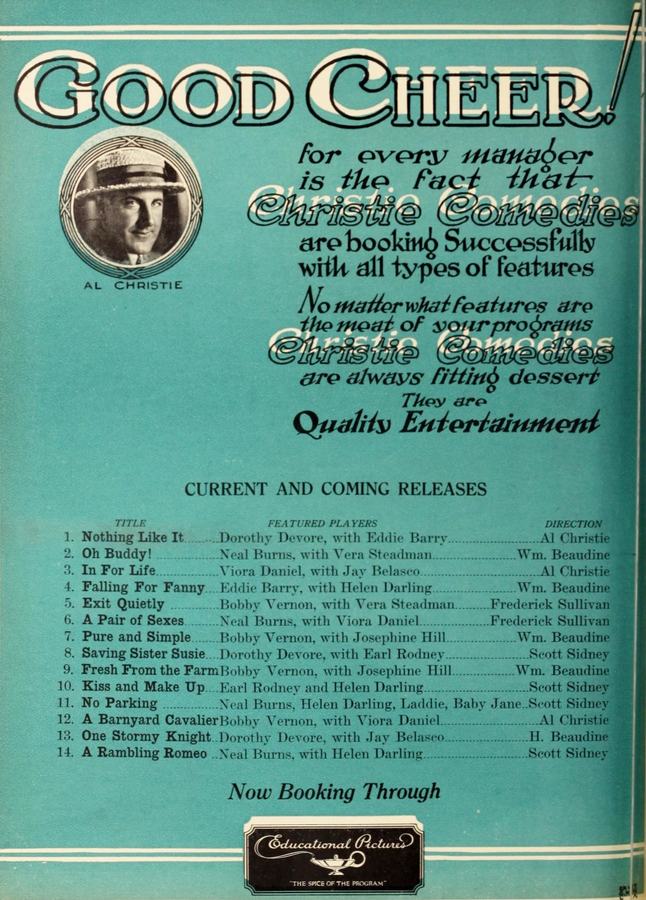
Lobby chandeliers, honeymoon nerves, and a misplaced mash note—Kiss and Make Up plays like champagne left out overnight: still fizzy, slightly sour, and unexpectedly intoxicating.
Picture Manhattan, 1934. Skyscraper shadows slice through afternoon haze while the Waldorf’s revolving door disgorges a freshly married couple who reek of cologne and trepidation. Director Harlan G. Edwards—working under the one-off alias “Harvey Howells”—understands that hotels are erotic pressure cookers: every key jangle is foreplay, every room-service bell a potential alarm. Within seconds the camera ogles brass luggage carts, flirtatious bellhops, and the bride’s knee peeking through bias-cut silk. The picture’s first reel is practically a guided tour of Deco desire, an amuse-bouche before the main course of jealousy.
Then geography pivots. A smash-cut to a rattling Western Pacific sleeper flings the newly minted “bucolic” Mr. and Mrs. into a California bungalow framed by eucalyptus and paranoia. The tonal whiplash is deliberate: urban gloss gives way to sun-blistered clapboard, echoing how swiftly marriage itself can downgrade from penthouse to fixer-upper. Our groom—played by the square-jawed but comedically limber Thornton Edwards—starts to treat domestic space like a hotel he’s still nervously trying to tip. Meanwhile Dagmar Dahlgren’s bride radiates the uncalculated magnetism of someone who has never read a self-help book on wifely deference.
Act two is a Rube Goldberg contraption of misunderstanding. She plans a surprise birthday bacchanal; he, nursing unnamed insecurities, arrives home early with suspicion tucked in his breast pocket like a loaded hankie. Enter the hired help: a ukulele-strummer who looks like John Gilbert’s dissolute cousin, a pastry chef wearing last night’s tuxedo, and a florist lugging enough roses to suffocate a parade float. They dive behind sofas, inside closets, under bearskin rugs—any crevice that might save their tip. The camera glides voyeuristically, peeping through keyholes and half-shut doors, turning the bungalow into a playground of thighs, ferns, and dangling telephone cords.
Of course the jig ends with slapstick inevitability: the husband’s fountain pen rolls beneath an ottoman, he bends, discovers a pair of unfamiliar brogues, and the farce detonates. What follows is less narrative than emotional pinball—accusations ricochet, a messenger boy misdelivers a mash note addressed to “Dearest Dimples,” and suddenly every outsider is recast as potential paramour. The screenplay, attributed to “The Gag Department” and never officially signed, is a patchwork of vaudeville blackout sketches. Yet the stitching feels oddly honest: marriage as a long con where love and possession blur, where trust is a currency repeatedly debased by comic inflation.
Edwards the actor excels at double-takes that verge on the existential. Watch his pupils dilate when he spots a strange necktie on the hat-stand; you can practically hear his id screaming “Cuckold!” Dahlgren, for her part, never begs for sympathy. Her wide-eyed incredulity—why would I stray when I’ve got a lifetime subscription to your neuroses?—anchors the picture’s moral center. The supporting players orbit like slapstick satellites: Helen Darling’s fluttery neighbor supplies rumor-mill exposition, while Earle Rodney’s drunken caterer gets the film’s best throwaway line, comparing meringue to “the foam on a betrayer’s lips.”
Visually the movie is bargain-basement plush: hotel sets are recycled from other Poverty Row quickies, yet cinematographer James Diamond sneaks in Dutch angles and mirrored reflections that anticipate film noir. The bungalow interiors glow with butterscotch lamplight, a chiaroscuro that softens the austerity of the Great Depression outside theater walls. Listen to the sound design: kettles whistle like tea-time banshees, doors creak like old secrets, and every off-screen crash is accompanied by a xylophone glissando that mocks the characters’ anguish.
Context matters. Made mere months before strict Production Code enforcement, Kiss and Make Up flirts with raciness: adultery is joked about, lingerie is flaunted, divorce is bandied like a party game. Contrast it with Madame Butterfly’s tragic chastity or Little Women’s genteel domestic piety and you’ll see how boldly the film winks at marital hypocrisy. Even What Happened to Rosa, another comedy of mistaken identities, ultimately moralizes; Kiss and Make Up prefers to shrug, pour another sidecar, and let the lovers stew in their own screwball juices.
Themes? Ownership, obviously. The husband treats his wife like limited-edition art: worth flaunting, insuring, locking away. Her social glow inside the hotel lobby turns him into both proud exhibitor and panicky guard. Later, when the Californian sun bronzes her skin and local surfers call her “Duchess,” his insecurity metastasizes. Yet the film refuses to punish her for desirability; instead it lampoons male fragility with the glee of a whoopee cushion. In that sense, it anticipates postwar sex comedies like Pillow Talk, though without pastels or split-screen telephones.
Structural flaws show. The third act reconciliation is rushed: a single explanatory telegram and a smooch erase reels of mistrust. Supporting characters evaporate—where does the ukulele player go after his curtain gag? And the racial humor, typical for the era, lands with today’s thud: a Black porter’s wide-eyed terror played for cheap laughs leaves a sour aftertaste. Yet even these craters feel instructive, archaeological evidence of what mainstream audiences once swallowed whole.
Historically the film vanished for decades, languishing in a 16mm print labelled “Domestic Comedy #7” in some studio vault. Its 2019 restoration by UCLA reveals grain, scratches, cigarette burns—grit that paradoxically enhances its authenticity. You sense the projectionist in some 1934 Ohio fleapit racing to change reels before the audience started throwing popcorn. That lived-in shabbiness dovetails with the movie’s thematic obsession: marriage as maintenance work, love as a patch-up job.
Performances aside, the real star is tempo. At 68 minutes, the picture hurtles like a getaway car, never pausing for psychological footnotes. Compare this economy to the lugubrious melodrama of Panthea or the serial cliffhangers of The New Exploits of Elaine. Here, each scene ends on a pratfall punchline, a curtain hook for the next gag. The editing prefigures modern screwball cadences: overlapping dialogue, insert shots of twitching curtains, smash-cuts to reaction faces. It’s cinematic espresso—bitter, bracing, addictive.
So is it a masterpiece? Hardly. But Kiss and Make Up belongs to that disreputable genus of scrappy curios that accidentally capture cultural static. It’s a time-capsule of Depression-era gender anxiety, a celluloid Rorschach where viewers project either nostalgia for simpler farce or cringe at antique misogyny. Watch it as a double feature with A Home Spun Hero and you’ll see how rural domesticity was sold as antidote to urban decadence; pair it with Phroso and you’ll note how colonial exoticism offered another escape hatch from marital claustrophobia.
Ultimately the film survives because its central tension—can two people share a life without turning love into a ledger of liabilities?—remains evergreen. The bungled party, the misdelivered letter, the jealousy that combusts into laughter: they’re all fizz on top of a darker brew. When the final shot freezes on the couple mid-kiss, curtains billowing behind them like surrender flags, we’re not sure trust has been restored—only that suspicion has momentarily run out of breath. And sometimes, in marriage and in movies, that counts as happy ending.
Seventy-odd years later, as we swipe right on romance and outsource commitment to algorithms, this brittle bauble reminds us that love was always part contract, part con game. The wisecracks may age, the mores may mortify, but the heartbeat—anxious, arrhythmic, stubbornly alive—still thumps beneath the celluloid. Kiss, make up, repeat: the film’s title is less a promise than a perpetual instruction manual.
IMDb —
1920
Community
Log in to comment.