DbcultAccessing Vault...
5.3/10
Senior Film Conservator
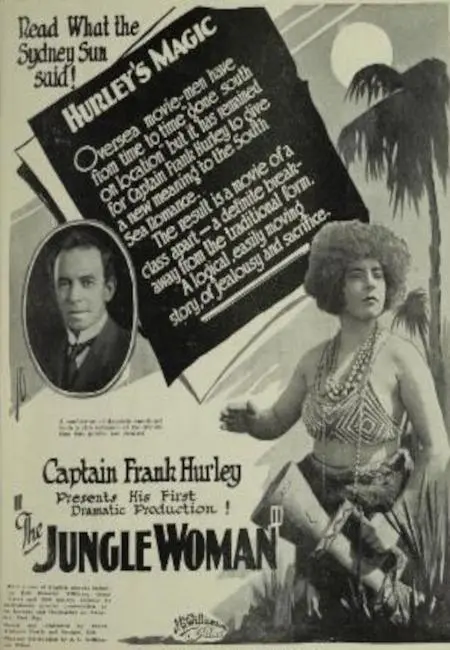
A definitive 5.3/10 rating for a film that redefined the boundaries of cult cinema. Jungle Woman remains a cornerstone of transgressive art.
Is Frank Hurley's Jungle Woman, an Australian silent film from 1926, worth watching today? Short answer: yes, but with significant caveats that demand a particular kind of viewer. This film is an intriguing historical artifact that offers a glimpse into early adventure cinema and the directorial vision of a pioneering figure, but it struggles to hold a modern audience's attention without a keen appreciation for its context.
It's a film for those fascinated by the origins of cinema, colonial-era narratives, and the raw, unpolished beauty of early documentary-style filmmaking. Conversely, if you seek polished storytelling, nuanced character development, or a film that challenges rather than reinforces outdated cultural perspectives, this is emphatically not for you.
In the vast landscape of cinematic history, some films are less discovered and more unearthed. Jungle Woman is precisely one such relic, a product of a nascent Australian film industry and the adventurous spirit of Frank Hurley, a man more renowned for his photography and documentary work in Antarctica than for narrative features. Released in 1926, the film promised exoticism and adventure, a journey into the heart of New Guinea that, even then, was a place of mystery and danger to Western audiences.
Its premise is deceptively simple: a European man escapes from 'natives' and subsequently rescues a girl from a forced marriage to a 'crooked partner'. This skeletal plot, however, serves as a mere framework for Hurley's primary interest: capturing the raw, untamed beauty and perceived savagery of New Guinea. The film is less about the intricacies of human drama and more about the spectacle of its setting, a visual travelogue thinly veiled by a rescue narrative.
This film works because of its historical significance and the breathtaking, often perilous, on-location cinematography by Frank Hurley, which offers an unparalleled visual record of New Guinea in the 1920s.
This film fails because its narrative is simplistic, its characterizations are paper-thin, and its colonial gaze on indigenous populations is deeply problematic by contemporary standards, making it a difficult watch for many.
You should watch it if you are a film historian, an anthropologist interested in early ethnographic film, or someone with a deep appreciation for silent cinema's unique aesthetic, particularly when coupled with authentic, if controversial, location shooting.
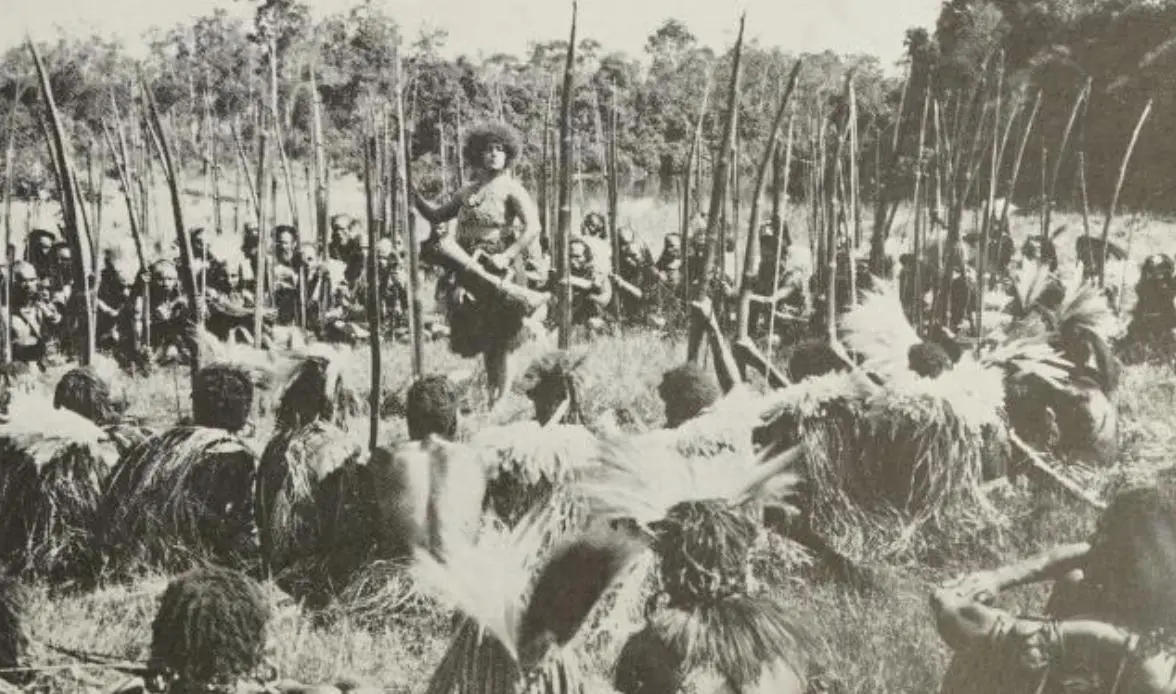
Frank Hurley, credited as the writer, brings a distinct, almost ethnographic eye to Jungle Woman. His background as a documentarian and expedition photographer is palpable in every frame. The film's strength lies not in its dramatic tension or character arcs, but in its raw, unfiltered depiction of the New Guinean landscape and its inhabitants. Hurley's camera often feels less like a narrative tool and more like an explorer's eye, lingering on the dense jungle canopy or the stark contrast of human figures against a vast, untamed landscape.
This approach, while visually arresting for its time, creates a fundamental tension: is Jungle Woman a narrative film or a disguised travelogue? It attempts to be both, often to its detriment as a cohesive story. Moments of genuine visual wonder, such as sweeping shots of rivers or the intimate, albeit voyeuristic, portrayal of village life, are frequently interrupted by the perfunctory demands of the plot. The narrative feels secondary, a necessary evil to string together Hurley's more passionate visual observations.
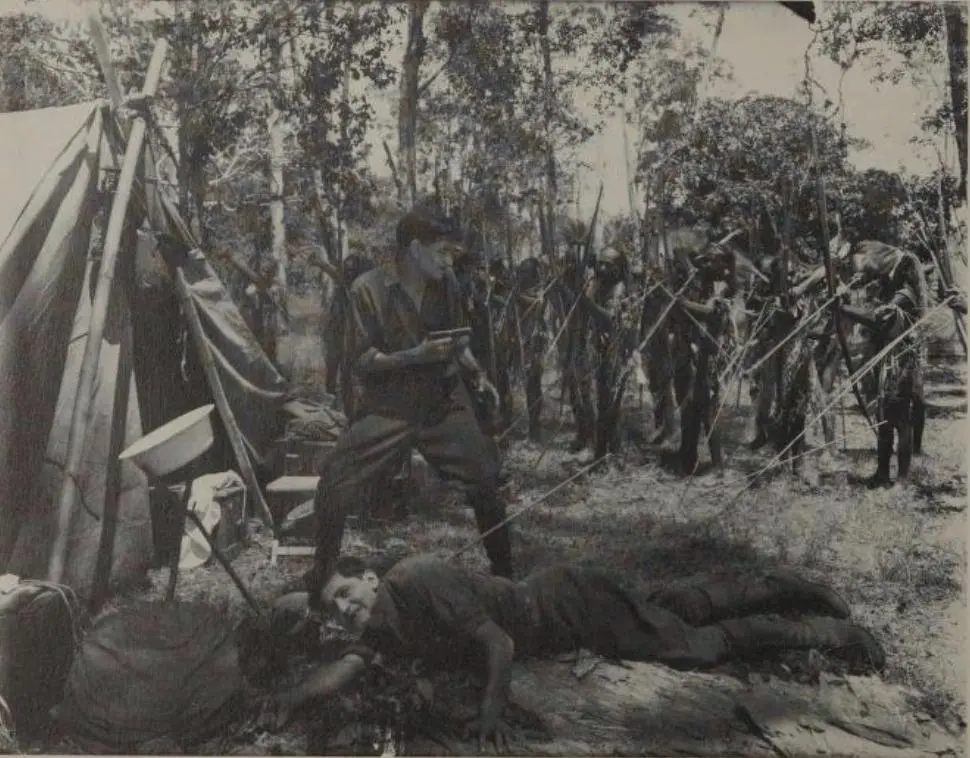
One could argue that Hurley was ahead of his time in blurring these lines, presenting a 'docu-drama' before the term existed, but the execution is undeniably clunky. For example, a scene depicting the protagonist's escape from a native village prioritizes wide shots of the environment and the general chaos over the protagonist's specific actions or emotional state, making the danger feel more abstract than immediate. This is a common thread throughout; the setting is the true star, and the human drama merely a supporting act.
The cast, including Grace Savieri, W.G. Saunders, Jameson Thomas, Eric Bransby Williams, and Lilian Douglas, operates within the constraints of silent cinema, where exaggerated gestures and facial expressions were the primary tools of communication. Grace Savieri, as the titular 'Jungle Woman' (though her character is implied to be European or of European descent, rather than indigenous), conveys a sense of vulnerability and quiet defiance. Her performance, while lacking the depth modern audiences expect, is earnest and communicates her plight effectively through her physicality.
W.G. Saunders, as the heroic rescuer, embodies the stoic, adventurous male archetype prevalent in early 20th-century cinema. His performance is largely defined by his actions – his escapes, his confrontations – rather than nuanced emotional displays. This isn't a flaw of his acting, but a reflection of the era's performance style and the script's prioritization of action over introspection.
Jameson Thomas, likely playing the 'crooked partner,' delivers a performance that relies on classic villainous tropes: sneering looks, furtive glances, and an overall air of untrustworthiness. While effective for the period, these portrayals can feel almost cartoonish to contemporary viewers. There's a certain charm in their unvarnished directness, but it requires a conscious effort to appreciate it within its historical context, much like watching Sherlock Jr. for its innovative slapstick rather than its dramatic gravitas.
The true triumph of Jungle Woman lies in its cinematography. Frank Hurley, a master of the lens, transforms New Guinea into a character itself. The film is replete with stunning, often dangerous-looking, location shots that capture the dense foliage, winding rivers, and the sheer scale of the environment. These are not studio backdrops; they are real, tangible landscapes, providing an authenticity that few films of its era could boast.
Hurley's use of natural light, combined with what must have been challenging conditions for filming, gives the movie a raw, almost documentary-like texture. There's a sense of immediacy to the visuals, as if the camera itself is an intrepid explorer venturing into uncharted territory. Close-ups are sparse, replaced by expansive wide shots that emphasize man's insignificance against nature's grandeur. This aesthetic choice is both a strength and a weakness; it immerses the viewer in the setting but distances them from the human drama.
Consider a sequence where the protagonist navigates a river in a dugout canoe; the water's ripple, the overhanging branches, the distant, imposing mountains – these elements are captured with a stark beauty that transcends the simple narrative. It feels less like a staged scene and more like a captured moment from a real expedition, a hallmark of Hurley's distinctive style, reminiscent of his work on In a Naturalist's Garden.
The pacing of Jungle Woman is reflective of silent-era adventure films – it's deliberate, punctuated by bursts of action. The narrative unfolds at a measured pace, allowing the audience to absorb the exotic visuals before moving to the next plot point. This can feel slow by today's standards, accustomed as we are to rapid cuts and constant stimulation. However, for those willing to adjust their expectations, this slower rhythm allows for a greater appreciation of the film's visual composition.
The tone wavers between earnest adventure and a somewhat detached observation. There are moments of genuine peril, particularly during the escape sequences, but these are often undercut by the film's broader focus on its setting. The 'adventure' aspect is more about survival against nature and overcoming human obstacles in a wild land, rather than a thrilling, action-packed spectacle.
It works. But it’s flawed. The dramatic tension, while present, rarely reaches a fever pitch, settling instead for a consistent hum of low-level suspense. The film never quite decides if it wants to be an enthralling narrative or an ethnographic showcase, leading to a tone that is a fascinating blend, but also a slightly muddled one.
Perhaps the most challenging aspect of re-evaluating Jungle Woman today is its undeniable colonial gaze. The film presents the indigenous people of New Guinea primarily as 'natives' – either as a source of danger (from whom the protagonist escapes) or as exotic background dressing. Their cultures, their motivations, and their humanity are largely unexplored, reduced to caricatures that serve the European narrative.
This isn't surprising for a film of its era; such portrayals were regrettably common. However, it necessitates a critical viewing. The film, in its very premise, reinforces the 'white savior' trope, where the European male is the beacon of civilization in a 'savage' land. It's a problematic foundation that cannot be ignored, no matter the film's historical value or photographic beauty.
The film offers a stark reminder of how cinema was used, consciously or unconsciously, to shape perceptions of 'otherness' and justify colonial expansion. It's a historical document of both filmmaking technique and societal attitudes. Ignoring this aspect would be a disservice to critical analysis.
For example, the initial escape sequence depicts the indigenous people as an undifferentiated, menacing force, their actions driven by an unexplained hostility. There's no attempt to understand their perspective, only to escape their perceived threat. This lack of nuance is perhaps the film's biggest failing, transcending mere narrative weakness to become a significant ethical concern for modern viewers.
For a general audience seeking entertainment, Jungle Woman is a tough sell. Its silent format, slow pacing, and outdated cultural representations make it a challenging experience. However, for specific niches – film historians, enthusiasts of early Australian cinema, or those interested in the work of Frank Hurley – it holds considerable value.
It's a window into a bygone era of filmmaking, an era where the sheer act of capturing images in remote locations was an adventure in itself. The film’s raw, documentary-like quality, born from Hurley’s distinct expertise, ensures its place as a significant piece of cinematic history, even if its narrative fails to fully engage.
Ultimately, its worth is subjective. If you approach it as an archaeological find, a piece of cultural history to be examined and understood within its context, then yes, it is absolutely worth watching. If you’re looking for a compelling story to simply enjoy on a Friday night, you’d be better served by something more contemporary or even a more polished silent classic like The Light That Failed.
Jungle Woman is a fascinating, if flawed, piece of cinematic history. Its true value lies not in its storytelling, which is rudimentary at best, but in its unparalleled visual record and the audacious spirit of its creator, Frank Hurley. It stands as a testament to early filmmaking's exploratory nature, a film that prioritizes spectacle over substance, capturing a world that was, even then, rapidly changing.
For the discerning viewer, it offers a rich ground for critical analysis and historical appreciation. For casual entertainment, however, it remains squarely in the realm of curiosity. Approach it with an open mind and a critical eye, and you’ll find a unique, albeit challenging, journey into the past.
IMDb —
1920
Community
Log in to comment.