DbcultAccessing Vault...
Cult Review
Senior Film Conservator
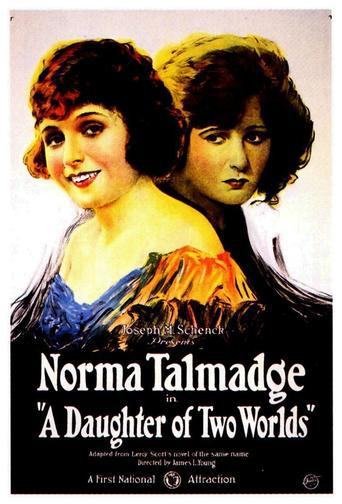
The 1920s witnessed a cinematic obsession with the permeability of social strata, and few films encapsulate this zeitgeist with the raw emotional dexterity of A Daughter of Two Worlds.
Directed by James Young and penned by the formidable Edmund Goulding, this feature isn't merely a vehicle for Norma Talmadge; it is an architectural study of the American Dream’s darker underpinnings. The narrative avoids the saccharine traps of contemporary melodramas like The Perfect Thirty-Six, opting instead for a gritty, almost visceral examination of how the past clings to the present like a second skin.
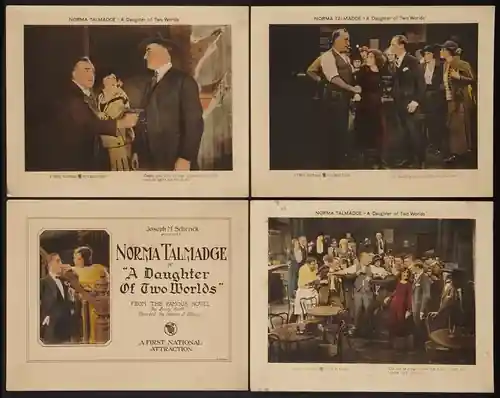
Norma Talmadge delivers a performance of profound interiority. As Jennie Malone, she is tasked with portraying a woman who is constantly 'performing'—first as the dutiful daughter of a criminal, then as the refined debutante. The nuance in her expressions when she is at the boarding school, caught between the fear of exposure and the blossoming of genuine affection for Kenneth Harrison (played with a steady, if somewhat traditional, charm by Jack Crosby), is a masterclass in silent era acting. Unlike the more whimsical explorations of identity found in The ABC of Love, Talmadge’s work here is grounded in a palpable anxiety that resonates with modern audiences.
Her chemistry with the ensemble cast, particularly Charles Slattery as Black Jerry, provides the film’s emotional anchor. Slattery portrays the underworld kingpin not as a caricature of villainy, but as a man possessed by a desperate, misplaced altruism. His desire to 'cleanse' his daughter of his own sins is the catalyst for the entire tragedy, reminding us that the road to social ruin is often paved with the best intentions of the marginalized.
The visual language of the film is a striking exercise in contrast. The 'dive' managed by Black Jerry is rendered in deep, expressionistic shadows, a stark departure from the airy, over-lit opulence of the Harrison estate. This dichotomy isn't just aesthetic; it’s philosophical. James Young uses the camera to interrogate the spaces characters occupy. When Jennie is in the boarding school, the framing is often restrictive, suggesting that her new life is as much a prison as her father’s dive. This sense of impending doom is far more effectively realized here than in similar period pieces like Shadows of the Past.
The cinematography captures the subtle shifts in Jennie’s posture as she moves between these 'two worlds.' In the underworld, she is defensive, her movements sharp and wary. In the upper-class setting, she adopts a fluid grace that feels almost ethereal, yet her eyes remain haunted. It is this visual storytelling that elevates the film above the standard fare of 1920. The production design meticulously constructs these environments, ensuring that the audience feels the weight of the velvet curtains and the grit of the barroom floor in equal measure.
The narrative tension reaches a fever pitch when Sam Conway (Ned Burton) enters the fray. Burton plays Conway with a chilling, bureaucratic coldness. He is the true villain of the piece—not because he is from the underworld, but because he is a creature of the 'clean' world who uses his status as a shield for his depravity. When he frames Harry Edwards for murder, the film shifts into a courtroom drama that serves as the ultimate test of Jennie’s character.
The choice Jennie faces is agonizing. If she stays silent, she secures her marriage to Kenneth and her status in high society, but at the cost of an innocent man’s life. If she speaks, she loses everything. This isn't just a plot point; it’s a critique of the silence required to maintain class structures. While films like Marked Men often focus on external redemption, A Daughter of Two Worlds is concerned with the internal cost of integrity. Jennie’s decision to testify is portrayed not as a heroic triumph, but as a somber necessity—a shedding of her false skin to reclaim her soul.
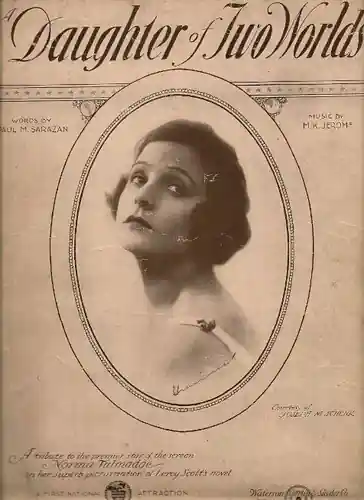
Edmund Goulding’s screenplay is remarkably sophisticated for its time. He avoids the heavy-handed moralizing found in The Agonies of Agnes or the simplistic resolutions of Nearly Married. Instead, Goulding weaves a complex web of loyalty and betrayal. The dialogue (conveyed through intertitles) is sharp and devoid of unnecessary fluff, allowing the visual performances to carry the emotional weight. The way Goulding handles the revelation of Jennie’s past to Kenneth is particularly noteworthy; it’s handled with a maturity that respects the audience’s intelligence.
The pacing of the film is deliberate, building a sense of claustrophobia as the trial approaches. Every scene in the boarding school feels like a countdown, and every moment in the underworld feels like a memory Jennie is trying to outrun. This rhythmic precision is what makes the final act so impactful. We aren't just watching a story; we are witnessing the collapse of a carefully constructed facade.
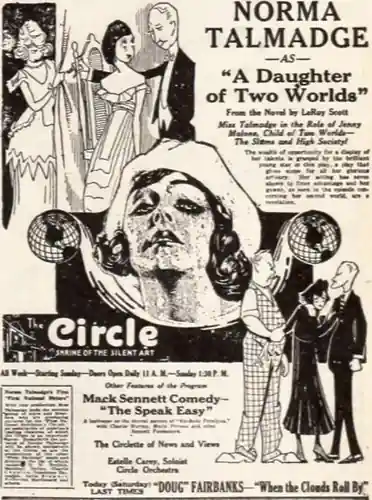
To view A Daughter of Two Worlds today is to witness the nascent anxieties of the American Century. The film grapples with the idea of 'forgery'—not just of documents, but of identity. In an era of rapid industrialization and shifting social boundaries, the fear that one’s neighbor might be a 'parvenu' or a criminal in disguise was a potent cultural trope. This film takes that fear and flips it, asking the audience to empathize with the 'imposter' rather than the society she has 'infiltrated.'
In comparison to the colonial anxieties of The Beggar of Cawnpore, this film is focused inward, on the domestic fractures of the American class system. It suggests that the 'Two Worlds' are not geographically distant, but exist side-by-side, separated only by a thin veil of wealth and a change of name. The resolution, while 'happy' in the traditional sense, leaves a lingering question about the permanence of Jennie’s acceptance. Kenneth forgives her, but does the world?
The legacy of A Daughter of Two Worlds lies in its refusal to simplify the human condition. It acknowledges that we are all products of our environments, yet it insists on the agency of the individual to break free from those constraints, even at a devastating cost. The technical prowess of James Young, combined with the luminous presence of Norma Talmadge, creates a film that feels surprisingly modern in its psychological depth.
While it may lack the experimental flair of Uma Transformista Original or the frantic energy of Pants, it possesses a gravitas that few of its contemporaries can match. It is a somber, beautiful, and ultimately hopeful film that demands to be rediscovered by anyone interested in the evolution of cinematic narrative. In the pantheon of silent drama, this is a work that understands the true meaning of sacrifice—not as a grand gesture, but as the quiet, painful act of telling the truth when a lie would have been so much easier.
Note for the Cinephile: Keep an eye out for the subtle use of mirrors in the boarding school scenes—a recurring motif that emphasizes Jennie’s fractured sense of self, a technique far ahead of its time.
IMDb 5.8
1933
Community
Log in to comment.