DbcultAccessing Vault...
Cult Review
Senior Film Conservator
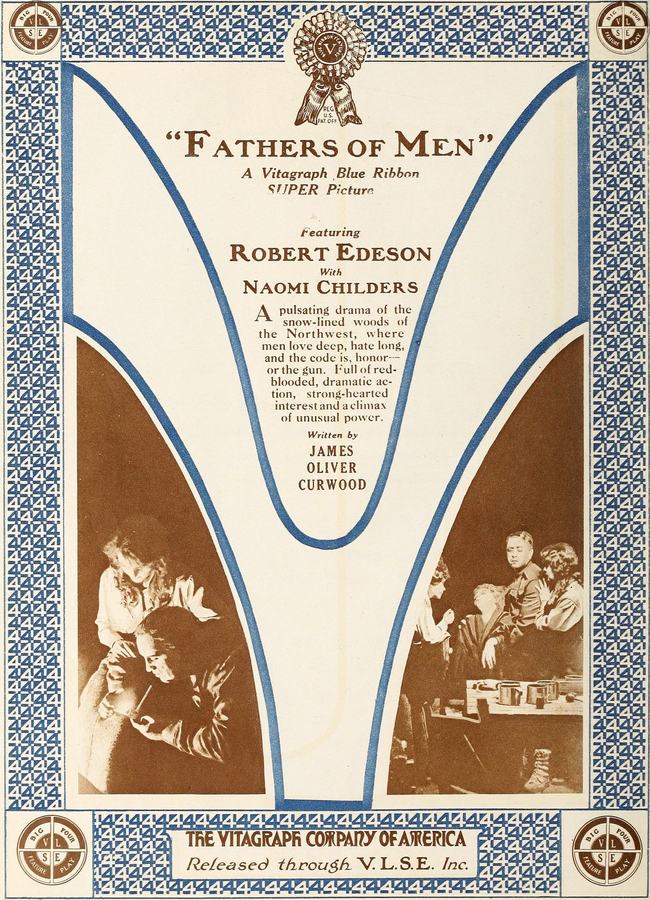
A white hell blossoms under the film’s opening titles: spruce needles iced into glass, breath crystallizing mid-air, the crunch of a sled runner like distant artillery.
Edward J. Montagne and frontier fabulist James Oliver Curwood weld melodrama to elemental cinema here, fashioning a narrative glacier that grinds marriage, fatherhood and frontier justice into diamond dust. Fathers of Men is less a story than a weather system: emotions swirl, collide, collapse under their own weight, and the survivors are left to read prophecies in the drifts.
The inciting accident arrives with deceptive gentleness—Jeanne’s sled skids, a soft plume of powder, a child’s gasp muffled by pine silence. Enter Blake, wrapped in bear-skins and merchant confidence, lifting mother and son from the avalanche’s tongue. One frame holds the instant: Blake’s gloved hand closing over Jeanne’s, the latter’s pupils dilating not from cold but from the heat of unsolicited rescue. Cinematographer Naomi Childers (pulling double duty as Jeanne) lets the iris swallow half the ambient light, so the betrayal is biological before it is moral.
During Howland’s absence, the cabin becomes an echo chamber of unvoiced invitation. Blake sharpens blades by lamplight; Jeanne stitches parkas, her thimble tapping like a metronome counting down to surrender. The film is fearless in letting sin look homely: a shared stew, fingers brushing the ladle, snow thudding against shingles like a voyeur trying to peer inside. When Howland returns, sled bearing not only his cured son but the elation of a father who outran death, the void hits harder than any gunshot. Curtains sway; no footprints lead away. The screen irises out on his stunned silhouette, the first intimations that revenge will become the new hearth around which the family will huddle.
Two decades elide in a single lap-dissolve: the same cabin, now abandoned to wolves; Howland’s beard silvered to ermine; Robert metamorphosed into Robert Edeson’s square-shouldered constable. The Royal Northwest Mounted Police uniform, scarlet against blinding snow, externalizes the moral absolutism that has replaced the trapper’s earlier contentment. Meanwhile Blake—Robert Gaillard excelling at dissipated charm—has worn guilt like rosary beads beneath his fur collar, yet clings to the conviction that every transaction (including affection) can be balanced in the ledger.
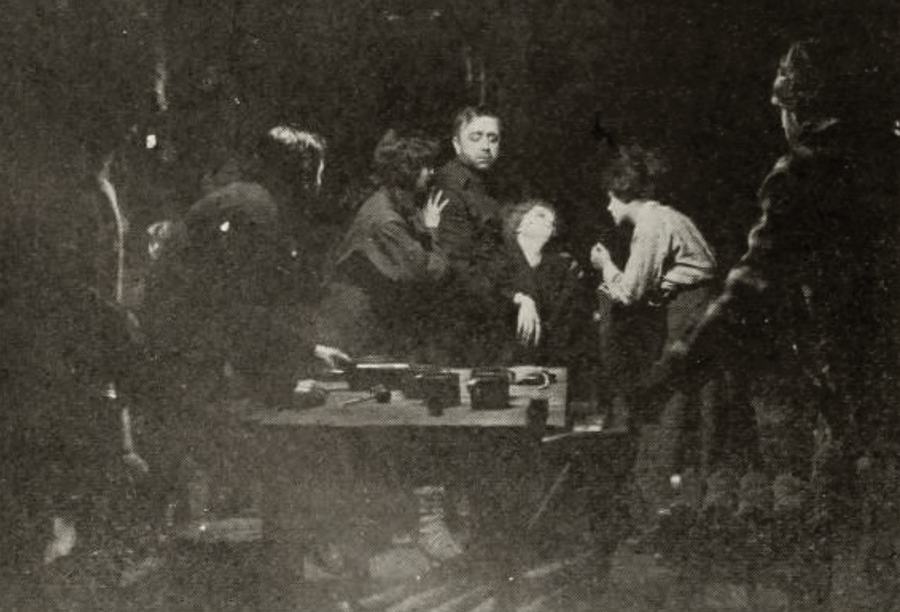
The wrongful conviction sequence is a master-class in silent tension. A murdered fur-buyer lies face-down in scarlet that pools like maple syrup on marble. Intercut close-ups—a button missing from Blake’s coat, a Mountie’s suspicious squint, Howland’s almost imperceptible nod—compress jurisprudence into a heartbeat. Montagne withholds the actual killer’s identity, underscoring the film’s thesis that truth is merely the story most convincingly performed. When Blake bolts from custody only to absorb a bullet meant for the escaping phantom, his trajectory through the frame—arms flung wide, snow erupting like angels’ wings—achieves a perverse crucifixion.
Cut to Blake’s progeny: three variations on paternal inheritance. David (Stanley Dunn), the eldest, carries his father’s mercantile acumen tempered by nascent ethics; the younger two are pure id incarnate, raised on campfire tales of Howland’s perfidy. Their assault on the Mountie outpost—white silhouettes against aurora skies—looks like a lithograph of Furies. Yet the film refuses easy villainy; when they club Robert unconscious, the camera lingers on trembling hands, the horror of mirrored vengeance dawning in their eyes.
What follows is a pursuit across blank negatives, the landscape so overexposed it verges on abstraction. Footprints zig-zag, split, vanish into river ice. Robert’s sled dogs collapse one by one, carcasses becoming signposts in a Stations of the Cross dedicated to obsession. When he finally corners David, both men are so starved their breaths look like ectoplasm. Exhaustion trumps hatred; they slump beside a cedar, too weak even to cock pistols. It is here the film whispers its most radical credo: enmity requires surplus energy, and winter taxes everyone to zero.
From the gale emerges Jeanne—no longer the errant wife but a snow-witch matriarch, hair hoary as hoarfrost, eyes holding the resigned calm of someone who has already died socially. Beside her, two girls clutch her skirts like orphaned moonlets. The screenplay’s boldest gambit is to make Jeanne the emotional cartographer: she has wandered for years mapping the coordinates of guilt, and the map turns out to be circular. Recognition crashes over Robert like an avalanche—one intertitle, a single tear frozen on his lash, and every narrative vector bends toward reconciliation.
The trapper’s cabin that shelters them is a den of wolves in sheep’s clothing: the host serves caribou stew laced with laudanum while his cohorts finger the women’s brooches. David and Robert, bound back-to-back, communicate via micro-expressions—twitch of cheek, flare of nostril—reminiscent of the forced comradeship in Down with Weapons. When the other Blake boys burst in, rifles blazing, the fight choreography is chaotic yet lyrical: bodies skid on bear rugs, fists thud like muted drums, lantern light strobes across axes. In the mayhem, the camera finds Jeanne shielding the girls with her own body, at last repaying the rescue that began the cycle.
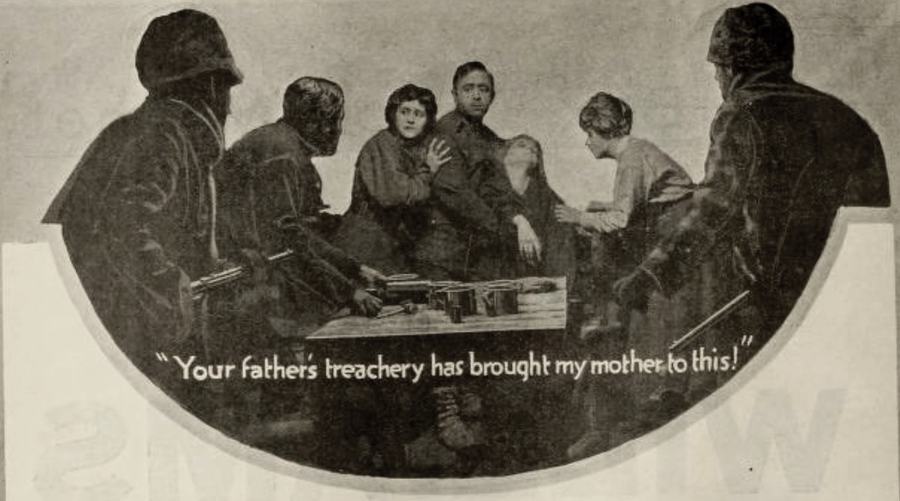
Morning after carnage: the trapper’s cabin smolders, snow drifts through the roof like forgiveness indifferent to human structures. The brothers—blood on cuffs, powder burns on palms—listen as Jeanne recites her two-decade odyssey: work camps, famine, the slow erosion of identity until only the maternal instinct survived. It is a monologue delivered entirely in close-up, the flicker of cigarette burns on the print lending each scratch the aura of stigmata. When she names the girls merely “daughters of the trail,” the film reframes motherhood as transferable, a flame rather than a bloodline.
Robert’s revelation—that Blake seduced and abandoned her—should detonate the final duel. Instead, the four young men stand in a cruciform tableau, rifles lowered, breaths mingling in the sub-zero air. The expected shootout evaporates; they march off in opposite directions, footprints forming a helix that the wind will soon erase. Vengeance, the picture argues, is a narrative that cannot survive the white page of winter; only the stories we allow to be rewritten by mercy persist.
Naomi Childers navigates Jeanne’s arc from sensuous vitality to spectral wisdom with minimal cosmetic aid; rather, she modulates the angle of her collarbone, the cadence of glove removal, the blink rate. It is silent-era acting at its most microbial. As the elder Howland, William Humphrey exudes granite rectitude cracked by private grief—note how his Mountie salute slackens into a civilian claw whenever he thinks of Blake.
Robert Edeson shoulders the film’s moral pivot. His transition from avenging angel to protector of Jeanne’s foundlings is charted through shoulders that gradually descend from ears to heart-height. Watch the moment he first calls Jeanne “mother”: his jaw trembles as though the word tastes of iron, then relaxes into something like prayer.
Childers’s cinematography exploits high-contrast orthochromatic stock: skies bleach into obliterating whiteness while faces sink into charcoal chiaroscuro. The result is portraiture that feels excavated rather than shot—each frame a tintype exhumed from permafrost. Several exteriors were filmed in Algonquin Park during February 1922; crew members reported cameras seizing solid, lenses needing whisky rubs to thaw. That hardship translates into verisimilitude: breath clouds linger so long they become additional characters.
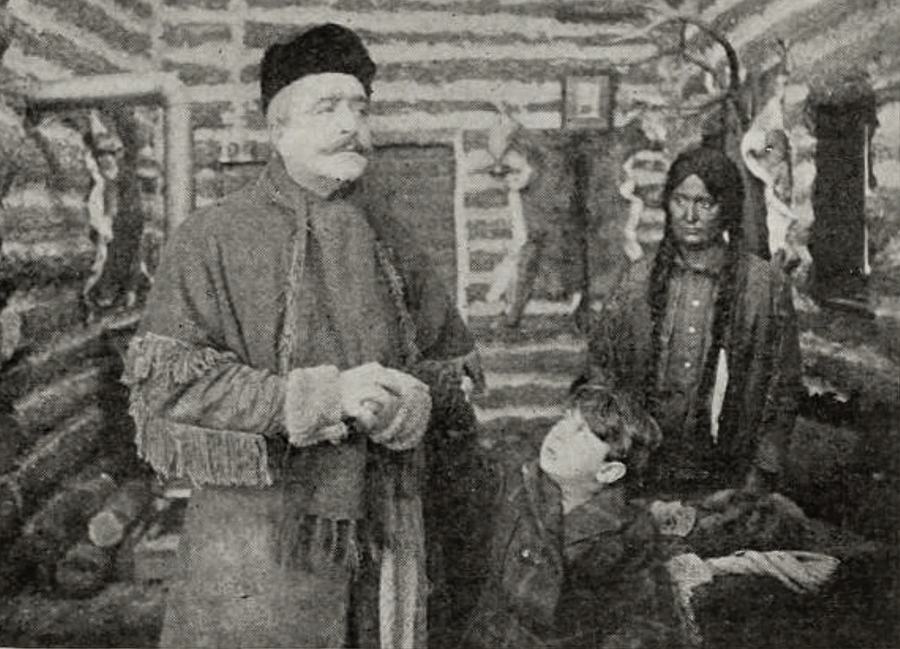
Montagne’s blocking stresses horizontal vectors—sleds, rifle barrels, horizon lines—so when vertical elements appear (a totemic pine, Jeanne’s upright silhouette against aurora) they read as spiritual punctuation. Compare this to the diagonal chaos of The Dishonored Medal; here geometry is moral, not mere spectacle.
The intertitles, penned by Montagne, eschew the florid dime-novel diction common to early ’20s melodrama. Instead they are haiku of guilt: “The snow remembers nothing, forgets nothing.” “A vow spoken over an empty cradle ages faster than milk.” Each card is textured to resemble frost creeping across glass, so the text itself seems to shiver.
Though released without official score, contemporary exhibitors often accompanied the final reel with Grieg’s “The Death of Åse,” its strings mirroring the Scandinavian fatalism embedded in Curwood’s Canadian wilderness. Modern restorations have employed Inuit throat singing, the rhythmic exhalations syncing with actors’ visible breaths, fusing diegetic and non-diegetic into a single respiratory system.
Fathers of Men premiered only months after The Darkening Trail, another Curwood adaptation, prompting critics to decry “snow fatigue.” Yet where the latter foregrounded spectacle, Montagne drills into psychological tundra. Censors in Alberta demanded trimming of Jeanne’s seduction, claiming it “justified adultery by survival logic.” The excised footage is lost; extant prints jump from Blake’s hand on Jeanne’s shoulder to the abandoned cabin, a narrative scar that inadvertently intensifies the moral abyss.
Viewed today, the film anticipates generational trauma narratives popular in latter-day television, yet resolves them with a stoicism unattainable in our confessional culture. The refusal of final gunplay influenced Fifty-Fifty’s climactic handshake, while the snow-borne redemption arc presages the moral thaw of To Have and to Hold, albeit without maritime grandeur.
Archival prints reside in the Library of Congress and Cinémathèque québécoise, though both lack the amber tinting of the original Montreal premiere. A 4K restoration funded by the National Film Board is slated for 2025; if successful, modern audiences may finally feel the cold that no longer gathers at the edges of our centrally-heated lives.
Verdict: A frostbitten epic that chisels the philosophy of revenge into glacial clarity, Fathers of Men endures as both artifact and admonition—proof that the coldest wars are waged in the human heart, and the warmest peace often arrives wearing a stranger’s face.
IMDb —
1919
Community
Log in to comment.