DbcultAccessing Vault...
Cult Review
Senior Film Conservator
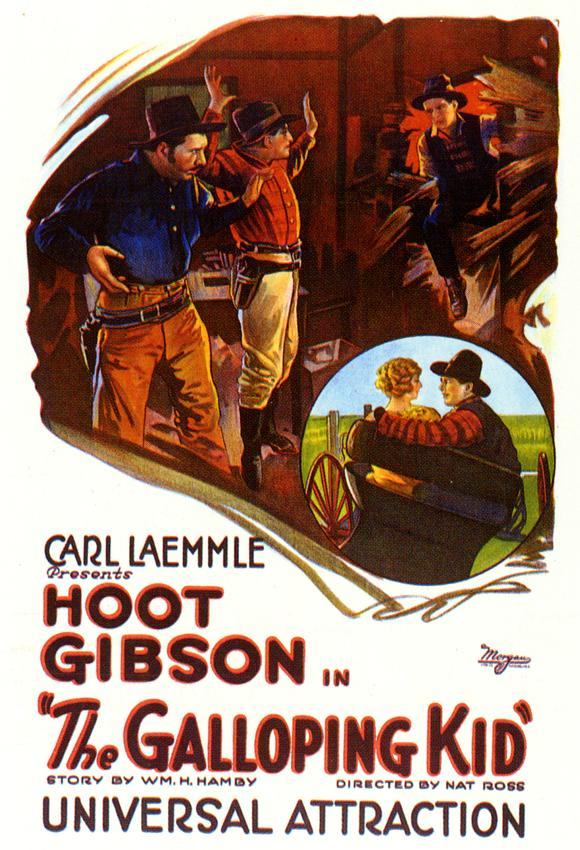
Platinum under the sagebrush, venom under the smile
Nobody strolls out of The Galloping Kid unaltered; the picture simply refuses to let its characters—or its viewers—remain static. Released in the volcanic bloom of 1922, this Paramount sleeper lands like a mesquite thorn beneath the fingernail of the traditional Western, inflaming every trope it brushes against. Director William James Craft—often dismissed as a studio journeyman—here conducts a chamber piece of emotional mining rights, letting the landscape itself become a taciturn character whose silences are more eloquent than most dialogue cards of the era.
The film’s first miracle arrives before a single intertitle: a dolly shot gliding past a sun-bleached cow-skull, tumbleweeds pirouetting like gossip, until the camera tilts up to discover Simplex Cox (Hoot Gibson) astride a clay-colored mustang, his silhouette gnawed by the white-hot horizon. No swagger, no six-gun glint—just a man perched between paychecks, hat brim sagging with existential fatigue. It’s the sort of visual admission that the West, for all its dime-novel bluster, is mainly a workplace accident with better scenery.
Enter Laura Arnett—Edna Murphy in a career-high turn—introduced via a match-cut that swaps the cow-skull for her parasol: equal parts shield and provocation. The film’s central conceit is deliciously cruel. Laura’s heart is a flint that sparks at the slightest friction; cowhands, traveling dentists, even the itinerant photographer who insists on developing plates in a covered wagon—all fall victim to her instantaneous, incandescent devotions. Yet the narrative handcuffs Simplex with one cosmic punchline: he alone fails to ignite her tinder. The resulting tension is a gender-flipped Taming of the Shrew where the shrew, in fact, hungers to be tamed, and the reluctant Petruchio wants nothing save a night’s sleep unmolested by cupid’s paperwork.
Every Western needs a magnetic villain, but Bolston—Léon Bary oozing Gatsby-level pretense—transcends mustache-twirling. He’s a proto-startup founder, hawking futures in ore instead of crypto. Notice the wardrobe: linen suit spotless amid alkali dust, a cravat the color of arterial blood. When he doffs his gloves, the close-up reveals fingernails manicured to a sheen bordering on the obscene; civilization’s blade pressed against the frontier’s calloused throat. His courtship of Laura is framed not in moonlit two-shots but in geological survey maps, each contour line a pre-nuptial contract with the earth itself.
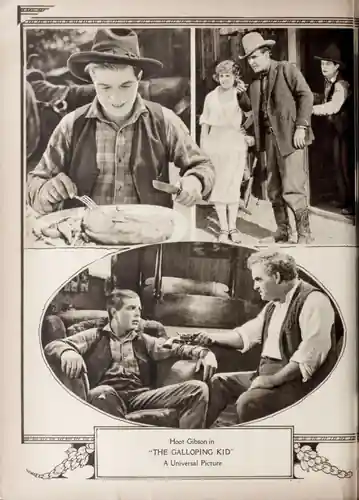
Because the film is mute, every clop of hoof or creak of saddle was supplied by the theater’s in-house orchestra, usually a pianist nursing a flask of something flammable. Contemporary cue sheets recommended “Andante Mystico” for subterranean discovery scenes. One can only imagine the dissonance when Bolston unrolls the platinum survey—audiences in ’22 heard arpeggios dripping like quicksilver while picturing a metal they had likely never seen. The result: alchemy. Silence onscreen, sonorous anticipation in the auditorium, a duet across the abyss of decades.
Craft and DP William Marshall exploit early panchromatic stock, letting sage shimmer like verdigris against umber rock. Compare this palette to the cardboard skies of Guarding Old Glory (all hand-tinted patriotism) or the chalky noir of The Man Hunt. Here, platinum literally reflects: night-for-night campfire sequences bathe faces in argent ripples, presaging the noir chiaroscowl of the coming decade. Shadows have weight; they slump across characters like unpaid debts.
Studio legend claims William Henry Hamby, Andrew Percival Younger, and Arthur F. Statter hot-seated the same Remington, each punching keys until the ribbon frayed. The haste shows—in the best way. Dialogue cards crackle with slang now extinct: “Oil-Can” as epithet, “platinum-plated piker,” “gallupin’ grief.” The linguistic chaos mirrors the land-rush itself, a verbal free-for-all where possession is nine-tenths of syntax.
Gibson, often pigeonholed as the affable goof, here underplays marvelously. Watch his eyes when Laura rhapsodizes about Bolston’s “Parisian manners.” A micro-flinch, half pity, half jealousy—gone faster than a prairie dog dive. It’s the silent era’s answer to the reaction shot, predating Hope’s melodramatic excesses. Edna Murphy matches him beat for beat; she makes Laura’s serial infatuations feel symptomatic rather than scatterbrained, a woman trying to author her own legend in a territory that allows men sole storytelling rights.
Bolston’s platinum maps serve the narrative engine, yet the film whispers a deeper dread: the moment the frontier ceases to be horizon and becomes ledger entry. When Cox finally slaps the survey documents onto the saloon table for public reckoning, the gesture feels revolutionary—paper trumping pistol. In 1922, post-war America was busy converting blood into specie; the movie forecasts the coming securities bubble, the Dust Bowl plutocracy, our own algorithmic land-grabs.
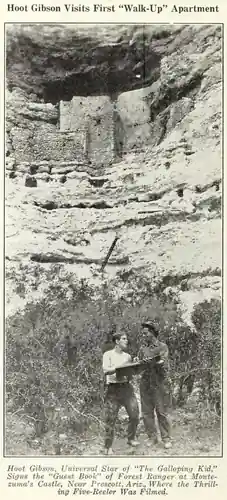
Craft stages the showdown inside an abandoned rodeo corral at dusk. Barbed wire glints like fractured starlight; posts lean like senile sentries. Bolston’s horse—black as a foreclosure notice—rears, silhouetted against a magnesium flare of sunset. Cox enters frame, dismounted, reins looped loosely, a man walking into divorce court with the marriage certificate crumpled in pocket. No six-shooter theatrics; instead, a fistfight scored only by wind-gust and the distant threnody of a locomotive. Each punch lands with the moist click of knuckle on cartilage, a sound effect audiences supplied mentally because the intertitles had run out of synonyms for “thwack.”
Unlike the saccharine rescues in My Little Boy or the paternalistic moralizing of Tom’s Little Star, The Galloping Kid lets its finale hinge on Laura’s recognition that affection can’t be quarantined like hoof-and-mouth. She strides between the brawling men, splits them with a shotgun cradled like a newborn, and utters the film’s last intertitle: “I’ll pick my own heartaches, gents—same as I pick my hats.” Cue end iris-in on her defiant grin, a proto-feminist punctuation mark that still feels radical a century later.
Most of 1922’s oaters survive only in herky-jerky fragments, yet The Galloping Kid endures, miraculously, in a 35mm tinted print at UCLA, thanks to a projectionist who pocketed the reels when the Paramount exchange ordered junking. The tints—amber for interiors, cyan for night, rose for Laura’s flirtations—impart a dreamlike bruise. Streaming versions cribbed from 1980s TV telecades flatten those hues; seek the 2019 4K restoration if you crave the full metallic sheen.
Criterion Channel occasionally rotates the restoration; otherwise, boutique Blu-rays bundle it with Partners Three. Pair with a Claude Debussy piano étude playlist—odd, yet the unresolved chords echo Laura’s romantic restlessness. If you can snag a revival screening with live accompaniment, expect the organist to lean into dissonant tritones whenever Bolston unfurls those lethal maps.
Seventy years later, There Will Be Blood would mine similar terrain—minerals as moral acid—yet The Galloping Kid got there first, and with a breezy 58-minute sprint. Its DNA strands coil through McCabe & Mrs. Miller’s entrepreneurial ennui, through Days of Heaven’s wheat-and-gold radiance, even through the toxic courtships of Mary’s Ankle.
So, if your concept of silent Westerns stalls at William S. Hart stoicism or Tom Mix serial derring-do, let The Galloping Kid buck you off that high horse. Beneath its jaunty title lies a meditation on appetite—how we map it, mine it, and mortgage it. The film gallops, yes, but it also glints, and somewhere amid the hoof-beats you may hear the clink of ore against bone, the sound of America monetizing its own mirage.
IMDb 5.2
1926
Community
Log in to comment.