DbcultAccessing Vault...
Cult Review
Senior Film Conservator
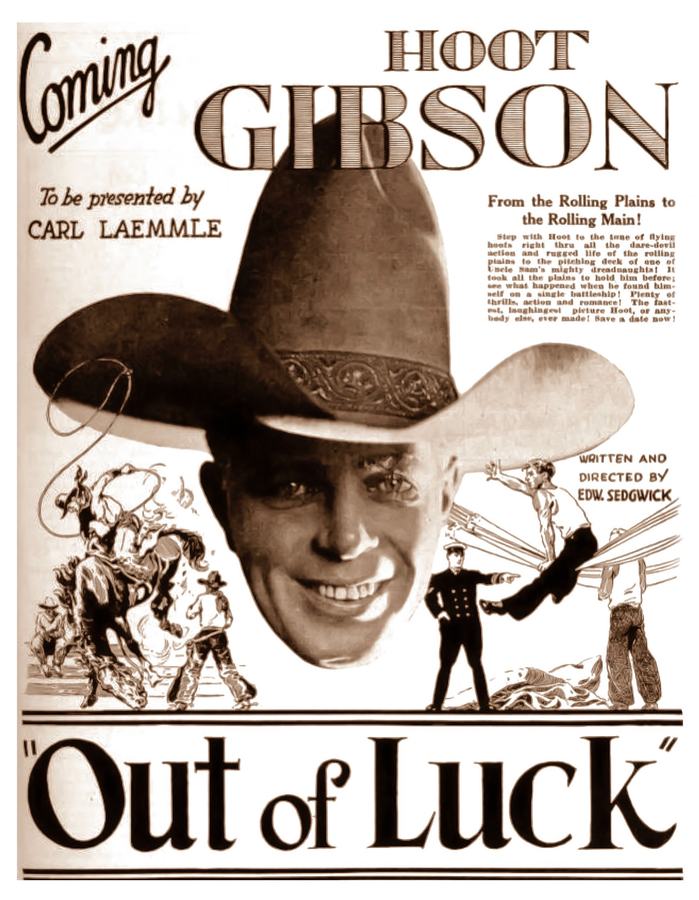
The 1923 silent film Out of Luck is a captivating tale of love, guilt, and redemption, set against the backdrop of the U.S. Navy. Directed by Edward Sedgwick, the film tells the story of Cowpuncher Sam Pertune, played by Hoot Gibson, who finds himself in a desperate situation after striking the father of his beloved, Mae Day, played by Laura La Plante, in self-defense. Believing he has committed a grave crime, Sam flees and joins the U.S. Navy, only to later discover that his presumed victim is, in fact, alive.
As Sam navigates his new life in the Navy, he is met with the harsh reality of his situation. Despite his desire to resign and make amends, he is told that he is out of luck. However, fate has other plans for Sam, as his ship docks in San Francisco, where Mae is visiting her aunt, who is married to the captain of Sam's ship. This unexpected turn of events sets the stage for a complex web of relationships and redemption, as Sam and Mae are reunited, and the truth about the past is finally revealed.
The film features a talented cast, including John Judd, Howard Truesdale, and Kansas Moehring, among others. The cinematography is also noteworthy, with a keen attention to detail and a strong sense of visual storytelling. The film's use of light and shadow is particularly effective, adding depth and nuance to the narrative.
In comparison to other films of the era, such as Out of Luck stands out for its unique blend of romance, drama, and adventure. While films like Winning a Widow and A Pair of Sixes also explore themes of love and relationships, Out of Luck is distinct in its use of the U.S. Navy as a backdrop for the story. Similarly, films like Men Who Have Made Love to Me and Madame Peacock also feature strong female characters, but Out of Luck is notable for its portrayal of Mae Day as a independent and determined individual.
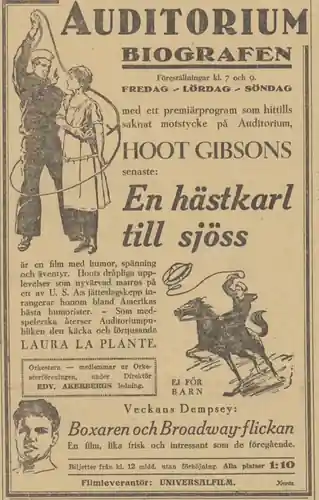
The film's themes of guilt, redemption, and the power of love are timeless and universal, making Out of Luck a compelling watch even for modern audiences. While the film's pacing and tone may seem somewhat dated, the story remains engaging and emotionally resonant, with a strong performances from the cast. Overall, Out of Luck is a hidden gem of the silent era, deserving of recognition and appreciation for its unique blend of romance, drama, and adventure.
In terms of its historical context, Out of Luck is a fascinating example of the cultural and social attitudes of the time. The film's portrayal of the U.S. Navy and its personnel is particularly noteworthy, offering a glimpse into the values and ideals of the era. Similarly, the film's depiction of women and their roles in society is also significant, highlighting the limited opportunities and expectations placed on women during this period.
The film's use of visual motifs is also worthy of note, with a strong emphasis on symbolism and metaphor. The use of light and shadow is particularly effective, adding depth and nuance to the narrative. The film's cinematography is also noteworthy, with a keen attention to detail and a strong sense of visual storytelling.
In conclusion, Out of Luck is a captivating and emotionally resonant film that explores themes of love, guilt, and redemption. With its unique blend of romance, drama, and adventure, the film is a must-see for fans of the silent era. While it may seem somewhat dated, the story remains engaging and emotionally resonant, with a strong performances from the cast. As a hidden gem of the silent era, Out of Luck is deserving of recognition and appreciation for its contribution to the world of cinema.
For fans of Out of Luck, other films of the era may also be of interest. 3 Gold Coins, A Dog Gone Day, and The Eye of Envy are all notable examples of the silent era, each with their own unique blend of romance, drama, and adventure. Similarly, Hate, The Conquering Power, and The Roaring Road are also worthy of note, offering a glimpse into the cultural and social attitudes of the time.
IMDb —
1924
Community
Log in to comment.