DbcultAccessing Vault...
Cult Review
Senior Film Conservator
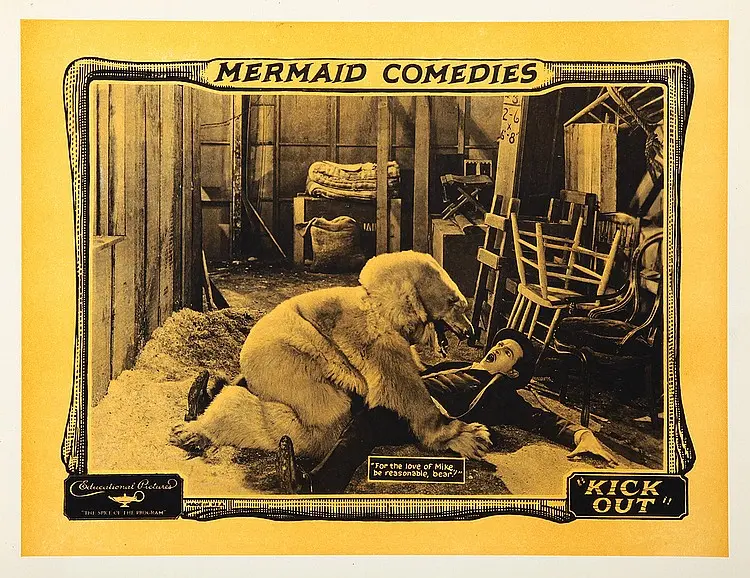
There are certain films from the silent era that, even after a century, retain an astonishing vitality, a kinetic energy that transcends the lack of spoken dialogue. Kick Out is unequivocally one of them. It’s not merely a historical curiosity; it’s a masterclass in physical comedy, a testament to the audacious spirit of early filmmaking, and a delightful encapsulation of the universal struggle of the aspiring artist. Starring the inimitable Lige Conley, this cinematic escapade takes a deceptively simple premise – a writer down on his luck – and catapults it into an unforgettable, adrenaline-fueled chase against some of nature's most formidable predators. It’s a film that demands to be seen, not just for its historical significance, but for its sheer, unadulterated entertainment value and its surprisingly nuanced portrayal of desperation meeting opportunity, albeit one fraught with peril.
Our protagonist, Lige, embodies the archetypal struggling artist. He’s a writer, brimming with ideas, perhaps even flashes of genius, but perpetually hampered by the harsh realities of a world seemingly indifferent to his creative output. The film opens with a vivid portrayal of his predicament: stacks of returned manuscripts, each one a crushing blow to his aspirations. This isn't just a throwaway detail; it's the emotional bedrock upon which the entire comedic edifice is built. We understand Lige's frustration, his yearning for validation, and the profound sense of futility that must accompany such relentless rejection. This initial setup, while brief, is remarkably effective in establishing empathy for our hero. It’s a narrative thread that resonates with anyone who has ever pursued a creative dream against formidable odds, a poignant reminder that even the most determined spirits can be worn thin by the ceaseless grind of professional disappointment. The film, in its silent eloquence, manages to convey the heavy weight of these failures, making his eventual, desperate leap into the unknown all the more understandable and, in a strange way, heroic.
Driven by an urgent need for income, Lige stumbles into the burgeoning world of movie studios, a realm of chaotic creativity and burgeoning spectacle. This transition from the quiet solitude of his writing desk to the bustling, often bewildering, environment of a film set is a stroke of narrative brilliance. Early Hollywood studios were places of immense energy, where innovation mingled with improvisation, and safety protocols were often secondary to capturing the perfect shot. Lige secures a job as an extra, a mere cog in the massive machinery of cinematic production. This entry point allows the film to subtly satirize the industry itself, showcasing the often-absurd lengths to which filmmakers would go to achieve their vision. The scene-setting here is crucial; it’s not just a backdrop but an active participant in the unfolding drama. The studio, with its labyrinthine corridors, bustling crew members, and props of every conceivable nature, becomes a character in its own right, a place where the line between reality and illusion is constantly blurred, setting the stage for the extraordinary events to follow. It’s a fascinating glimpse into a bygone era of moviemaking, where grit and daring often superseded sophisticated planning.
The true spark of Kick Out ignites when Lige finds himself on a set where real, untamed lions are being utilized for a particularly daring scene. The juxtaposition of a struggling writer in a background role suddenly thrust into a life-or-death scenario with apex predators is pure comedic gold, laced with genuine tension. What ensues is a breathtaking, utterly relentless chase that forms the core of the film's appeal. Lige, with his everyman demeanor, transforms into a figure of extraordinary agility and desperate ingenuity. The lions, majestic and terrifying, are not mere props; they are a formidable force of nature, lending an undeniable authenticity and edge-of-your-seat thrill to the proceedings. The chase is meticulously choreographed, a symphony of frantic movement, near misses, and ingenious escapes. It's a masterclass in visual storytelling, where every frame is packed with suspense and humor. The ingenuity of Lige's evasions, often utilizing the very props and sets of the studio, is a testament to the creative problem-solving inherent in survival. This sequence alone elevates Kick Out beyond a simple comedy, embedding it with a palpable sense of danger that keeps the audience utterly captivated.
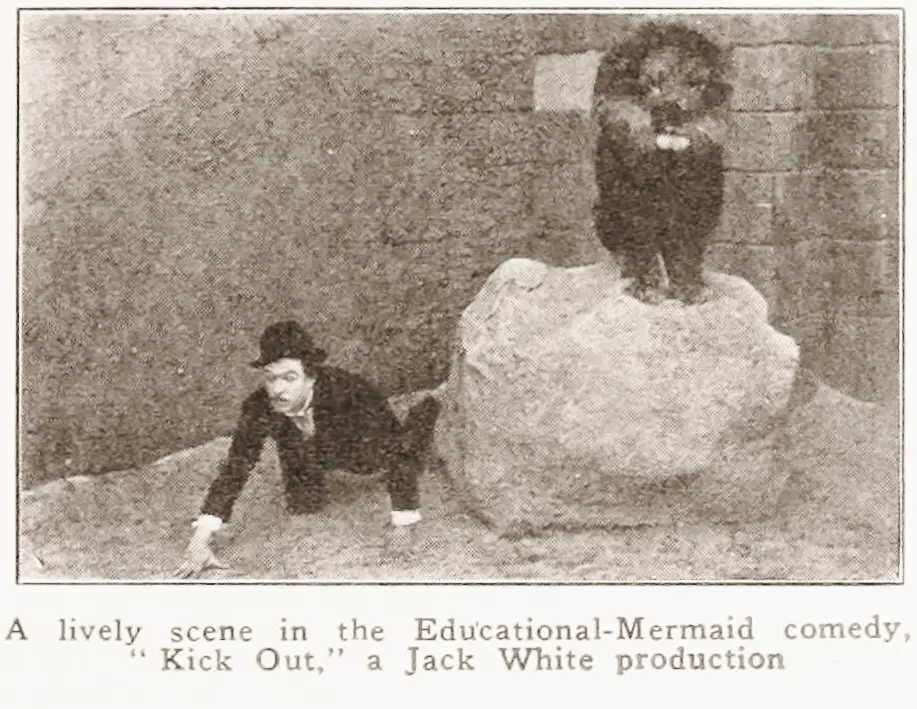
At the heart of this wild spectacle is Lige Conley, whose performance is nothing short of phenomenal. Conley, though perhaps not as widely remembered today as some of his contemporaries, possessed a unique blend of physical prowess and expressive comedic timing. His portrayal of Lige is a nuanced study in escalating panic, transforming from bewildered extra to a resourceful survivor. His facial expressions alone are a narrative in themselves, perfectly conveying fear, determination, and moments of sheer absurdity without uttering a single word. He doesn't just run; he contorts, he leaps, he tumbles with a graceful clumsiness that is utterly captivating. His physical comedy is precise, yet feels spontaneous, a hallmark of true comedic genius. Unlike the often-stoic resilience of a Buster Keaton or the wide-eyed innocence of a Harold Lloyd, Conley brings a slightly more frantic, almost manic energy to his performance, making his character's plight feel intensely personal and hilariously desperate. His ability to sustain such a high level of physical performance throughout the extended chase sequence is truly remarkable, solidifying his place as a significant, albeit often overlooked, talent of the silent era. He makes the impossible seem plausible and the terrifying utterly hilarious, a balancing act few could achieve with such finesse.
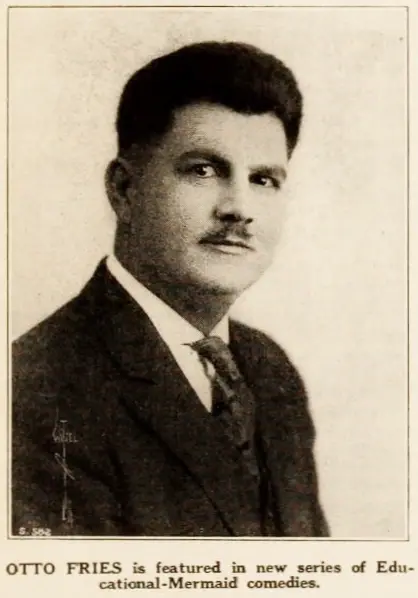
While Lige Conley undoubtedly commands the screen, the film also benefits from a dedicated supporting cast who contribute to its overall comedic texture and dramatic tension. Spencer Bell, Otto Fries, Lillian Hackett, Cliff Bowes, and Kewpie Morgan, though their roles might be less central, each play their part in fleshing out the chaotic world of the studio and reacting to the escalating pandemonium. These performers, often specialists in vaudeville and early film, understood the nuances of silent comedy, using exaggerated gestures and reactions to communicate emotion and intent. Their presence grounds the fantastical elements of the lion chase in a recognizable human context, providing additional layers of humor and occasional moments of genuine concern. Whether they are fellow extras caught in the crossfire, bewildered studio personnel, or the trainers attempting to regain control of their formidable charges, their collective efforts create a rich tapestry of reactions that amplifies Lige's predicament. This ensemble work, often unheralded, is crucial to the success of any silent film, where the visual language must be universally understood and compelling. Their contributions, however fleeting, add to the film’s vibrant, bustling atmosphere, ensuring that the audience is fully immersed in the unfolding spectacle.
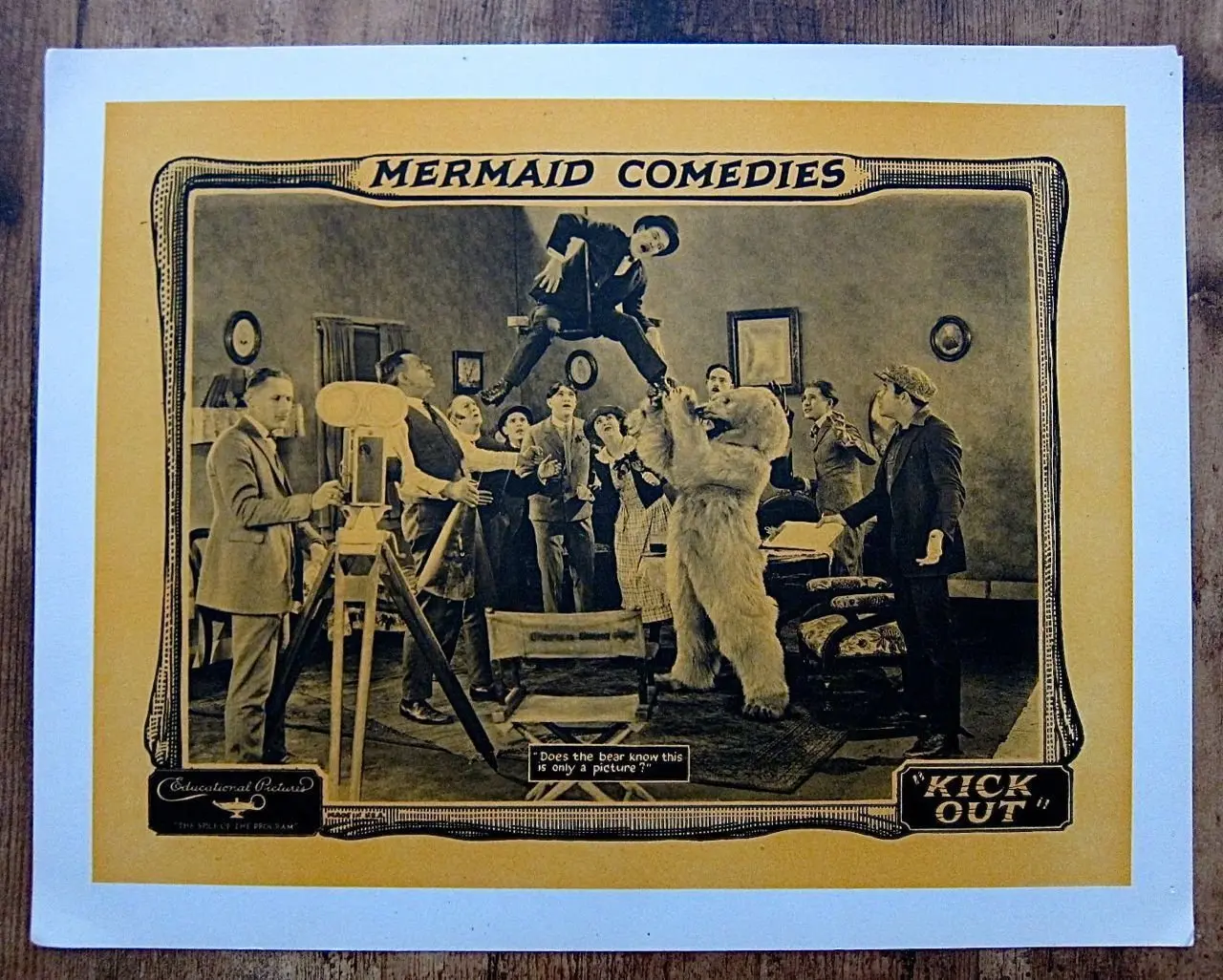
The direction of Kick Out is remarkably adept at balancing slapstick humor with genuine suspense. The filmmakers understood the power of visual pacing, accelerating the action during the chase sequences to create a sense of breathless urgency, then occasionally allowing for brief moments of respite, only to plunge Lige back into danger. The use of real lions, a common but incredibly risky practice in early cinema, adds an undeniable frisson of danger that no amount of special effects could replicate. This decision speaks volumes about the audacious spirit of the era's filmmakers, who were willing to push boundaries and embrace practical, albeit perilous, effects. The cinematography, while perhaps not groundbreaking for its time, is effective in its clarity and ability to capture the frenetic energy of the chase. The camera follows Lige's desperate flight with an almost documentary-like immediacy, placing the viewer right in the midst of the action. The edits are crisp, maintaining a lively tempo that keeps the audience engaged from the moment the lions break free. This thoughtful construction of the film, from its initial setup to its exhilarating climax, demonstrates a clear understanding of comedic timing and narrative propulsion, making Kick Out a finely tuned machine of mirth and mayhem.
Beyond its surface-level gags and thrilling chase, Kick Out subtly explores several compelling themes. At its core, it's a story of survival, both literal and metaphorical. Lige's struggle as a writer is a fight for artistic survival, while his encounter with the lions is a primal battle for physical existence. The film cleverly juxtaposes the mundane frustrations of human ambition with the raw, untamed power of nature. It's a whimsical take on the 'man versus beast' trope, infused with the absurdity of the film industry setting. Furthermore, the film offers a commentary on the illusion of cinema itself. The lions are brought in for a film, to create a spectacle, yet they become real threats, blurring the lines between staged performance and genuine danger. This meta-narrative, however unintentional, adds a layer of intellectual intrigue to the otherwise straightforward comedic adventure. It suggests that the pursuit of spectacle, whether in art or life, often comes with unforeseen and sometimes perilous consequences. The film, therefore, is not just a series of laughs and thrills; it’s a contemplation on the inherent risks and rewards of stepping outside one’s comfort zone, whether that's pursuing a dream or literally outrunning a predator.
To fully appreciate Kick Out, it’s essential to place it within the vibrant cultural and cinematic landscape of the 1920s. This was a decade of immense experimentation and growth in film, particularly in the realm of comedy. Slapstick was king, and comedians like Charlie Chaplin, Buster Keaton, and Harold Lloyd were pushing the boundaries of physical performance and narrative ingenuity. Kick Out stands as a testament to this era's bold approach to entertainment. The use of real animals, daring stunts, and rapid-fire visual gags were common, reflecting a public appetite for thrills and laughter. Films like Seven Years Bad Luck, with its intricate set pieces and Max Linder's comedic precision, or the energetic pace of Short and Snappy, represent the broader trends of the time. Kick Out, however, carves out its own niche by integrating the specific chaos of early film production into its narrative, effectively satirizing the very industry that produced it. It’s a snapshot of a time when the rules were still being written, and filmmakers were unafraid to take risks, both creatively and physically, to captivate their audiences. The film's enduring appeal lies in its ability to transport us back to this exhilarating period, offering a window into the innovative spirit that defined early Hollywood.
While Kick Out possesses a unique charm, it also exists within a lineage of films that explored similar themes or stylistic approaches. The depiction of the struggling artist, for instance, is a timeless motif, echoing in more dramatic narratives like The False Code or Life's Harmony, albeit with a comedic lens here. The chaotic energy of the film studio itself, a character in many silent comedies, provides a fascinating, albeit fictionalized, counterpoint to more observational works like Kino-pravda no. 7, which aimed for a raw, unvarnished look at reality. The sheer audacity of using live animals for thrilling sequences, a hallmark of early cinema, can be seen in various adventure films, though rarely with such a direct comedic intent. While other films like The Terror or Black Shadows might have aimed for suspense, Kick Out masterfully blends it with humor. The film’s strength lies not just in its originality but in how it synthesizes familiar elements – the down-on-his-luck hero, the perilous chase, the chaotic setting – into a fresh and exhilarating experience. It’s a testament to the fact that even within established genres, a truly creative vision can forge something distinct and memorable. Its influence, subtle as it may be, can be traced through subsequent generations of physical comedy and action films that playfully toy with danger and the absurd.
In conclusion, Kick Out is far more than a vintage curiosity; it's a vibrant, exhilarating piece of cinematic history that deserves a prominent place in the pantheon of silent comedy. Lige Conley's performance is a tour de force of physical humor and expressive acting, anchoring a narrative that is both genuinely thrilling and profoundly funny. The film's audacious use of live lions, coupled with its insightful portrayal of artistic struggle and the chaotic world of early filmmaking, makes it a compelling watch even today. It reminds us of the raw inventiveness and sheer daring that characterized the dawn of cinema. For anyone seeking to understand the enduring appeal of silent film, or simply looking for an hour of pure, unadulterated entertainment, Kick Out is an absolute must-see. It’s a film that continues to roar with laughter and excitement, proving that some stories, and some chases, are truly timeless. Its legacy is a testament to the universal language of visual comedy and the enduring power of a good, old-fashioned, wild pursuit.
IMDb —
1918
Community
Log in to comment.