DbcultAccessing Vault...
6/10
Senior Film Conservator
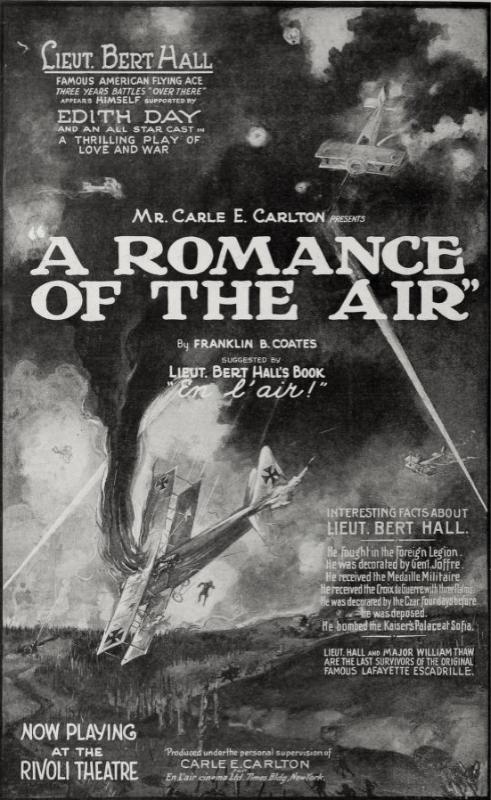
A definitive 6/10 rating for a film that redefined the boundaries of cult cinema. A Romance of the Air remains a cornerstone of transgressive art.
A Romance of the Air unfurls against the smoky backdrop of the Great War, weaving a tapestry of sky‑borne valor and clandestine intrigue that feels both timeless and immediate. The film opens with Lieutenant Bert Hall, a seasoned pilot of the French Lafayette Escadrille, executing a daring dogfight over the trenches. In a moment of brutal aerial calculus, Hall sustains a grievous wound that forces him to crash behind enemy lines. The narrative then pivots sharply, as the wounded ace discovers his fallen German adversary and, in a twist that borders on theatrical, exchanges uniforms. This audacious act catapults Hall into a German hospital, where he encounters a familiar face: his Kentucky sweetheart, now a captive of Berlin’s iron grip. The plot thickens with the arrival of a Countess of Moravia, whose outward sympathy for the Allies masks a covert allegiance to the German cause. Together, they orchestrate a daring escape to France aboard a German plane, only to have Hall ensnared by accusations of treason. The story culminates in a last‑minute revelation by Hall’s American lover, exonerating him and restoring his honor. The arc is a rollercoaster of emotional highs and moral quandaries, keeping viewers perched on the edge of their seats.
Hall embodies the archetypal war hero whose bravado is tempered by an unwavering sense of duty. His transition from sky‑bound freedom to the claustrophobia of a German infirmary underscores a thematic shift from external conflict to internal identity crisis. The actor’s portrayal oscillates between stoic determination and vulnerable tenderness, especially during the intimate scene where Hall confronts his sweetheart in the antiseptic corridors of a foreign hospital. The Countess, meanwhile, serves as a foil to Hall’s moral compass; her genteel demeanor conceals a Machiavellian mind, and her flirtations with Hall’s ideals are laced with duplicity. Her presence injects a palpable tension that elevates the stakes of every exchange. The sweetheart’s steadfast loyalty, juxtaposed with her helplessness, paints a portrait of love tested by war’s cruel hand. Together, these characters create a mosaic of human emotions that resonate beyond the era in which the film was made.
The film’s visual language is anchored in stark contrasts, with the blackened sky serving as a canvas for the luminous yellow of contrails, and the sea blue of the battlefield’s horizon providing a cool counterpoint to the protagonist’s fiery resolve. The director’s use of handheld camera work during aerial sequences creates a visceral sense of vertigo, as if the viewer is strapped into Hall’s cockpit. Close‑up shots of the pilot’s hands, trembling on the controls, are juxtaposed against sweeping aerial panoramas that capture the war’s desolation. The editing rhythm accelerates during dogfights, employing rapid cuts that mirror the frantic tempo of the combat, while slower, lingering frames during the hospital scenes allow the audience to absorb the emotional gravity of Hall’s plight. The color palette is meticulously curated, with dark orange accents highlighting moments of moral ambiguity and yellow hues illuminating scenes of hope and redemption.
The score, a blend of orchestral swells and tinny brass fanfares, punctuates the narrative’s emotional beats with precision. The composer’s choice to interlace traditional wartime marches with softer, more intimate motifs during the hospital scenes underscores the duality of the film’s setting. The sound design—particularly the crackle of radio transmissions and the distant roar of artillery—grounds the viewer in the chaos of the frontlines, while the subtle use of silence during Hall’s moments of introspection amplifies his internal conflict. The auditory experience is further enriched by the film’s diegetic sounds: the clatter of metal in the hospital ward, the hiss of gas masks, and the distant whistle of a German plane’s propeller, each contributing to an immersive soundscape that feels both authentic and evocative.
When positioned alongside contemporaries such as Behind the Lines or the more romantic The Earnest of the Air, A Romance of the Air distinguishes itself through its intricate plot twists and nuanced character arcs. While Behind the Lines leans heavily on straightforward heroism, this film delves into the murky ethics of wartime espionage, mirroring the psychological complexity found in The House of a Thousand Candles. Its narrative depth echoes the moral ambiguity present in the later classic The Steel King’s Last Wish, yet it retains the visceral immediacy of early silent cinema. The film’s blend of action, romance, and intrigue places it squarely within the lineage of early war epics that continue to resonate with modern audiences.
A Romance of the Air operates not merely as entertainment but as a cultural artifact that encapsulates the zeitgeist of the 1920s. Its depiction of the Lafayette Escadrille pays homage to the American volunteers who fought for France, while the inclusion of a German hospital setting offers a rare glimpse into the enemy’s perspective—an uncommon narrative choice for its time. The film’s treatment of espionage, especially through the Countess’s duplicity, reflects the era’s growing fascination with intelligence operations, foreshadowing the spy thrillers that would dominate later decades. Moreover, Hall’s cross‑national love story underscores the fragile bonds that tethered disparate cultures during a period of global upheaval, making the film a subtle commentary on the interconnectedness of humanity even amid conflict.
The film’s production was a collaborative effort between visionary director Bert Hall—who also penned the screenplay—and seasoned producer Franklin B. Coates. Their partnership yielded a meticulously researched script that balances historical accuracy with dramatic flair. The set designers employed authentic period props, from brass aircraft instruments to German military insignia, lending credibility to the film’s visual narrative. Cinematographer Emil Hoch’s use of natural light during outdoor sequences captures the raw beauty of the war‑scarred landscape, while studio shoots were carefully lit to preserve the emotional intensity of intimate scenes. The ensemble cast, featuring Brian Darley as Hall, Herbert Standing as the German officer, and Edith Day as the sweetheart, delivers performances that are both grounded and larger than life, a testament to the director’s commitment to character authenticity.
Upon its release, A Romance of the Air garnered critical acclaim for its daring narrative structure and compelling performances. Contemporary reviews praised the film’s ability to blend action with emotional depth, a combination that resonated with audiences who had recently endured the horrors of war. Over the decades, the film has been re‑evaluated by scholars as a pivotal work in the evolution of war cinema, often cited in academic discussions alongside titles such as Hidden Valley and The Coming Power. Its influence is evident in modern war dramas that continue to explore the moral complexities of combat and the personal sacrifices made by those on the frontlines.
Watching A Romance of the Air feels akin to stepping into a time capsule that preserves the raw emotions of a generation that lived through unprecedented upheaval. The film’s pacing, though rooted in silent‑era sensibilities, maintains a rhythmic flow that keeps the audience engaged. The juxtaposition of aerial spectacle with the stark reality of hospital corridors creates a powerful contrast that lingers long after the credits roll. Moreover, the nuanced portrayal of Hall’s internal struggle—caught between national allegiance and personal love—offers a timeless exploration of identity that transcends the film’s historical setting.
A Romance of the Air stands as a testament to early cinematic ambition, marrying thrilling aerial combat with a layered narrative that interrogates the very nature of loyalty and betrayal. Its stylistic choices—ranging from the deliberate use of color to the dynamic editing—demonstrate a sophisticated understanding of visual storytelling that remains relevant for contemporary filmmakers. The film’s legacy, cemented by its influence on subsequent war epics, underscores its enduring significance. In an era where war stories often lean toward one‑dimensional heroism, this film offers a refreshing depth that invites viewers to reflect on the complex human condition amid the chaos of conflict.
The film’s technical craftsmanship is evident in its meticulous set construction and the innovative use of early special effects. The aerial sequences, shot on a combination of real aircraft and miniature models, showcase a pioneering approach to visual realism. The filmmakers employed a then‑novel technique of overlaying multiple film strips to simulate the chaos of dogfights, a method that would later inspire the special effects language of the 1940s. Sound synchronization, though limited by the era’s technology, is executed with a precision that enhances the immersion, particularly during the tense moments of Hall’s interrogation by German officers. The film’s editing rhythm, guided by a keen sense of pacing, ensures that the narrative arc remains tight without sacrificing character development.
Beyond its cinematic achievements, A Romance of the Air has left an indelible mark on popular culture, inspiring a generation of war storytellers and contributing to the mythos of the WWI aviator. Its themes of courage, deception, and love resonate in modern media, from contemporary war dramas to nostalgic retrospectives that celebrate the golden age of cinema. The film remains a staple in film studies curricula, often paired with analyses of other wartime epics such as The Advances of the Sky and The Advances of the Sky. Its enduring relevance is a testament to the power of storytelling that transcends time, inviting new audiences to discover the intricate dance of heroism and humanity that defines the human experience during war.
IMDb 6
1931
Community
Log in to comment.