DbcultAccessing Vault...
Cult Review
Senior Film Conservator
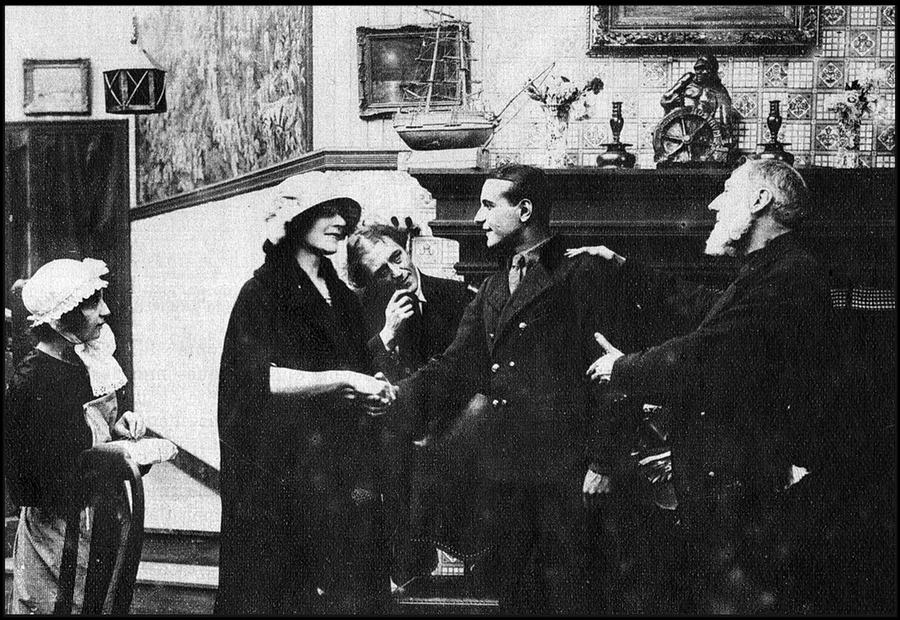
Stepping into the world of De kantwerkster van Brugge is akin to unearthing a forgotten treasure, a cinematic artifact that, despite its age, pulses with a vibrant, humanistic core. This silent era gem, often overlooked in the grand tapestry of early cinema, offers a profoundly moving exploration of artistry, class, and the indomitable spirit of a young woman caught between the demands of survival and the desires of her heart. From the opening frames, one is immediately transported to the melancholic, yet undeniably picturesque, canals and cobblestone streets of 19th-century Bruges, a city itself a character, its ancient beauty serving as a poignant backdrop to Elise's delicate struggle.
The narrative, though seemingly simple, unfolds with an intricate elegance that belies its quiet demeanor. Elise, brought to life with a remarkable subtlety that transcends the limitations of silent performance, is not merely a lacemaker; she is an artist whose hands articulate a language of beauty and resilience. Her craft is not just a means to an end; it is her voice, her legacy, her very soul. This deep connection between artisan and art is a recurring motif, subtly echoing themes explored in films like The Strength of the Weak, where characters often find their true power within their humble vocations. The film masterfully portrays the arduous, almost meditative process of lacemaking, transforming it from a mere domestic chore into a metaphor for life itself – each thread a choice, each knot a consequence, each finished piece a testament to perseverance.
The performances, particularly from Abel Sovet as Jan and Jimmy O'Kelly as Monsieur Dubois, are studies in the power of expression without dialogue. Sovet, as the earnest canal worker, embodies a quiet dignity and unwavering devotion. His portrayal is one of understated strength, his eyes conveying a depth of emotion that speaks volumes where words would be superfluous. One might draw parallels to the raw, unvarnished sincerity seen in performances from Pay Day, where working-class heroes are often depicted with a similar blend of stoicism and heartfelt sentiment. O'Kelly, on the other hand, crafts a wonderfully nuanced villain in Dubois. He is not a mustache-twirling caricature but a man of refined tastes whose appreciation for beauty veers into a possessive, almost predatory desire. His charm is deceptive, his generosity a calculated maneuver, and his ultimate goal is to acquire, whether it be a priceless piece of lace or the artist who created it. This duality, this subtle menace beneath a veneer of sophistication, is a testament to O'Kelly's skill and elevates Dubois beyond a simple antagonist to a complex embodiment of societal power dynamics.
The visual storytelling in De kantwerkster van Brugge is nothing short of exquisite. The cinematography, with its chiaroscuro lighting and meticulously composed frames, transforms Bruges into a living painting. The reflections on the canals, the play of light and shadow on ancient facades, the intimate close-ups of Elise's hands at work – each shot is a deliberate brushstroke, evoking a sense of time and place that feels both historically accurate and timelessly romantic. There are moments of striking visual poetry, such as a sequence where Elise’s delicate lace patterns are superimposed over a shot of the city’s intricate ironwork, subtly drawing a connection between her personal artistry and the larger artistic heritage of Bruges. This kind of visual metaphor is reminiscent of the evocative world-building found in films like Anna Boleyn, where historical settings are rendered with an almost painterly attention to detail, adding significant depth to the narrative.
The thematic richness of the film is perhaps its greatest strength. At its core, De kantwerkster van Brugge is a poignant examination of love versus ambition, artistic integrity versus commercialization, and the enduring struggle of the individual against the impersonal forces of societal expectation and economic necessity. Elise's dilemma is universal: how does one maintain authenticity when survival demands compromise? The film doesn't offer easy answers, instead choosing to explore the nuances of her emotional landscape. The tension between her burgeoning love for Jan and the seductive promise of Dubois's patronage creates a compelling internal conflict, one that resonates deeply even today. This exploration of personal sacrifice for the greater good, or for love, is a theme often found in early dramas like The Marriage Ring, where characters grapple with profound moral choices that shape their destinies.
Moreover, the film subtly critiques the commodification of art and the exploitation of artists. Dubois, with his discerning eye and vast wealth, represents the patron who seeks to own not just the product, but the very essence of the creator. His interactions with Elise are laced with a paternalistic condescension, a belief that his financial power grants him dominion over her talent and her choices. This dynamic serves as a powerful commentary on the precarious position of artists, particularly women, in a society that often values their output more than their intrinsic worth. It’s a critique that, unfortunately, remains relevant, echoing the struggles of artists across centuries and media, a timeless concern that finds its parallel in the social commentaries of films such as The Forbidden Path, which often delved into the moral complexities of societal pressures.
The pacing of De kantwerkster van Brugge is deliberate, allowing the audience to luxuriate in the atmosphere and absorb the emotional weight of each scene. Unlike some of its contemporaries that might have leaned into overt melodrama, this film opts for a more restrained, naturalistic approach, making the moments of heightened emotion all the more impactful. The use of intertitles is judicious, never overwhelming the visual narrative but instead acting as a gentle guide, providing necessary context without interrupting the flow. This thoughtful balance between visual storytelling and textual aid is a hallmark of superior silent filmmaking, a technique that sets it apart from more heavy-handed efforts. One might consider the economy of storytelling, both visual and textual, to be a sophisticated precursor to modern narrative techniques, ensuring that every element serves a purpose in advancing the plot or deepening character understanding.
The climax, a meticulously staged exhibition of Elise's masterwork, is a masterclass in silent film tension. The hushed reverence of the onlookers, the subtle glances exchanged between the main characters, the dramatic reveal of the lace itself – all converge to create a powerful moment of reckoning. It is here that Elise’s choice is laid bare, not just for the audience, but for herself. The resolution, while offering a sense of hope and vindication, avoids overly saccharine conclusions, instead reaffirming the quiet strength of conviction and the enduring value of genuine connection. The ending, while satisfying, leaves a lingering impression of the sacrifices made and the battles won, a nuanced approach that avoids the simplistic 'happily ever after' and instead offers a more mature, resonant closure. This refusal to tie up every loose end with a neat bow, allowing for a more reflective ending, is a characteristic shared with other profound silent dramas, such as Ett farligt frieri, which often presented resolutions that were more thought-provoking than purely joyous.
In an era often dismissed for its nascent technical capabilities, De kantwerkster van Brugge stands as a testament to the artistic sophistication and emotional depth achievable in silent cinema. It transcends its historical context to deliver a universal story about the human spirit's capacity for creation, love, and resistance against forces that seek to diminish it. The film's enduring appeal lies in its sincere portrayal of characters navigating complex moral landscapes, their struggles and triumphs rendered with a tenderness and authenticity that resonates across generations. It reminds us that true artistry is not merely about skill, but about the soul poured into the creation, and that genuine love, like fine lace, is woven with threads of patience, dedication, and an unshakeable belief in its inherent beauty.
For those who appreciate the quiet power of early filmmaking, or simply a story told with profound feeling and visual grace, De kantwerkster van Brugge is an absolute must-see. It is a film that invites contemplation, rewarding repeated viewings with new layers of meaning and appreciation for its meticulous craftsmanship, both on screen and in the narrative it presents. Its historical significance is undeniable, but its emotional impact is what truly cements its place as a significant, albeit perhaps lesser-known, masterpiece of its time. The film’s ability to evoke such a powerful emotional response without a single spoken word is a powerful reminder of cinema's fundamental ability to communicate across barriers, relying on universal human experiences and expressions. It truly encapsulates the magic of silent film, where gestures, glances, and the artistry of the frame carry the entire weight of the narrative, much like the intricate visual storytelling found in The Bronze Bride or even the dramatic tension of The District Attorney, where every visual cue is critical.
The legacy of films like De kantwerkster van Brugge is crucial for understanding the evolution of cinematic language. It shows how early directors and performers were already experimenting with complex character arcs and nuanced thematic explorations, pushing beyond mere spectacle. This film, in particular, offers a window into the cultural and social fabric of its era, painting a vivid picture of artisanal life in a historic European city. The detailed depiction of lacemaking not only serves the plot but also acts as a valuable historical record, showcasing a craft that was both economically vital and culturally significant. The film's contribution to understanding the social pressures faced by women in the arts during that period is also noteworthy, demonstrating a progressive sensibility for its time. It’s a compelling argument for the preservation and re-evaluation of such works, proving that timeless narratives don't require modern technology to captivate and inspire. Much like the careful documentation of rural life in The Church with an Overshot Wheel, this film offers a snapshot of a specific time and place, imbued with universal human drama.
Finally, the film's aesthetic choices, from its costume design to its set decoration, are impeccable, transporting the viewer directly into the period. The exquisite detail in Elise’s humble abode, contrasted with the opulent settings of Dubois, speaks volumes about their respective worlds and the chasm between them. These visual distinctions are not merely decorative; they are integral to the film's thematic exploration of class and privilege. The careful attention to historical authenticity in the visual elements is something that can be admired, providing not just a backdrop for the story, but an active participant in its telling. This dedication to visual storytelling through every element on screen aligns with the meticulous artistry seen in productions like Eva or even the detailed world-building in The Five Dollar Plate, where the environment itself conveys significant narrative information. De kantwerkster van Brugge is more than just a historical curiosity; it is a profound artistic statement, a beautifully woven narrative that continues to resonate with contemporary audiences who seek depth, beauty, and emotional truth in their cinematic experiences.

IMDb 7
1934
Community
Log in to comment.