DbcultAccessing Vault...
Cult Review
Senior Film Conservator
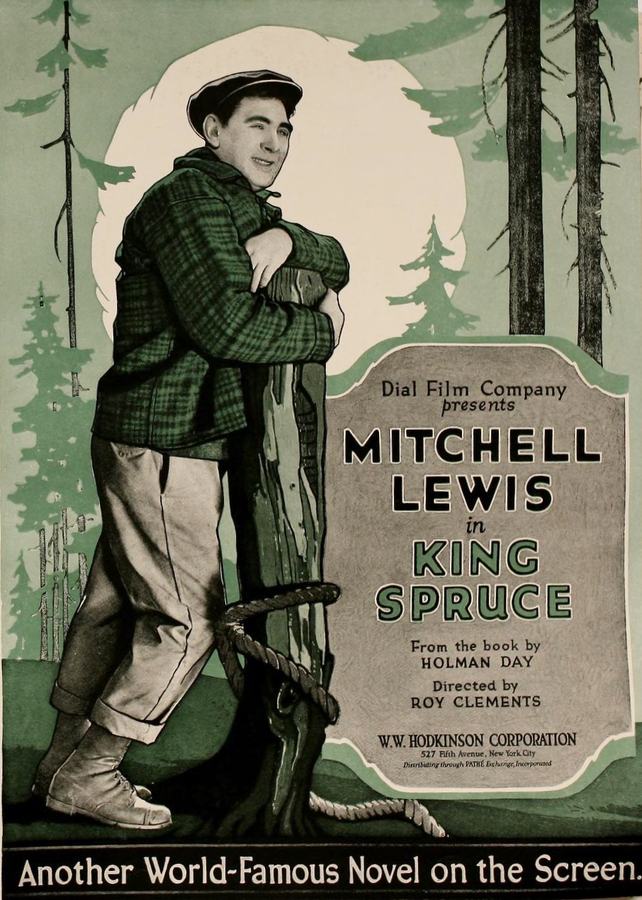
How does one photograph the scent of sap, the hiss of a cross-cut saw, the moral creak of cedar under empire-weight? Director Paul C. Smith and cinematographer H. Lyman Broening manage exactly that in King Spruce, a 1920 Northern lumber melodrama long buried beneath the sawdust of cinema history. The picture arrives like a logjam breaking—sudden, thunderous, chaotic with repressed stories.
John Barrett, played with bristling gravitas by Gus Saville, is less a man than a movable ledger of board-feet and broken promises. Watch how he plants his boots: each step a lien against the earth, each syllable a lien against the soul. Saville’s micro-gesture—two fingers drumming a stump as though counting interest on photosynthesis—renders capitalism’s invisible claw visible. The forest is not scenery; it is a ledger column awaiting red ink.
Betty Wales imbues Elva with a porcelain-fragility that shivers when she spies Wade teaching logarithms on a frosted window. Their first love scene—no kiss, only the communal exhalation of visible breath while reciting Coleridge—feels subversively intellectual for a silent pulp reel. Arthur Millett’s Wade has forearms like whips yet eyes like rainy Sundays; he is the New England schoolmarms’ answer to the pugilist heroes of Bare Fists, but armed with chalk instead of knuckledusters.
Barrett’s eviction pogrom is shot in chiaroscuro: torches become stars of doom, cabins collapse like guilty consciences. The intertitle cards—hand-lettered, jittering—read “Clearing vermin.” One wonders how many 1920 spectators felt the spectral echo of company towns, of strike-breakers, of red summer race massacres. The sequence predates and outflanks the moral ambush of Upton Sinclair’s Jungle adaptation; its flames lick not merely wood but the celluloid itself.
Mignon Anderson’s Kate storms the narrative like a Dionysian afterthought, hair spangled with pine needles, boots mudded by centuries of unpaid feminine rage. Her forest arson is not crime; it is ecological critique. When she torches the slash piles, the camera tilts upward, revealing smoke that writes her illegitimate name across heaven. The revelation that Barrett is her sire lands like Greek tragedy stapled to a land deed.
Few images in silent cinema rival Barrett lashed to a spruce, orange tongues reflecting in his eye-whites, while the wife of the wronged woodsman offers a mock benediction. The mise-en-scène quotes both Odin’s Yggdrasil ordeal and Salem’s witch pyres. Yet rescue arrives—not from divine thunderbolt but from Wade’s axe, swung with the matter-of-fact heroism that silences myth. The ember-lit smoke swirling around Barrett’s face feels like an inverted halo, the first step toward a reluctant humanity.
Holman Francis Day’s screenplay refuses a deathbed conversion. Barrett’s redemption is transactional: a partnership contract, profit-sharing inked in the same forest he once carved like meat. Capital absorbs even its own critique, a lesson as contemporary as quarterly earnings calls. Yet the film tempers cynicism: Wade insists on a clause protecting squatter rights, a moment that plays like an early collective bargaining win.
Broening’s cinematography favors cyanotype blues for predawn drives, then pivots to sulfurous yellows once fire enters. The tonal shift is so abrupt you can almost hear the color temperature scream. Compare this to the more uniform amber nostalgia of convent-lit The Rosary; here, color itself is class warfare.
Silent film acting often ages into mime caricature, yet Saville restrains himself to jaw-muscle pulses and calloused finger twitches—close-ups register each sinew of economic cruelty. Anderson counters with full-body kinetics, sprinting over windfall trunks like a deer evading wolves. Their dueling registers—minimalist versus expressionist—create a dialectic that sound could blunt.
Notice how the two daughters—Elva and Kate—occupy opposite economic hemispheres yet share mirroring entrances: each first appears in doorway frames, one lit by lace-curtained parlour glow, the other by inferno backlight. Their eventual handshake, mediated by Wade, suggests a feminist coalition albeit in embryonic form, less saccharine than the cousin solidarity of Merely Mary Ann but more utopian than the femme fatale fatalism of Lady Audley’s Secret.
Most archive prints circulate sans original score; modern festivals often retrofit generic Appalachian strings. Yet the narrative begs for something harsher: prepared piano mimicking saw-blades, log-thud percussion, maybe a choir whispering land-cession treaties. The absence of authentic cue sheets leaves a vacuum scholars still debate.
Stream it today and Barrett evokes every tech-baron parceling up digital real estate, Wade the open-source advocate, Kate the hacktivist launching botnet wildfires. The film’s refusal to punish Kate—she is last seen striding toward a horizon of saplings—anticipates contemporary audiences’ thirst for restorative justice rather than carceral vengeance.
The Weakness of Man moralizes via bedroom farce; King Spruce moralizes via chainsaws and embers, giving it a visceral gravitas. A Soul for Sale sells its heroine to Wall Street wolves metaphorically; here the forest itself is on the auction block, smoke as gavel.
Is it flawless? Intertitles occasionally overdose on Day’s dime-novel bombast, and the surviving third reel shows nitrate warping that makes faces ripple like grief under water. Yet these scars enhance its urgency, as though the film itself survived a forest fire to bear witness. Watch it for the most elemental collision of family saga and eco-terror ever spliced in the silent era, then spend days arguing whether Barrett’s final grin is gratitude or the wolf’s calculation that partnership still equals dominion. Either way, the spruce will remember.
— 35mm remaster currently touring cinematheques; digital 2K restoration rumored for 2025 Blu-ray from Kino Classics.
IMDb 6.4
1936
Community
Log in to comment.