Summary
In the cathedral-quiet of the North woods, where virgin spruce scrape the belly of heaven, a timber titan christens himself sovereign: John Barrett, colossal as the trunks he fells, strides through sap-scented gloom as though the forest itself were a disobedient subject. His empire of axes and debt is mirrored by a domestic one—daughter Elva, porcelain-fragile, whose sudden yen for Dwight Wade, a chalk-dusted schoolmaster with ink under the nails and Thoreau under the arm, fractures the old man’s iron equilibrium. Barrett’s retaliation is baroque: he dispatches Wade to the winter lumber camps via the venal foreman McLeod, a man whose soul resembles a badly planed plank—splintered, knotty, treacherous. There, amid the clang of peaveys and the musk of wet wool, the magnate personally leads a pogrom against “skeeters,” the squatter families whose shanties blemish his surveyed Eden. Wade, appalled, thrashes McLeod for torturing a crippled logger; the act brands him heroic, target, and ultimately tinder. From the first torched shack erupts Kate Arden—feral, flame-haired, half-feral nymph and half-avenging fury—who retaliates by kissing a match to the resinous underbrush. The conflagration she births is both apocalypse and genealogy: Barrett learns that the wild girl is the bastard he sired decades earlier on a woodswoman’s wife, a long-simmering vendetta now come to collect its interest. In a tableau worthy of pagan tragedy, the usurer of land is lashed to his own totem tree, sentenced to roast in the holocaust he kindled. Wade, bucking every blood-feud logic, hacks him free, and the blaze that was meant to cauterize old sins instead illuminates them: Elva’s and Kate’s twin faces—sepia versus solar—mirror the split paternity Barrett denied. Chastened yet incapable of humility, the baron tries to buy absolution by forcing McLeod to wed Kate; Wade and Elva intercede, brandishing not blades but moral clarity. The film closes on a restructured kingdom: Barrett signs partnership papers with the teacher whose spine proved stiffer than cedar, and Elva—wit sparkling like hoarfrost—remarks that she is ‘thrown in for good measure,’ as though love itself were a log scale bonus.
Synopsis
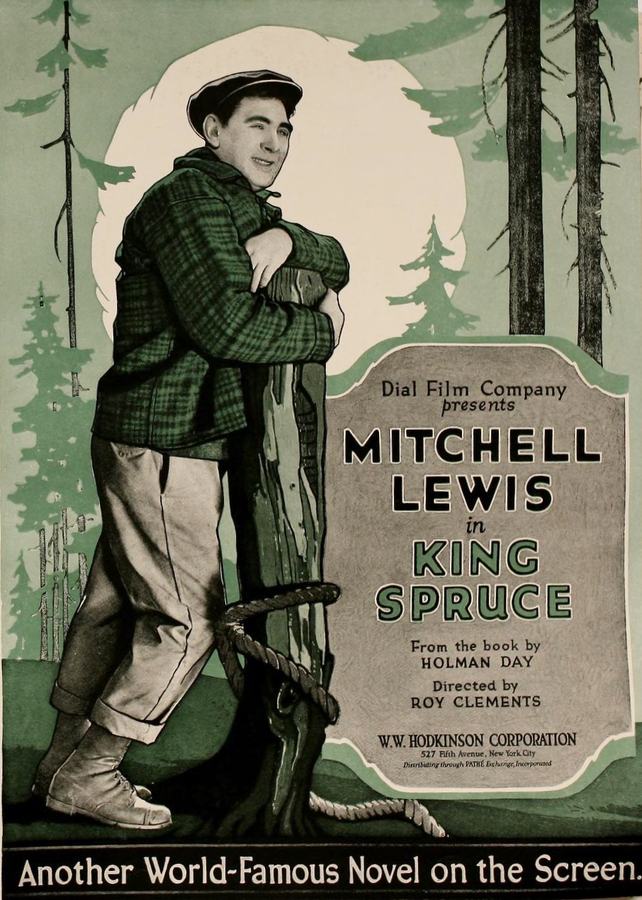
"King Spruce" is personified in John Barrett, lumber magnate of the North woods. His domineering character is shown when his daughter Elva falls in love with a school teacher, Dwight Wade. Barrett conspires with his foreman, McLeod, to entice Wade away to the lumber camps, and finally decides to accompany the gang of men himself. He starts in to eject and burn out all "skeeters" who have settled on the land without domiciliary rights. Wade has shown his fighting blood by thrashing McLeod for an act of cruelty, and he now vainly opposes Barrett from motives of humanity. From the first shack burned emerges a wild girl, Kate Arden, who sets the forest afire in revenge. There is another vengeance awaiting Barrett. Kate is his own daughter by the wife of a woodsman who has waited years to get even. It is he who ties Barrett to a tree, where he must be burned in the fire now raging, but he is rescued by Wade. Barrett now acknowledges Kate to be his daughter. When his daughter Elva comes to take care of him the resemblance between the two girls confirms his confession. Barrett attempts a half-hearted redemption by bribing his foreman to marry the wild girl, but he is brought to his senses by Wade and Elva. Wade has become a power through his feats of strength and kindly humanity, and he finally wins the high regard of the spruce magnate himself. He is given a partnership in a newly organized business by Barrett, and Elva, to use her own terms, is thrown in for good measure.
Moving Picture World, March 27, 1920
Review Excerpt
"
How does one photograph the scent of sap, the hiss of a cross-cut saw, the moral creak of cedar under empire-weight? Director Paul C. Smith and cinematographer H. Lyman Broening manage exactly that in King Spruce, a 1920 Northern lumber melodrama long buried beneath the sawdust of cinema history. The picture arrives like a logjam breaking—sudden, thunderous, chaotic with repressed stories.
Barrett’s Empire: Capitalism as Cosmic Violence
John Barrett, played with bristling gravitas by Gus Sav..."