DbcultAccessing Vault...
Cult Review
Senior Film Conservator
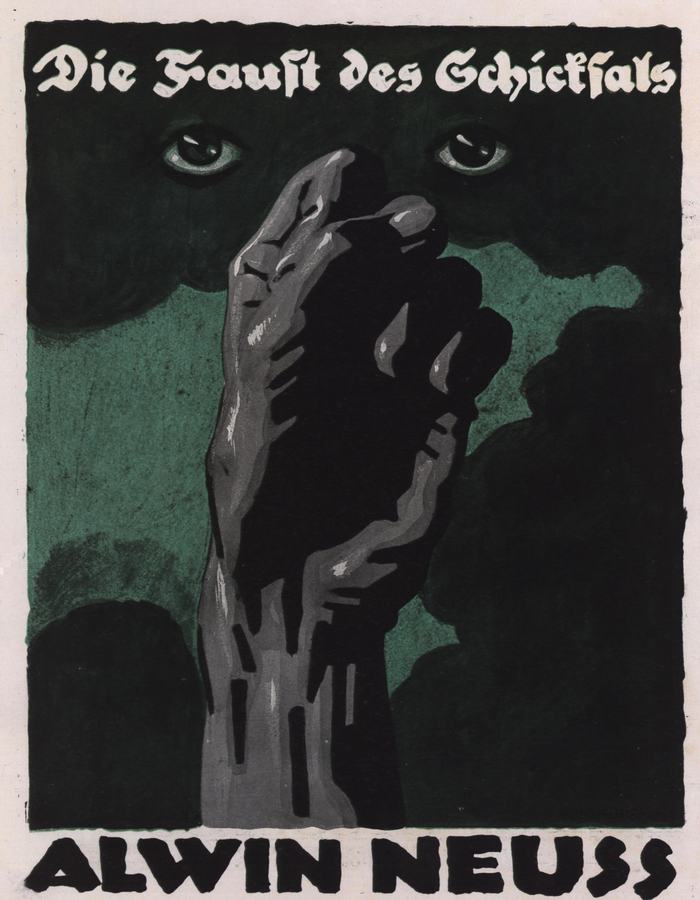
Stepping back into the hallowed, flickering halls of early 20th-century German cinema is always a profound experience, and ‘Die Faust des Schicksals’ (The Fist of Fate) is a particularly potent exemplar of the era’s dramatic prowess. Directed by the multi-talented Paul Otto, who also contributed to the narrative’s intricate design, this film is a fascinating dive into the philosophical quandaries of control, destiny, and human agency, all presented through the evocative, often exaggerated, lens of the silent screen. It’s a work that, even a century later, manages to captivate with its audacious storytelling and the sheer commitment of its ensemble.
The film immediately immerses its audience in a world where unseen forces seem to dictate the lives of individuals. At its core lies the compelling character of Helene, brought to life with remarkable nuance by Käthe Haack. Haack, a luminary of German stage and screen, imbues Helene with a captivating blend of vulnerability and steely resolve. Her portrayal is a masterclass in silent acting, conveying a vast spectrum of emotions through subtle gestures, expressive eyes, and a posture that shifts from fragile hope to defiant strength. Her initial naiveté, as she navigates the perilous social landscape, quickly gives way to a hardened determination, a transformation that feels earned and deeply resonant. It’s a performance that stands shoulder to shoulder with other powerful female leads of the period, perhaps even echoing the quiet strength seen in Purity, albeit with a distinctly German melodramatic flair.
Otto’s narrative unfurls with a deliberate pace, gradually revealing the insidious machinations of ‘The Master,’ a figure of almost mythical malevolence embodied by the formidable Alwin Neuß. Neuß, with his piercing gaze and commanding presence, crafts a villain who is less a caricature and more a chilling embodiment of hubris. His Master is not merely a criminal; he is a philosopher of control, a man who genuinely believes he can play God, manipulating the fragile threads of human existence for his own twisted ends. This concept of a central orchestrator of fate is a recurring motif in early cinema, yet Neuß’s interpretation elevates it beyond simple villainy into something more psychologically complex. His performance, often subtle in its menace, allows the audience to grasp the intellectual arrogance that drives his character, making his eventual downfall all the more satisfying.
The plot’s brilliance lies in its intricate layering. Helene’s brother, a struggling artist, becomes an early casualty of The Master’s schemes, lured into the destructive vortex of gambling. This personal tragedy serves as the catalyst for Helene’s journey, transforming her from an observer into an active participant in a high-stakes game. The film deftly portrays the societal vulnerabilities that The Master exploits – the desperation of poverty, the allure of quick riches, the moral decay lurking beneath the veneer of societal respectability. It's a critique, however subtle, of the societal pressures that can push individuals to their breaking point, a theme explored with varying degrees of success in films like The Primrose Path, but here rendered with a particularly stark, Germanic intensity.
Adding another layer of intrigue is Ressel Orla as the Baroness von Falken. Orla’s Baroness is a fascinating counterpoint to Haack’s Helene – a woman of opulence and ambiguous morality. She enters The Master’s world not as a victim, but initially as an accomplice, drawn by a mixture of boredom, avarice, or perhaps a twisted fascination with power. Orla’s performance is alluringly enigmatic, her every gesture exuding a sophisticated world-weariness. Her character arc, as she slowly realizes the true cost of her involvement and finds her own fate inextricably linked with Helene's, provides a crucial moral compass for the audience, demonstrating that even those who seemingly choose the path of darkness can be ensnared by the very forces they seek to wield. This complex portrayal of a woman caught between societal expectations and personal desires is reminiscent of some of the more nuanced female characters in films like Sumerki zhenskoy dushi, showcasing the period's growing interest in psychological depth.
The narrative tension is further amplified by the presence of Inspector Werner, portrayed with a dogged persistence by Willy Kaiser-Heyl. Werner is the unwavering force of justice, a detective whose instincts lead him to suspect a grand, overarching scheme behind a series of seemingly unrelated misfortunes. Kaiser-Heyl’s performance is characterized by an understated intensity, a quiet determination that underpins his relentless pursuit of The Master. He is the audience’s anchor in the world of law and order, a stark contrast to the shadowy machinations he seeks to dismantle. His methodical investigation, though sometimes overshadowed by the more flamboyant theatrics of The Master, provides the necessary structural backbone to the plot, guiding the audience through the labyrinthine web of deceit. His character embodies the societal struggle against an unseen, almost metaphysical, threat, much like the relentless protagonist in Captain Courtesy, albeit in a more urban, contemporary setting.
Paul Otto's direction is particularly noteworthy for its ability to maintain a pervasive atmosphere of suspense and impending doom. He utilizes the cinematic techniques available to him at the time with considerable skill, employing dramatic chiaroscuro lighting to heighten tension, particularly in scenes involving The Master's clandestine activities. The framing of shots often emphasizes the isolation of characters or the overwhelming power of the forces arrayed against them. Close-ups are used sparingly but effectively, drawing the audience into the emotional turmoil of the characters, especially Helene. The pacing, while reflective of the silent era’s conventions, is remarkably consistent, building towards a series of climactic confrontations that are both visually striking and emotionally charged. The film's visual storytelling, relying heavily on symbolic imagery and the expressive physicality of its actors, is a testament to Otto's keen understanding of the nascent cinematic language. One might even draw parallels to the dramatic visual flair present in a film like The Dagger Woman, though 'Die Faust des Schicksals' leans more into psychological dread than overt action.
The central thematic conflict of ‘Die Faust des Schicksals’ revolves around the eternal struggle between fate and free will. The Master represents the ultimate, albeit illusory, control over destiny, while Helene embodies the indomitable human spirit that refuses to bend to predetermined paths. The film posits a profound question: are we merely puppets in a grand, cosmic play, or do our choices, however small, truly shape our existence? The intricate plot, with its twists and turns, serves as a grand experiment to explore this very query. The narrative suggests that while external forces, or indeed, the machinations of powerful individuals, can exert immense influence, there remains an irreducible core of human agency that can, at crucial junctures, defy the script. This philosophical depth elevates the film beyond mere melodrama, placing it in conversation with more introspective works, even those from later periods that grapple with similar existential questions. It’s a bold statement for a silent film, demonstrating that the medium, even in its early stages, was capable of exploring profound intellectual concepts.
The film’s exploration of morality is equally compelling. The Baroness von Falken's journey, from a cynical participant to a woman grappling with the consequences of her actions, is a testament to the film's nuanced approach to character. She is not merely a villainess but a figure of tragic complexity, highlighting the corrosive effects of ambition and the seductive allure of power. Her eventual, reluctant alliance with Helene underscores a belief in redemption, or at least, a recognition of shared humanity in the face of overwhelming malevolence. This moral ambiguity, where characters are not strictly black or white, but shades of grey, is a sophisticated touch that enriches the narrative. It’s a thematic thread that can be seen in various forms across cinematic history, from the moral quandaries of All Man to the more overt romantic dilemmas of Gloria's Romance, but here it's filtered through a lens of existential dread.
Beyond its immediate narrative, ‘Die Faust des Schicksals’ offers invaluable insight into the aesthetic and technical capabilities of German silent cinema. The film's production design, though perhaps not as overtly expressionistic as some of its contemporaries, still creates a world that feels both grounded and slightly heightened. The urban settings, with their imposing architecture and shadowy alleyways, serve as a fitting backdrop for the clandestine activities and moral struggles that unfold. The use of intertitles is artful, providing necessary exposition without disrupting the visual flow, often enhanced by elegant typography that adds to the film’s overall aesthetic appeal. The musical accompaniment, though lost to time and subject to modern interpretation, would undoubtedly have played a crucial role in amplifying the emotional impact, guiding the audience through the narrative’s peaks and valleys with sweeping orchestrations and poignant melodies.
The performances, as noted, are uniformly strong, showcasing the theatrical training that many silent film actors brought to the screen. Käthe Haack, in particular, commands the screen with a powerful, yet never overbearing, presence. Her ability to convey complex emotional states without dialogue is a testament to her skill and the expressive power of the human form. Alwin Neuß’s portrayal of The Master is equally captivating, his stillness often more terrifying than any overt act of violence. The chemistry between the principal actors, particularly the subtle tension between Helene and the Baroness, adds layers of emotional complexity that are often overlooked in analyses of silent film. The film’s ability to weave together these disparate elements – a compelling plot, strong performances, and thoughtful direction – is what elevates it from a mere historical curiosity to a significant piece of cinematic art.
Comparing it to other films of the period, ‘Die Faust des Schicksals’ holds its own with remarkable distinction. While lacking the grand scale of an epic like Hamlet (1911) or the overt romanticism of The Girl of the Golden West, its strength lies in its meticulous construction of suspense and its profound thematic explorations. It eschews the simpler moralities sometimes found in productions like Wild Oats or Whoso Findeth a Wife, opting instead for a more intricate dance between good and evil, control and chaos. The film stands as a testament to Paul Otto’s vision, demonstrating his capacity to craft a narrative that is both entertaining and intellectually stimulating, a rare feat in any era of filmmaking. Its legacy lies not just in its historical significance, but in its enduring power to provoke thought and stir the emotions, proving that the silent screen was anything but silent in its impact.
In conclusion, ‘Die Faust des Schicksals’ is more than just a relic of a bygone cinematic age; it is a vibrant, compelling piece of storytelling that resonates with timeless themes. Its intricate plot, driven by powerful performances from Käthe Haack, Ressel Orla, Willy Kaiser-Heyl, and Alwin Neuß, under the astute direction of Paul Otto, creates a cinematic experience that is both intellectually stimulating and emotionally gripping. It challenges the audience to ponder the nature of fate versus free will, the corrupting influence of power, and the enduring resilience of the human spirit. For aficionados of silent cinema and anyone interested in the foundational works of German filmmaking, this film is an essential viewing experience, a testament to the profound artistry and narrative ambition that characterized the early decades of the medium. It stands as a powerful reminder that even in the absence of spoken dialogue, a film can speak volumes, its themes echoing across the decades with a clarity that belies its age. The film truly captures the essence of a struggle against overwhelming odds, a universal narrative that remains as potent today as it was upon its initial release. It is a cinematic gem that deserves rediscovery and appreciation for its enduring artistic merit and its profound exploration of the human condition. Indeed, the fist of fate, as depicted here, is a force to be reckoned with, but so too is the human will to defy it, a powerful and timeless message.
IMDb 6.1
1919
Community
Log in to comment.