DbcultAccessing Vault...
Cult Review
Senior Film Conservator
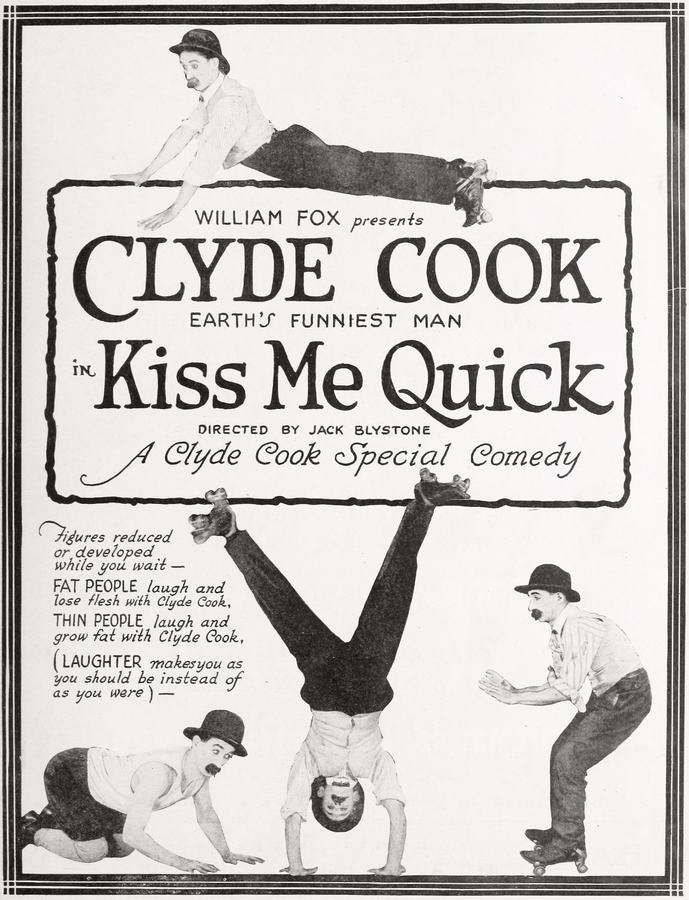
The silent era was not merely a precursor to modern cinema; it was a distinct, highly evolved language of movement and visual rhythm that reached a particular zenith in 1920. Kiss Me Quick stands as a testament to this era, a kinetic explosion of vaudevillian energy that showcases the unique talents of Clyde Cook. While often overshadowed by the giants of the era, Cook’s work here displays a technical proficiency and a daring physicality that warrants a place in the pantheon of early comedic masters. Unlike the more existential pathos of Chaplin or the stoic engineering of Keaton, Cook brings an almost chaotic, hyper-mobile energy to the screen that feels startlingly modern.
In Kiss Me Quick, the environment is never static. Every door, window, and staircase is a potential adversary. The film’s narrative structure is a series of escalating confrontations that utilize the frame with a precision that would make modern directors weep. When we look at contemporary works like His Musical Sneeze, we see a similar obsession with the singular physical catalyst, but Kiss Me Quick expands this into a full-body architectural experience. The choreography between Cook and the towering Blanche Payson is particularly inspired. Payson, a former police officer turned actress, provides a gravitational center that Cook orbits with frantic, desperate speed.
The film’s pacing is relentless. It doesn't allow the audience to breathe, instead stacking gags with a cumulative force. This isn't the gentle pastoral humor one might find in The Hayseeds Come to Sydney; it is an aggressive, urban form of comedy that reflects the anxieties of a world moving too fast for its own good. The cinematography, though restricted by the technology of the time, manages to capture the depth of the physical space, allowing the viewer to anticipate the disaster before it strikes, which is the cornerstone of effective slapstick.
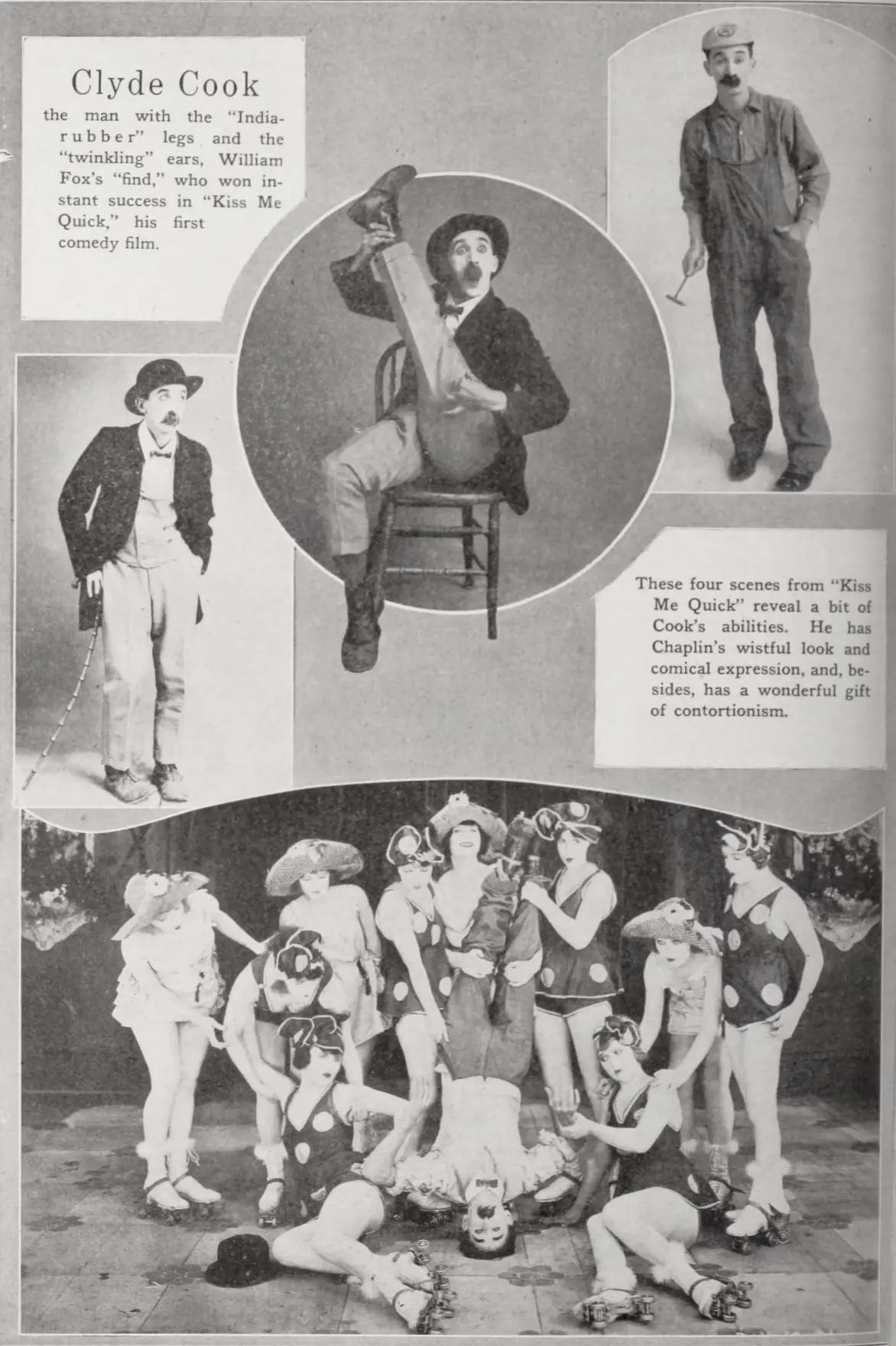
Clyde Cook’s performance is a masterclass in eccentric dance and pantomime. His ability to contort his body into impossible shapes provides the film with its most surreal moments. There is a sequence involving a simple chair that transcends mere comedy and enters the realm of performance art. Cook treats the object not as furniture, but as a sparring partner. This level of dedication to the physical bit is something we occasionally see in dramas of the period, such as the grit found in The Outcast, but here it is repurposed for the sake of the laugh.
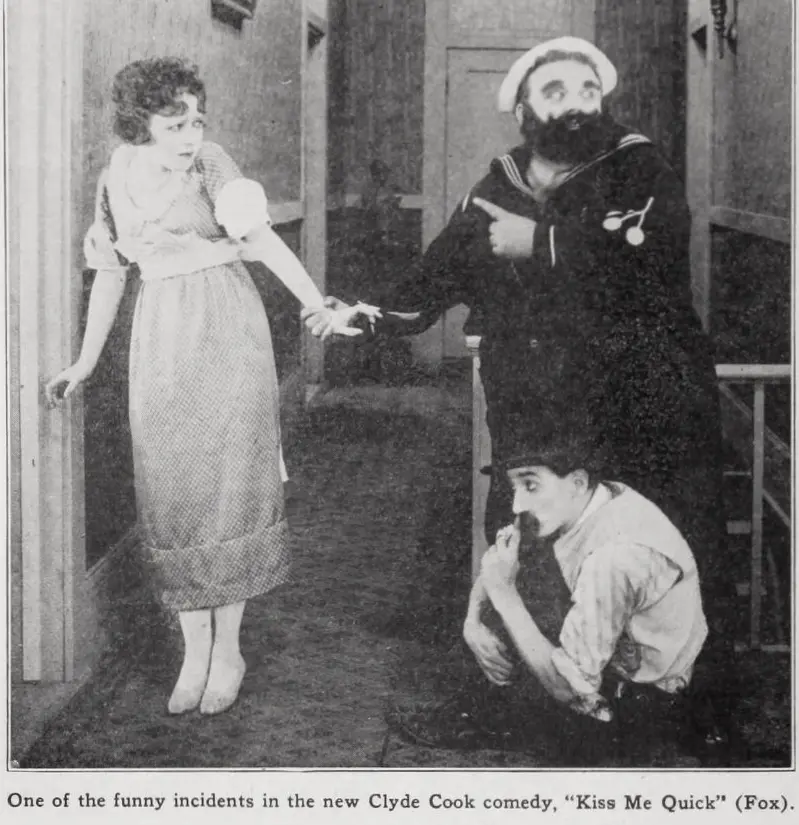
The supporting cast, featuring Frank Alexander and Albert T. Gillespie, provides the necessary friction. Alexander’s girth and Gillespie’s timing act as the perfect foils to Cook’s erratic motion. They represent the "status quo" that Cook’s character is constantly, and often inadvertently, disrupting. This dynamic of the small man against the large world is a recurring theme in 1920s cinema, echoing the sentiments found in God's Good Man, though handled here with much more levity and less moralizing.
Without the aid of synchronized sound, Kiss Me Quick relies heavily on the intertitles and the expressive faces of its leads. However, the film is at its best when it lets the movement do the talking. There is a sophistication to the visual jokes that suggests a deep understanding of the medium's possibilities. The use of scale and perspective—placing the diminutive Cook in the foreground while a massive Blanche Payson looms in the background—creates a sense of impending doom that is inherently funny. This visual hierarchy is a technique also explored in more dramatic contexts, like The Golden Wall, but here it serves the rhythm of the punchline.
The film also touches upon social mores of the time. The title itself, a cheeky demand for affection, sets up a premise of romantic pursuit that is constantly thwarted by the rigid social structures of the era. We see a similar, albeit more serious, exploration of social barriers in Believe Me, Xantippe or the domestic entanglements of Widow by Proxy. In Cook’s world, however, the barrier isn't just social; it's physical. He literally cannot get close enough to his goal without tripping over the furniture or being ejected by a larger man.
Technically, Kiss Me Quick is a fascinating specimen of early film editing. The cuts are sharp, designed to emphasize the impact of each fall and the surprise of each entrance. This editing style was revolutionary, moving away from the stage-bound aesthetics of the previous decade. When compared to the mystery-driven pacing of The Teeth of the Tiger, the editing here is much more aggressive and rhythmic. It’s about the beat, the timing, and the release of tension.
The film’s atmosphere is also worth noting. There is a gritty, lived-in quality to the sets that adds a layer of realism to the absurdity. This isn't the polished, high-society world of Dorian's Divorce or the romanticized poverty of The Cigarette Girl. Instead, it feels like the dusty, cluttered reality of the working class, making the escapist comedy even more potent. The contrast between the mundane setting and the extraordinary physical feats performed by the actors is where the film finds its heart.
To truly appreciate Kiss Me Quick, one must understand the landscape of 1920. The world was recovering from the Great War, and the audience’s appetite for visceral, physical release was at an all-time high. This film provided that in spades. While films like The Risky Road or Romance and Dynamite offered different flavors of excitement—the former through moral peril and the latter through explosive action—Cook offered a more personal, relatable form of chaos. He was the everyman who couldn't catch a break, a theme that resonates as much today as it did a century ago.
Even the more obscure titles of the era, like With the Moonshine on the Wabash, reflect a fascination with the eccentricities of human behavior. Kiss Me Quick distills this fascination into a pure, concentrated form. It doesn't need the melodrama of Sunday or the redemption arcs of The Redemption of Dave Darcey. It only needs a man, a woman, and a series of increasingly precarious situations.
What distinguishes Kiss Me Quick from other shorts of the period is the sheer variety of its physical comedy. Cook doesn't just fall; he descends with style. He doesn't just run; he scuttles with a desperate grace. There is a sequence involving a chase through a crowded interior that is so perfectly timed it feels like a piece of clockwork. The way the actors move in and out of the frame, narrowly avoiding collisions, requires a level of rehearsal and spatial awareness that is often undervalued in the history of cinema.
Blanche Payson’s contribution cannot be overstated. As the "heavy," she brings a terrifying dignity to the role. Her reactions—or lack thereof—to Cook’s antics are the perfect counterpoint to his frantic energy. When she finally does react, it is with a force that feels monumental. This dynamic of the irresistible force meeting the immovable object is the engine that drives the film forward. It’s a primal form of comedy, tapping into basic human instincts of fear and relief.
As we look back on Kiss Me Quick, we see a film that is surprisingly resilient. Despite the passage of time and the evolution of comedic tastes, the core of the film remains effective. The physical prowess of Clyde Cook is undeniable, and the craftsmanship of the production is evident in every frame. It serves as a reminder that before there were special effects and CGI, there were human beings who could do incredible things with their bodies and a camera. This film is a celebration of that era, a loud, crashing, hilarious celebration that deserves to be rediscovered by a new generation of cinephiles. It is a vital piece of the puzzle that is silent film history, a vibrant thread in the tapestry of early 20th-century art.
IMDb —
1923
Community
Log in to comment.