DbcultAccessing Vault...
Cult Review
Senior Film Conservator
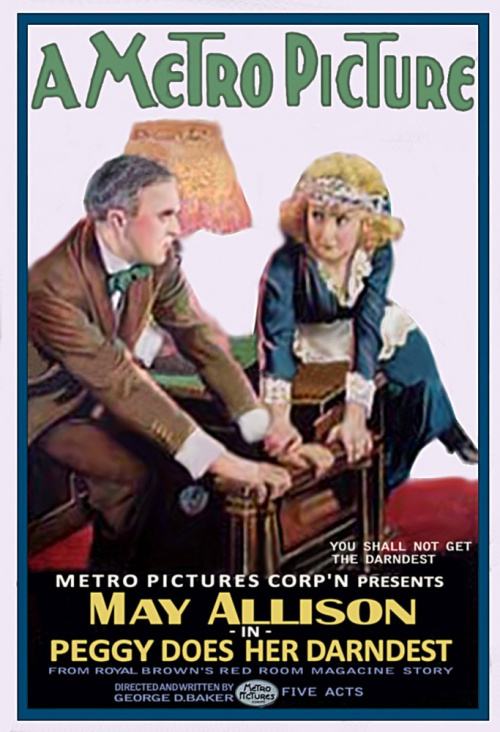
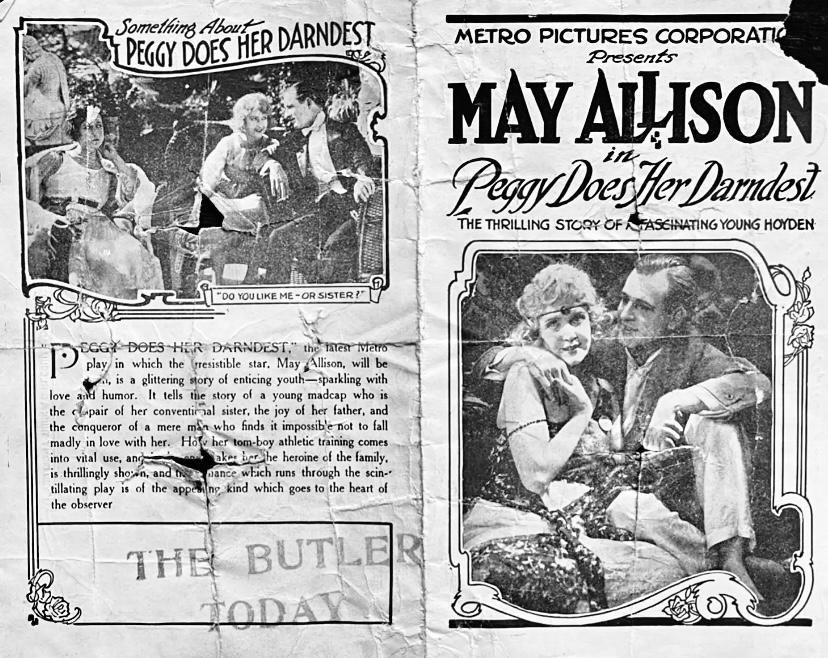
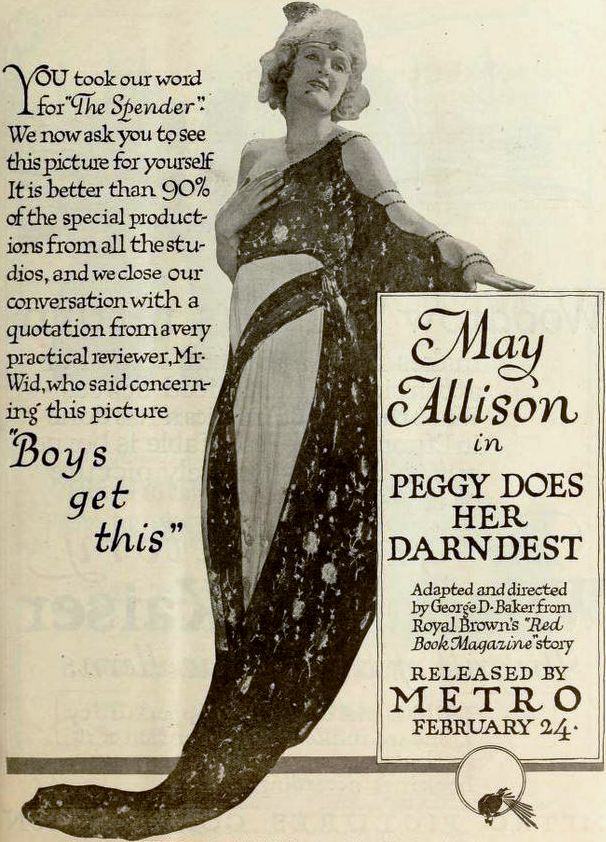
Beneath the frothy veneer of Peggy Does Her Darndest lies a tectonic shift in cinematic gender politics. Director John S. Robertson and scenarist George D. Baker craft a narrative where diamond heists become mere MacGuffins for the film's true jewel: May Allison's performance as Peggy Ensloe. Unlike her sister Eleanor (Rosemary Theby), whose arsenal consists of decolletage and calculated swoons, Peggy's weaponry includes correspondence detective manuals and a working knowledge of jujitsu throws – a metaphor so potent it practically fractures the celluloid. The 1917 comedy operates as a Trojan horse, smuggling radical ideas about female agency into drawing-room farce.
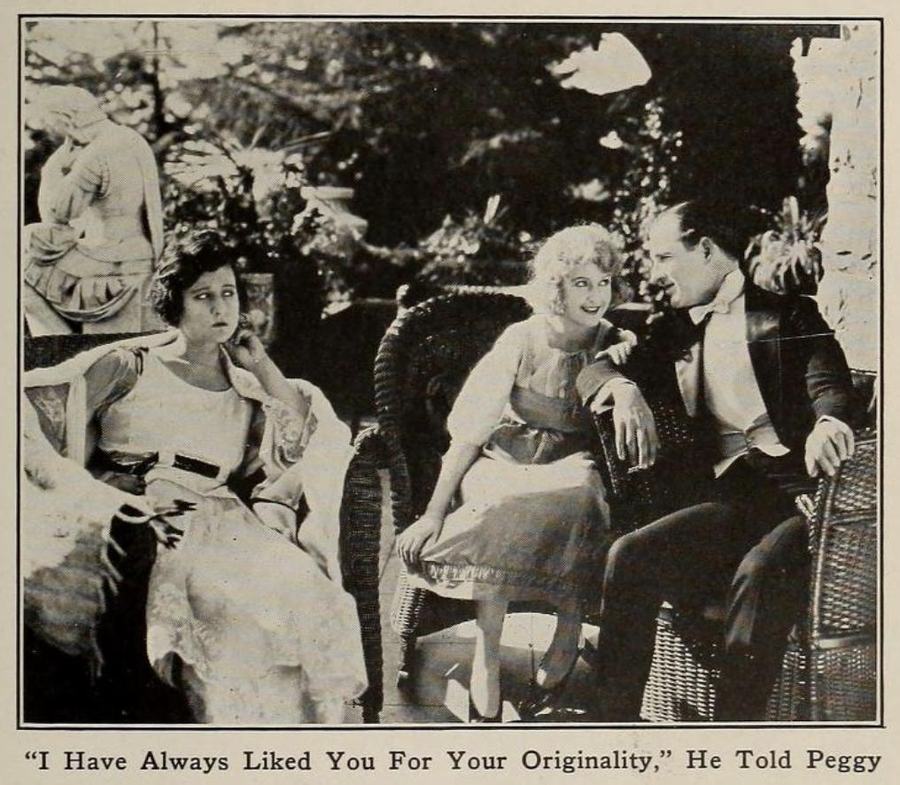
The Ensloe mansion functions as a petri dish for social experimentation. Self-made millionaire Edward Ensloe (Frank Currier) embodies American nouveau riche anxiety, his art collection screaming for validation. Enter Hugh Wentworth (Robert Ellis), an English aristocrat whose very posture critiques the gilded excess. Their dynamic mirrors the transatlantic tension of post-war society – ancient lineage versus new money. Yet the true class warfare erupts between Eleanor's performative gentility and Peggy's radical authenticity. When Hugh observes Peggy sprawled on the Persian rug deciphering detective manuals, his amused smile signals more than romantic interest; it's the dawning realization that this is modernity incarnate.
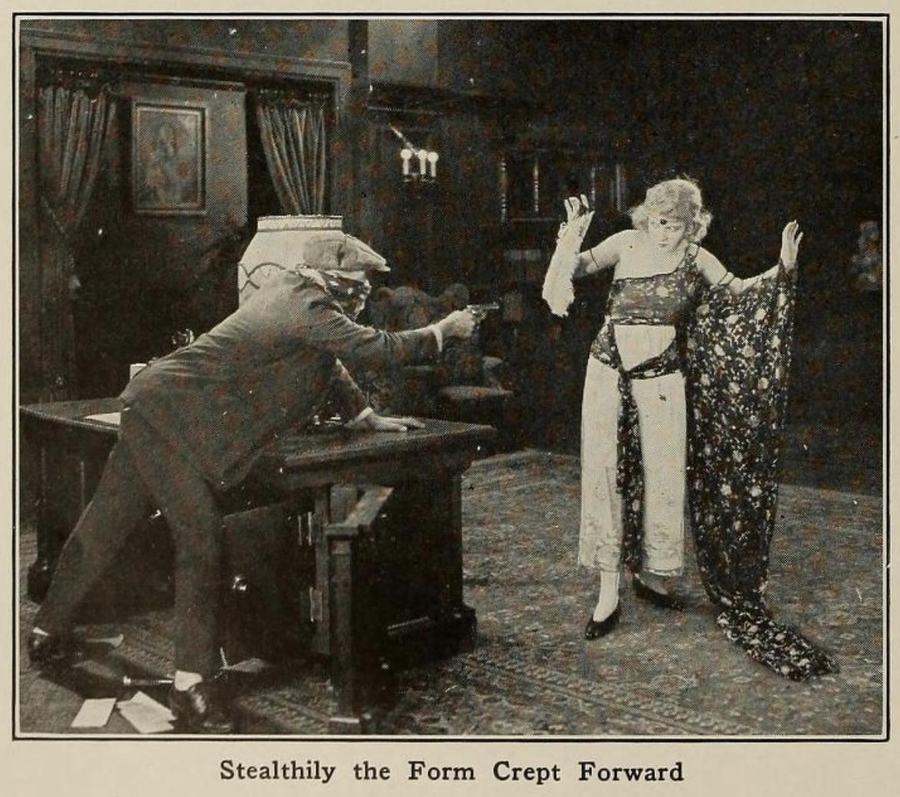
Allison's performance transcends silent film convention. Where her contemporaries often defaulted to wide-eyed innocence or vampish excess, she finds astonishing nuance in physicality. Watch how she modulates posture: shoulders slumped in boyish nonchalance during cricket matches with brother Bob (Ernest Morrison), then spine-straight as a sabre when confronting intruders. Her comic timing in the climactic jujitsu scene plays like Buster Keaton with a feminist manifesto – every hip throw dismantling Victorian gender constructs. The film's genius lies in letting Peggy's competence be her sex appeal; Hugh doesn't fall for her despite her unladylike skills, but because of them.
Robertson subverts detective tropes with surgical precision. The actual professional sleuth (Augustus Phillips) disguised as butler becomes a glorified prop, his conventional methods useless against Larry Doyle (Richard Rosson). Peggy's amateur status proves an advantage – her outsider perspective sees clues invisible to institutional thinking. The maid disguise sequence isn't mere farce; it's metacinematic commentary on class invisibility. As Peggy polishes silverware, the camera adopts her POV, noticing Larry's telltale bootprint the 'professional' missed. Cinema itself becomes Peggy's accomplice, with Robertson employing Dutch angles during the fight scene to visually destabilize patriarchal norms. Compare this to the static compositions of Who's to Blame? and the innovation stuns.
The 'Star of Sussex' diamond operates on three symbolic levels: as McGuffin, as emblem of patriarchal wealth transfer, and as reflection of Peggy's multifaceted brilliance. When Larry Doyle snatches the gem, he's stealing more than carbon; he's attempting to hijack Eleanor's dowry-based future. Peggy's retrieval thus becomes economic emancipation – she secures her sister's traditional path while simultaneously forging her own. The diamond's final resting place matters less than Hugh's proposal, delivered not with jewelry but with shared laughter over detective manuals. Robertson telegraphs their compatibility through parallel action: Hugh reading forensic textbooks while Eleanor fusses over hatpins. A century before the Bechdel Test, this film passes with flying colors.
Cinematographer Joseph Ruttenberg transforms the Ensloe estate into a silent ballet stage. The corridors become chase-scene choreography worthy of Harold Lloyd, with Larry's shadow preceding him like a German Expressionist nightmare. Ruttenberg's deep focus during the jujitsu sequence lets us witness three simultaneous reactions: Hugh's astonished admiration, Eleanor's horrified paralysis, and the detective's professional jealousy. Even nature participates – the croquet lawn where Peggy first demonstrates her unladylike athleticism is filmed in harsh daylight, exposing every grass stain on her petticoat. This tactile authenticity grounds the comedy; when Peggy flips Larry over her hip, we feel the thud through the screen. Modern comedies like Melting Millions feel airless by comparison.
Rosemary Theby's Eleanor isn't merely a foil; she's a tragic emblem of pre-war femininity. Her scenes with Sylvia Ashton as their status-obsessed mother reveal generational coercion. Note the recurring motif of constriction: Eleanor's corsets, her rigid tea pouring, the way she holds laughter like contraband. When she practices romantic gestures before a mirror, the reflection shows not vanity but desperation. This makes Peggy's triumph bittersweet – her freedom highlights Eleanor's gilded cage. The sisters' final embrace carries seismic subtext: Peggy gained love through liberation while Eleanor secured diamonds through performance. The film subtly questions whether either truly won.
Richard Rosson invests burglar 'Lonesome Larry' Doyle with startling pathos. His introductory scene – warming ragged hands over a steam grate – evokes the social realism of The Law That Failed. When he later infiltrates the mansion, his awe at the opulence becomes a silent condemnation of wealth disparity. The brilliance? Peggy defeats him not through violence but understanding. Her jujitsu isn't aggression; it's physics redirecting his momentum. In their final tableau – burglar pinned by former debutante – Robertson frames them as equals undone by circumstance. Larry's whispered confession (“I just wanted to touch something beautiful”) resonates beyond plot mechanics.
Watching this 1917 gem today feels like unearthing proto-feminist scripture. Peggy predates Katzensteg's tortured heroines and Sündige Mütter's maternal sacrifices by decades. Her DNA surfaces in screwball heroines and action stars alike – from Rimrock Jones' resourceful women to modern detective procedurals. Yet Robertson’s masterpiece remains singular in its refusal to ‘tame’ its heroine. The final kiss between Hugh and Peggy plays against a background of scattered detective notes and a cricket bat leaning against the parlour wall. No grand romantic score; just the whispered implication that love means never having to pretend. In an era of restrictive gender norms, Peggy Does Her Darndest did nothing less than imagine female liberation as joyous, messy, and utterly triumphant.
Robertson’s direction turns physical comedy into kinetic art. The jujitsu sequence runs a revolutionary 45 seconds – an eternity in silent comedy. Choreographed like violent ballet, Peggy’s throws combine grace with physics: hip tosses using Larry’s momentum, joint locks applied with scientific precision. Cinematographer Ruttenberg shoots at knee-level, emphasizing Peggy’s grounded power versus Larry’s flailing height. Unlike the documentary stiffness of contemporary nature films, every frame thrums with intention. When Peggy finally sits on Larry’s back reading his Miranda rights from her correspondence manual, the composition centers her mud-smeared ankle beside the stolen diamond – a still life of competence upending tradition.
What resonates loudest is what remains unsaid. Hugh never verbally rejects Eleanor; his avoidance of her arranged tête-à-têtes speaks volumes. Peggy’s detective manuals become totemic objects – her silent rebellion against finishing school. Even the diamond heist occurs in eerie quiet, the only ‘sound’ being Larry’s shadow creeping up the staircase. This visual vocabulary reaches its zenith when Peggy disguises herself as a maid. Without dialogue, Robertson conveys her transformation through posture alone: the lowered gaze, the constrained gait, the hands nervously adjusting an apron. When she suddenly drops the act to execute a jujitsu throw, the effect isn’t just comic – it’s the visual equivalent of a war cry. Modern talkies like Eye of the Night could learn from this economy.
The Ensloe mansion itself functions as antagonist and ally. Production designer William Cameron Menzies crafts spaces that reflect their occupants: Eleanor’s boudoir drips with suffocating lace, while Peggy’s attic bedroom features maps pinned to walls and books stacked like rebel fortifications. Even the garden becomes contested territory – Eleanor’s rose arbors versus Peggy’s cricket pitch. Menzies’ crowning achievement? The hidden passage Larry uses. Its reveal isn’t just plot convenience; it’s architectural metaphor for the secrets underpinning Gilded Age wealth. When Peggy discovers it via her detective studies, she’s literally uncovering the rotten foundations of her privilege – a more daring statement than Back of the Man’s explicit critiques.
In the constellation of 1917 cinema, Peggy Ensloe shines as a supernova anomaly. While Her Strange Wedding trapped women in Gothic fates and Under Galgen explored male angst, Peggy claimed agency through joyful physicality. May Allison’s performance remains a masterclass in comic timing – watch her feign clumsiness while actually positioning Larry for a throw. The film’s revolutionary core lies in Peggy’s lack of repentance; she never trades overalls for gowns. Hugh’s love comes precisely because she reads detective manuals at dinner. By making competence erotic, Robertson and Baker crafted something dangerous and delightful – a romantic comedy where the heroine rescues herself and still gets the aristocrat. Now that’s doing your darndest.
IMDb 5.5
1935
Community
Log in to comment.